Nicole Kimball
18:58 - 19:25
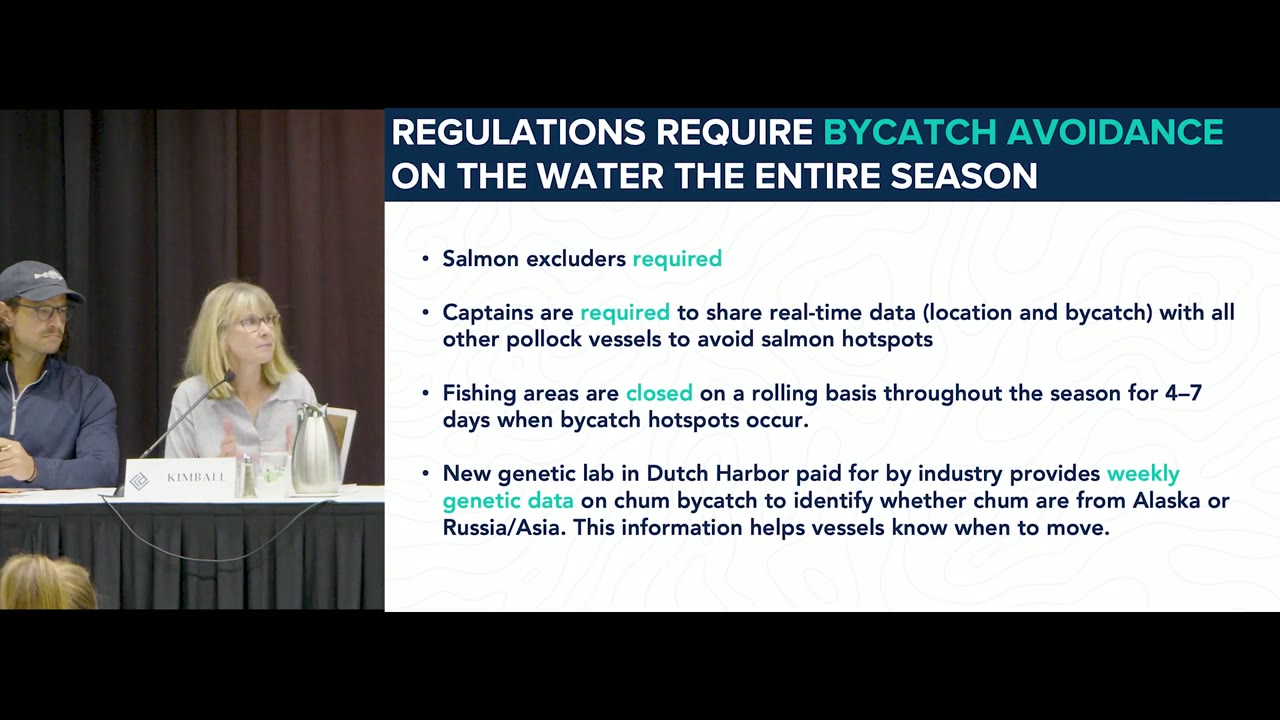
"There's also a new genetic lab in Dutch Harbor. This is paid for primarily by the Bristol Bay CDQ Group, but now by other industry groups. They provide weekly genetic data on chum bycatch to identify whether the chum are from Alaska or whether they're from Russia, Asian hatcheries. And that really is helping people on the water know when to move."
“There's also a new genetic lab in Dutch Harbor. This is paid for primarily by the Bristol Bay CDQ Group, but now by other industry groups. They provide weekly genetic data on chum bycatch to identify whether the chum are from Alaska or whether they're from Russia, Asian hatcheries. And that really is helping people on the water know when to move.”
- Speaker
- Nicole Kimball
- Timestamp
- 18:58 – 19:25
- Community
- Alaska News
- Location
- Alaska
- Captured at
- September 8, 2026
From the transcript
There's also a new genetic lab in Dutch Harbor. This is paid for primarily by the Bristol Bay CDQ Group, but now by other industry groups. They provide weekly genetic data on chum bycatch to identify whether the chum are from Alaska or whether they're from Russia, Asian hatcheries. And that really is helping people on the water know when to move. If you get a bunch of chum, you're— Oh, big alert, but if it's all Russian chum, you're probably not gonna close that area.
Related Coverage
Pollock official puts bycatch impact on Western Alaska runs at 1.9%
At an RDC breakfast forum Thursday, Nicole Kimball of the Pacific Seafood Processors Association detailed the Bering Sea pollock fleet's 100 percent monitoring, hard caps and new Dutch Harbor genetics lab. The chum caps she cited will not take effect until at least June 2028.
 by Bill AlaskaNews1mo ago2 min read