Colin Jones
49:59 - 50:23
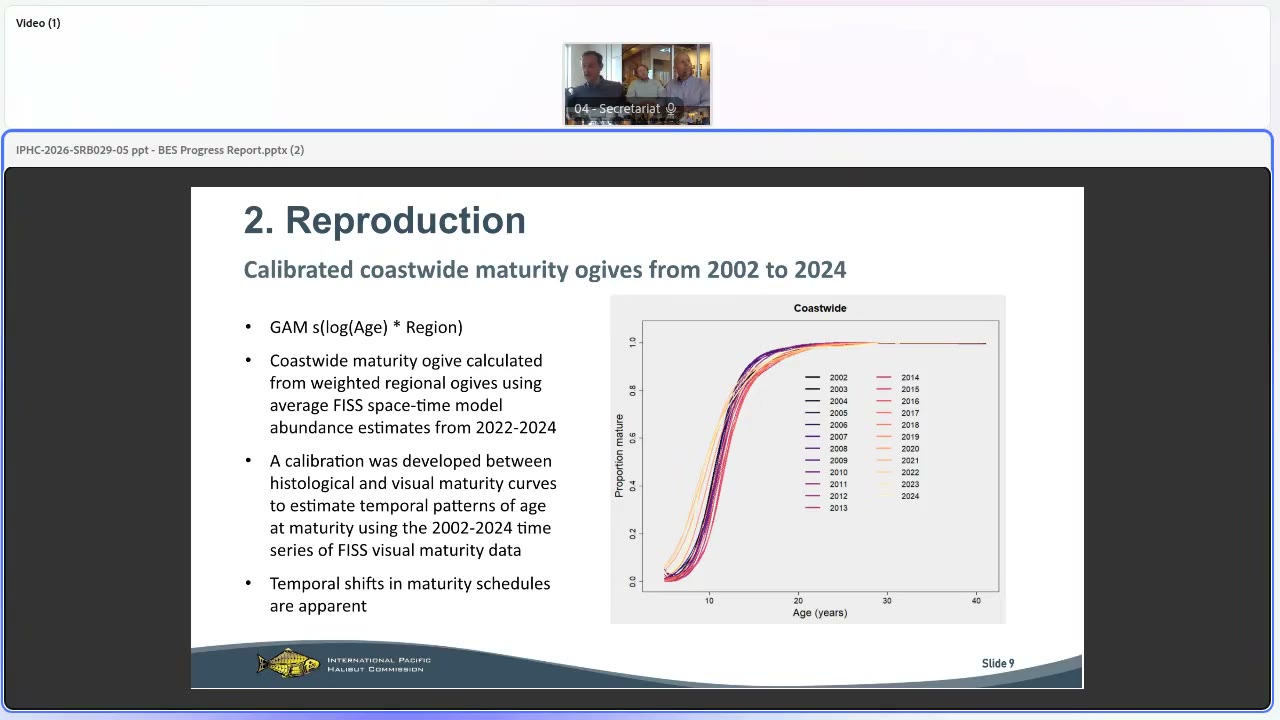
"there has been two distinct shifts during this time series. From 2002 to about 2016, there was a shift to older maturing females, and then at about 2016 to 2020, 2021, there was actually a large decrease in showing a lot younger maturing females over that time series."
“there has been two distinct shifts during this time series. From 2002 to about 2016, there was a shift to older maturing females, and then at about 2016 to 2020, 2021, there was actually a large decrease in showing a lot younger maturing females over that time series.”
- Speaker
- Colin Jones
- Timestamp
- 49:59 – 50:23
- Community
- Alaska News
- Captured at
- September 22, 2026
From the transcript
Yeah, yeah, better assessment. Yeah, so then Another thing that we looked at, because we now have a very long time series of 23 years, we wanted to look and see potential shifts in maturity through that time. And as you can see here on the figure, these are individual years of coast-wide ojives that were constructed from 2002 all the way to 2024. And what you can see is that there has been two distinct shifts during this time series. From 2002 to about 2016, there was a shift to older maturing females, and then at about 2016 to 2020, 2021, there was actually a large decrease in showing a lot younger maturing females over that time series.
Related Coverage
Halibut scientists report whale losses and a shift in when females mature
Halibut managers heard that killer whales make some Bering Sea grounds unfishable and that female halibut are maturing younger than previously estimated.
 by Bill AlaskaNews3w ago2 min read