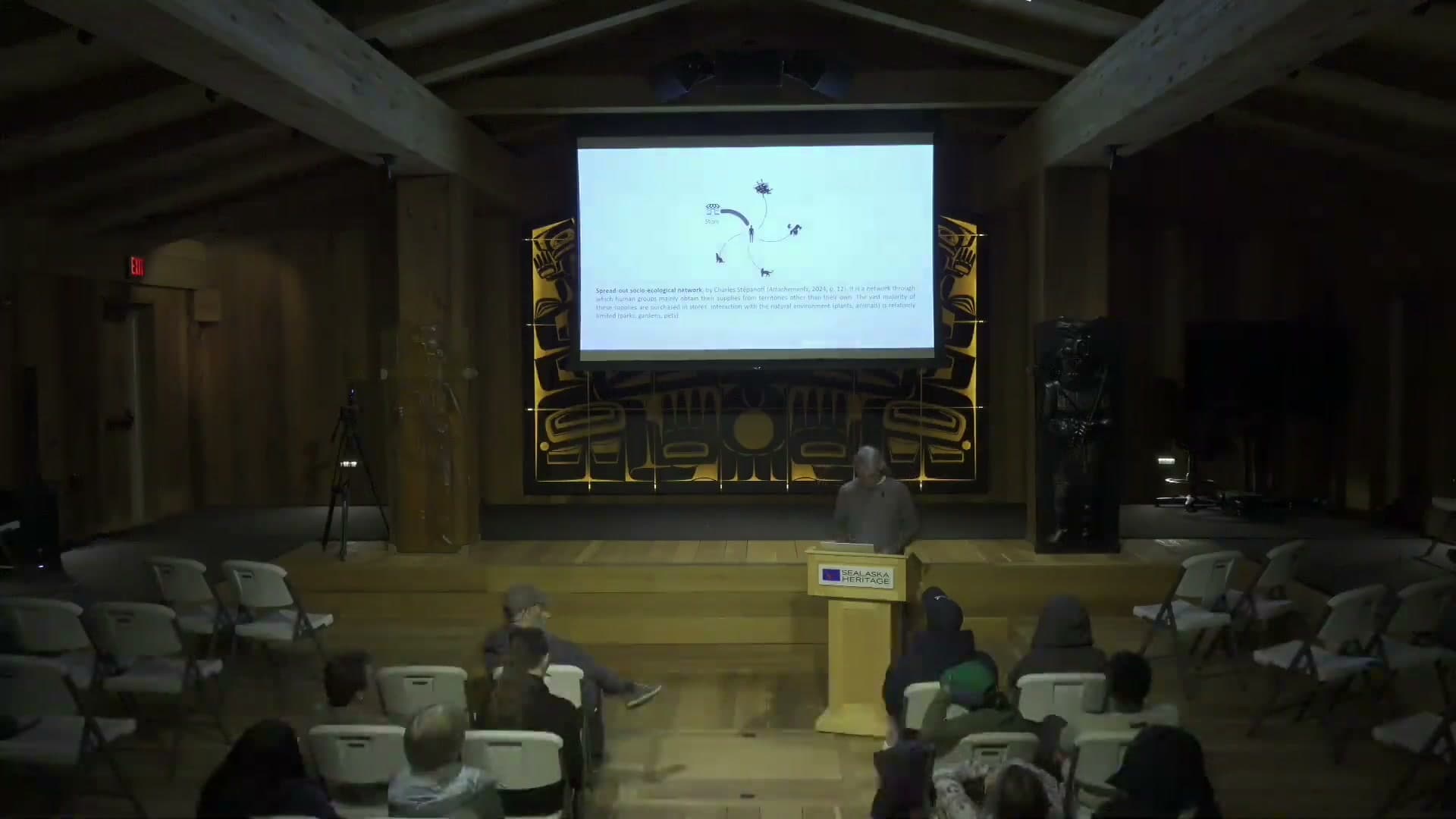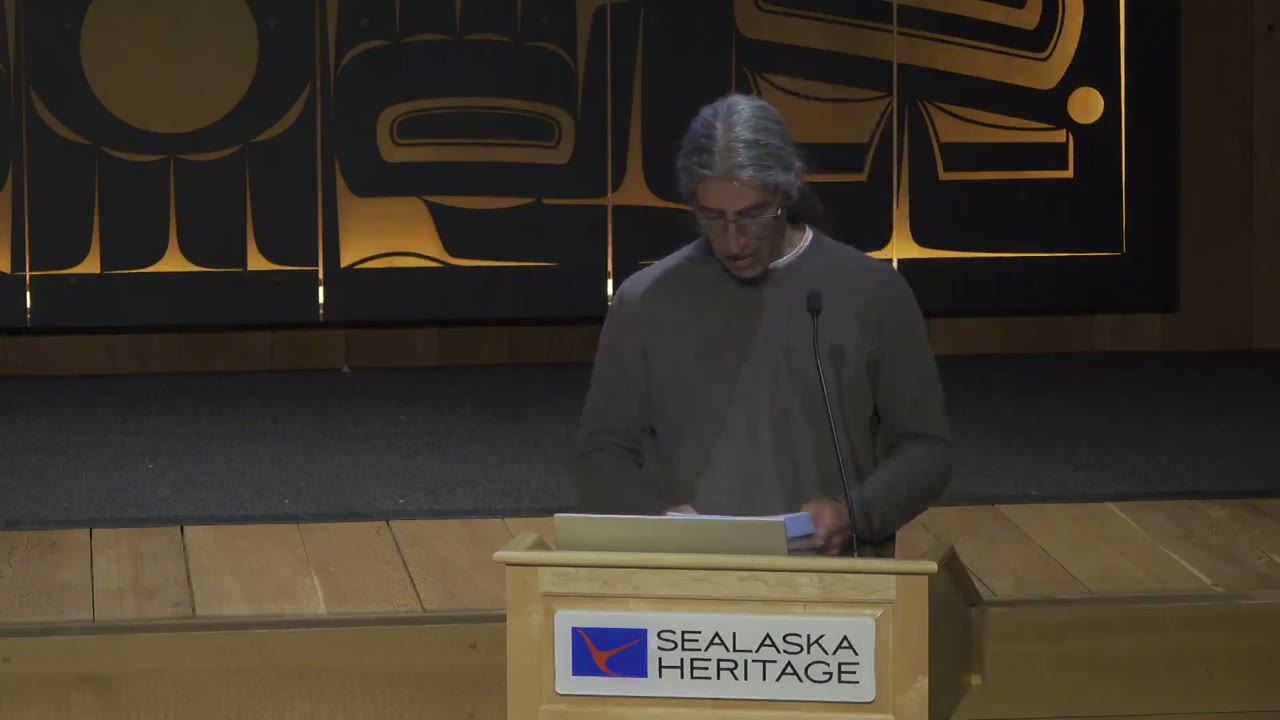
Renaud Chandivert
6:25 - 6:52
"Traditional foods and foodways broadly correspond to what is called subsistence food or subsistence practices. In federal and state regulations. Native people in Alaska consider that hunting, fishing, and gathering are central to who they are."
“Traditional foods and foodways broadly correspond to what is called subsistence food or subsistence practices. In federal and state regulations. Native people in Alaska consider that hunting, fishing, and gathering are central to who they are.”
- Speaker
- Renaud Chandivert
- Timestamp
- 6:25 – 6:52
- Community
- Alaska News
- Location
- Juneau
- Captured at
- July 1, 2026
From the transcript
And so a few words about the perspective I will develop in this lecture. Traditional foods and foodways broadly correspond to what is called subsistence food or subsistence practices. In federal and state regulations. Native people in Alaska consider that hunting, fishing, and gathering are central to who they are. They also generally consider that the notion of subsistence is inappropriate to qualify these practices.
Related Coverage
French anthropologist reframes Tlingit foodways as living relational system, not subsistence
Renaud Chandivert of Université Paul-Valéry Montpellier III lectured at Sealaska Heritage Institute in Juneau, arguing that Tlingit traditional foodways form a multidimensional 'archipelago of connections' that federal subsistence law cannot adequately describe or protect.
 by Bill AlaskaNews3mo ago2 min read