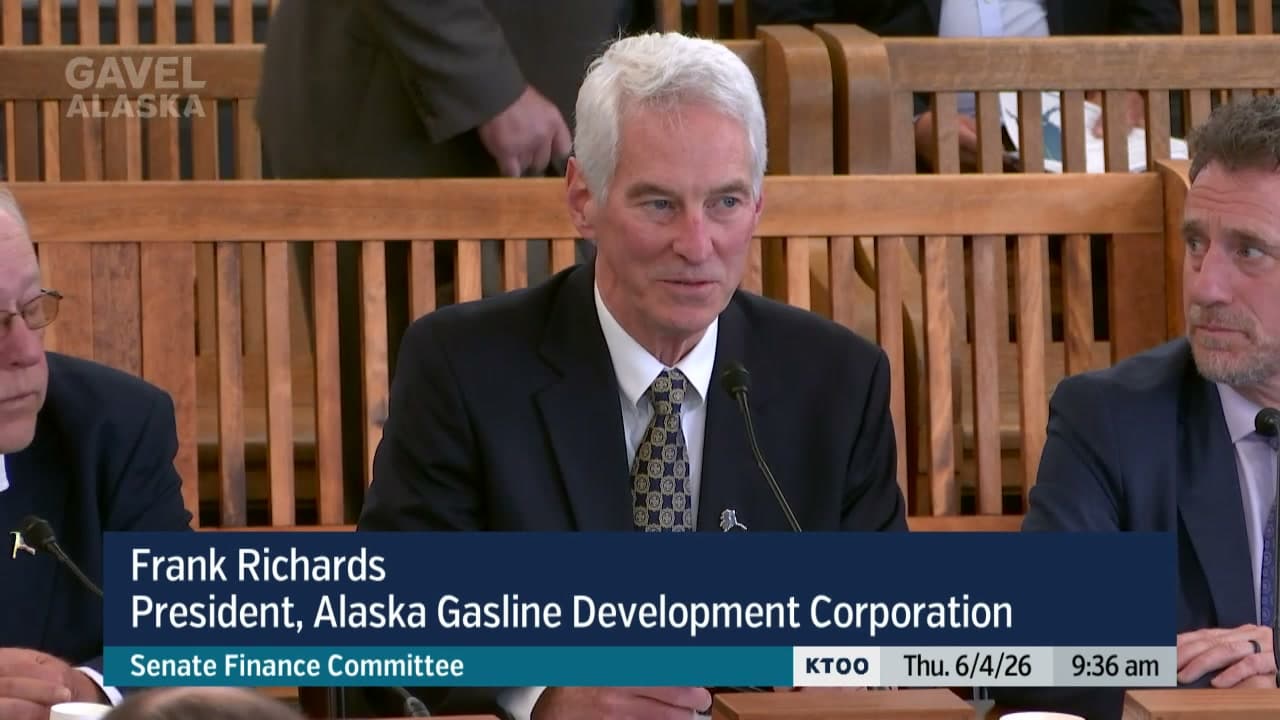
Frank Richards
6:46 - 7:31
"it has been recognized really for decades that Alaska's oil and gas property tax rate is very high. And so we've looked through independent verification on where Alaska sits in comparison to other jurisdictions that have LNG projects. And so, so we've gone and we'll present some of that information today. But literally it is that Alaska is approximately 10 times higher than other jurisdictions in terms of our oil and gas property tax."
“it has been recognized really for decades that Alaska's oil and gas property tax rate is very high. And so we've looked through independent verification on where Alaska sits in comparison to other jurisdictions that have LNG projects. And so, so we've gone and we'll present some of that information today. But literally it is that Alaska is approximately 10 times higher than other jurisdictions in terms of our oil and gas property tax.”
- Speaker
- Frank Richards
- Timestamp
- 6:46 – 7:31
- Community
- Alaska News
- Location
- Alaska
- Captured at
- June 4, 2026
From the transcript
Now what we see is that, and we'll get into this a little bit further in our presentation, that it's always, it has been recognized really for decades that Alaska's oil and gas property tax rate is very high. And so we've looked through independent verification on where Alaska sits in comparison to other jurisdictions that have LNG projects. And so, so we've gone and we'll present some of that information today. But literally it is that Alaska is approximately 10 times higher than other jurisdictions in terms of our oil and gas property tax. So the economics of the Alaska LNG project have always been challenged, meaning it's very thin margins, very thin profits on this.
Related Coverage
Glenfarne's own cost estimate for Alaska LNG is now significantly higher than AGDC's — and the state's equity option sits in the middle of the new math
AGDC transferred three-quarters ownership of Eight Star Alaska—the entity holding FERC authorization and project assets—to private developer Glenfarn in 2025, shifting construction risk off state books while preserving a 5–25% buy-in window at final investment decision.
 by Walter AlaskaNews3mo ago3 min readAI