John Sims
26:15 - 27:01
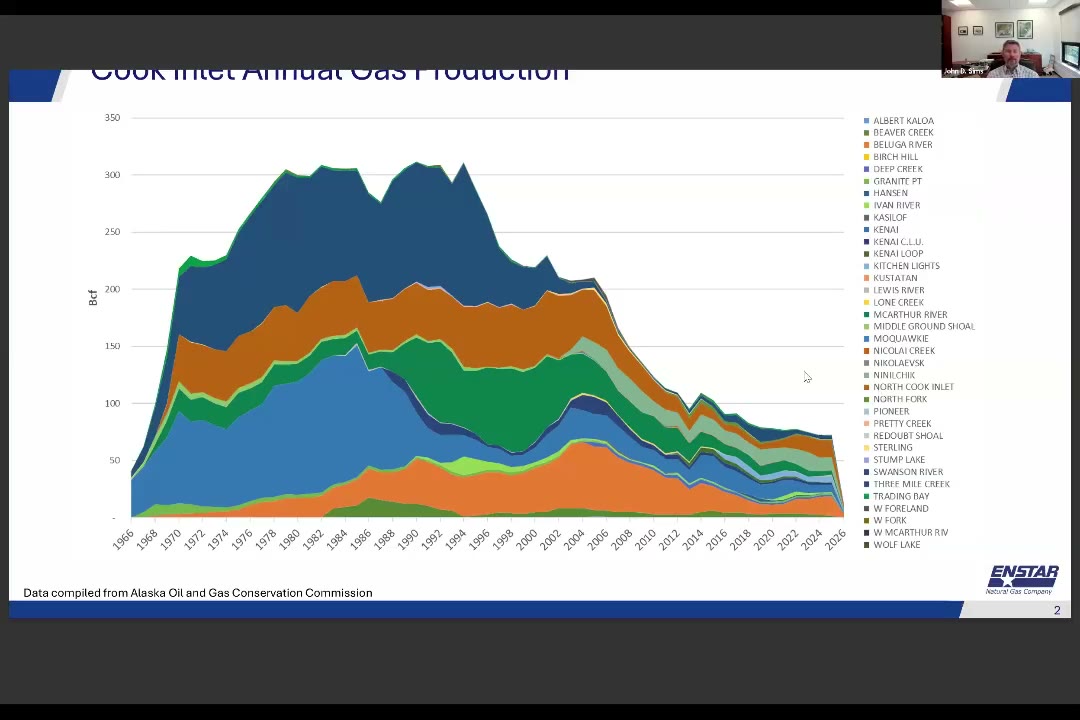
"Looking over a much shorter time frame from 2010 to 2026, you can see that that's dropped from about 350 million cubic feet a day down to right around 200 million a day. Again, how this relates to NSTAR in the wintertime when we need it the most, NSTAR's annual— or excuse me, daily peak is right around 320 for gas that we have to make sure that we have available to our customers."
“Looking over a much shorter time frame from 2010 to 2026, you can see that that's dropped from about 350 million cubic feet a day down to right around 200 million a day. Again, how this relates to NSTAR in the wintertime when we need it the most, NSTAR's annual— or excuse me, daily peak is right around 320 for gas that we have to make sure that we have available to our customers.”
- Speaker
- John Sims
- Timestamp
- 26:15 – 27:01
- Community
- Alaska News
- Location
- Alaska
- Captured at
- June 9, 2026
From the transcript
Again, looking at the Cook Inlet, the previous slide was looking at annual demand. This is looking at specifically what's produced on a daily basis. Looking over a much shorter time frame from 2010 to 2026, you can see that that's dropped from about 350 million cubic feet a day down to right around 200 million a day. Again, how this relates to NSTAR in the wintertime when we need it the most, NSTAR's annual— or excuse me, daily peak is right around 320 for gas that we have to make sure that we have available to our customers. Now, that would be a 40-year, 50-year weather event where it's sustained 25 below here in Anchorage.
Related Coverage
Enstar faces 2033 supply gap as Hilcorp contract expires, no Cook Inlet producer can match drilling scale
Enstar Natural Gas faces losing its primary gas supply in 2033 when its contract with Hilcorp expires, leaving Southcentral Alaska utilities with no Cook Inlet producer capable of matching the scale of investment that has kept the basin producing for the past decade.
 by Bill AlaskaNews4mo ago2 min read