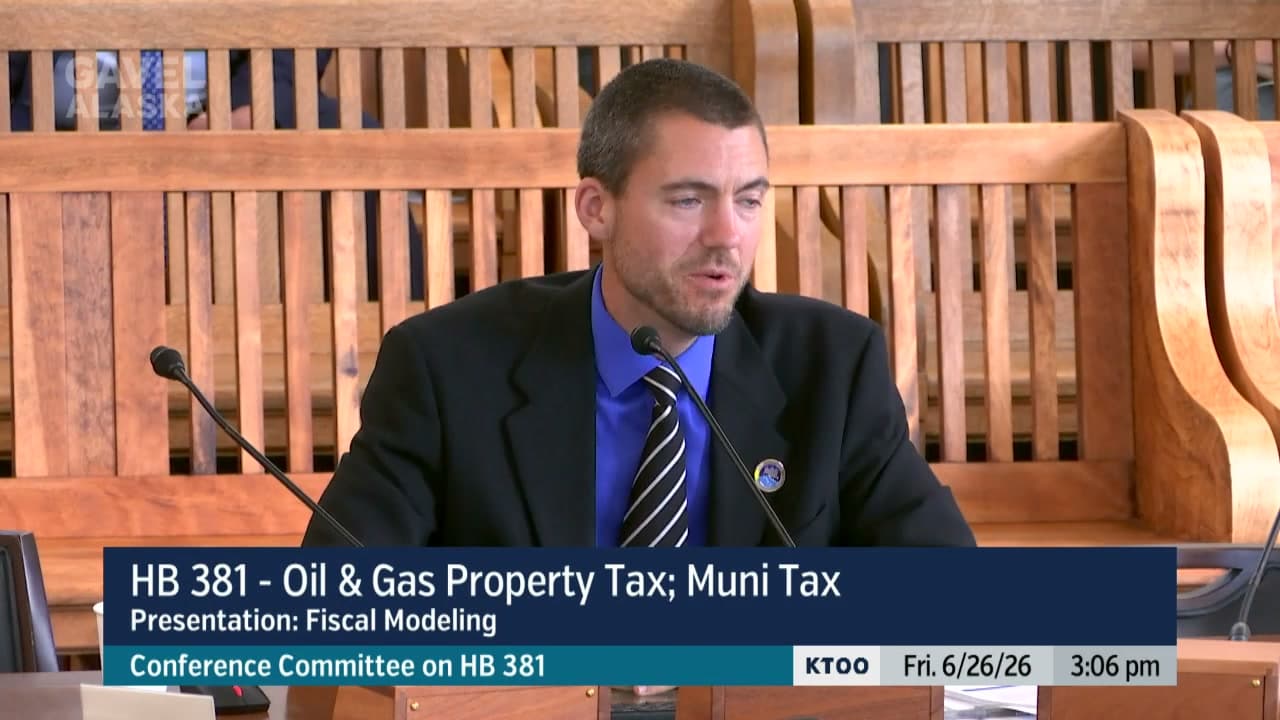
Dan Stickel
128:17 - 129:09
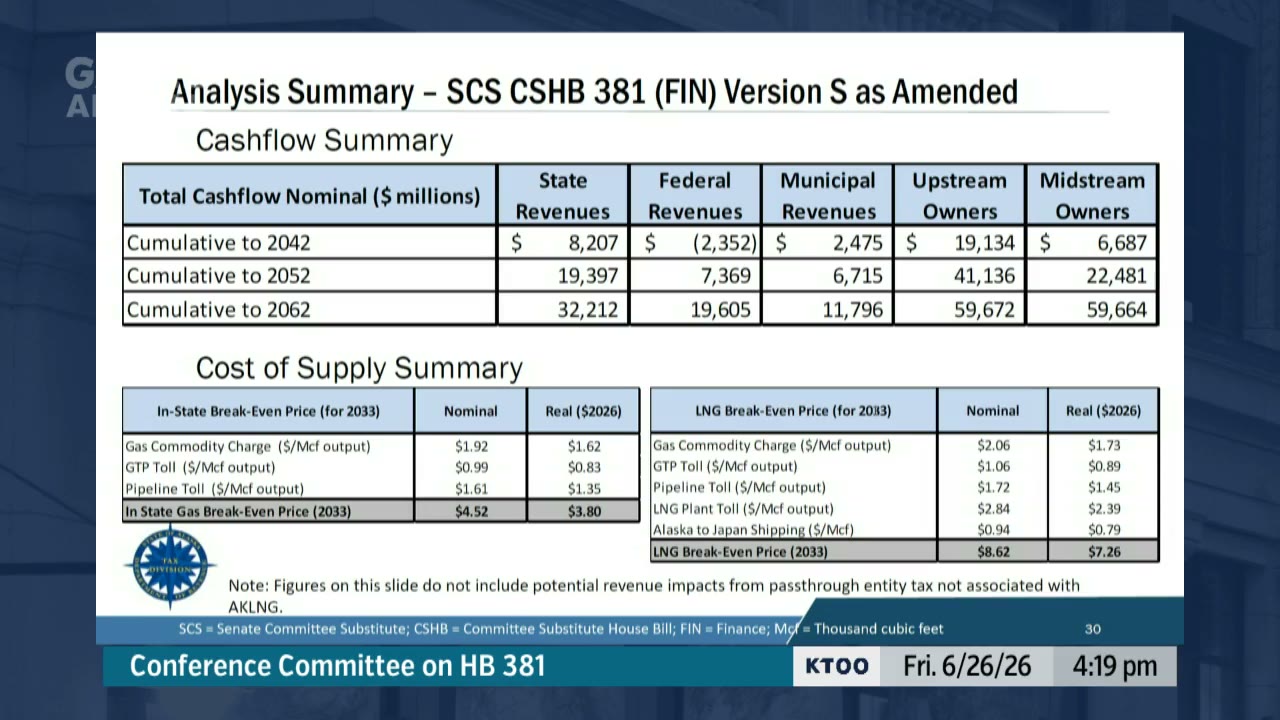
“the upstream and midstream would pay additional corporate income tax with the pass-through entity analysis. A portion of that would be an offset on federal tax because state taxes become a deduction against the federal tax. And then that would shift over life of project a little over— around $6 billion of cumulative revenue would shift from the companies and federal government to the state government.”
- Speaker
- Dan Stickel
- Timestamp
- 128:17 – 129:09
- Transcript
- Alaska Legislature: MSC2-20260626-1410
- Community
- Alaska News
- Location
- Alaska
From the transcript
In actuality, they probably would require a little bit higher price to account for that tax burden. What we see between slides 29 and 30 is a shifting of cash across the table and that cash flow where we were shifting revenue away from the upstream and midstream and federal government and towards the state. And so the upstream and midstream would pay additional corporate income tax with the pass-through entity analysis. A portion of that would be an offset on federal tax because state taxes become a deduction against the federal tax. And then that would shift over life of project a little over— around $6 billion of cumulative revenue would shift from the companies and federal government to the state government.
Related Coverage
Alaska's gas-pipeline bill now carries a tax on Hilcorp and others
A permanent tax on pass-through oil companies like Hilcorp is riding inside Alaska's gas-pipeline bill — and it kicks in by 2028 whether the pipeline gets built or not.

State economist: even with tax breaks, the gas line barely works
Even with the Senate's tax breaks, Alaska's gas project still costs more to make than Asia pays for it — and one lawmaker put it bluntly: "It seems like they don't work."