Renaud Chandivert
8:56 - 10:10
"How could traditional foodways— I prefer to use this expression rather than subsistence, which is rightfully very controversial— help us to go beyond basic oppositions between spirituality and materiality, between land and ocean, between animals and human beings, between keeping and giving, between the self and the other?"
“How could traditional foodways— I prefer to use this expression rather than subsistence, which is rightfully very controversial— help us to go beyond basic oppositions between spirituality and materiality, between land and ocean, between animals and human beings, between keeping and giving, between the self and the other?”
- Speaker
- Renaud Chandivert
- Timestamp
- 8:56 – 10:10
- Community
- Alaska News
- Location
- Juneau
- Captured at
- July 1, 2026
From the transcript
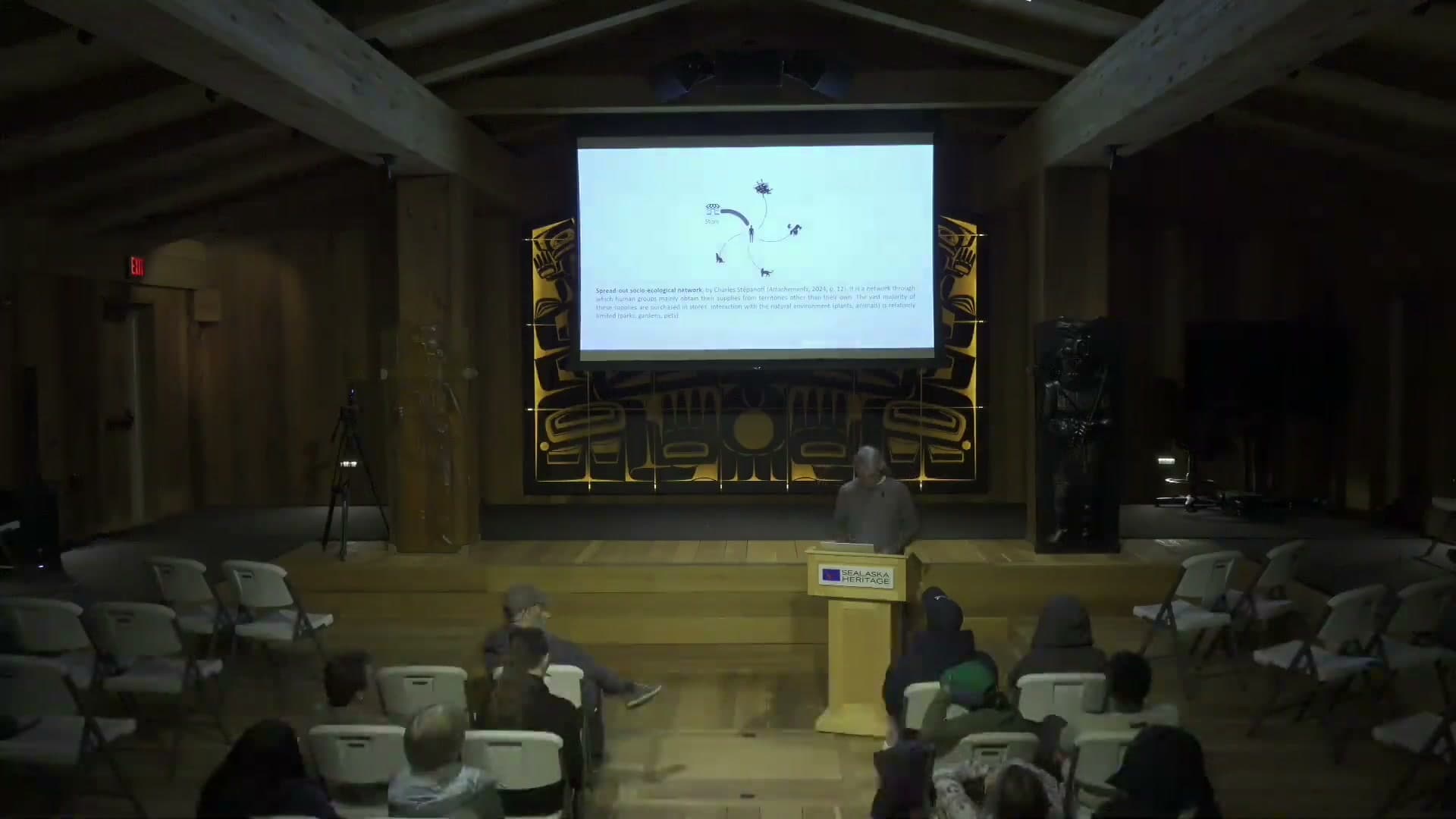
The way we interact with the natural world on which we depend is also not always working well. As explained by the French scientist Christophe Bonneuil, and so I quote, the collapse of the entire living tissue has never been so rapid and massive in 65 million years. Humans and their livestock account for 97% 97% of the weight of terrestrial vertebrates, leaving only 3% to the other 20,000 vertebrates on the planet, including birds, reptiles, amphibians, and mammals. So in addition to generating forms of isolation, globalized webs of connections are deeply rooted in anthropocentric disconnection with the living world. How could traditional foodways— I prefer to use this expression rather than subsistence, which is rightfully very controversial— help us to go beyond basic oppositions between spirituality and materiality, between land and ocean, between animals and human beings, between keeping and giving, between the self and the other?
Related Coverage
French anthropologist reframes Tlingit foodways as living relational system, not subsistence
Renaud Chandivert of Université Paul-Valéry Montpellier III lectured at Sealaska Heritage Institute in Juneau, arguing that Tlingit traditional foodways form a multidimensional 'archipelago of connections' that federal subsistence law cannot adequately describe or protect.
 by Bill AlaskaNews3mo ago2 min read