Renaud Chandivert
7:41 - 8:25
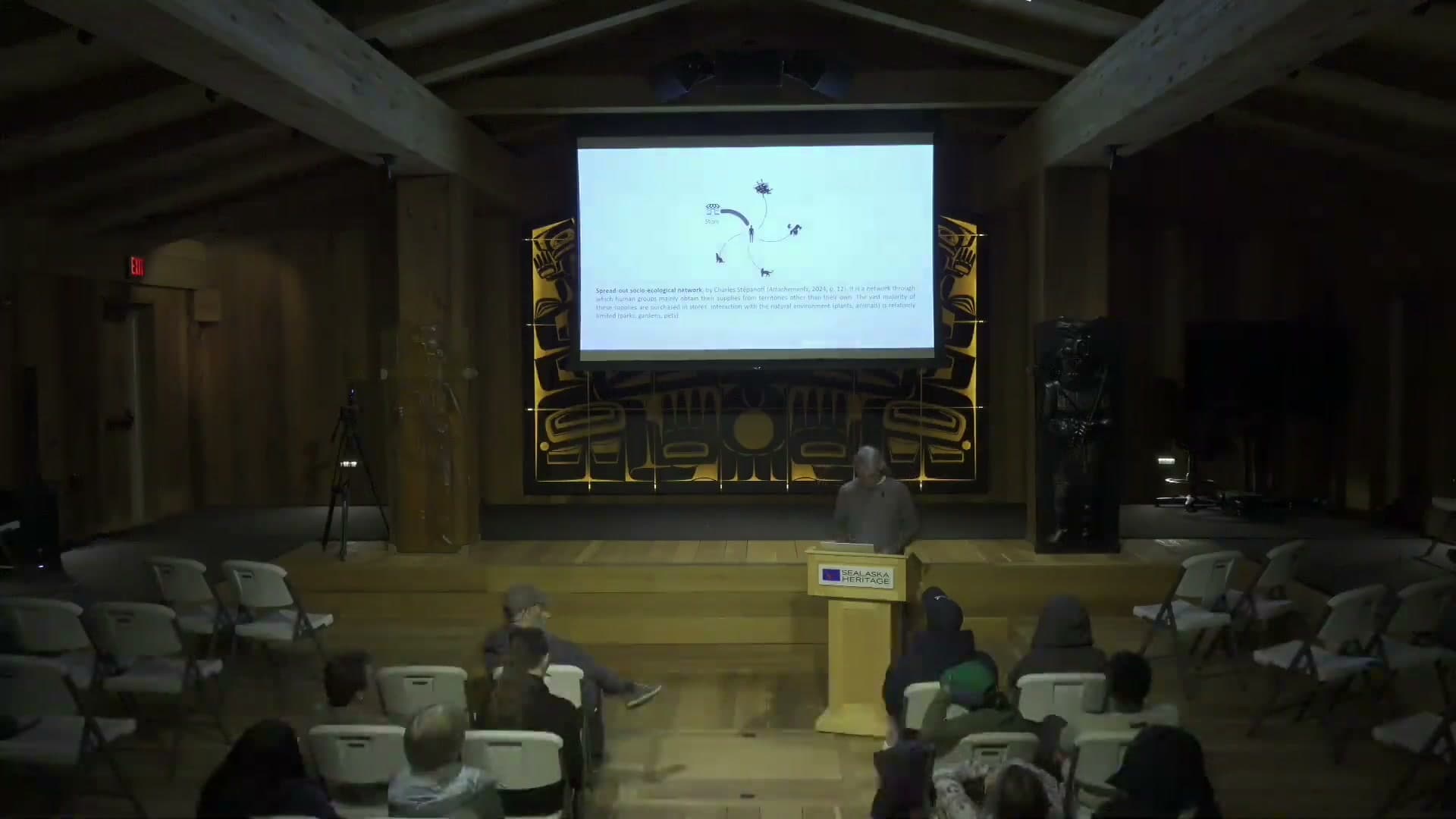
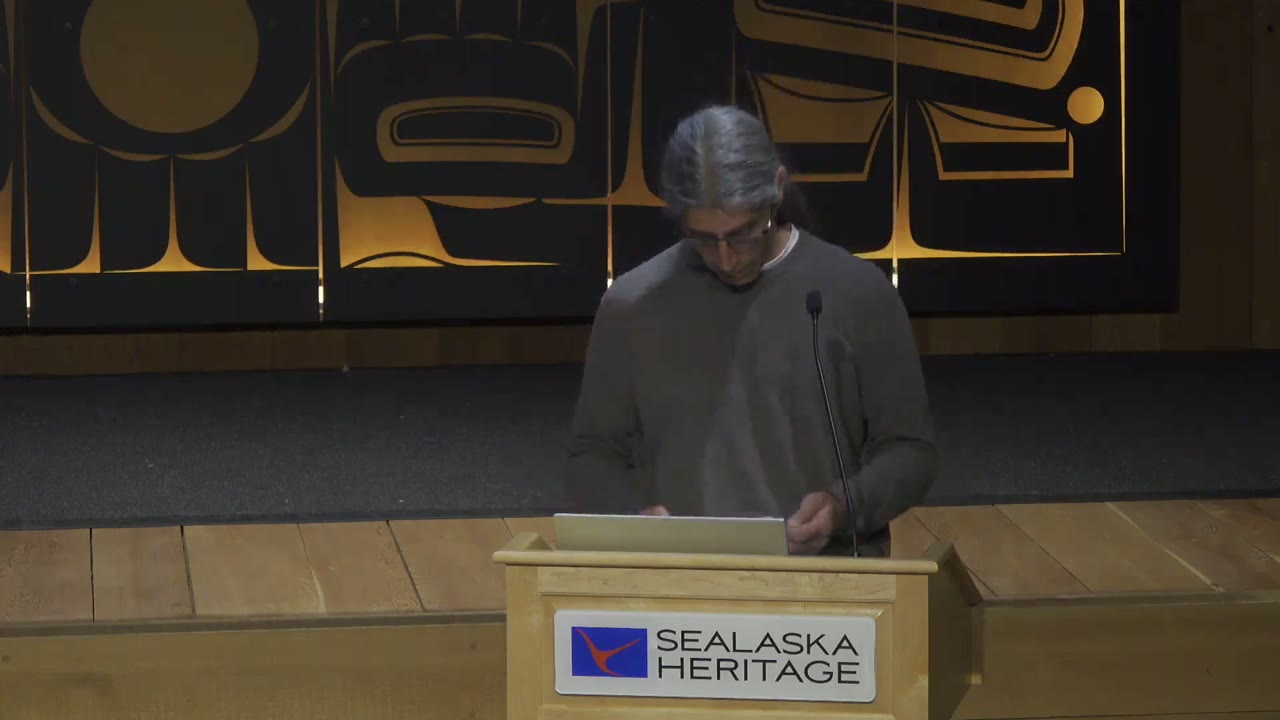
"I will focus on past and contemporary connections on relationality. Food is a perfect subject to talk about that because sharing a meal with family and/or with friends with friends is a good way to connect to each other and to develop relationality. Tlingit have a well-known saying, you know, 'When the tide is out, the table is set,' because you can gather cockles, clams, etc."
“I will focus on past and contemporary connections on relationality. Food is a perfect subject to talk about that because sharing a meal with family and/or with friends with friends is a good way to connect to each other and to develop relationality. Tlingit have a well-known saying, you know, 'When the tide is out, the table is set,' because you can gather cockles, clams, etc.”
- Speaker
- Renaud Chandivert
- Timestamp
- 7:41 – 8:25
- Community
- Alaska News
- Location
- Juneau
- Captured at
- July 1, 2026
From the transcript
These are very convincing arguments, but in this lecture, I will try to explore other arguments and other directions. I will focus on past and contemporary connections on relationality. Food is a perfect subject to talk about that because sharing a meal with family and/or with friends with friends is a good way to connect to each other and to develop relationality. Tlingit have a well-known saying, you know, "When the tide is out, the table is set," because you can gather cockles, clams, etc. And when the table is set, people gather around and they eat, they chat, they have good time, and so they create happy memories for the future too.
Related Coverage
French anthropologist reframes Tlingit foodways as living relational system, not subsistence
Renaud Chandivert of Université Paul-Valéry Montpellier III lectured at Sealaska Heritage Institute in Juneau, arguing that Tlingit traditional foodways form a multidimensional 'archipelago of connections' that federal subsistence law cannot adequately describe or protect.
 by Bill AlaskaNews3mo ago2 min read