Brett Watson
8:58 - 9:43
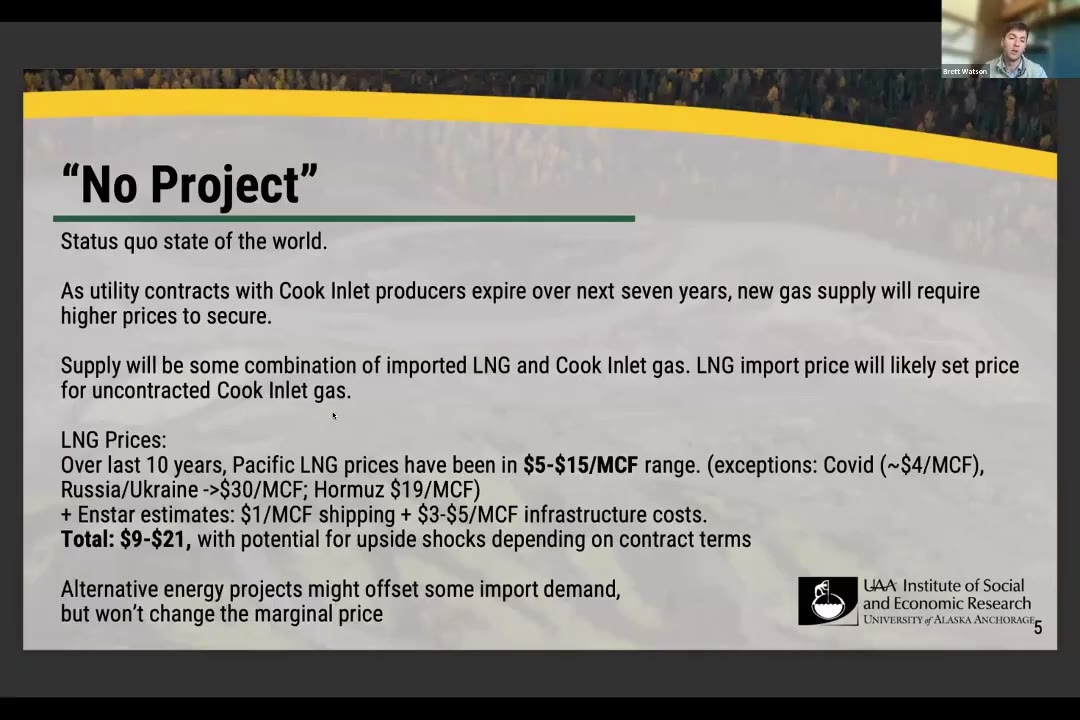
"estimates from NSTAR suggest that in addition to the purchasing the commodity on the spot market, we'd need to pay an additional dollar or so per MCF to ship that gas an additional $3 to $5 on top of that to build the infrastructure to receive that gas and regasify it from its LNG form. So kind of all-in costs from this no-project case represent gas prices somewhere in the neighborhood of $9 to $21."
“estimates from NSTAR suggest that in addition to the purchasing the commodity on the spot market, we'd need to pay an additional dollar or so per MCF to ship that gas an additional $3 to $5 on top of that to build the infrastructure to receive that gas and regasify it from its LNG form. So kind of all-in costs from this no-project case represent gas prices somewhere in the neighborhood of $9 to $21.”
- Speaker
- Brett Watson
- Timestamp
- 8:58 – 9:43
- Community
- Alaska News
- Location
- Alaska
- Captured at
- June 9, 2026
From the transcript
So estimates from NSTAR suggest that in addition to the purchasing the commodity on the spot market, we'd need to pay an additional dollar or so per MCF to ship that gas an additional $3 to $5 on top of that to build the infrastructure to receive that gas and regasify it from its LNG form. So kind of all-in costs from this no-project case represent gas prices somewhere in the neighborhood of $9 to $21. So that's a big range, and there's also potential for significant upside to that range. Again, these are— this is a cost or a price estimate sort of in normal time periods. But if we were looking at sort of abnormal time periods like the one that we're living in today or during Russia's invasion of Ukraine, there's significant upside risk for those prices.
Related Coverage
Enstar faces 2033 supply gap as Hilcorp contract expires, no Cook Inlet producer can match drilling scale
Enstar Natural Gas faces losing its primary gas supply in 2033 when its contract with Hilcorp expires, leaving Southcentral Alaska utilities with no Cook Inlet producer capable of matching the scale of investment that has kept the basin producing for the past decade.
 by Bill AlaskaNews4mo ago2 min read