AI image
Suit seeks Alaska Judicial Council records on judge screening
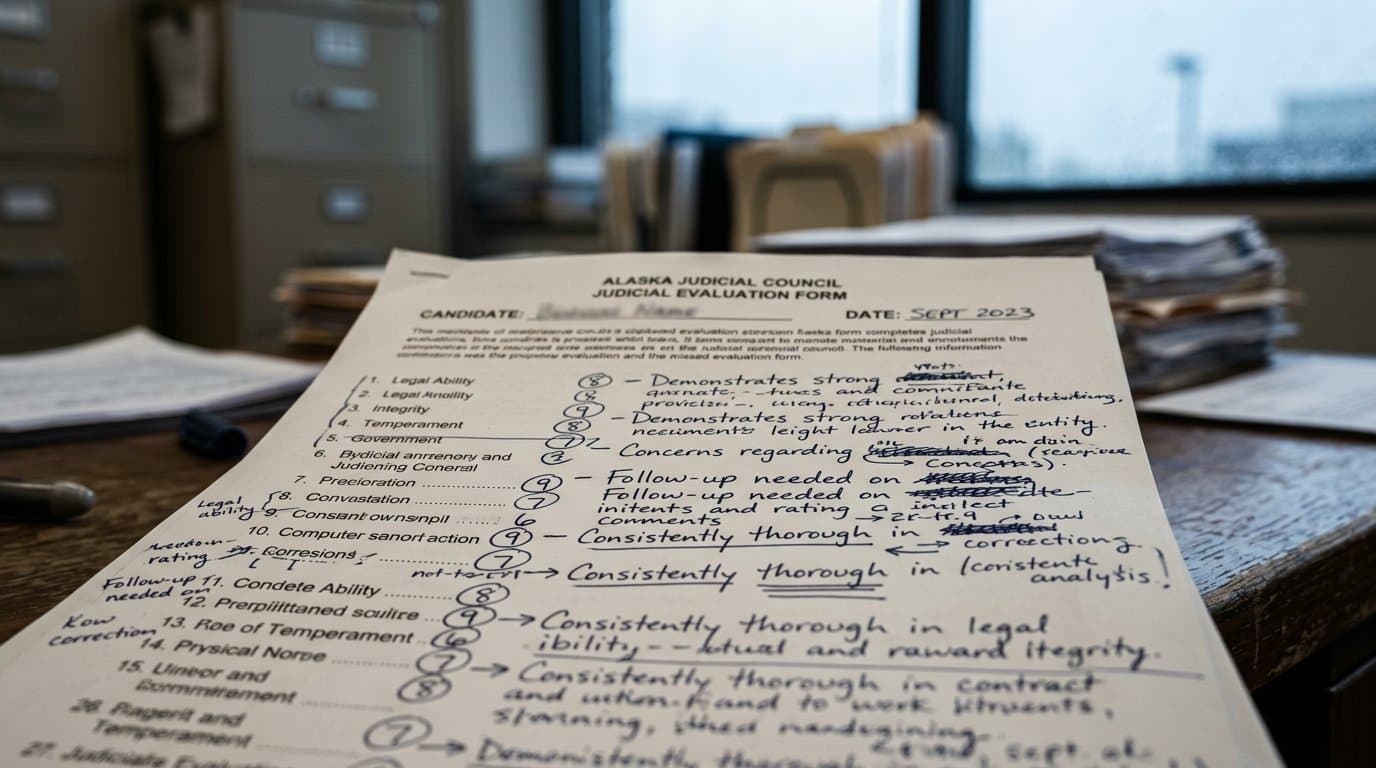
A conservative legal group is suing to see how Alaska picks its judges. The America First Legal Foundation filed in Anchorage Superior Court on Wednesday, asking a judge to force the Alaska Judicial Council to produce the scoring sheets, evaluation forms and interview assessments it has used to rank candidates for every judgeship in the state since 2020.
The council screens applicants for every judicial vacancy and sends the governor a short list, and every two years it tells voters whether to keep the judges they have. Its retention findings are on the ballot in November, when 21 judges stand for a vote. The council recommends keeping 18 of them, replacing two Kenai Peninsula judges, and takes no position on a third in Juneau, where its own vote split three against, two for and two abstaining.
The foundation asked for the records by email on June 5. Executive Director Susanne DiPietro wrote back four and a half hours later: "Receipt confirmed. S. DiPietro." Nothing else came in the nearly three months before the lawsuit.
The request goes further than scoring sheets. It also covers the racial and gender makeup of the bench and the applicant pool, any demographic goals for nominee lists, and communications with the governor's office about what nominees should look like.
The complaint quotes the council's bylaws as requiring "every effort to promote diversity, including gender and ethnic diversity" in evaluating recommendations. The published bylaws use that phrase in a different context, about encouraging qualified attorneys to apply. The council's actual nomination criteria run from professional competence and integrity to community service and to equal justice for Alaska's diverse communities. The foundation objects to those last two, arguing they function as proxies for race.
The suit itself rests on a narrower point. It says the council missed a ten-day deadline set in a regulation that applies to executive branch agencies. The council is part of the judicial branch, where records procedures are set by the court system's administrative director. The foundation's own request cites that distinction to argue the council had no authority to write its own rules. What deadline actually governs, the complaint does not say.
Some of what the foundation wants is shielded by the council's own bylaws. Solicited comments about applicants, sensitive personal material, personnel records and internal deliberations are exempt, though the last only when the harm of releasing outweighs the public's need to see it. The council builds its evaluations partly on confidential comments from attorneys who have appeared before the applicants, on the premise that candor depends on privacy.
Foundation senior counsel Emily Percival said the council should produce the records and prove that judicial selection in Alaska is "fair, honest, and meritocratic."
The council has not answered the suit or said anything publicly about the request. Its next scheduled meeting is the week of Nov. 2, after the election.
Source: America First Legal, America First Legal sued Alaska's judge-screening council over a records request that got a two word answer in June and nothing since.
Made by our human newsroom with AI. How humans and AI work here · Grow with our newsroom
Stay informed. Support what matters.
Free, permanent access to local news you can verify. Subscribe to support Walter AlaskaNews and go ad-free.
Related Coverage
A conservative group sues Alaska's judicial council for diversity records
Alaska News · 1mo ago
Judicial Council seeks dismissal of DC group's suit over scoring records
Alaska News · 2w ago
Judicial council urges no vote on two Kenai judges in November
Alaska News · 2mo ago
Which judges are on your Alaska ballot, and why the council opposes two
Alaska News · 8h ago
Alaska's ranked-choice fight returns to the Supreme Court, months before a repeat repeal vote
Alaska News · 2mo ago
Comments
Sign in to leave a comment.
No comments yet. Be the first to share your thoughts.