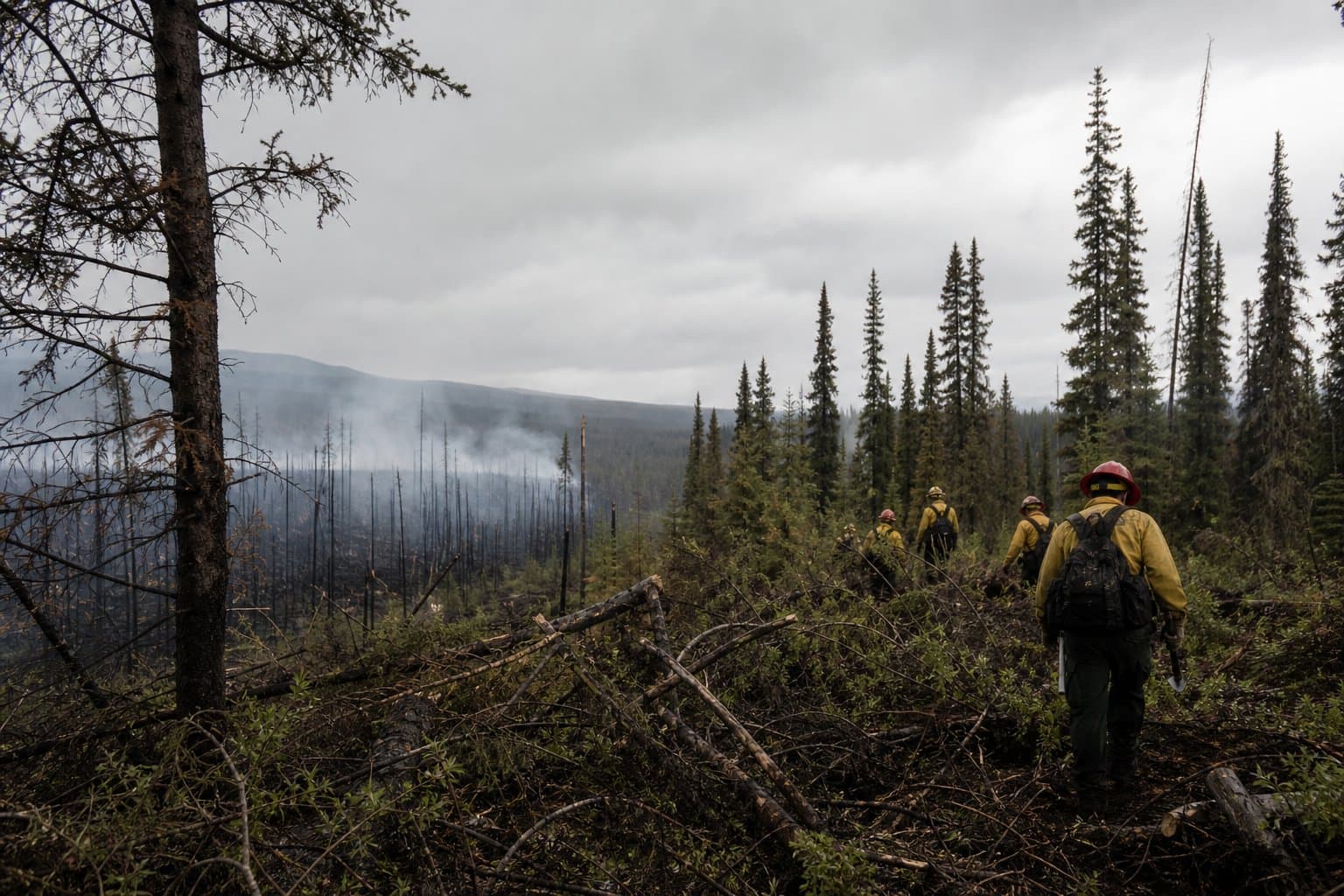
Starry Fire crews race to lock down perimeter before heat returns near Anderson
Starry Fire Progress Near Anderson
The Starry Fire near Anderson reached 65% containment Friday, one week after ignition, but aerial reconnaissance found significant heat within the fire's interior. Incident Commander Torrey Short warned the fire is not finished.
Short put the stakes plainly in a Friday update from the Alaska Division of Forestry and Fire Protection. "After this weekend, when it warms back up, we want to make sure it doesn't blow out and make another run toward Anderson or Clear," Short said.
Seven days after initial attack, the Starry Fire incident management team continues to prioritize firefighter health and safety as crews settle into the rhythm of working the fire.
What Crews Are Working Against
On paper, Friday's targets are aggressive. Crews are working to establish 100 feet of cold perimeter on the west side of the 547-acre fire and 50 feet on the east side, where large amounts of jackstraw, tangled downed trees, are slowing their pace. The Fairbanks 1 Type 2 Crew is cutting black spruce and jackstraw to strip out excess heat and fuel along the fire's edge.
Engine E-2 is working on the slop to the south of the fire. At the end of the previous shift, only one visible hotspot remained in that area.
Rain showers and isolated thunderstorms are expected Saturday, with some areas of the fire potentially receiving an inch of rain. That moisture could help cool hotspots before warmer weather returns. Crews plan to use the time to cut a connecting path between two helicopter landing zones established Thursday on opposite sides of the fire, improving access for aerial support.
Lost Fire and Seventeenmile Fire
Crews are also monitoring two other fires in the Anderson area. The Lost Fire was placed in monitor status on June 25. Thursday showed minimal fire behavior, with smoldering and some smoke production from a spot fire on the south edge. The Mooseheart Mountain Type 2 Crew worked to grid the spot fire, aiming to finish by end of day Friday, while the rest of the crews worked deeper off the dozer line to further separate the fire from unburned fuels.
Aerial reconnaissance identified four potential hotspots within the Seventeenmile Fire. The Starry and Lost fires were first reported June 20. The Seventeenmile Fire was reported June 21.
What Comes Next
The Starry Fire ignited June 20. The central question now is whether crews can deepen the cold perimeter enough over the weekend to hold the line when temperatures climb again after the expected rain.
AI-assisted, reviewed by editors. Spot an error?
Comments
Sign in to leave a comment.
No comments yet. Be the first to share your thoughts.