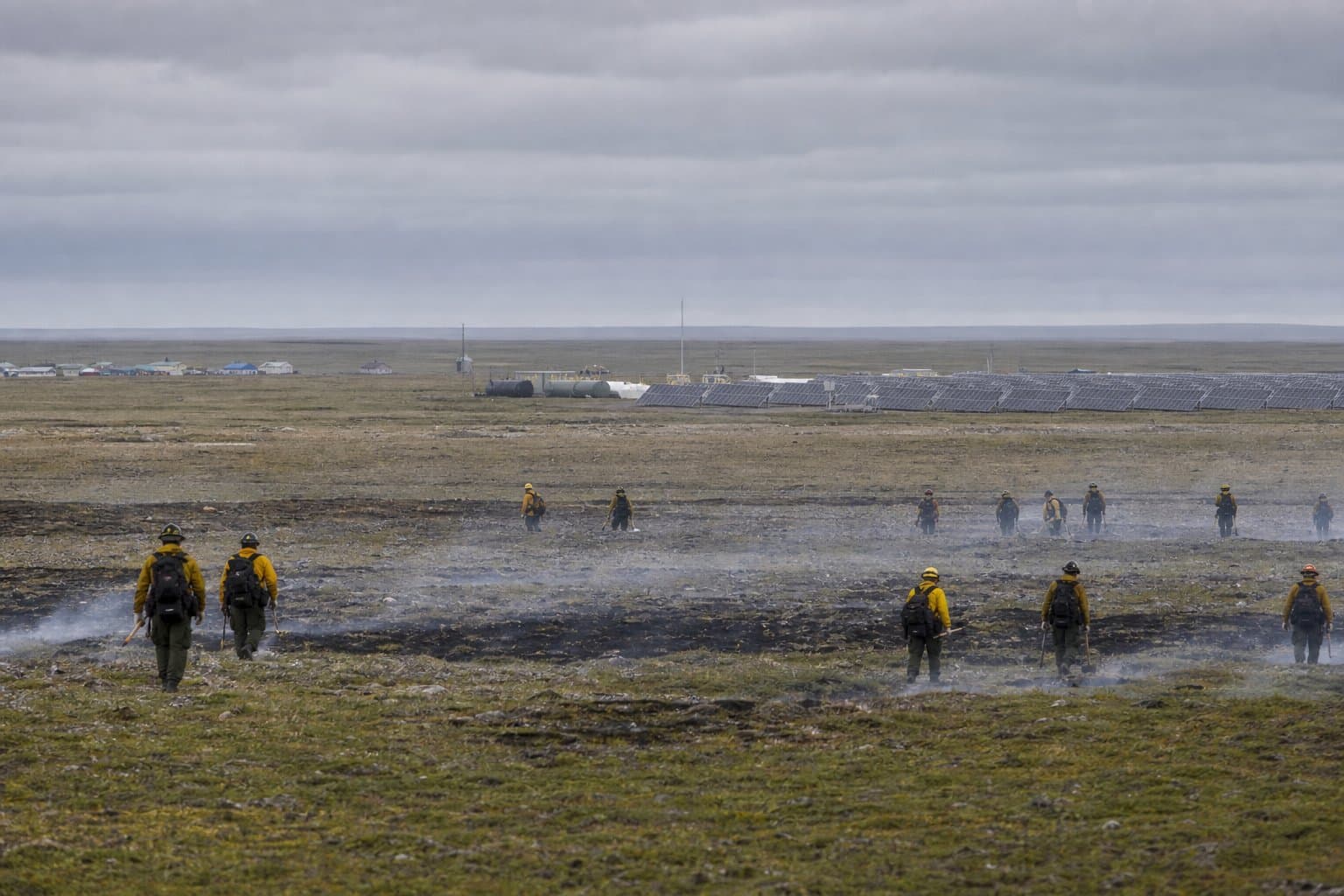
Smokejumpers halt Selawik fire 100 yards from solar array
A tundra fire that escaped the Selawik landfill came within about 100 yards of the village's solar array and threatened its fuel tank farm before smokejumpers halted it at 21 acres, the U.S. Wildland Fire Service said Thursday.
Selawik has no road access and no connection to a regional electric grid. The solar array and tank farm are critical power infrastructure for the remote northwestern community.
Twelve smokejumpers from Galena parachuted in July 6 after the fire escaped the landfill and grew wind-driven across the tundra. An Alaska Division of Forestry and Fire Protection air tanker dropped retardant in front of the solar array to slow the fire's advance. By the morning of July 7 the fire was at 60 percent containment, with crews gridding the area closest to the village for hot spots. Four smokejumpers remained on scene Thursday to complete a grid search before demobilizing Friday.
"Smokejumpers and aircraft were able to stop the fire within 100 yards of the solar array, but the risk to the site remains high this evening as firefighters continue working to keep the fire away from infrastructure and structures near Selawik," the U.S. Wildland Fire Service said in a late-night update July 6.
Alaska Interagency Coordination Center meteorologist Heidi Strader said frozen ground layers helped limit the blaze to surface tundra. "Not much is happening in the deeper areas because they're still frozen, probably because we had a cool and damp spring," Strader said. "We didn't have 80-degree weather until solstice. We're a few weeks behind as far as dryness of deeper ground layers."
The fire is not expected to spread in secured areas. Smoke from burning landfill material remains a health concern near Selawik, officials said.
AI-assisted, reviewed by editors. Spot an error?
Comments
Sign in to leave a comment.
No comments yet. Be the first to share your thoughts.