AI image
Sitka's search for housing land narrows to two small parcels
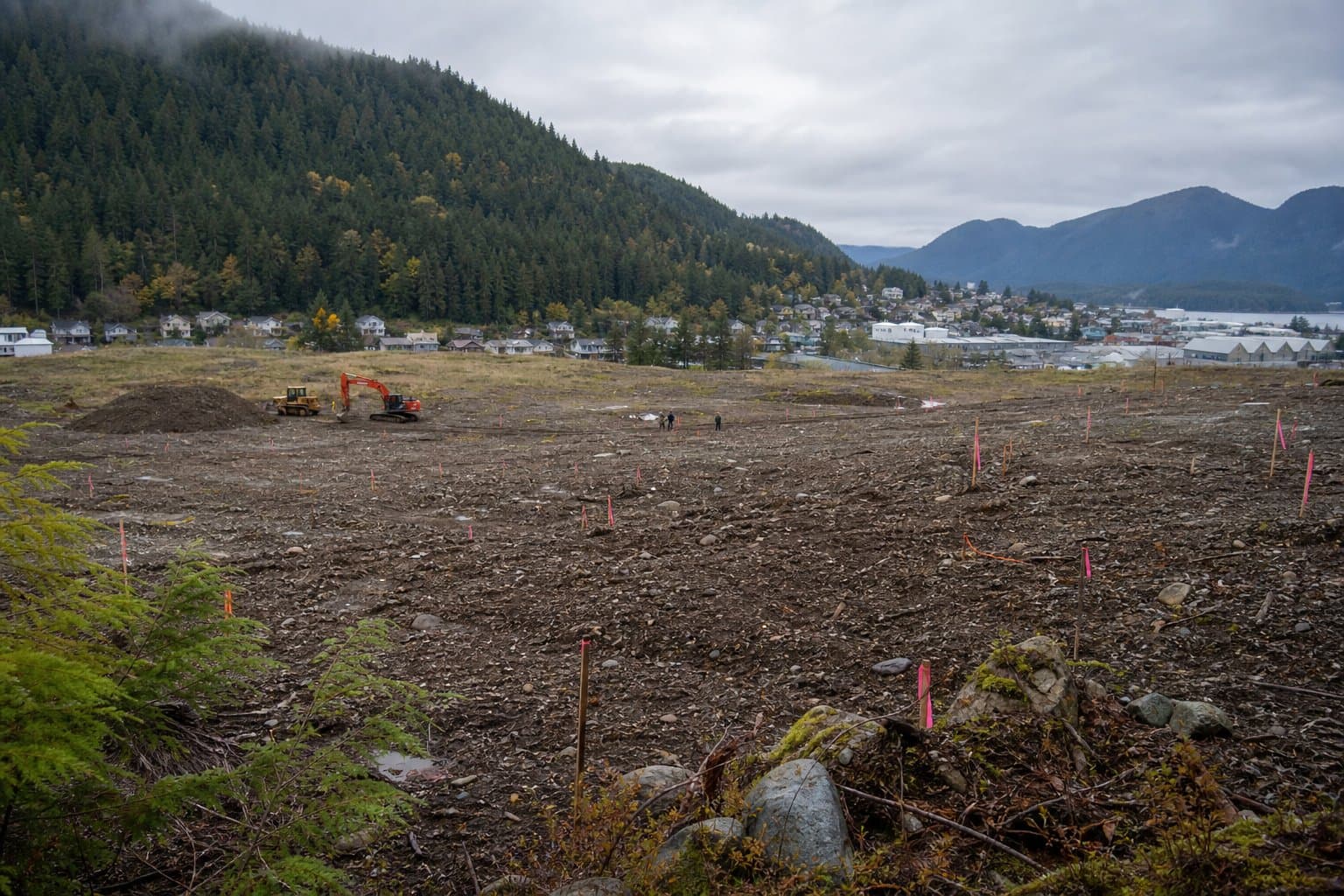
Sitka's hunt for city land to build housing on has come down to two parcels — and the two the study ranked highest are among the smallest, offering about eight buildable acres between them.
That's the tension at the center of the search: in a town facing what a 2024 tribal housing assessment called "a critical shortage of available and affordable housing," the sites with the most room to build are the hardest to actually build on, and the sites that are ready to build are small. The Planning Commission saw the first concept layouts for the two finalists on Sept. 2.
The two are the Osprey Street parcel, with about an acre of buildable ground, and the Sitka High School site, with about seven. They finished on top of nine city-owned parcels an engineering firm screened for the borough — not because they're big, but because they already have the water and sewer capacity to support housing. Osprey Street is the only site in Sitka with enough existing utility capacity to build with minimal upgrades; the high school site is close behind.
The parcels with real acreage ranked lower for the reasons that make land hard to build on in Sitka — extensive utility work, steep terrain, or landslide risk. The Benchlands, 62 buildable acres inside town, was flagged over the Kramer debris flows that hit the area in August 2015, and the study recommends a landslide analysis before it advances at all. Sitka's buildable-land problem is geographic: steep slopes, unstable ground, and a large share of land in federal hands.
Early sketches for the two finalists suggest what they might hold. Osprey Street could fit around a dozen single-family or duplex lots, or denser multifamily housing yielding roughly 32 units. The larger high school site could hold 40 house lots, or a hybrid centered on a 1.5-acre workforce-housing lot — a bunkhouse or dormitory that the code sets no density cap on — alongside multifamily housing, together potentially housing a few hundred people. Lots along Halibut Point Road would be turned onto an internal road to keep driveways off the highway.
The borough is careful to call all of this preliminary. Planning Director Amy Ainslie told the commission the layouts are "just that, early ideas for development potential," that the borough is "not locked into these concepts," and that "more extensive public engagement will be needed." No cost estimate exists yet for either site. The one benchmark on record: a 2020 city plan for lots at Granite Creek concluded the city would have to charge $350,000 a lot just to break even on roads and infrastructure — and Ainslie has estimated costs have risen 50 percent since, which would push that past $500,000.
Several open questions remain. The borough hasn't said in these documents whether it would sell, lease or develop the land, or who would build the housing. No resident, neighbor or commissioner appears in the record, and public engagement hasn't started. And the three larger sites still in the running — Gavan Hill, the Benchlands and Harbor Mountain Road, which finished within a few points of each other — come back before the commission in November.
Source: Sitka went looking for somewhere to build housing on its own land. The two best sites it found are 1.04 acres and 7.26 acres, and only one of them has utilities that could already take a buildout.
Made by our human newsroom with AI. How humans and AI work here · Grow with our newsroom
Stay informed. Support what matters.
Free, permanent access to local news you can verify. Subscribe to support Walter AlaskaNews and go ad-free.
Related Coverage
Sitka planners favor 30 to 40 single-family lots near Sitka High School
Alaska News · 3w ago
A Sitka nonprofit seeks to bend the rules to build more housing
Alaska News · 2mo ago
Sitka would make backyard apartments easier to build, in fewer places
Alaska News · 1mo ago
Kodiak staff urge keeping Beaver Lake land as the borough hunts for housing sites
Alaska News · 1mo ago
Sitka would make second houses easier to build in some zones and ban them in others
Alaska News · 1mo ago
Comments
Sign in to leave a comment.
No comments yet. Be the first to share your thoughts.