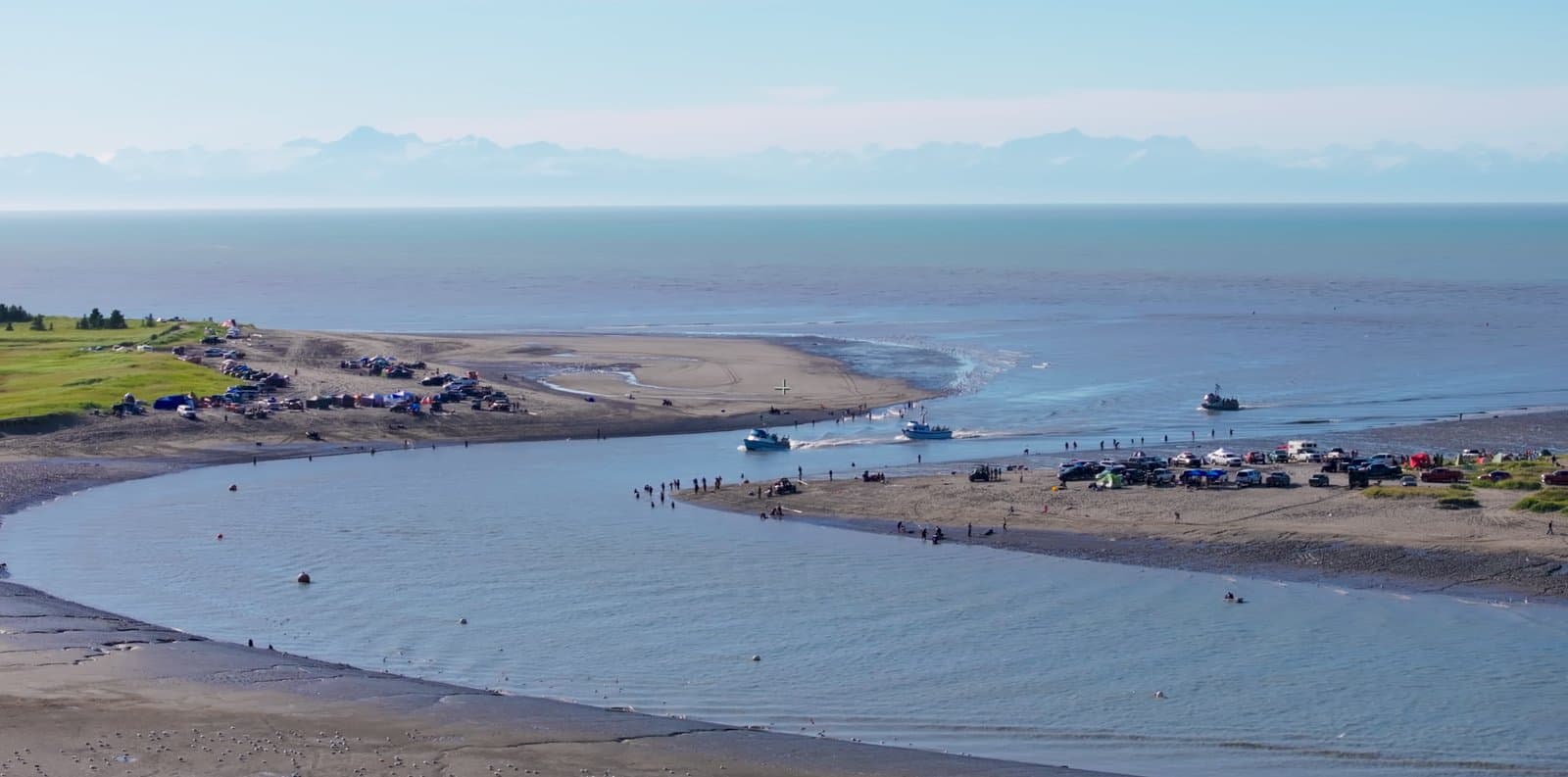
Photo of the mouth of the Kasilof
On the Kasilof, Alaska is opening the sockeye floodgates and holding the line on kings
On the Kasilof River this week, the state is doing two opposite things at once — and the contrast tells you almost everything about the state of Alaska's salmon.
The Alaska Department of Fish and Game is raising the Kasilof sockeye bag limit to six fish a day starting Friday, June 26, and expanding the personal-use dipnet fishery, because the red salmon are running ahead of schedule: 117,665 had passed the river's sonar by June 23, against a biological escapement goal of 140,000 to 320,000 fish. "The current escapement of sockeye salmon into the Kasilof River is proceeding at a rate that is projected to exceed the biological escapement goal," said Patrick Fowler, the department's Cook Inlet management coordinator.
For dipnetters filling freezers, it's a green light.
The kings tell the opposite story on the same water. The Kasilof's wild king salmon are managed to a goal of just 700 to 1,400 fish past the Crooked Creek weir — and the department's own record shows that goal went unmet in 2021, 2023, 2024, and 2025 despite restrictions every one of those years. So even as it opens the sockeye floodgates, the state is holding the line on kings: wild kings must be released, only a single hatchery king may be kept and only through June 30, and a separate June order squeezed the set-gillnet fishery at the river mouth specifically to push more kings upstream.
That split is the whole Cook Inlet predicament.
Sockeye return by the hundreds of thousands; kings, once the prize of these rivers, now come back in the low thousands at best. The hard part is that they swim together. In a mixed-stock river, a fishery aimed at abundant sockeye can still kill kings incidentally — a tradeoff conservation advocates have flagged, and one the department's order doesn't publicly address. Managers are betting that gear rules, release requirements, and timing can let people harvest the surplus of one species without spending down the remnant of another.
For anyone planning to go: the Kasilof dipnet fishery opens June 25, and the expanded boundaries and six-fish limit take effect the next day, June 26, running around the clock through August 7. Shore dipnetting is allowed from the Fish and Game markers on the Cook Inlet beaches upstream to the Sterling Highway Bridge; boats can dipnet from those same markers up to about river mile 3. Only Alaska residents may take part, and only with an Upper Cook Inlet personal-use permit and a 2026 resident sport-fishing license.
The rules are strict on what comes home. Only sockeye may be kept, and both tail-fin tips must be clipped before the fish leave the water. Kings may not be retained under any circumstances, and any kings, Dolly Varden, or rainbow and steelhead trout caught by accident must be released immediately and unharmed. Questions go to Fowler at the Soldotna Fish and Game office, (907) 262-9368.
Based on a press release from ADF&G.
Drafted with AI. Edited by Cale Green (2 revisions). No full editor review is on record. Who is accountable.
Stay informed. Support what matters.
Free, permanent access to local news you can verify. Subscribe to support Bill AlaskaNews and go ad-free.
Related Coverage
Sockeye keep the drift fleet fishing while the Kenai's kings stay closed
Alaska News · 2mo ago
The sockeye are running strong on the Kenai, and the state just doubled your limit
Alaska News · 2mo ago
Russian River Sanctuary opens Thursday as sockeye goal met
Alaska News · 3mo ago
Chitina dipnetters can keep sockeye but must release every king
Alaska News · 1mo ago
Kodiak's silver limit drops as its king limit rises
Alaska News · 1w ago
Comments
Sign in to leave a comment.
No comments yet. Be the first to share your thoughts.