AI image
Ketchikan has five years to start disinfecting the sewage it discharges
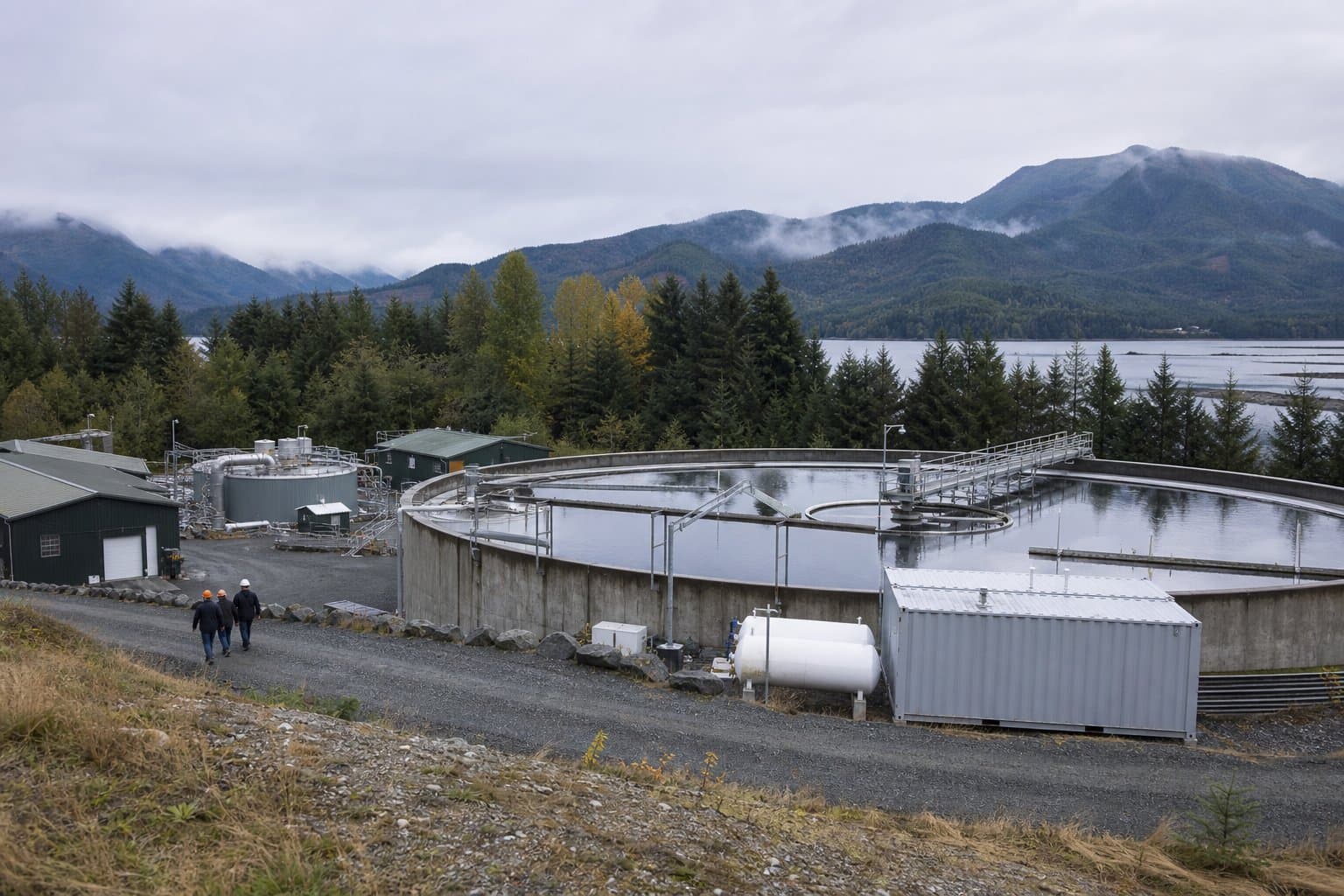
Ketchikan's wastewater treatment plant does not disinfect what it puts into the water. Its permit has allowed discharges carrying up to 1.5 million fecal coliform colonies per 100 milliliters, with a monthly average limit of 1 million. In December 2024 the Environmental Protection Agency renewed Southeast Alaska permits, Ketchikan's among them, and required sharply lower bacteria levels and disinfection within five years.
Voters agreed last October to pay for it. They approved a $15 million revenue bond, with about $10 million going to a new disinfection facility at the Charcoal Point plant and about $5 million to replace failing sewer mains on Tongass Avenue, Water Street, Park Avenue and Harris Street, at Bear Valley and along Ketchikan Lakes Road.
Ratepayers carry the cost directly. A revenue bond is repaid out of user fees rather than taxes, which works out to roughly $4.72 a month, or $56.64 a year, on a term running as long as 30 years.
The schedule is the pressure. Seth Brackey told the council at its June 4 meeting that the disinfection upgrade is required under the new permit and that the timeline is tight: "We have five years which we're almost one year through."
The plant serves roughly 8,300 residents and also takes waste from ferries and cruise ships. EPA's 2017 fact sheet for the earlier permit said disinfection was not required then, but could be required later. The Alaska Department of Environmental Conservation's clean water priority list for state fiscal 2026 includes the Charcoal Point disinfection facility for full design.
Every Southeast town on that permit round is asking the same question. Sitka is seeking $11 million for its own disinfection system. Wrangell's public works director told the EPA a comparable step there could run about $12.6 million, plus $250,000 or more a year to operate. Commenters in Haines warned of substantial rate increases for sewer customers.
Source: Ketchikan City Council holds work session on mandated wastewater disinfection upgrade.
Made by our human newsroom with AI. How humans and AI work here · Grow with our newsroom
Stay informed. Support what matters.
Free, permanent access to local news you can verify. Subscribe to support Walter AlaskaNews and go ad-free.
Related Coverage
Four Southeast towns face 2030 deadline to disinfect sewage, with costs up to $14 million
Alaska News · 3d ago
Juneau's wastewater plant has been out of compliance for three years, and ratepayers foot the bill
Alaska News · 2mo ago
Juneau water and sewer bills go up 5 percent a year through 2030
Alaska News · 1mo ago
State moves to finalize Juneau sewage plant permit despite years out of compliance
Alaska News · 4d ago
Petersburg sewer rates to rise 20% as EPA bans mixing zone
Alaska News · 5mo ago
Comments
Sign in to leave a comment.
No comments yet. Be the first to share your thoughts.