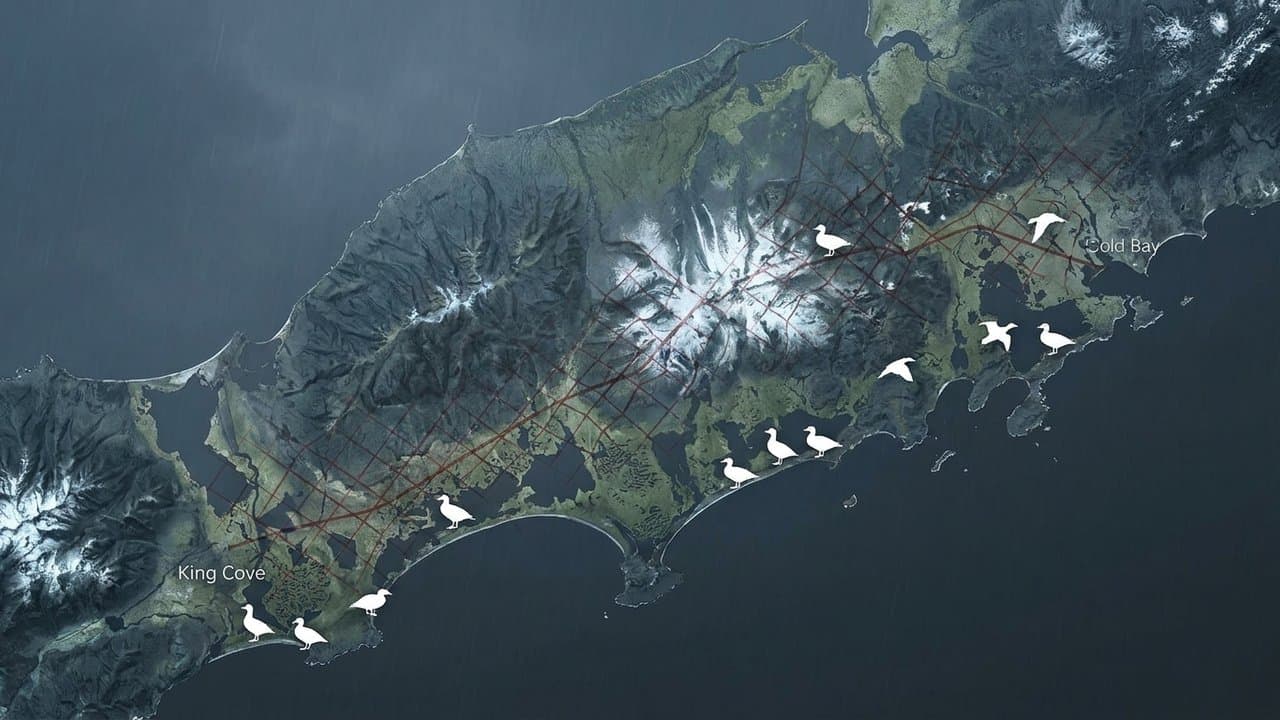
Editorial map (Gemini + Google Maps)
Judge's Izembek order faults biological opinion math in voiding King Cove road corridor
A federal judge has voided the land exchange that would have given King Cove Corporation the corridor for an 18.9-mile gravel road to the Cold Bay airport, and the decision turns in part on arithmetic.
U.S. District Judge Sharon L. Gleason vacated the Oct. 21, 2025, exchange between the U.S. Fish and Wildlife Service and the village corporation in an 89-page decision filed Aug. 18. The United States conveyed roughly 490 acres of federal land, including about 336 acres of designated wilderness, and paid the corporation $48,050 to equalize values. The corporation conveyed about 1,739 acres near Kinzarof Lagoon and gave up selection rights to roughly 5,430 acres in the refuge. About 15.6 miles of the corridor sit on lands that were within the Izembek Refuge.
Interior Secretary Sally Jewell declined a King Cove exchange in December 2013, and a federal district court in Alaska vacated the exchange approved under Secretary David Bernhardt. Most of Izembek was designated wilderness in 1980 under ANILCA, and Izembek Lagoon holds one of the world's largest eelgrass beds. Plaintiffs included the Native Village of Hooper Bay, the Native Village of Paimiut, Chevak Native Village, the Center for Biological Diversity, Defenders of Wildlife, and Friends of Alaska National Wildlife Refuges.
The Fish and Wildlife Service's biological opinion concluded that road-related disturbance would take 3.8 minutes per hour of the Steller's eiders' time, or 6.3 percent of their overall time budget, and called the increase small. The service issued a 44-page errata in March 2026 correcting those figures to 13.2 minutes per hour and 28.9 percent, and deleting the word small. Gleason refused to consider the correction, calling it a post hoc rationalization, and found the errors made the no-jeopardy finding for the threatened species arbitrary and capricious.
The service issued no incidental take statement, which the court found violated the Endangered Species Act even though the agency had projected one Steller's eider killed a year by inadvertent harvest and two to four northern sea otters killed or injured a year in Izembek Lagoon.
Secretary Doug Burgum won on several points. The court held he could weigh the economic and social needs of Alaskans under ANILCA, found no violation of the National Environmental Policy Act because of a statutory exemption for conveyances to Native corporations, and found he adequately explained his break from prior secretaries. The exchange still failed for skipping ANILCA's Title XI process for transportation systems and for the absence of a required suitability-for-disposition finding under the Refuge Act.
"But those circumstances cannot justify keeping in place an unlawful land exchange that would allow road construction to proceed," Gleason wrote of the hardships Interior described.
Sen. Dan Sullivan said in an Aug. 18 press release that at least 18 people have died over the years for lack of a road, and that he will keep fighting for it. The State of Alaska and the corporation told the court July 24 that construction would not start before Sept. 1. Gleason directed entry of final judgment, opening the ruling to appeal.
AI-assisted, reviewed by editors. Spot an error?
Stay informed. Support what matters.
Free, permanent access to local news you can verify. Subscribe to support Maggie AlaskaNews and go ad-free.
Related Coverage
Judge vacates 490-acre Izembek land swap, reopening the fight over the King Cove road
Alaska News · 1w ago · 93% match
Judge vacates Izembek land exchange for King Cove road
Alaska News · 1w ago · 89% match
King Cove finally gets its road, and the lawsuits are still coming
Alaska News · 1mo ago · 83% match
Judge asked to rule by Aug. 31 on whether King Cove road work can begin
Alaska News · 1w ago · 82% match
After decades, King Cove's road may finally be coming
Alaska News · 1mo ago · 78% match
Comments
Sign in to leave a comment.
No comments yet. Be the first to share your thoughts.