House panel hears gas line tax bill with 15-cent volumetric fee
The House Finance Committee heard testimony Thursday on a bill that would replace traditional property taxes on the Alaska LNG pipeline with a volumetric tax of 15 cents per thousand cubic feet of gas transported.
House Bill 381 would exempt the pipeline from state and municipal property taxes and instead levy the alternative tax on gas flowing through the line. The state would collect the tax and distribute 81 percent to municipalities, retaining 19 percent for state revenue. Half of the municipal share would go to communities along the pipeline route based on distance, with the state keeping the Unorganized Borough portion. The other half would be distributed statewide on a per capita basis.
Dan Stickel, chief economist for the Department of Revenue, told the committee the alternative tax would generate about $10 million in 2029 when first gas flows. He noted that a slide showing $577 million by 2033 contained a typo. That figure represented the total for alternative volumetric tax as well as remaining municipal property tax, not the alternative tax alone. The department will provide corrected figures to the committee. The state would receive $2 million in 2029, increasing to $37 million by 2033 under the alternative tax.
The Department of Revenue issued an indeterminate fiscal note because it cannot predict whether the AK LNG project would proceed with or without a tax change.
The bill leaves significant decisions to municipalities. North Slope Borough and Kenai Peninsula Borough would retain authority to negotiate alternative taxes or equity stakes for gas treatment plants and LNG facilities located in their jurisdictions.
Representative Alyse Galvin questioned whether the bill sacrifices tax certainty for Phase 2 of the project by leaving municipal decisions unresolved. Stickel said the bill provides certainty for the pipeline and Phase 1 investment but leaves Phase 2 tax structure to future municipal negotiations.
The project must meet eligibility conditions before qualifying for the alternative tax. Owners must commit to depositing $40 million into a community impact fund, negotiating a project labor agreement, and constructing a Fairbanks spur line. The spur line must begin operation within two years of the main project and deliver gas at the lowest reasonable cost, with costs allocated system-wide rather than solely to Fairbanks consumers.
The House Resources Committee added a provision requiring a report to the Legislature before a final decision on Phase 2.
Representative Will Stapp asked about the difference between the 15-cent rate in the current bill and the 6-cent rate in the governor's original proposal. Stickel said the original bill applied a 6-cent tax to the entire project with a ramp-up period and 1 percent annual inflation adjustment. The current version applies 15 cents only to the pipeline with no ramp-up period. The bill provides for annual inflation adjustments based on a 5-year average of the Consumer Price Index, though Stickel noted some drafting ambiguity around the inflation mechanism that the department is interpreting as an annual adjustment using a 5-year smoothed average.
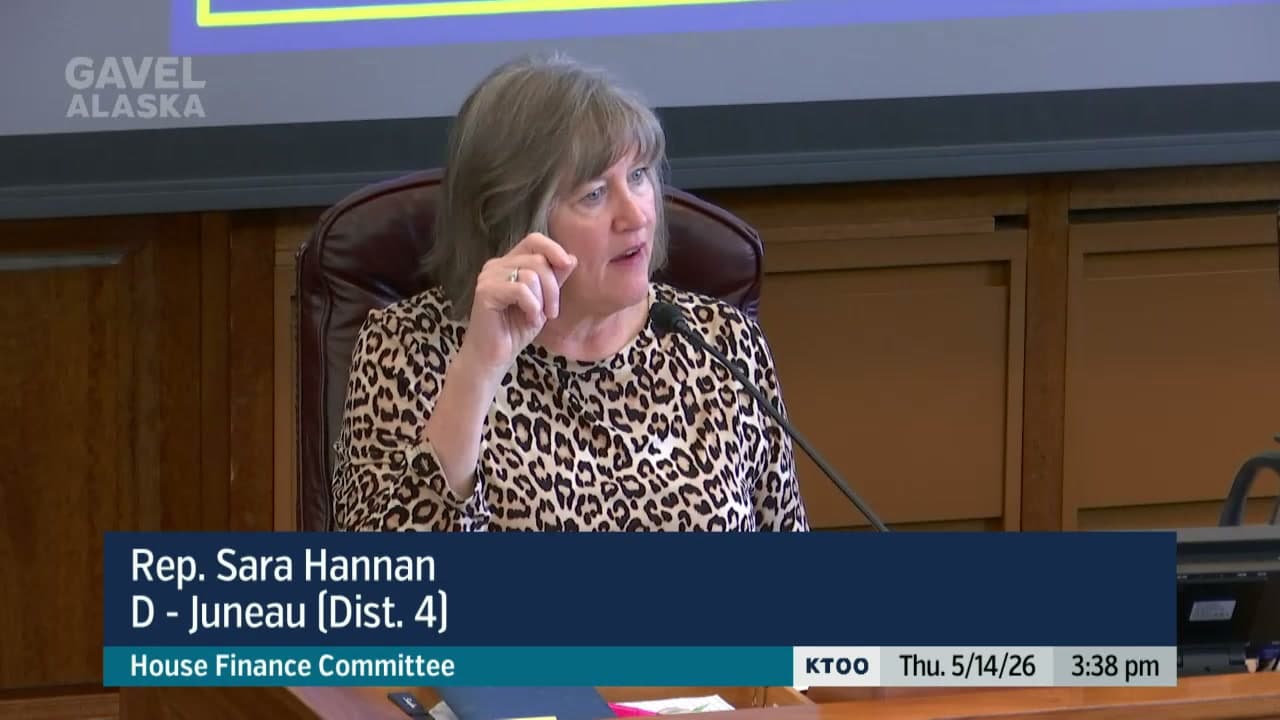
Representative Sara Hannan asked whether the 15-cent rate reflected discussions in the House Resources Committee. She said Glen Farn, the project developer, had indicated 12 cents was acceptable. Stickel said the department had provided modeling at both 12 cents and 15 cents to the Resources Committee and would provide detailed comparisons at multiple rates to Finance.
The alternative tax would begin when commercial operations start and continue until 2056, when the project would revert to traditional property tax. If construction does not begin by 2032, the alternative tax provisions would repeal.
Under current law, the state would collect $25 million in property tax in 2029, growing to $244 million by 2033, according to the department's estimates. Municipalities would collect an estimated $479 million per year at full production. Representative Dan Saddler noted that project developers have said the pipeline will not proceed without tax modifications, making revenue projections under current law hypothetical.
Property tax concerns for a gas pipeline have been flagged as a potential problem since the late 1990s, dating back to the Stranded Gas Act, with a property tax holiday bill filed as recently as 2012.
Representative Jeremy Bynum asked about economic benefits beyond tax revenue. Stickel said the project would deliver low-cost gas to Alaskans and support new industrial development including fertilizer plants and data centers. He said the department's modeling assumes baseload customers and in-state industrial demand incentivized by the project.
The bill also affects production tax revenue. Stickel said upstream producers would make significant investments in Prudhoe Bay and Point Thompson to develop gas for the project. Those costs would be deductible against production tax, decreasing state revenue during the development period. Over the project's life, production tax revenue would increase.
The Department of Revenue requested four new positions to implement the bill: an appraiser for valuation work, an auditor to administer the volumetric tax, an oil and gas revenue specialist, and a commercial analyst to certify project eligibility. The department also requested $500,000 in capital funding to update tax systems. Annual implementation costs would total about $800,000.
The committee recessed before hearing the department's detailed project modeling section, with plans to potentially return after floor session.
This article is based on a public meeting — HFIN-260514-1330 ().
AI-assisted. How we use AI Transcript byLucas Brown
Stay informed. Support what matters.
Free, permanent access to local news you can verify. Subscribe to support Alaska News and go ad-free.
Related Coverage
House panel hears tax proposal for Alaska LNG project
Alaska News · 4mo ago
House Resources gas line bill would cost municipalities $13B under governor's plan
Alaska News · 4mo ago
House Finance begins review of Alaska LNG tax bill with competing rate proposals
Alaska News · 4mo ago
House Finance advances Alaska LNG tax bill, curtailing North Slope's power to negotiate
Alaska News · 3mo ago
Senate panel examines regulatory questions on gas pipeline tax plan
Alaska News · 5mo ago
Comments
Sign in to leave a comment.
No comments yet. Be the first to share your thoughts.