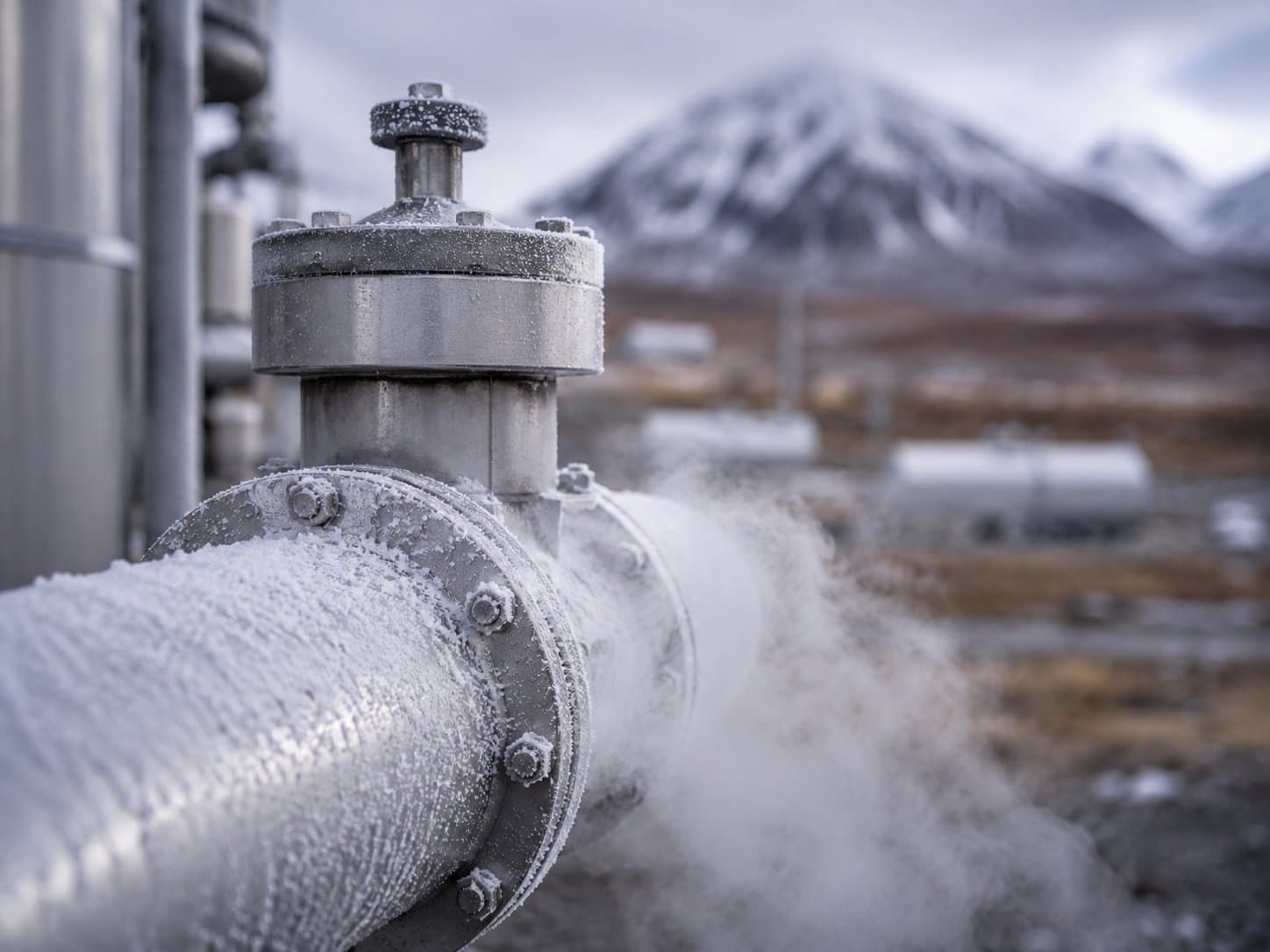
Photo by Cale Green
Four nuclear startups race to bring microreactors to Alaska by 2029
Four advanced nuclear companies told an Alaska energy conference they are racing to deploy microreactors in the state by decade's end, with the first electricity flowing as soon as 2027. The pitch: portable reactors that can power military bases, mining camps, and industrial sites without diesel trucks or grid hookups.
The timeline is aggressive. Radiant Nuclear ships its demonstration unit to Idaho National Laboratory this year for full-power testing, then deploys its first commercial reactor in 2026. Antares flips the switch on a 300-kilowatt unit in 2027 and scales to 1 megawatt shortly after. Applied Atomics is designing 100-megawatt modules for the Railbelt to stabilize gas prices and support industrialization. NuCube joined the Department of Energy's Launch Pad program for expedited licensing and built its 1.2-megawatt design specifically for Alaska remote sites.
The military is already in. Antares won an Air Force contract for Joint Base San Antonio with a 2030 deadline. Oklo is targeting 2030 for a 5-megawatt reactor at Eielson Air Force Base to back up the coal plant. The Defense Innovation Unit picked eight firms in April for installation microreactor contracts.
"Between now and 2029, all of our reactors, they're portable, fully integrated systems, will be deployed to government customers," Ara Krikorian, head of business development at Radiant Nuclear, said. "Maybe a military base or two in Alaska, hopefully."
Alaska cleared the regulatory path in 2024 by adopting rules to streamline state approvals for communities seeking nuclear microreactors. My read is the companies see Alaska as proof-of-concept terrain: if the technology works in remote, cold, diesel-dependent sites here, it works anywhere.
Paul Keutelian, chief technology officer at Applied Atomics, said adding nuclear load could stabilize gas costs and complement Alaska gas development. The company is targeting industrial off-takers, data centers, and communities on the Railbelt. "Alaska has a lot of natural resources, and there is an opportunity by adding load growth to take those resources and turn them into Alaskan products," Keutelian said.
Thomas Mancinelli, head of strategy and policy at Antares, said the company expects to beat the Air Force's 2030 deadline. "We think we can go faster than that, and we're determined to do so," Mancinelli said. Antares was founded in 2023, raised over $140 million, and holds about $13 million in federal contracts. The company received a Department of Energy license in April for a low-power criticality test and expects to meet the July 4 deadline.
Cristian Rabiti, CEO of NuCube Energy, sized his reactor based on lessons learned working in Alaska in 2021. "That was a little bit of my lesson learned that I thought that the size was not a fit and the 1 megawatt was a better fit for the application here," Rabiti said. NuCube uses heat pipes, graphite core, and high-temperature technology similar to Antares.
Radiant's system refuels every 5 to 8 years depending on capacity factor, with all fueling and decommissioning done off-site in Oak Ridge, Tennessee. Antares estimates 6 effective full-power years if the reactor runs 24/7. NuCube is targeting more than 25 years without refueling in the best scenario. Krikorian said the company plans to build a high-throughput manufacturing facility in Oak Ridge that will produce 50 units per year.
The economics hinge on fuel costs and federal support. Most Alaska ratepayers pay over 20 cents per kilowatt hour on the commercial side, Krikorian said. Reestablishing domestic uranium enrichment could bring fuel costs down, Mancinelli said. President Trump signed four executive orders in May 2025 directing the Department of Energy to reform reactor testing. Mancinelli said the partnership with Idaho National Laboratory has been essential for Antares' progress.
The companies identified ideal customers as large industrial loads, data centers, remote mining, rural hospitals, and communities in austere environments where 24/7 uptime matters. Krikorian said Radiant's system works for any customer consuming at least 1 megawatt of baseload. Mancinelli said Antares is focused on places where nuclear can unlock a mission or eliminate diesel fuel logistics.
Here is what gets lost in the optimism: no private microreactor has yet operated in the United States, and no commercial customer has signed a long-term power purchase agreement. The companies are betting military contracts will prove the technology before Alaska communities write checks.
This article is based on a public meeting — Accelerating Advanced Nuclear Power ().
Made by our human newsroom with AI. How humans and AI work here · Grow with our newsroom Transcript byLucas Brown
Discussed in
Stay informed. Support what matters.
Free, permanent access to local news you can verify. Subscribe to support Bill AlaskaNews and go ad-free.
Related Coverage
NuCube, Alaska Fund launch NuAlaska nuclear initiative
Alaska News · 2mo ago
Oklo targets 2030 for Alaska's first small nuclear reactor at Eielson
Alaska News · 4mo ago
The Air Force wants to put AI data centers on Alaska military land — and the three sites tell three very different stories
Alaska News · 4mo ago
Alaska Sustainable Energy Conference explores future of statewide energy systems
Alaska News · 4mo ago
Alaska LNG Project Targets 2029 Gas Delivery as Developer Reports Major Contract Awards
Alaska News · 4mo ago
Comments
Sign in to leave a comment.
No comments yet. Be the first to share your thoughts.