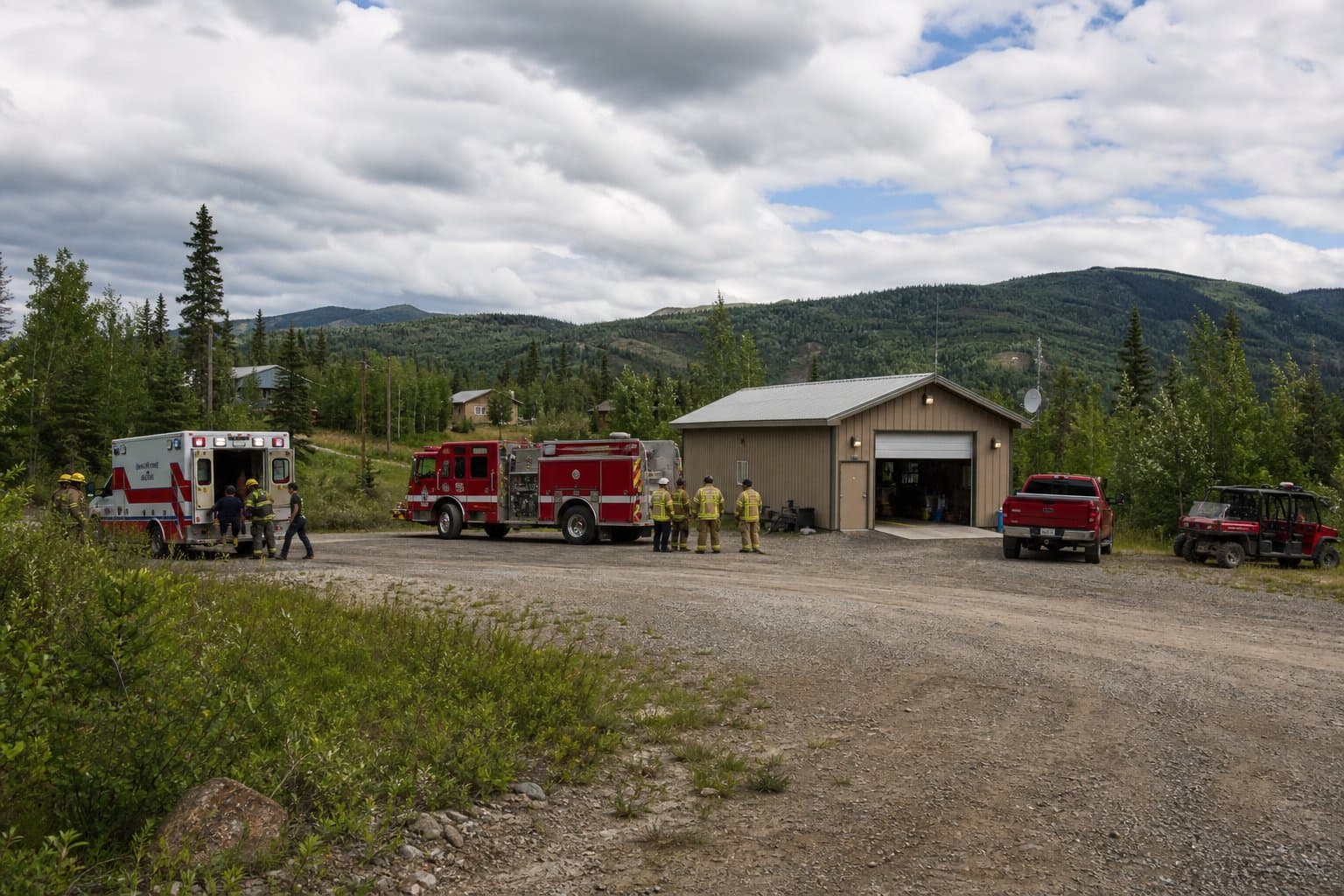
Fairbanks committee may ask Assembly to fund review of fire service areas
A comprehensive review of how the Fairbanks North Star Borough organizes rural fire and ambulance coverage could move a step closer Monday, Aug. 17, when an Assembly committee considers asking the Assembly to pay for it.
The Assembly Regional Emergency Services Advisory Committee meets at 6 p.m. in the Mona Lisa Drexler Assembly Chambers at the Juanita Helms Administration Center, 907 Terminal St. Emergency Operations will present a draft request for proposal for a comprehensive review of the borough's fire service areas and non-areawide medical services. The agenda lists a possible recommendation to the Assembly to fund the review. The committee does not have spending authority. It reviews and monitors fire, emergency medical and other emergency services and makes recommendations to the Assembly.
The review would cover territory outside city limits. Borough planning materials describe non-areawide medical service as something the borough can perform in any area outside the cities through its contractors. Mayor Grier Hopkins described that arrangement to the Alaska State House Finance Committee on May 28, telling members the borough lacks public safety powers and depends on the Alaska State Troopers for law enforcement. "But our EMT service is all borough-provided outside of the city of Fairbanks," Hopkins said.
The borough has studied the question before. A 2018 regional growth public safety plan found that service in some areas "is challenged by uncertain state funding and poor coverage," recommended detailed analysis of where fire stations and ambulances should sit, and raised combining fire and EMS service areas into one large service area. Changes to service-area boundaries could affect rural residents outside the cities and the volunteer departments that hold the contracts. Rural residents hold a designated seat on the committee, filled by Grant Galvin.
The committee will also hear a presentation on the Supplemental Emergency Medical Transportation Program as it applies to non-areawide ambulance service.
The agenda sets two citizens' comment periods, both limited to items on the agenda. Each speaker is limited to three minutes, with 30 minutes total per period. The agenda notes that items may not be considered in sequence and that it is subject to change.
AI-assisted, reviewed by editors. Spot an error?
Stay informed. Support what matters.
Free, permanent access to local news you can verify. Subscribe to support Walter AlaskaNews and go ad-free.
Related Coverage
Assembly Approves Study of Wildfire Service Area for High-Risk Zones
Alaska News · 3mo ago · 80% match
Fairbanks Planning to take up metro boundary expansion June 17
Alaska News · 2mo ago · 78% match
Fairbanks trails commission to weigh commercial vehicle rules Monday
Alaska News · 3w ago · 77% match
Mat-Su weighs a flood emergency and a tax overhaul
Alaska News · 4w ago · 77% match
What Fairbanks wants from Juneau — and why it costs more up north
Alaska News · 4w ago · 76% match
Comments
Sign in to leave a comment.
No comments yet. Be the first to share your thoughts.