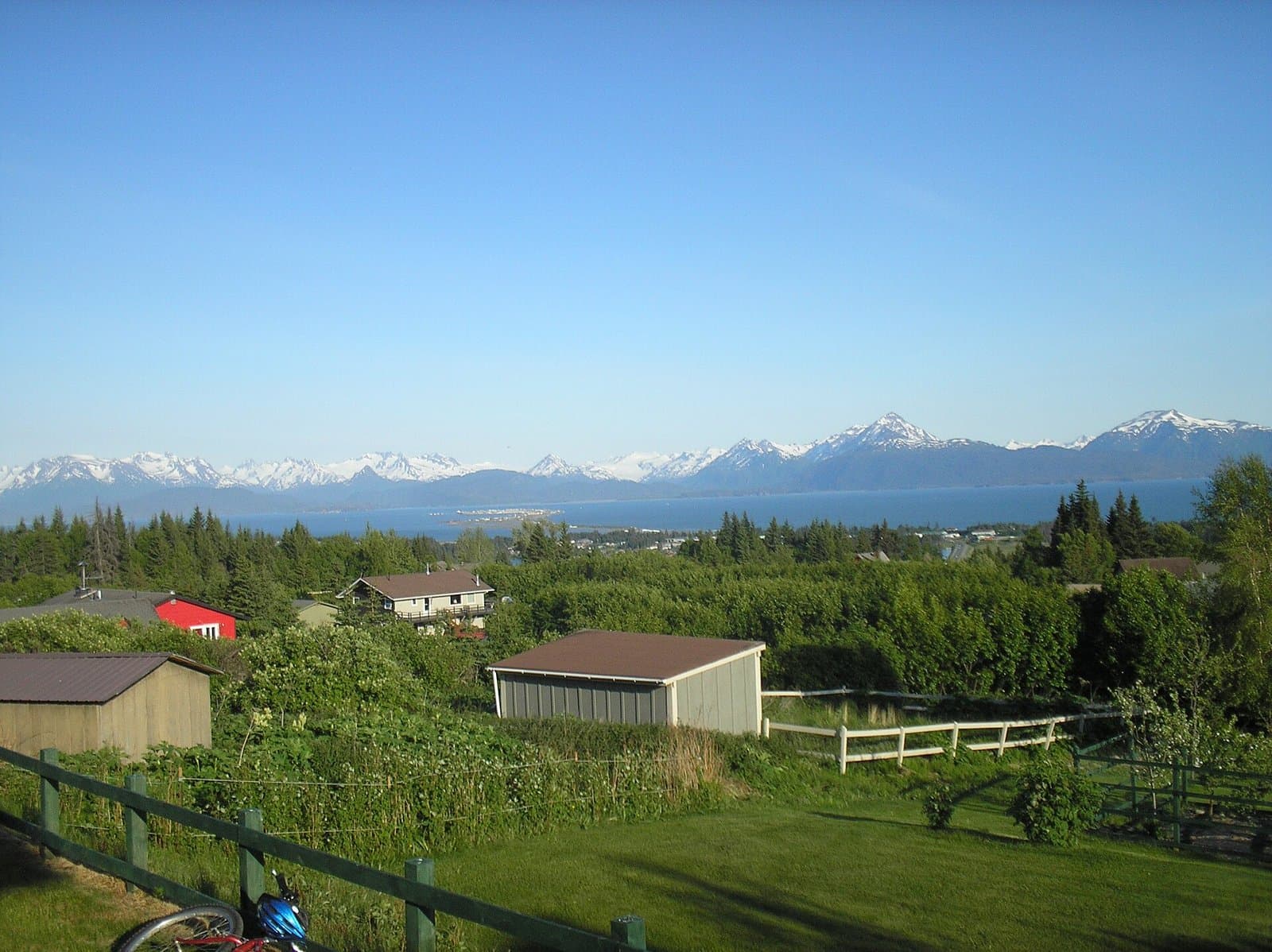
Photo: Hobig via Wikimedia Commons · Source · Public domain
Corps seeks state water quality OK for $402 million Homer harbor to end five-deep rafting
The U.S. Army Corps of Engineers has asked the state to certify that a proposed $402 million harbor on the Homer Spit would meet Alaska's water quality standards. The Alaska Department of Environmental Conservation is taking comments and requests for a public hearing through Oct. 26, according to its notice. Its review covers only water quality: it can certify the harbor, certify it with conditions, deny certification or waive its review.
The harbor is meant to fix a crowding problem that has boats in Homer tied to one another as many as five deep. A boat on the inside can't leave until the boats outside it move. Large vessels regularly wait one to three hours, according to the Corps' May 2026 draft feasibility report, and sometimes days when a neighboring boat's crew isn't available. One resident told the Corps about breaking ribs in a fall while climbing over rafted boats.
The waitlist for a permanent slip grew from 270 boats in 2019 to 379 in 2024, the report says. Fifty communities off the road system rely on Homer as a regional hub port.
The new harbor would sit on the east side of the Spit, near the existing one, with room for 304 vessels: the transient fleet plus every boat on the current waitlist. Building it would take about 4,500 feet of rock breakwater and up to 1.5 million cubic yards of dredging to create a 37-acre mooring basin. The dredged material, which tests found clean, would be disposed of at a 28-acre deep-water site outside the Kachemak Bay Critical Habitat Area. Work is planned from 2030 to 2034.
A parking area was dropped from the plan because the dredged material would likely need to be mixed with other fill before it could be built on, according to a July city memo.
The seafloor there is soft silt and clay, and the Corps expects the breakwater's rock to sink into it. Its request to the state includes 50% more rock than the baseline design to account for that. The report rates the settlement a high cost risk because the extra material needed to offset it is not yet in the cost estimate.
Under the Corps' standard economic test, the harbor's costs outweigh its benefits. The report gives it a benefit-cost ratio of 0.77, or about 77 cents in national economic benefits for every dollar it costs, and none of the four designs the Corps studied reached 1. The Corps can still recommend it because of a 2024 change in federal law that lets the Army recommend an Alaska harbor without justifying it on those benefits alone, as long as more than 80% of the goods moving through it are consumed in the United States. The Corps weighed factors including public safety, access to subsistence resources and the welfare of the communities the harbor would serve.
The report puts the harbor's first cost at about $402.1 million, with about $360.6 million from the federal government. Homer's share, in the report's cost table, comes to about $170 million: about $41.5 million toward construction, about $90 million for what the report calls local service facilities, including new floats and a fuel dock, and $38.6 million more that the city would pay back with interest over as long as 30 years. The interest is not included in that total. The Homer City Council endorsed the plan in April.
The Corps calls the permanent conversion of about 68 acres of marine-bottom habitat the project's main unavoidable adverse impact. Eelgrass and understory kelp lie within the footprint, and the area provides habitat for endangered Cook Inlet beluga whales and threatened Steller's eiders. The Corps found the effects on fish and wildlife insignificant, so no formal compensatory mitigation plan is required. Endangered Species Act consultations were ongoing when the report came out.
The Corps received 77 comments on its draft during a 30-day period that ended June 22. Many commenters asked for more time, "which was not possible," the Corps told the city, according to the July memo. A final Corps report is due Nov. 27, and the study would end with a signed Chief's Report, expected March 29, 2027.
Source: Alaska Department of Environmental Conservation, Corps seeks state water quality OK for a new $402 million Homer harbor; comments due Oct. 26.
Made by our human newsroom with AI. Reviewed by Cale Green. How humans and AI work here · Grow with our newsroom
Stay informed. Support what matters.
Free, permanent access to local news you can verify. Subscribe to support Walter AlaskaNews and go ad-free.
Related Coverage
Homer planning commission asked to name Spit erosion, public works campus and harbor floats as top capital projects
Alaska News · 1mo ago
Juneau harbor board weighs charter passenger fee of $7.50, up from $2.05
Alaska News · 1mo ago
Sitka's Coast Guard cutter dock clears review; work set for 2026
Alaska News · 2mo ago
Board of Fisheries to weigh closing Homer Spit waters to commercial fishing
Alaska News · 1d ago
NOAA proposes letting Seward cruise dock pile driving run into 2027
Alaska News · 1mo ago
Comments
Sign in to leave a comment.
No comments yet. Be the first to share your thoughts.