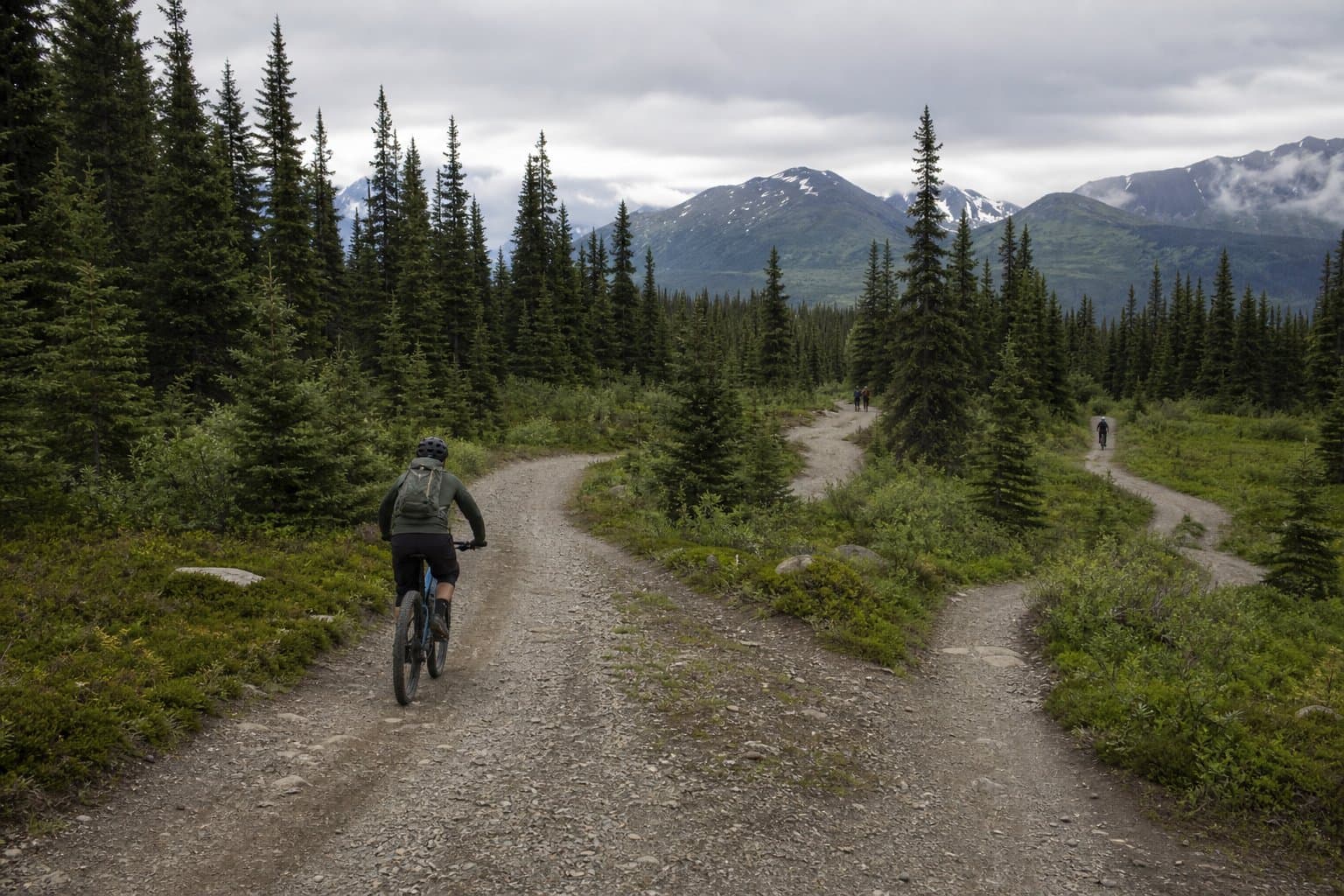
Chugach e-bike rule draws access fight over disability, trail damage and backcountry use
A Chugach National Forest reminder that e-bikes remain barred from nonmotorized trails has turned into a public argument over disability access, trail damage, enforcement and who gets to use Alaska backcountry routes.
The forest’s posted guidance says all e-bikes, including pedal-assist models, are treated as motorized vehicles under current U.S. Forest Service direction. That means riders may use them on Chugach National Forest roads and motorized trails, but not on trails designated for nonmotorized use.
The local decision is not just a map note. It is a trail-access fight.
In public Facebook comments under the Chugach post, some riders framed pedal-assist bikes as an access tool, especially for people who cannot ride traditional bikes comfortably. Patrick Radner wrote that a pedal assist should be allowed for people with disabilities, arguing that a low-wattage pedal-assist bike is not capable of tearing up a trail and that a rider on a good mountain bike can do more damage.
Others questioned why one kind of trail user should be allowed while another is barred. Joseph Pearce wrote that if there is a hiking trail, there should be a trail for everything, and argued that it makes no difference whether a plant is crushed by a shoe or a tire. James Parker Cunneen asked mountain bikers to explain the opposition, saying he understood a pedal-assist bike as different from a full electric dirt bike.
Several commenters pushed the other way. Bill Mck wrote that e-bikes are still motorized vehicles and said disabled riders should use designated e-bike routes, adding that riding in places where help would be difficult could create hazards. Benjamin Paul Wade argued that e-bikes damage trails because they are heavier, more powerful and can dramatically increase the number of riders. He also tied the rule to backcountry character, writing that the backcountry stays pristine because it takes hard work to access.
The Chugach National Forest gave four reasons for keeping the prohibition in place: preserving backcountry character, limiting overuse in low-density backcountry areas, following national Forest Service direction and avoiding enforcement problems on a connected trail network where allowing e-bikes on some trails but not others would be difficult to manage.
The forest has also decided not to pursue individual trail exemptions while the national review continues. The posted notice says Class 1 e-bikes may be the most compatible option if the agency later allows some e-bikes on otherwise nonmotorized trails.
Nationally, the Forest Service allows Class 1, 2 and 3 e-bikes on motorized roads and trails across national forests and grasslands. Local officials may consider e-bike use on nonmotorized trails, but only through the Travel Management Rule process, which requires environmental analysis, public involvement and a formal local decision.
Sources
Based on: View Transcript
AI-assisted, reviewed by editors. Spot an error?
Comments
Sign in to leave a comment.
No comments yet. Be the first to share your thoughts.