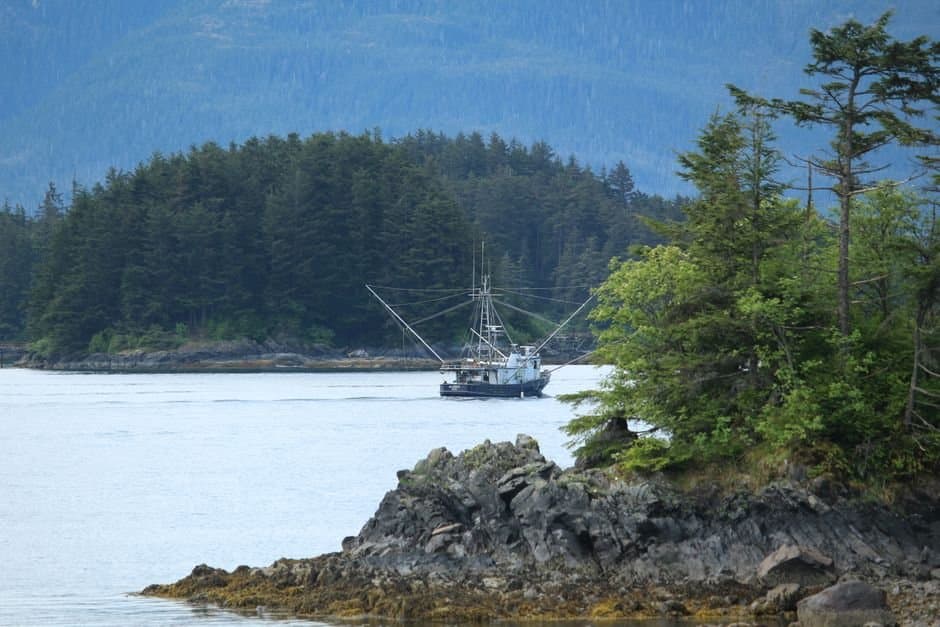
Photo by Howard Herdi on Pexels · Source
Court strikes down fishery council veto powers, the same ones Alaska's council holds
A federal appeals court on Thursday struck down a Gulf of Mexico fishery council's power to block the Secretary of Commerce from imposing a limited access system on a fishery, the same veto power held by Alaska's North Pacific Fishery Management Council. A limited access system caps who may fish a stock, through permits or quota shares. A court of appeals binds only the lower courts in its own circuit, and Alaska sits in the Ninth. The council's veto powers are unchanged here unless the Ninth Circuit or the Supreme Court takes the question up.
The Eleventh Circuit Court of Appeals found three provisions of the Magnuson-Stevens Act unconstitutional in a case brought by commercial fishermen Dominick Russo and James Russo and their company, FFC Seafood Inc., who challenged a rule cutting annual catch limits for Gulf of Mexico gag grouper by about 86 percent. Judge Andrew Lynn Brasher wrote for the panel. "Like the district court and two other circuits to have addressed this issue, we conclude that the Act delegates significant authority to the Council, which it cannot wield as it is currently constituted," the court held. The Southern District of Alabama had reached the same conclusion in November 2025, declaring the veto provisions unconstitutional and severing them from the Act, but it also declined to vacate the grouper rule and entered judgment for the fishermen. Severing means cutting a provision out of the statute and leaving the rest standing.
The fishermen lost anyway. The court held the veto powers played no part in making the grouper rule and declined to vacate it, sending the case back with instructions to enter judgment for the government. The narrowest fix, the court said, is to ignore council acts taken under the veto provisions.
The three provisions require council approval before the Secretary repeals a fishery management plan, before he delegates management of a fishery to a state, and before he includes a limited access system in an amendment he prepares himself. They are 16 U.S.C. sections 1854(c)(3), 1856(a)(3)(B) and 1854(h). The government called the provisions ancillary. The court answered that the veto's mere existence can deter measures that might provoke it.
Alaska's council is created by the same section of the Act, with authority over fisheries in the Arctic Ocean, the Bering Sea and the Pacific Ocean seaward of Alaska. It has 11 voting members. The Secretary appoints seven, five from Alaska and two from Washington. The other four seats, the three constituent states' fishery officials and the National Marine Fisheries Service regional director, are filled outside that process. In the Gulf, the court counted six such seats among the council's 17 voting members and called that the defect.
The power at issue is the council's ability to stop Washington from imposing a limited access system, not its ability to propose one. Alaska's crab rationalization program, the American Fisheries Act pollock cooperatives, the halibut and sablefish quota program recommended in 1991, and the Community Development Quota program created in 1992 all came from council recommendations the Secretary approved. The CDQ program alone allocates a share of Bering Sea and Aleutian Islands quotas to 65 Western Alaska communities organized into six CDQ groups.
Four circuits have now taken up the question, with rulings from the Third Circuit in 2024, the Fifth in March, and a split First Circuit decision on standing in April that the Eleventh Circuit expressly disagreed with. The Ninth Circuit, which covers Alaska, has not addressed it, though the Eleventh Circuit leaned on a 1987 Ninth Circuit Alaska case, Alaska Factory Trawler Association v. Baldridge, for part of its analysis.
Chief Judge William Pryor concurred in full but wrote separately to say the district court had overstepped in ordering the provisions severed. A court can refuse to enforce an unconstitutional law, he wrote, but it cannot repeal one, and a decree that claims to is a nullity. The sentence he quoted for that point, that "federal courts have no authority to erase a duly enacted law from the statute books," is from a 2018 Virginia Law Review article by Jonathan F. Mitchell. No Alaska party appeared in the case, and the North Pacific council states no position in it.
AI-assisted, reviewed by editors.
Stay informed. Support what matters.
Free, permanent access to local news you can verify. Subscribe to support Walter AlaskaNews and go ad-free.
Related Coverage
Ninth Circuit upholds federal Cook Inlet salmon management against drift fleet challenge
Alaska News · 1w ago
The council that runs Alaska's fisheries has no tribal vote
Alaska News · 1mo ago
NPFMC directs NOAA to update pollock roe rules after seizure highlighted regulatory gap
Alaska News · 2mo ago
Alaska AG voids contested Area M salmon regulations after ethics challenge
Alaska News · 3mo ago
North Pacific Fisheries Management Council limit golden king crab catch limits
Alaska News · 2mo ago
Comments
Sign in to leave a comment.
No comments yet. Be the first to share your thoughts.