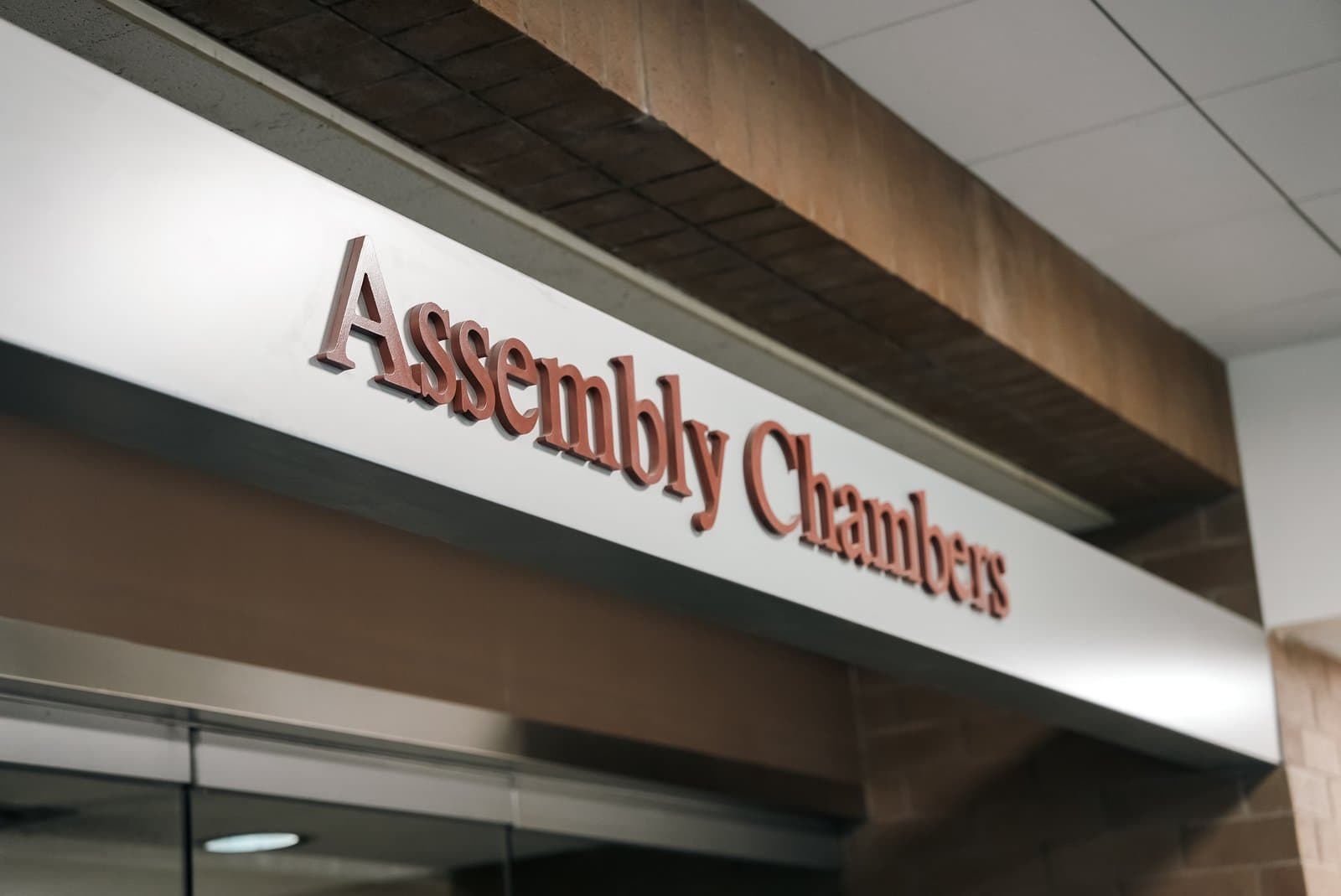
Photo taken outside the Anchorage assembly Chambers, by Cale Green/Alaska News
Anchorage weighs a fiscal summit as property taxes carry the city
In 1982 the State of Alaska covered about 42 percent of what it cost to run the Municipality of Anchorage, and property taxes covered about 36 percent. By 2024 property taxes paid about 58 percent and the state paid about half of one percent.
The Anchorage Assembly takes up a resolution Tuesday, Sept. 1, submitted by Chair Anna Brawley and Member Erin Baldwin Day, that would create a Fiscal Future Initiative and call a community summit in October. The item sits on the consent agenda, with no public hearing attached.
The comparison covers municipal operating revenue and leaves out the school district, where most state money to Anchorage goes. Alaska's FY2025 school funding schedule projected $395.2 million for Anchorage, including $303.3 million in foundation funding and $20.1 million reimbursing the municipality for school debt.
As petroleum income receded, Alaska cut back or ended the programs that sent money to local governments, revenue sharing among them, and the cost of services landed on local taxpayers.
The resolution directs the Assembly to plan the summit and public engagement through the fall, gathering community priorities that would shape later decisions on budgets, services, capital projects and where revenue comes from. It argues the problem is too big to fix department by department, and asks that the summit present options "without a predetermined outcome."
Brawley and Baldwin Day have spent the past year running "Our Muni, Our Budget" workshops. In January, Baldwin Day said the city has twice the infrastructure to maintain and about two-thirds of the money to do it coming from property taxes.
The Anchorage Economic Development Corporation has warned investors that continued property tax increases "can reduce competitiveness," and has pushed for solutions that lean on something other than property taxation. The Alaska Policy Forum, a free-market policy organization, argues the burden traces to local spending decisions as much as to the state pulling back.
The Assembly's 2026 operating budget runs $656.8 million. That leaves roughly $198,000 under the tax cap, three hundredths of one percent, and one-time money closed the gap. In July the Assembly set its opening priorities for the 2027 budget.
Source: Anchorage Assembly, Anchorage Assembly: AR No. 2026-255: A Resolution of the Anchorage Assembly Establishing a Fiscal Future Initiative.
Made by our human newsroom with AI. How humans and AI work here · Grow with our newsroom
Stay informed. Support what matters.
Free, permanent access to local news you can verify. Subscribe to support Walter AlaskaNews and go ad-free.
Related Coverage
Anchorage budget trade-off: schools OR general government, not both, may be coming
Alaska News · 3mo ago
Anchorage's property tax cap rises $18.5 million for next year
Alaska News · 3w ago
Anchorage Assembly resolution seeks school-funding scenarios and deferred maintenance analysis
Alaska News · 2mo ago
Anchorage picks up the tab for building repairs the state used to help fund
Alaska News · 2mo ago
Anchorage mayor proposes 2027 budget that relies on one-time money, warns of 2028 fiscal cliff
Alaska News · 1w ago
Comments
Sign in to leave a comment.
No comments yet. Be the first to share your thoughts.