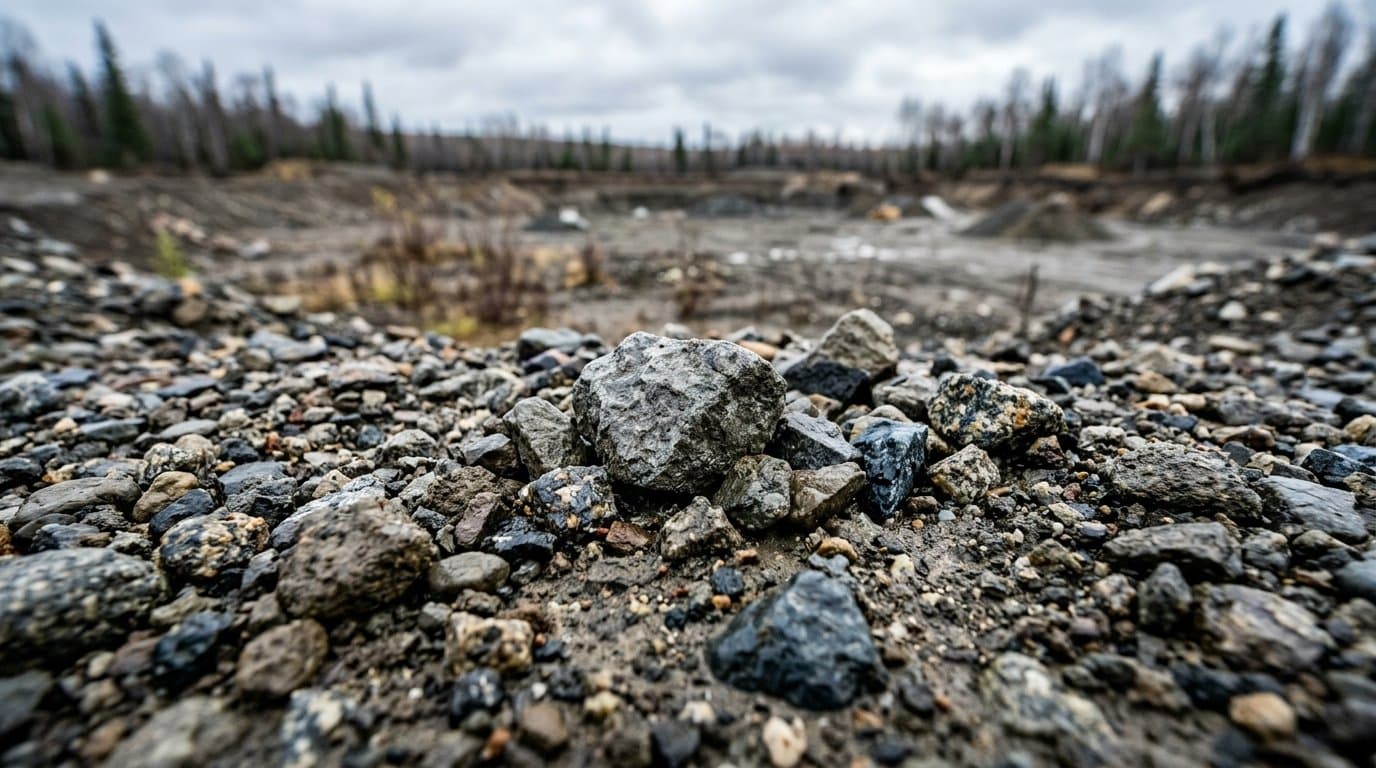
AI image
Alaska Supreme Court upholds borough's denial of Anchor Point gravel pit permit
The Alaska Supreme Court on Friday upheld the Kenai Peninsula Borough Planning Commission's 2022 denial of Beachcomber LLC's permit to mine gravel on roughly 27 acres of its 41.72-acre Anchor Point property.
The court ruled the commission may reject a conditional land use permit, which gravel pits in the borough's rural district need, even when an applicant meets every condition borough code allows. Under the code in force before 2023, the commission could refuse a permit if it found, on substantial evidence, that no combination of the permitted buffers, berms or fences could adequately minimize noise and visual impacts on neighbors.
Beachcomber had proposed a 50-foot vegetated buffer and a 12-foot-high berm along the property's southern and eastern borders. The commission found those measures would not sufficiently shield neighbors.
In the court's opinion, Justice Henderson rejected Beachcomber's argument that because the code says "only" the listed conditions may be imposed, an application meeting them must be approved. Under that reading, the commission "would have to approve the applications that would have the most negative impacts," the opinion said. "This interpretation defies common sense."
The case ran eight years. The commission denied the permit 6-3 in July 2018 after nearly 30 people testified against it. Several commissioners described the site as a crater or amphitheater where berms and vegetation buffers would not minimize noise. A hearing officer later ruled the commission lacked discretion to deny the permit, and the commission approved it 8-2 in June 2019. Neighbor Hans Bilben and others appealed. A superior court judge reversed that approval in September 2021, the commission voted 5-2 to deny the permit again in March 2022 and the superior court affirmed that denial in April 2024.
The borough backed Beachcomber's reading of the code after the 2018 denial and during Bilben's appeal, then joined Bilben at the Supreme Court to argue the company's position "fails under a plain reading of the Code." The justices declined to treat the borough's earlier stance as evidence of the Assembly's intent.
The court also rejected Beachcomber's procedural claims. A planning commission may consider community testimony but may not rely on neighborhood opposition alone, the court said, and the record here also held photographs, topographic maps and LIDAR elevation images, which Beachcomber itself had used.
The borough amended its material-site code in 2023 in ways Henderson wrote "appear intended to extend the Commission's discretion." Because the earlier code no longer applies, the court called Beachcomber's demand for a permit under it generally moot but decided the question anyway because it affects attorney's fees.
Source: Alaska Supreme Court, Kenai Peninsula Borough Planning Commission: Beachcomber, LLC v. Hans Bilben, et al..
Made by our human newsroom with AI. How humans and AI work here · Grow with our newsroom
Stay informed. Support what matters.
Free, permanent access to local news you can verify. Subscribe to support Bill AlaskaNews and go ad-free.
Related Coverage
Borough Planning Commission to hear proposal for Nikiski gravel pit on Oct. 12
Alaska News · 3w ago
Kenai commission weighs letting a gravel operation dig into required setbacks
Alaska News · 1w ago
Alaska Supreme Court upholds rule requiring rent on expired oil leases during appeals
Alaska News · 1mo ago
Kenai Peninsula planners to weigh road and bridge over salmon creek in Anchor Point
Alaska News · 3mo ago
Kenai commission rejects family RV campground permit on Tundra Rose Lane, 4-1
Alaska News · 1w ago
Comments
Sign in to leave a comment.
No comments yet. Be the first to share your thoughts.