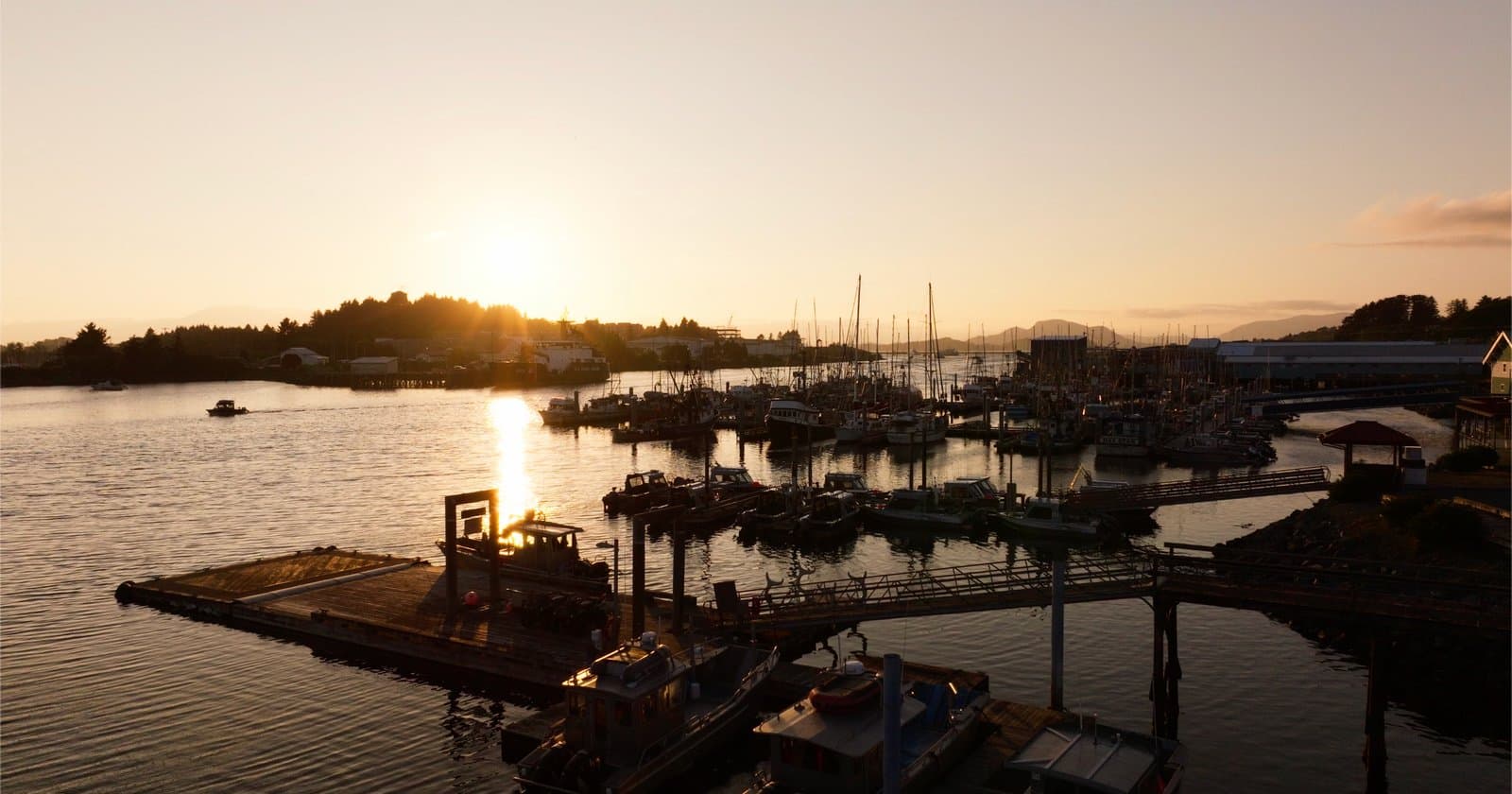
Photo by Cale Green
Alaska summer outlook leans warmer, but not as a simple El Niño story
Alaska is heading into summer with federal forecasters favoring warmer-than-normal temperatures for much of the state, but the official outlook is not a simple El Niño story.
El Niño is likely to emerge soon, with an 82% chance during May, June and July, according to the National Weather Service Climate Prediction Center. But peak strength remains uncertain, and stronger El Niño events do not guarantee stronger impacts in Alaska.
Federal forecasters favor above-normal temperatures for most of Alaska from June through August. Only the North Slope falls outside that tilt. Even coastal Southwest Alaska and the Alaska Peninsula, where cooler sea-surface temperatures often hold down early-season heat, are given elevated odds of above-normal temperatures over the full three-month period.
That does not mean constant heat. Seasonal outlooks are probability forecasts. A warmer-than-normal summer can still include cool weeks, storms and sharp regional differences.
Western and northern mainland Alaska are favored to see above-normal precipitation this summer. Southern Alaska is less certain. El Niño summers tend to be drier in southern Alaska, but the official June-August outlook leaves southern Alaska in the equal chances category, meaning forecasters do not have a strong enough signal to favor wet, dry or near-normal precipitation.
Drought and wildfire
Alaska has only small patches of abnormal dryness, and drought development is not forecast by the end of summer, according to NOAA's Seasonal Drought Outlook. That does not mean every community will get regular rain. It means federal forecasters do not currently see the ingredients for a broad Alaska drought through August.
Wildfire risk is not being forecast as unusually severe statewide. Alaska Predictive Services and national fire outlooks call for normal fire potential in Alaska. Normal Alaska fire season still includes dangerous periods when deep fuels dry out, lightning starts fires, humidity drops or wind pushes an existing fire.
Heat advisories
The National Weather Service office in Anchorage will begin issuing Heat Advisories in its forecast area on or about June 9. The advisories will replace Special Weather Statements for heat-related hazards.
The Anchorage office set advisory thresholds as low as 70 degrees in some coastal, island and Southwest Alaska zones, 75 degrees in others, and 80 degrees in parts of Southcentral and Southwest. The thresholds must be met for two or more days.
That does not mean a heat wave is forecast for June 9. It means forecasters are adding a clearer public-warning system for Alaska heat, where many homes, schools and public buildings are not built around air conditioning.
Sources: NOAA Climate Prediction Center seasonal outlook discussion, May 21, 2026, https://www.cpc.ncep.noaa.gov/products/predictions/long_range/fxus05.html; NOAA Climate Prediction Center ENSO Diagnostic Discussion, May 2026, https://www.cpc.ncep.noaa.gov/products/analysis_monitoring/enso_advisory/ensodisc.shtml; NOAA Climate Prediction Center Seasonal Drought Outlook, https://www.cpc.ncep.noaa.gov/products/expert_assessment/sdo_summary.php; Alaska Predictive Services 2026 Fire Potential Outlook, https://fire.ak.blm.gov/content/weather/outlooks/monthly.pdf; National Weather Service Anchorage Heat Advisories public information statement, May 8, 2026, https://forecast.weather.gov/product.php?site=CHS&product=PNS&issuedby=AFC; National Weather Service Anchorage heat advisory guidance, https://www.weather.gov/afc/heatadvisories/
Source: Alaska summer outlook leans warmer, but not as a simple El Niño story.
Made by our human newsroom with AI. How humans and AI work here · Grow with our newsroom
Stay informed. Support what matters.
Free, permanent access to local news you can verify. Subscribe to support Walter AlaskaNews and go ad-free.
Related Coverage
A strong El Niño is likely this winter, warm and wet for Southern Alaska
Alaska News · 3mo ago
A tale of two Junes at the top of the world
Alaska News · 3mo ago
Seven straight months below normal: what drove Alaska's chilly first half of 2026
Alaska News · 2mo ago
Alaska's quiet June fire season faces July's heat and lightning
Alaska News · 3mo ago
Interior faces warmest stretch of summer as Tanana Valley smoke lingers
Alaska News · 1mo ago
Comments
Sign in to leave a comment.
No comments yet. Be the first to share your thoughts.