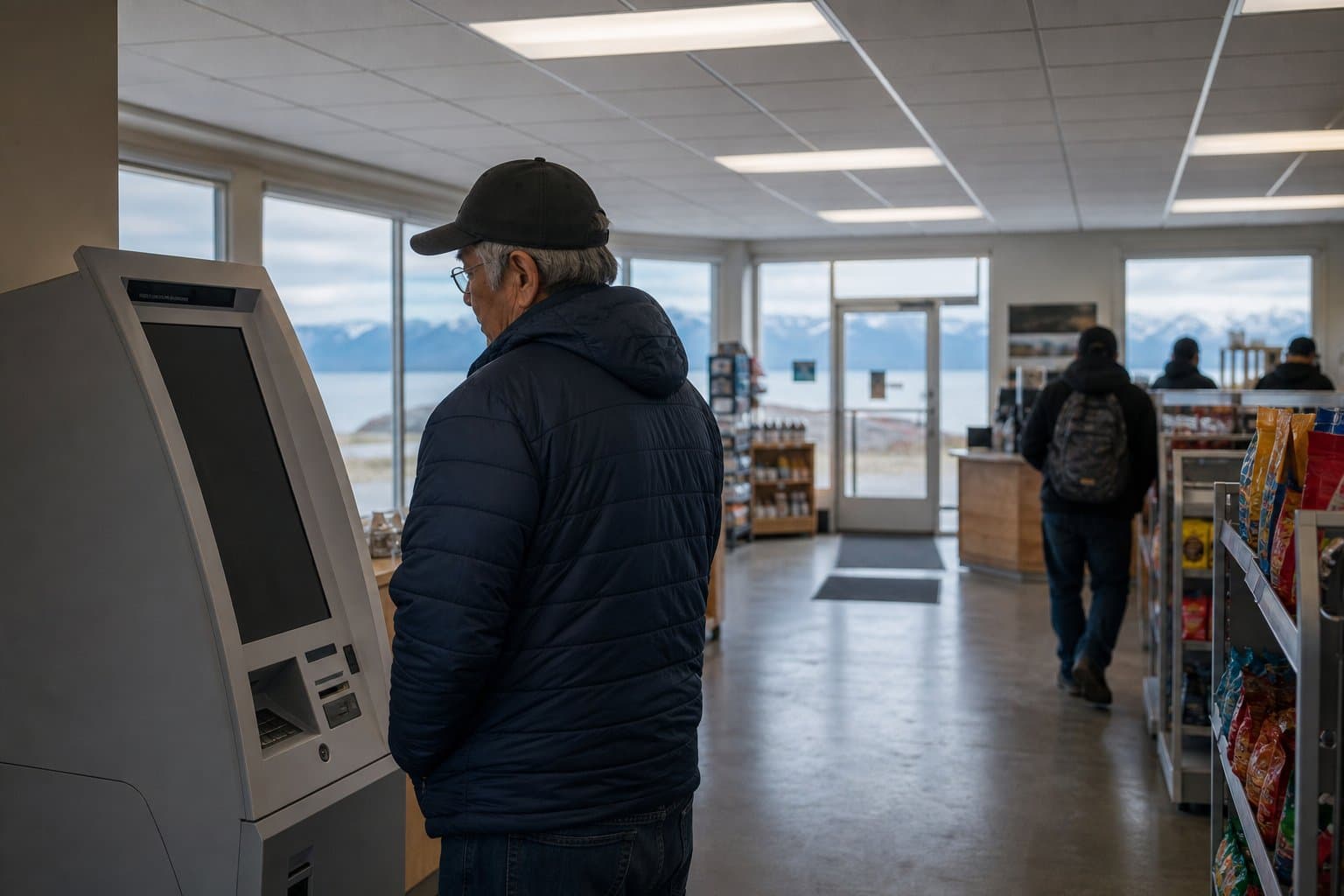
Alaska law now requires crypto kiosk licenses, caps fees, and creates fraud refund path
Alaska seniors and families gained new legal protections Wednesday when SB 249 became state law. Senator Cathy Tilton and other lawmakers described the measure as closing a regulatory gap that scammers had exploited to steal millions of dollars through cryptocurrency kiosks. The announcement came from the Senate Republican Caucus press office.
The law requires all kiosk operators to obtain a state money transmitter license and register with the Alaska Department of Commerce, Community, and Economic Development. Each machine must display mandatory fraud warnings. Daily and monthly transaction limits take effect, and transaction fees are capped. Victims who can prove fraud now have a pathway to liability refunds, a remedy that did not exist before Wednesday. The law also requires operators to use software to assist law enforcement investigations of kiosk transactions.
Tilton, a Wasilla Republican who sponsored the bill, said the legislation grew from her own family's experience. "With FBI reports showing a sharp increase in senior fraud across Alaska, I am proud that SB 249 has become law," Tilton said. "This legislation was inspired by my own mother's experience as a victim of a cryptocurrency scam. That personal experience drove my determination to protect others from the same devastating harm."
The Scale of the Problem
The scale of the problem drove the bill's urgency. In prior floor debate covered by Alaska News, Senator Gary Stevens said Alaskans lost more than $26 million to online fraud in 2024 alone, with seniors accounting for roughly a third of those losses. Stevens said crypto kiosks had become scammers' preferred tool because transactions are instant, irreversible, and largely untraceable.
Representative Elexie Moore, who carried the companion bill in the Alaska State House, described the human cost during House floor debate in May. "She lost $8,000 in minutes, money that can never be returned," Moore said, describing the bill sponsor's mother. "Traditional banks have guardrails. Crypto kiosks have none until now."
What the Law Changes
Tilton's office thanked AARP for its advocacy on behalf of seniors during the bill's passage. The organization has warned that criminals instruct victims to withdraw cash and deposit it into a cryptocurrency kiosk, directing funds to a digital address the scammer controls.
Alaska joins a growing number of states, including South Dakota and Nebraska, that have enacted licensing requirements, transaction limits, and fraud-refund protections for crypto kiosk users. Tilton's office said the Senate Republican Caucus will continue pursuing consumer protection legislation in future sessions.
AI-assisted, reviewed by editors. Spot an error?
Comments
Sign in to leave a comment.
No comments yet. Be the first to share your thoughts.