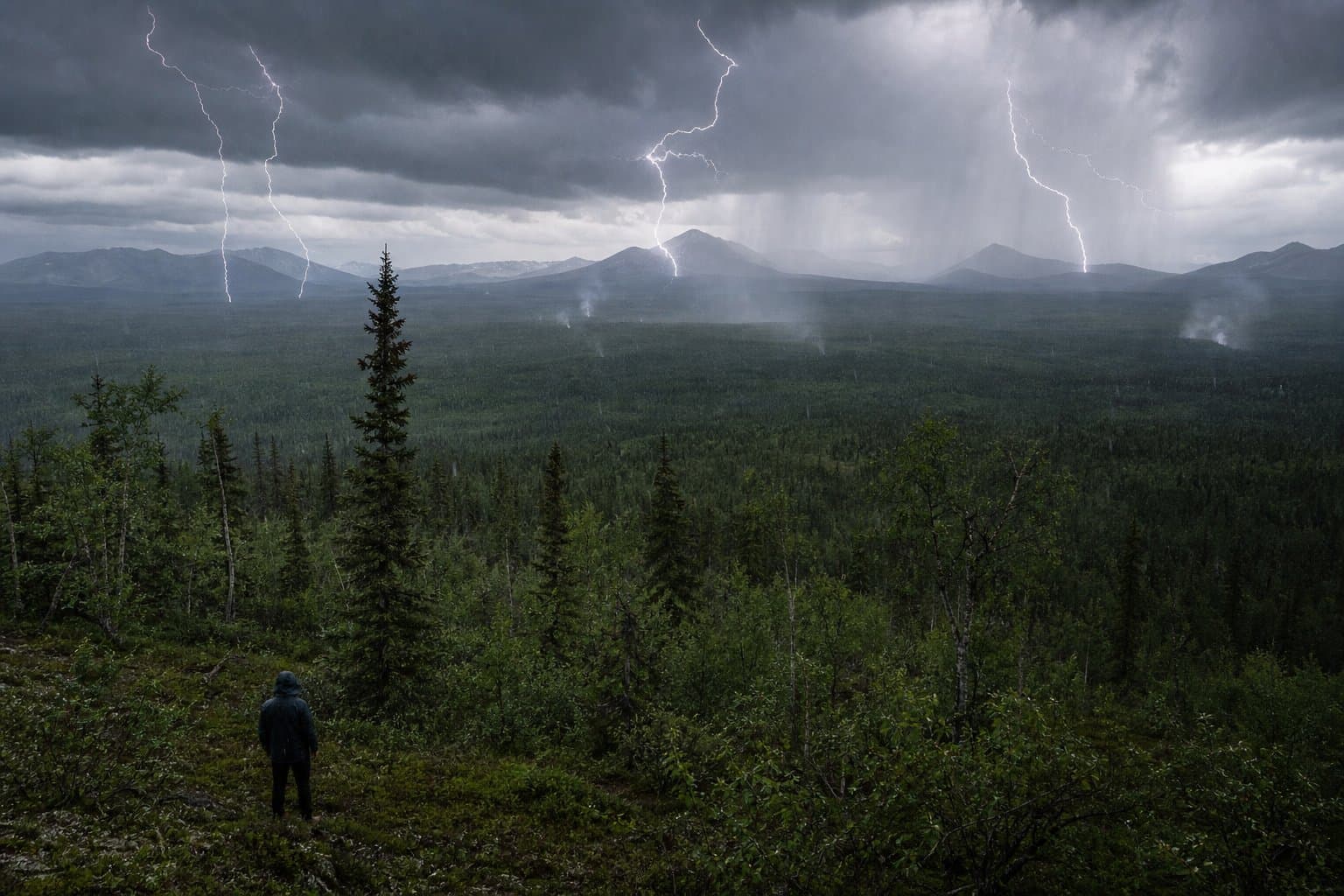
Alaska burns fewer than 29,000 acres in June despite record lightning
Alaska burned fewer than 29,000 acres in June 2026, the sixth-lowest June total since 1993, even as roughly 75,000 lightning strikes in and around Alaska provided abundant ignition sources.
The number stands out because the ignition sources were numerous. The Alaska and Arctic Climate Newsletter, drawing on Alaska Interagency Coordination Center data, placed June's lightning total as the fourth-highest since 2012, when the current detection network came online. About 61,000 of those strikes were ground strokes in Alaska. More than 100 wildfires started. None grew into the kind of long-duration fire that reshapes a season. The acreage figure excludes prescribed fires.
The pattern echoes June 2012, which also produced plenty of lightning but well below median area burned. The contrast with 2023 is also notable: that year, low thunderstorm activity played a role in the lack of fires. In June 2026, ignition sources were far more numerous, yet area burned remained well below average.
The newsletter attributed the outcome to weather conditions that did not favor fire spread. Rain accompanied the thunderstorms. More importantly, according to the newsletter, "the fires were unable to grow rapidly due to rain that accompanied the thunderstorms and, more importantly, a real lack of any sustained hot and dry weather that would rapidly dry the fuels in the boreal forest."
The closest call came June 20, when a lightning strike started the Starry wildfire on the edge of Anderson in the Denali Borough. Denali Borough officials issued evacuation notices. Firefighters wrapped the fire with dozer line before it reached the community.
The contrast with the Northwest Territories is direct. After the solstice, wildfire activity increased dramatically in the NWT due to dry fuels and very warm temperatures, even as Alaska and the Yukon Territory continued a much below-normal season in area burned. A 14,000-hectare fire threatened Fort Simpson along the Mackenzie River in the last week of June, a few kilometers from town. The same boreal latitude, different fuel conditions, a different outcome.
Alaska's fire season can shift quickly as summer weather patterns change, according to the Alaska Interagency Coordination Center, which coordinates wildfire response and predictive services statewide.
AI-assisted, reviewed by editors. Spot an error?
Comments
Sign in to leave a comment.
No comments yet. Be the first to share your thoughts.