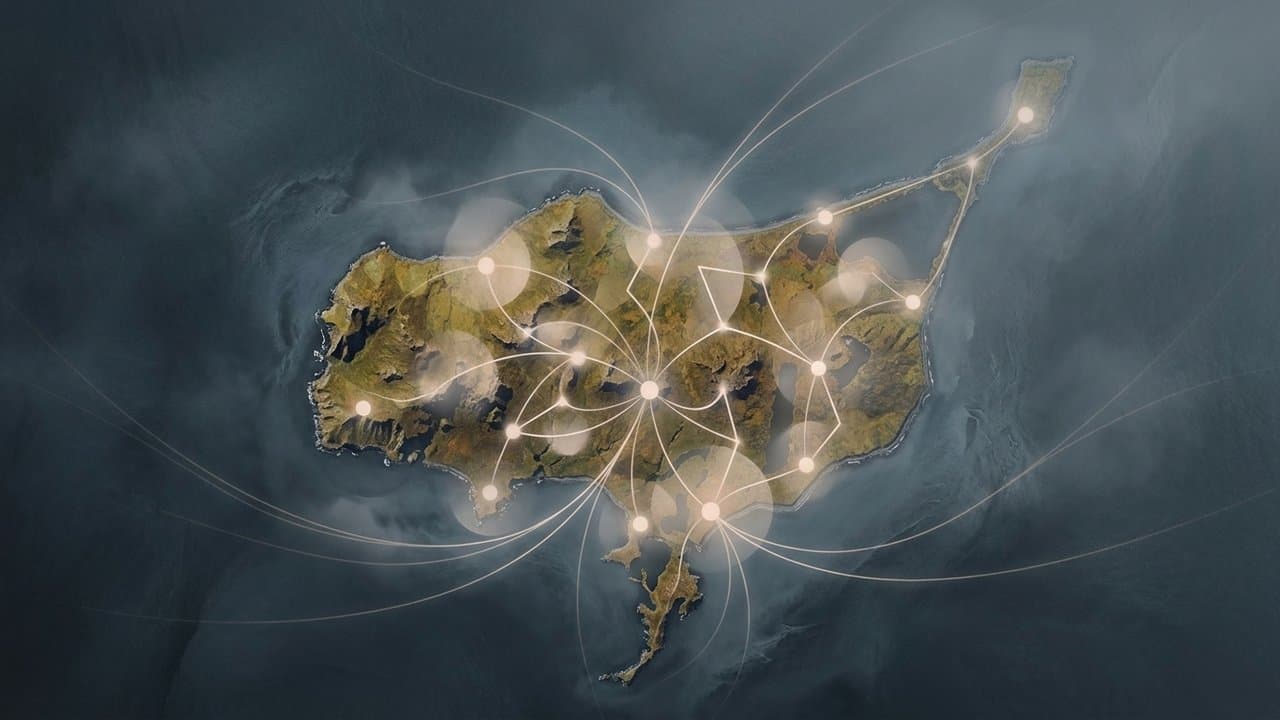
Editorial map (Gemini + Google Maps)
A tiny Bering Sea tribe runs its own healing court, from the island to Anchorage
On St. Paul Island, a community of about 320 people in the middle of the Bering Sea, the Unangax̂ tribal government runs its own healing court — one built to fit St. Paul, not copied from a state courtroom. A new federal grant will help it reach further, including across the water to tribal members who've moved to Anchorage.
The Aleut Community of St. Paul Island will receive $137,161 from the federal government's substance-abuse agency to expand treatment and recovery services inside its Txin Kaangux̂ Tribal Healing to Wellness Court. Over five years, the court expects to serve up to 105 tribal citizens with criminal cases — 15 to 25 a year, most between 25 and 40 — who are dealing with addiction and, often, the trauma, mental health struggles and unstable housing that come with it.
A tribal wellness court isn't a drug court transplanted onto a reservation. Guidance the tribe follows describes it as part of the tribal justice system that has to be adapted to each community's own culture, rather than borrowed from the state. St. Paul's version is a piece of a broader effort the tribe started in 2015 to wrap services around families caught up in the courts — cases involving domestic violence, child abuse, neglect or a parent's substance use.
The grant adds concrete pieces. Every participant gets overdose-prevention education and access to naloxone, the medication that reverses opioid overdoses. It also funds medication for opioid and alcohol use disorder, drug testing, referrals to recovery housing, transportation, and family and cultural programming.
St. Paul's roughly 1,800 enrolled citizens are split between the island and the mainland, and the court operates in both places — on St. Paul itself, and across the Anchorage and Mat-Su region, where about 1,200 of its members now live, more than 700 miles away. It's a small, remote tribe trying to keep its justice and recovery system attached to its people wherever they are.
The tribe's court is independent of its council and executive branch. A separate, larger federal award is also funding an expansion of the tribe's broader court services.
Source: Department of Health and Human Services, Department of Health and Human Services: [PROJECT GRANT (B)] Department of Health and Human Services: ALEUT COMMUNITY OF SAINT PAUL ISLAND for EXPANDING TREATMENT AND RECOVERY SUPPORT CAPACITY FOR THE TXIN KAANGUX̂ TRIBAL H ($137,161).
Made by our human newsroom with AI. How humans and AI work here · Grow with our newsroom
Stay informed. Support what matters.
Free, permanent access to local news you can verify. Subscribe to support Maggie AlaskaNews and go ad-free.
Related Coverage
A federal grant funds Tlingit & Haida's plan to hear child protection cases
Alaska News · 4w ago
Federal grant will test a Yup'ik healing framework against homelessness
Alaska News · 1mo ago
Tlingit & Haida wins $1.57M to train Southeast Alaska overdose responders
Alaska News · 4w ago
St. Paul Island tribe awarded $649,890 for math project for Pribilof students
Alaska News · 2w ago
Cruise ships come to St. Paul as the island rebuilds after the crab crash
Alaska News · 2mo ago
Comments
Sign in to leave a comment.
No comments yet. Be the first to share your thoughts.