TEAMS TaskForce Meeting to Reimagine the Former Public Safety Advisory Commission - June 26, 2025
Alaska News • • 83 min
Source
TEAMS TaskForce Meeting to Reimagine the Former Public Safety Advisory Commission - June 26, 2025
video • Alaska News
Great. All right. Yeah, thank you. All right, so I'm going to go ahead and call this meeting to order. This is the first meeting of the Task Force to Reimagine the Former Public Safety Advisory Commission.
We are noticed today from 9:00 AM to 10:30 AM. We're getting started at 9:04. Thanks for joining us either in person here at the LUSAC or virtually. I'll go ahead and start with a brief land acknowledgement. To start our meeting, we would like to acknowledge that we gather today on the traditional homeland of the Dena'ina Athabascans.
For thousands of years, the Dena'ina have been and continue to be the stewards of this land. It is with gratefulness and respect that we recognize the contributions, innovations, and contemporary perspectives of the Upper Cook Inlet Dena'ina. Thank you. All right, we are going to start with some opening comments from our facilitation team. And I'll turn it to Denali for that.
All right, well, how's my audio here? We can hear you very well. Okay, well, Assemblymember Rivera and others in the room, my name is Denali Daniels. And my team at, uh, Donnelly Daniels and Associates, or DDA, will be providing you all with facilitation support between now and October to help reimagine the Public Safety Commission. I'm joining you remotely from, uh, the Big Island today.
I'll see you in person in future meetings. I also have a magnificent cold. So if my voice sounds a bit wheezy, that's why, and I may go off camera while you're all meeting. I just have a few brief opening comments to kind of set some intentions for today before I turn it over to y'all in the room. DDA has been in business for 13 years.
I'm from Soldotna, but I've lived in Anchorage for over 25 years, and we share an office and a 14-member team with our partner company, Alaska Survey Research. And in addition to facilitation, our team is the qualitative side of the house for ASR. So you might see a little bit of that sneaking into our approach with this work. For 10 years, I was Denali at the Denali Commission, and we talked about it almost every day. And during that time, I was able to work with a lot of communities on infrastructure development, And one of my favorite projects was actually the Anchorage Neighborhood Health Clinic, which is just around the corner from where y'all are today.
And in addition to being your facilitators, DDA's background includes spending 5 years working on criminal justice reform. And the majority of our projects have a direct impact on local or statewide policy through recommendations similar to what we're going to be working with you all on. So we're pretty excited about this work. It's right up our alley. We're excited about some of the familiar faces in the room and also the new folks that we haven't quite gotten to know yet.
No audio detected at 3:00
So I want to be clear that as your facilitators, we are not the experts. You are the experts. And so I want to emphasize that we are committed to providing a transparent and open and constructive process for this work. We think that there may be a mix of task force members that have some background with previous Public Safety Commission work and others that may not have any background. So my challenge to you is this, um, Bring along what will serve the group process and leave behind what won't serve the process.
And keep it simple. So at this stage, we're just designing the process and we're listening.
So you have an amazing leadership team happening with your assembly and with the administration. I'd really like to thank Jennifer and Amy, who are in the room, for their amazing support the last 2 weeks as we've been standing this group up in pretty quick turnaround. And without further ado, I'd like to introduce your project manager and facilitator who you're looking at. I can see her on the screen. Isabella Vaz has been our senior facilitator for the past 2 years and is going to be leading this work.
No audio detected at 4:30
Prior to joining DDA, her tenure has included working for 2 municipalities on pretty similar projects. One in Colorado and the other in the city of Homer. So I'll let her introduce herself and take the reins, but before I do, I'm gonna make her blush. I wanna congratulate her on getting married last week. She has been out as we've been standing and putting, standing this up and putting this group together.
She's back in the saddle and hitting the ground running, and y'all are in great hands. So thank you for allowing us the privilege to serve you all, and I'll turn it over to Isabella.
Great. Thank you, Denali. Thanks for that. It's so great to be in the room with everyone today. Really great turnout.
So thanks for having us and excited to dig in. So I'll be your facilitator today and for future meetings as well. So you're going to be receiving a lot of emails from myself and my team. So stay tuned for that. I also wanted to give a shout out to my team who's in the room with us today.
Shane's over here. Anika's on the computer and Grace is over here. So, um, big thanks to the 3 of them for being here today and supporting. Um, they will be supporting this project through logistics and communication. So just wanted to recognize them.
Um, so our agenda today is really to kick off the process. Um, we're going to be getting to know each other, getting to know the task force, um, who's on it. Um, we'll look at the task force timeline as well as rules of engagement. And then we're going to spend some time doing an activity, the success circle that those in the room will see on the wall. So we'll spend some time thinking about and defining success.
And then, time permitting, we'll see where we're at when we get close to our 90 minutes, but we'd also love to hear from members of the public that we are in attendance today. And Denali mentioned this, but as your facilitators, our role really is to be unbiased. 3Rd party, um, we will be here to lead meetings to allow our co-conveners to be able to participate as participants. So we're really here to be that objective, uh, 3rd party voice. We'll be helping planning agendas as well as beginning to tee up decision-making, um, as we move further along in the project.
No audio detected at 7:00
And really, we're here to listen, so, um, we'll be providing feedback Please move forward. I do have a slide deck, a short slide deck that I'll present later in the meeting, but a few housekeeping items. We are recording the session today. This is going to be public record, so it'll be posted on the webpage. And there are people online, so, and I know that these owls are notorious for picking up background noise, so any side chatter will be picked up on the microphones.
And then also, just for those in the room, it's, you know, we're only here for another hour and 15, but there are bathrooms down the hall to the right. Straight down. Okay. Yeah. So restrooms.
Yeah. And with that, I'm going to pass it off for some opening comments to our co-conveners and Assembly liaisons. So, Felix, you have the floor. Great. All right, I'll be brief so that we can get to the heart of our meeting, but just want to thank everyone for being here today.
I am one of the co-conveners of the task force. I just want to speak briefly to what brought me to this task force and a little of the inspiration behind the creation of the task force. So for some years now, I have been concerned particularly around the nexus of how the public gets to interact and engage with regard to public safety, specifically from a governmental perspective. There are some infrastructure and pieces out in the non-governmental arena that members of the public can engage with public safety, but there, there had been waxing and waning efforts in the governmental arena, and the last effort, which was started in 2020, 2020 with a collaboration between the municipality and the Department of Justice had a good report that came out in the end, but I think now really looking to see what specific actions we can take on. And particularly for me, this— I want this task force to be one where we can have difficult conversations because this is a You know, the area of public safety is a sensitive topic depending on the context that you come at it from.
So I want us to be open to having difficult conversations, open to putting ideas on the table, and then we will go through a deliberative process to make our final recommendations. Now, this is a time-limited task force, so I'm not going to be asking you all to spend years and years of your life here. We are done in October, so between now and October is our scope, and I'm hoping to produce some really good recommendations. The co-conveners, which are going to be Rich and I, our roles are mainly to help steward this process, working with our assembly liaisons who are going to be myself, Anna Brawley, and Cameron Perez Verdia, who were the three sponsors of the resolution which created this task force. The liaisons and the conveners are going to be sort of the strategic thinking for this task force and help us get to accomplishing what our goals are.
And I'll just briefly read a couple of lines from the resolution which created this task force, and then we'll turn it over to Rich. So this task force, our suggestions shall include, but not limited to, exploring the role of the community and public safety, including opportunities for public engagement. And providing a recommendation on forming a new entity to replace the former Public Safety Advisory Commission. So it is as simple and as complex as that. With that, I'll turn it over to Rich.
Thank you, Felix. My name is Rich Kirtner. I am on the chair of the Justice Committee of the Alaska Black Caucus. I'm also on the Alaska Coalition for Justice, and the Alaska Coalition for Justice has many different community organizations as part of it. And they started in 2020.
Of course, Alaska Black Caucus has been involved with advocating for social justice for many, many years. And we were primarily involved with the body cams, getting body cams on the street. And so I think the theme for the coalition and the Black Caucus is transparency and accountability. I feel like I've said those terms so many times, I hate to repeat myself, but I think that's our— to be completely upfront, that's what our theme is in participating in this. One thing that's, I think, unique, we've looked at, we've been looking at different type of civilian interactions with law enforcement around the country.
There's probably 150 different cities that have had some kind of involvement with the oversight, or it could be a civilian review board. They're all across the board, they're all different, and what's important is to get something that fits the community, and so that's what we've been looking at, keeping an open mind whether it's a civilian review board or this, this Safety Commission or what. One thing I think is unique right now is that looking at the different other states and cities, they usually create something like a review board or civilian oversight when there's some kind of a crisis. And I think what's good, what makes me hopeful, is that there's not a crisis now. We can sit down all together.
This is a great array on this task force and start figuring out what works best for this community. And it's not going to be an easy task because there may be different ideas of what's right? But I'm hoping that we can come up to a consensus of what will work and which most will— in representing, I think, the communities in Anchorage, we want something that will be meaningful representation and community for the community in this whole process. So that's where we are, and thank you for being here, and looking forward to working on this. Isabelle?
Yeah, thank you, Rich. Great. Um, so, um, as Felix mentioned, we do have two Assembly liaisons. Anna, um, unfortunately wasn't able to join us today, but we have Cameron Perez Verdia. Thanks for some comments.
Yeah, I just have some opening comments. Good morning, everyone. Uh, thank you for being here today. My name is Cameron Perez Verdia. I serve as the chair of the Public Health and Safety Committee for the Anchorage Assembly, a role I've held for several years.
I've been deeply engaged in efforts to build and strengthen the relationship between the community and our public safety systems, particularly the Anchorage Police Department. Some time ago, I was part of the decision that led to the sunsetting of the previous Public Safety Commission, which was not a decision we took lightly. The intention of that commission was to serve as a bridge between the community and our public safety services, a place where we— where broad representative voices could shape a safer and more trusted Anchorage. But over time, we recognized that it wasn't fully meeting that purpose. So today, the task force begins a new chapter.
Our job is to ask better questions and build a stronger foundation for what community involvement in public safety could and should look like. The central question I hope we can explore together is, what does meaningful involvement look like? How can we create a structure where the community feels heard and represented? The police department is supported and informed by the community. Trust grows on both sides.
We're starting— we're not starting from scratch. Since the sunsetting of the last commission, there have been real efforts to reflect, reform, and rebuild, especially in response to the community concerns that were amplified after a series of officer-involved shootings, including the tragic death of a young girl that deeply impacted many in our city. That moment sparked renewed calls for accountability, transparency, and connection. It's also important to acknowledge that these conversations are happening nationally. In a climate where police departments often feel under siege and communities continue to feel deep fear and distrust.
Both of those feelings are valid, and both realities must be held with care and honesty if we are going to move forward meaningfully. Here in Anchorage, we are fortunate to have a capable and professional police force, a chief who I believe is the right person for the job. Important work has already begun. There has been an external review of the, of the specific shooting I mentioned, as well as broader review of training and policy practices with APD. The work is ongoing and it matters.
But no amount of internal review replaces the need for the community and the partnership that is required. That's where we come in, this task force. So what are we doing here? The task force has been created to help us reimagine, as, as Felix said, a Public Safety Commission, what it could be, define its purpose, structure, and responsibilities, understand the needs of the community and the realities of the department. To think honestly about what this new body can do well and what it can't do well or shouldn't do.
This Commission won't be the answer to everything, and that's okay. If we identify the needs that fall outside of the scope of this Commission, we can propose other structures or solutions. But our focus here is to build something that is credible, constructive, and lasting. So let's keep the conversation grounded and open, and as Felix said, respectful, but really honest. We're here to learn and listen and design something together that can help Anchorage continue to grow, not just in safety, but in trust, connection, and shared responsibility.
So I just want to thank everybody for being a part of this. I'm grateful for your time and commitment, and I'm really looking forward to this process. [Speaker:KAYLA] Thank you. Would you like to introduce the new business item, and then I'll— Perfect. All right, so you've heard, uh, the Assembly liaisons and co-conveners introduce ourselves.
I think we've done enough talking now. Would love to have an introduction of our task force members and focusing on defining, um, task force success and lessons learned. Thank you. Okay, so I'll take it from here. Um, so yeah, let's get to know each other.
Let's get to know the members of the task force. Um, we have an activity set up over here, so I'm going to move over the room and stand in front of you all over here. Um, so for our introductions today, I'm going to ask the task force members— we're going to go around in a circle and introduce yourself, your name, your organization, introduce yourself. But then I'm also going to ask you a question. So, and my question for you is to think ahead, think to the end of October you've had your last task force meeting and we have the report submitted to the Assembly with the recommendations.
Visualize that and then think about what a couple of word— a word or a couple of words of success and what that might mean to you in that moment. So we'll go around and I'll write your words for success in the circle and then we can kind of come back to this. Sound good? And then my— the part 2 of that is also when you're introducing yourself, if you have any lessons learned from the past, anything that we want to keep in mind as we move forward, I'll write those on this sheet as well. Anything that might have gone wrong in the past that we don't want to do again, but just kind of keeping in mind lessons learned as well as our success over here.
No audio detected at 19:00
So we'll go around the room first. We'll go around the table, and then any task force members that are online, I'll have you go at the end. Does that sound good? And then we'll have anyone online— you don't— well, maybe you do see the wall. Yeah, maybe you do.
We have a sheet here in the room that we'll write your words on, so Okay, let's get started. Chief Case, would you like to get us started? Sure. Sean Case, Anchorage Police Department, and simple word for success, communication. [FOREIGN LANGUAGE] Awesome, thank you so much.
No audio detected at 20:00
Would you like to go next? Sure. Hi, good morning, everybody. Katie Baldwin Johnson. I'm the Chief Operating Officer at the Alaska Mental Health Trust Authority.
Happy to be here this morning. Um, let's see, I think intentionality is one. I have two. I never have one. Um, and then transparency.
Intentionality and transparency.
And transparency. Any lessons learned from either of you? Not the moment. Not the moment. That's okay.
Okay, Thea, would you like to go next? Yeah, I'm Thea Agnew-Bemben. I'm with the mayor's office and the mayor's designated task force.
Um, do we just want like one, really like one word? A word or two words? Five words would be too. Okay, I mean This isn't one word, but I think the biggest, like, the most important factor is that we have agreement on what problem we're trying to solve. So what's the gap or the obstacle or the problem in our current setup that we're trying to address with the Commission?
And then from there, I think we have to set up a practical an effective structure that can actually endure between administrations. And some of that is really just where does it live, who provides support, who's on the commission, like some of those just logistical things. But I think more important than that is like the, the clarity of the mission that aligns with the problem that we all prioritize and say that's, that's what we're trying to do, because I think that's what we've struggled with. Here is just, you know, we want something, but we don't exactly know what for or why, or is that a gap? Is it being done some other way?
No audio detected at 22:00
So I think that's really important. And then in terms of lessons learned, a number of people in this room right now were part of a committee that I was part of first in my former job, but then as a volunteer co-chair. Which was the Equity Committee. It first started at the Health Department during COVID And then with the change in administration, the new administration didn't want to have that anymore. So we tried to sort of spin off and then we became kind of part of the Assembly.
We were like a community committee of the Assembly, which is strange because most Assembly committees are Assembly members. And we existed like that for 2 years. And then the Assembly finally was like, you know, we can't really support this anymore. So then we tried to move to the Center for the Office of Equity and Inclusion, and then some of the executive orders put a bit of a kibosh on that. So I guess there's a lot of things I could say about that whole experience, but I think just to be concise, which isn't my forte, if you can tell, the— I think just having that clear location that helps it endure and a clarity around who are the members, what are their roles, like just the kind of logistics of terms.
I mean, it's all the boring stuff that you don't really want to spend time on, but it actually helps set it up in a way that can be effective over time. Yeah. So, and it can actually like harness the energy and the skill of the community members and value their time because people, get together, but it doesn't always produce a result, and that's very frustrating for community members or for any of us.
So thanks, Thea. So I had having clear, having clear location and coordination, like support. I mean, it needs to be staffed. Like, you can't, you can't put a group of community members together and just be like, how about it? Like, Yeah, totally.
Yeah. So having clear location and support and then value community members, um, as far as lessons. And then did you have a word? Let's say, uh, I think it's clarity around the problem we're trying to solve. Clarity.
And then, yeah, specifically about the problem or the gap, and then what's the right mission to fill or address that problem. Like those two things have to happen.
Totally. Yeah. [FOREIGN LANGUAGE] Uh, sure. Um, for those who don't know me, um, my name is Cheryl Cox Williams. I'm the current NAACP president, and, uh, I am a UAA Police Department not to be confused with a spinoff of A&E, but I am a law enforcement administrator.
Uh, my specific role there is accreditation. So we're trying to standardize and demonstrate what good law enforcement looks like and have that codified. The other thing that I'd like to share is that because of my many hats— where's all of this coming from? I'm a retired Army veteran, I am a grandmother of Indigenous, I'm a mother of two Black boys and one Black woman. There—.
That is going to influence and color everything that I say and do, and I wanted to let everybody know that I will shift in and out of those hats quite frequently. And unapologetically. The referencing your success, I walked in with hope for several of the items that you mentioned, Juliette. I called it mission drift because that's the way I talk. Success is transparency.
As a single word, and for us to have collaboration authenticity. So that's like college speak. I want us to make sure that everything that we do is done in a way that everybody can understand it and be a part of it. And that's going to be the boring stuff before we even get to the meeting, which is finding all the people that are influenced by this. And if I've got ASD on the line right now, everybody who speaks all of those languages, I need a representative way for them to contribute.
Again, I'm not a big fan of the big table with everything, but where do you fit in and what are your concerns? Let's make sure that we delineate those. Um, financing, um, They're this volunteer army, uh, that's—. That doesn't work. I have a privilege, and that is why I'm able to be here at 9 o'clock in the morning.
And that is something that is very obvious. If we continue to host these kinds of task force at this time, you are automatically eliminating some very powerful voices. Which brings me to remembering the folks that have been trying to keep it going. Chief Case and I have been attending over at the Fairview Rec Center, the Anchorage Community Police Relations Task Force. I want them to be incorporated.
They've kept the fires burning for us. And last but not least, if it's not in the books, as a law, as a resolution, it's going to fade away again. Thank you. Thank you so much, Cheryl. Yeah, I love everything you said.
So I put transparency and collaboration, authenticity. Does that sound good? Okay, good. Awesome. Thank you so much.
Cameron? Yeah, for success, I put down the word real. Needs to be real. Real. Um, and I, I would add the word representation.
I think success means that there are all the voices that need to be in the room, need to be in the room at some point. Um, and, uh, and the lessons learned, I, I would like to just put the word practice because I think if we, we need to try things and need to continue to working on things, and if we're going to fail and we're going to falter. But continuing to work on them and continuing to do it, I think, is a really important piece, is that it doesn't have to be perfect, but we have to continue to practice the things we want to see succeed. Amazing. Thank you.
Phoenix. Yeah. So I think there are several of those that I would agree with and probably would have stated myself.
Hello. So probably, maybe the only addition that I would have there is sort of another measure of success at the end of the day is that the public feels like they've been involved. So I guess involvement, involvement, public involvement in the process, and then lessons learned. I think some of the past efforts that have had varying degrees of success or not, I think having an array of perspectives is critical to success. And I think some past efforts did have those and some did not.
No audio detected at 30:00
Having an array of perspectives. Awesome. Thank you, Felix. Rich? Well, I'm going to double down on transparency, but I got two words to add to that, and one is satisfaction.
If we can get— hopefully we can have some results from this that will satisfy the community and the police department. And I can, you know, sometimes people think that there's— we're anti-police because we're looking at these issues. I can guarantee it's not the case. Chief and I were at some meetings last night where there was a community and law enforcement that were together, and that's the way it should work. And so the second word would be, for me, it would be, um, I guess, lessons learned.
I think, and I think the thing we need to do, we have to look at what happened to the original or the last, uh, Public Safety Commission. I think there's a lot of lessons to learn from that. Also, there was a commission, there was a commission called the Founders Committee that addressed some of these issues some years ago, and it's interesting to look at their report and what their input was. And I was, so I think we need to do some research on what hasn't worked here and what may work. And so That's, that's it.
And that's why we're here again. Awesome. Thanks, Rich. Can I write transparency again? You said that you were going to double down on it, but I think it's cool to see—.
Underline it. Underline. I'll do that.
Morning, my name is Daryl Evans. I'm a sergeant with the Anchorage Police Department, and I'm the president of the Anchorage Police Department Employees Association. Represent about, uh, approximately 500 of the APD's employees, both the sworn officers and our non-sworn more support staff. I think two words that I would add to the success circle there would be attainable and reasonable.
Attainable, reasonable. Good morning, everyone. My name is Kimberly Rash. I'm the director for the Anchorage Health Department. And I would say one word would be engagement.
Engagement.
Can I add one thing? Yeah, please. It just, I just, it reminds me of what Rich was sharing because I think when I was talking about clear agreement on the problem, I think some of that starts with just clear agreed-upon definitions. Because, like, the title of this is Reimagining the Former Public Safety Advisory Commission. So public safety to me is a, like, especially from a municipal point of view, is really a joint effort.
It includes police, fire, health. It includes transportation. It includes parks. It includes a whole array. So is our goal to have a commission that actually speaks to public safety and Anchorage, or is our goal to have a commission that oversees the police department?
Those are two different things. So I think being clear again about definitions and, like, what problem we're trying to solve is really important before we jump to, like, what action we want to take in terms of what a commission would do. Yeah. So being clear about the problem we're trying to solve and the definition. Yeah.
Hopefully you all can read my handwriting. Okay, thanks, Thea. Okay, great. Got everyone in the room. What about those online?
Are we following along? Can I—. I'll just call on people. That's amazing. Thank you.
I'm like, I can't see the screen from here. So I'm gonna go ahead and start with Carl Jacobs.
Yeah, thank you, Felix, and good morning, everyone. Carl Jacobs here. I serve as the president of the Anchorage School District School Board. Mm-hmm. Appreciate the invitation to participate.
For me, a process that is successful and an end result looks like— I heard engagement earlier. I'll add the qualifier that engagement should be meaningful. And so meaningful engagement is important. And then a process that's action-oriented. I haven't been part of past efforts in this vein or in this space, but I have connected with folks who have, and I've watched many meetings of the Equity Committee, and I think one of the lessons learned that I heard from folks who participated in that was there was a lot of meeting and a lot of conversation, but maybe not a lot of end result from that process, or that was the perception or perspective shared at times.
And so I'm not— I'm just validating that perspective and sharing, uh, something that is something I've heard. Thank you.
Okay, what was his name? That was Carl. Okay, thanks, Carl. I wrote meaningful engagement for you and then end results on the lessons learned. So thank you so much.
Actionable, I think something that he really pulled out was actionable. Yeah, action-oriented was my other takeaway. Thank you, Cameron. That was the one I was missing. Thank you.
Action-oriented.
Okay. Great. So, next online, we'll go to Tafi.
And you're on mute, Tafi, if you're—. There you go. [FOREIGN LANGUAGE] I serve as the Executive Director of Pacific Community of Alaska. I come into this room as a Samoan fa'afafine, someone who is also privileged to be in this space with you all, and a community that is in fear of their lives when it comes to public safety within the Anchorage municipality.
The two words that comes to mind is community trust and shared power.
So those are the two terms that I would come in with understanding. Yeah. Can you hear me?
Yes, we can hear you. Community trust, and what was the second one? Shared power. So shared power, right?
And the reason being is because a lot of these services that we talked about, like APD, fire department, health department, from my community's perspective, these are services that are, that have power because they have something that community needs. And very often when we come in with a mindset of We have the power to take away or do whatever we want to do into community. Community will then just hope that you will make the right decisions for them without their voice being heard. And so I'm hoping that in this space, I would love to be heard and also double down on accountability and actionable where in this space, I know there's so many people in power in this space, that they do hear from community honestly and make decisions that will empower and give power to be shared with community. Thank you.
No audio detected at 38:30
Thanks, Tafi. Great. Okay, go ahead for next online. Cool. We'll read them at the end.
Next we have Randi.
Of course I get called on after Taffy. Thank you, Taffy.
I think I would also just kind of reiterate the actionable. I've also been a part of a number of committees and task force that we spend a lot of time communicating and building trust, which is really important, but the end result is not a lot of items to do and action on. And I think part of the second piece of that part of that is having this be a financial priority for the Assembly in order for it to be sustainable. So I would say sustainability would be the next one. And then data-driven.
I think we have a lot of information out there, both within the municipality and nationally, that could guide us. And so I would hope that we would look to the data as well.
Great, thank you. And last online, we have Amanda. [SPEAKING KLINKIT] Hi everyone, I come to you as Amanda Bremner, or Kasaay Klaa. I am a citizen of the Tlingit Nation in Southeast and also privileged to be a member of our community here in Dageaa'puk, or Anchorage. I also come to you as the Deputy Director of Native Movement, a 501(c)(3) serving Anchorage and Fairbanks areas, and part of our mission statement is building people power rooted in an indigenized worldview towards healthy, sustainable, and just communities for all.
And as part of one of our strategic priority areas is Just Communities and Community Safety. So we administratively support the Alaska Coalition for Justice.
As part of success, I would like to echo what was shared earlier, that, you know, anything— a framework or anything that gets developed out of this space is able to transcend administrative changes. I think sustainability is really important. And also that framework should be flexible enough to meet each moment with healing and heart-centered approaches that honor and provide equitable representation, like Tafi shared, for all the diverse facets of our community. So I think I might have 3 words Healing-centered, really, it speaks to that trust that also needs to be gained because through restoring relationships, we're building trust. I think healing-centered was what we missed.
No audio detected at 42:00
Healing-centered, Amanda? Yes, healing-centered, sustainable, and equitable.
Apologies, I am in rural Alaska today, so my internet might not cooperate.
And I heard, "Equitable." "Sustainable." "Sustainable." Wow. Great. And just really briefly, there are two folks who couldn't make it today, so I just want to acknowledge them and introduce them to the group, and I'm sure they can introduce themselves when they're here. So, um, Julia Louie, who is the President and CEO of VOA Alaska, and then Mercedes Arciniega, who is the Outreach and Good Government Lead of ACPRG. That's the Alaska Public Interest Research Group.
No audio detected at 43:00
Thanks, Felix. Great. What a great group you all are. Awesome. It's so nice to meet everyone and everyone in the room.
I'm going to read the success circle so we can remember we're visioning, End of October. What does success look like? Sustainable. Public involvement. Communication.
Reasonable. Intentionality. Actionable. Data-driven. Transparency.
Clarity about gap. Shared power. Transparency. Action-oriented. Collaboration, authenticity, healing-centered, satisfaction, community trust, attainable, real, sustainability, meaningful engagement, representation, equitable.
I don't know if I wrote shared power, but shared power. Awesome. Good job, guys.
Cool. Well, next I have a few PowerPoint slides that I was just going to run through, and then we'll do a time check. Felix, does that sound good? Yeah.
Feel free to jump in if I'm butchering my— Good job, everyone. Thanks for doing that with us.
How are we doing, Annika? Good. Awesome. We're live. Okay.
Well, I just have a few slides here that I'll run through pretty quickly, and then we'll do a time check and see how much time we have for our time together. So first— thanks, Monica. You can go ahead and go to the next slide. So first, I just wanted to introduce the role of the task force, and Felix mentioned this in his opening comments as well, but here you can see it on a slide. So the charge for this task force is to explore the community's role in public safety in Anchorage and to identify effective strategies for public engagement.
And then, ultimately, to issue recommendations on replacing the former commission by October '21. So, we're here to design something, uh, built with the community trust, and we're still at the beginning of the process. So, we're still designing what that looks like. Go ahead and hit next slide, please. Okay, you're good.
Oh, okay.
Aksanikwa. Okay, membership. Um, so really diverse and multidisciplinary task force. Um, you can see on the slide, um, it includes voices from the assembly, from the mayor's office, um, from the Anchorage Police Department, Health Department, the school board, various unions, nonprofits, advocacy groups, and community organizations. So, again, for everyone's time and volunteerism and commitment and energy for participating in this task force, we really appreciate it.
Uh, next slide. Uh, timeline. So between now and August, um, we're in the discovery phase. Which means that we're gathering input, we're hearing from the community, we're identifying models and needs. We'll be inviting speakers potentially to come talk and help ground ourselves in the process.
And then between September and October is when we'll be in the recommendation development. We'll be drafting and refining proposals, and that will be included in the final report, which is We'll submit end of October, uh, deliver it to the Assembly. And then throughout this, we'll be prioritizing community participation, um, both during these task force meetings and then throughout each, uh, for, uh, decision-making. The framework we're going to be utilizing, um, is consensus first and then moving to a 50% majority decision if needed. Um, more details to come on this this one, but I also wanted to mention here that task force members are able to send alternates if needed, and they will count for our quorum.
But however, as much as possible, we would like those primaries to be able to attend. An organization is able to switch out their primary if needed, so just communicate with our team. Um, go ahead, next slide. Communication. Um, task force documents will be available on the municipal website, which includes Meeting notes, agendas, any supplemental materials will be available for you there.
Calendar invitations will be sent through the clerk's office, and then you might receive other communications from my team at DDA. Um, next slide. As far as next steps, um, my team at DDA, we've already begun meeting with task force members one-on-one for just brief introduction meetings. So, you'll see that coming from us. And then on the slide, you'll see the task force meeting schedule that we have confirmed through the end of August, but with some additional meetings in September and October as we move into the recommendations phase.
And then, yeah, we'll be, I'm sure, posting any other kind of opportunities for engagement as well. And finally, yeah, thank you all for being here. Thanks for being here. At this point, we're going to transition to the next agenda item, but I did just want to pause for a second because I do see quite a few members of the public here in attendance, and I just wanted to take a moment and say thank you for being here. We really appreciate it.
I'm looking this way. But yeah, thank you all for being here. A really important part of this process is community involvement. So we really appreciate you taking the time to be here. At this point, we're still trying to figure out the best way to make that happen, but we have some time left.
So I did just kind of want to take a pause and see, like, raise of hands, maybe who would like to say something so I can kind of gauge. Okay, we have 1, 2, 3. Okay, over here. And anyone that would like to— 4. What about online?
Maybe you can tell me it. If you're online and would like to say something, let me know and I can—. I believe Member Silver wants to be in queue to ask a question. Thank you. Okay, we have one person online that would like to speak.
Okay, a member of the public. Okay, great. And what was their name? Uh, Cynthia. Cynthia, thank you.
Okay, well, um, with that, um, is it okay if we move into a quick adieu so we can talk about the best way to go forward? Sure. Okay, great. We're going to take just a quick break. Return at 10?
Yeah, yeah.
No audio detected at 51:30
5 Young— they met with the youth group too. Last night we all met at the, uh, Shiloh, and it was 5 young Black teenagers and 6 officers on us. Thought we should have a kids versus cops game because we were in the gym, but I couldn't talk them into that. But no, it was, it was good. And then we had—.
There's a good conversation. That's what I mean, was a good example of what could be. Because I mean, the kids were engaged, officers were really engaged, and, and it was just, uh, kind of a good feeling, everybody together. That's, you know, what could happen. Sorry, could have done that beginning.
Okay, so we have a good mention here that we can pull up and do like this QR code live poll.
Yeah, people online will put in like a or— and there's just like a word with the question, um, what words represent success with this past course. So we can do that first and then see how much time is left. Yeah, how long do you—. We'll do that open couple minutes for people. And are we just—.
We're simply pouring final words, but for Sim, like, yeah, like, so it's just, yeah, kind of the same exercise but So we could do that. I think that could take a few minutes.
So, oh no, in theory, 30 minutes. Yeah, so generally I don't want us to exceed the normal, uh, which is 3 minutes. Yeah, and I think it's a good room for 3 minutes for 5 people. Okay, do it. And then, uh, timekeeping if you want, or you just want to kind of let people talk?
Uh, no, we should have a timer. Um, I'm okay putting my timer on. You want like a 30-second—. Um, sure, yeah, that would be helpful for the public, I'm sure. Okay, I will have— and then we'll do the— pull up the Mentimeter right at 10, and I'll give the instructions for that, and then we'll move into Sounds great.
No audio detected at 54:30
Um, maybe I'll put it in the YouTube channel so people online can get to it. Yeah, we've had some— this will be their change of event.
No audio detected at 55:30
No audio detected at 56:00
Felix, whenever you're ready to take the floor. All right. Yeah, I think, um, to respect everyone's time, it sounds like most everyone is back in the room, so let's go ahead and get started again. Okay, thank you, Felix. Um, recording's good.
Okay, awesome. Um, well, thanks everyone. Um, so we'll move into the audience participation portion. And like I said, I just really wanted to echo that community involvement is really integral to this process. So, so excited to have you here and hear from you today.
We have a little exercise here that we'll start off with, and we hope that you like. So for those in the room, you can scan this QR code and it'll populate a word cloud. And the word you can enter is to the question, what words represent success for this task force? So, it should look pretty familiar for the one that we just did, but would love to hear from you all on what words represent success for this task force. So, you can use this QR code, and then for those online, we put in the chat a link that you can click on.
And enter your words that way. So hopefully it's like a multiple tab situation. Cool. So we'll hopefully start seeing those come up. But yeah, we'll take a few minutes to do that.
Okay.
Was there anyone in the room that didn't have a smartphone but wanted to participate? Because we can help you out with that. Yeah, I have a smartphone, but I don't use that. I'm just listening. So here, if you don't mind, I'm going to connect you with Shane right here, and Shane will put the words in so that— Oh, okay.
So they exist on our paper. Thank you.
Anyone else? Anyone else? And what about those online? Is anyone having trouble?
See comments. Yeah, if you're online and have any trouble, feel free to Let me know.
Give it another minute here, then I'll read our words.
How's it going, everyone? Good. Looks like we're slowing down. This is great. I love this.
This is— the visual is nice here. Okay, so I'm gonna go ahead and read these, um, and then we will move into some public funding. I'm good.
So communication, honest listening, justice, meaningful democracy, community involvement, accountability, transparency, intentionality, equitable, non-performative, defined problem, clear mission, defined terms, sustainable and engagement. So, good job everyone.
Cool. So, um, thanks, Annika, for pulling that up. I'll put those online for you too. Um, yeah. Okay, cool.
Okay. Um, so let's go ahead and move into the public comment portion. Um, Felix, I'm going to hand it to you, but I'm happy to help facilitate. Yeah. So, um, Some of you all are familiar with the normal public comment that we do at Assembly meetings or at committee meetings, so this is going to be similar to that.
You will have 3 minutes, you can give your comments, ask questions. We may not answer your questions, uh, right here right now, but definitely feel free to speak to anyone after the meeting and we can do our best to address your questions. With that, there's a question over here. Oh, sorry. Yeah, yeah, we have, we have a list going.
Yeah, yeah. With that, I'll turn it over to the list. And I just want to make sure we're leaving like 5 minutes at the end. Yes. Okay, cool.
Just check. Okay, Cynthia. Online. That's perfect. Let's do that.
Let's do online first.
Hi, can you hear me?
Yes. Okay, um, so I guess, well, one of my main concerns was starting into this that the day and time of these meetings, um, don't make a lot of sense. I'm going to let you know that right now, even as somebody who works in I work in, you know, an office type of profession. It would be very difficult for me to get there at 9 AM, so I can imagine that for even other members of the community, that would be almost an impossibility for them. So that's something that I think you all should consider.
No audio detected at 1:03:00
It's really important if you actually want community involvement, then you're going to have to make it at times that community could be available. Um, also timely notification of the meetings. This one had, I think, like a 3 or 4 day notification to the public. For me personally, that was not enough time to take my lunch hour and move it to this 9 o'clock time slot. And like I said, I have the, you know, the opportunity in my field to do that.
Most probably don't. Lastly, you know, in seeing the membership that you all have here, One, I don't think there was any public input on who was going to be a member of this task force, which I find concerning. Two, I find that, um, you don't have any families of officer-involved shootings on this task force, and I know that I've said that many times to the Assembly and specifically Felix, um, as a very big concern of mine when you guys were talking about even bringing this about. Um, of the task force, I see about half or so is nonprofits, and out of those nonprofits, only 2 of those nonprofits actually offer direct services, which means one-on-one care to clients. Um, and I would say specifically in the victim field, and to my knowledge, based on the grants they receive, they wouldn't be able to work directly with victims of officer-involved shootings or pursue, you know, any sort of assistance if someone calls for a misconduct complaint by APD.
So I just think those things really need to be considered when you're— I mean, you already have developed the task force, but if things move forward, you know, that really has to be considered. You're not including the community in a real way, and you're not putting anyone on the task force that could actually offer insight into the effects of misconduct and officer-involved shootings.
Thank you. Thank you, Cynthia. Yara, you want to go next? Sure. Yara Silver, Anchorage Assembly, East Anchorage.
And I kind of just wanted to echo a little bit what the previous speaker said about how the task force members were chosen. I don't know if that was very transparent. Process. I mean, I wanted to share that I also received an email from a patrol officer, and there is interest amongst patrol officers that their voice also be represented on task force. So I wanted to share that and, you know, just kind of ask if there is a way for you to open up the table to more community input on whose voice is at the table.
Thank you. Okay, um, Michael? Yeah, uh, yeah, my name is Michael Patterson. I'm with the Department for Social Liberation. I've spent half my 30s working around civilian oversight and accountability from BPD.
Uh, I just want to first address something Mr. Kirtner said. That I wholly disagree with. There is a crisis. We've had 13 officer-involved shootings since, since May of last year, and 8 of those people have been killed. That's a crisis for any city, any municipality.
And so I want to give a little bit of context to what PSL has done for the last 5 years. Uh, we were the first organization in the city at our George Floyd protest back in 2020 to call for body cameras. And we called for body cameras because a family member, a mother of a child who was killed back in February 2020 asked us to do that. We work regularly with families providing victim services with a partnership with Empowerment Advocate for families of officer-involved shootings. We actually proposed something called a community compact last year, which is eerily similar to what this is.
We asked for different stakeholders, including EPD, different community nonprofits, families and ourselves and media, because they're also important in this conversation too. We sent it to the Assembly and the mayor, no response. We also have published a white paper that all the Assembly members are familiar with, but they never acknowledged that it actually exists, about independent police review boards, the models, the financials, examples from other cities. And so basically we have a demand. One, the patrolmen don't need to be on.
They have the police— the president for the unions here and the chief of police are here. And two, we want to be on this task force as an organization. We've worked very hard. I've had conversations with mothers and fathers after their sons have been killed by EPD within the first 12 hours. You do not have authentic community input on this task force as it stands.
This is performative if it does not change, because it's the same voices that have been in the room for 5 years. And you may not like what PSL is saying, but if we're going to have a difficult conversation, then you probably should have difficult people in the room. And, you know, we're very difficult, but we're also professionals and adults. I have a college degree. I'm a paralegal.
I can sit at a table, or one of us can sit at a table and have these difficult conversations. And so we don't really appreciate this. It's not going to work if this is what it stays like, and you should open it up for more community involvement because the people in this room, you're not affected by what's happening. And just to answer a couple questions, it needs to be in the charter. Whatever this is needs to be in the charter.
And two, it needs to focus on oversight of the police because if you dilute it with public safety, It's not, uh, Parks and Rec shooting kids. It's not a— it's not the English Fire Department. It's APD.
And so there is a crisis. This is not being taken seriously. This is what it's going to be. And no disrespect to facilitators. So thank you all.
Thank you, Michael.
Uh, Bruce? Yeah, I'm here. There you are. My name is Bruce. I'm a member of an auxiliary organization, the Lost a caucus called Allies for Change and a member of the Alaska Coalition for Justice.
But more importantly, um, I lived in Anchorage for going on 45 years now and raised 3 kids here, 2 of whom are raising their families in Alaska. And I've been a longtime observer of the community's relationship with the police department here I think I've seen over time the good and the bad things about that relationship, and I think this is a really timely process. I'd just like to speak briefly about lessons learned because one of the things that whether or not the this is a legitimate process. I feel like it's going to be determined in the end by really the outcome and proposals that get reported back to the Assembly. So we should all, I think, wait and see, see what the product that, uh, that comes out of this looks like.
And the community will test it, and it needs to be tested by a really wide range of community voices and And folks, and I suspect that most of you agree with that, but I'm bringing it up to reemphasize it because having studied the literature and the research out there about community-police relations and the different organizational forms and structural forms that it takes in cities and so on around the country, and the research that's been done into the effectiveness of those various structures and and so on by organizations like NAACOL. That's a long acronym for, uh, a nonprofit organization that does research into civilian oversight of police in various cities, counties, and states around the country. And if you read their list of findings and lessons learned for their longstanding look at this issue in depth and detail, you can almost boil it all down to one thing, and that is, if it's— in the end, your local process doesn't result in meaningful community input and oversight, then really you shouldn't even start the process because it will just waste everybody's time. And there's always a danger that that's going to happen anyway, but in this case, I think it's particularly clear.
No audio detected at 1:11:30
No audio detected at 1:12:30
Thank you, Bruce.
And then Carrie. Hi, Carrie Martindale. I actually just moved to the area, uh, earlier this year, but it's a permanent relocation, so I care very much about being involved. I thought that's why I didn't know about—. Go ahead.
I'm just wondering, maybe you could come closer to the microphone so we can hear. Sure, sorry. Sorry. Well, Sarah Marnam, you're in the area. Actually, one of the things you said was something I wanted to emphasize, clear definitions, because it is very unclear what public safety means.
I was living in Maryland and we came, I guess in 2021, they installed a police accountability board. And I do think it's important at least to have the word accountability in whatever you're gonna do because I think And that doesn't have to be police accountability for it because accountability, you know, there are government organizations as well who need to be accountable for what all happens within the community. And let's see. Sorry, I jotted notes. I wasn't prepared to talk.
But I, you know, the thing that I think that everyone needs to feel in a community is that the police wake up Anybody who's armed, I think, should wake up thinking, how do I not use my gun today? And I think the whole community needs to feel like the police wake up not wanting to use their gun. And I, you know, in America, we don't all feel that way. So, I mean, I would like to be part of the community that feels that every officer wakes up thinking, how do I not shoot somebody today? So, So that's about all.
No audio detected at 1:14:30
Just please do a good job because I didn't know about this till like 2 days ago, and I understand apparently like it wasn't a transparent process who gets to be at the table. So that's problematic. It does, from what I've seen so far, seem performative, which I'm not a fan of. So that's about it. Thanks.
And then I think we have one more over here that I didn't grab your name. What was your name? Steven. Yeah, okay, you have the floor, Stephen. Yeah, my name is Stephen Jolly.
Um, I'm also part of Socialism Liberation. I just wanted to offer— I think I have a similar critique that some other people have put up here, um, with regards to public engagement, with regards to task force and, and, and all that. Um, 9 o'clock in the morning is going to be difficult to get people, um, just the public to come in and be a part of this. I think that probably is going to need to change. I feel like most of the people I think here are doing it because they're— this is part of the workday.
I'm not really sure. But yeah, and as far as the rest of public engagement goes, I kind of— I think I counted 7 out of the 11 people on this task force are from the muni, and I think that, you know, it's good to have any representation talking about this sort of thing, but it really probably does need to be opened up to more, uh, more public input with regards to being on— people being on the task force. And those who are on that, I mean, 3 of those 7 I think are law enforcement as well. I know you are not representing law enforcement, but it just, it doesn't give a good, it doesn't give a good look in terms of like if the actual mission moving forward has anything to do with actually mirroring what the public might be wanting out of this, uh, with regards to its mission. Um, I am kind of curious, like, who is actually here from the public?
I don't know if you can, you know, it just seems—. Yeah, and then here with the city. Yeah, and then of course, you know, there's just the representing an elected official that's been voted in by the whole community, and I've lived here 1973. So, you're the community, that's fine. We all live here.
That's true. Um, and then maybe a change in forum would also probably be, uh, or venue, I mean, would probably also be helpful, um, with regards to increasing public engagement because this is kind of a small space for more people to show up. If that's what the goal is. Anyway, thanks.
Thank you, Stephen. Is there anyone else that would like to have the floor? Okay, well, I'll hand it back to you. Okay, start comments. Um, so, so, um, the next task force meeting, think—.
Well, yeah. Thank you, everyone. Thanks, Cindy. Thanks, everyone, for that. Just a few closing comments here.
We do have the next task force meeting scheduled for 9:00 AM on July time in the same location, but I'm going to turn it over to the co-conveners for any final comments. And then just one last thing, if you are a task force member and you haven't scheduled your one-on-one with me and Jenelle, please do that. So if you have any questions on how to do that, you can ask me after the meeting. Sounds good. Okay, Felix.
Well, so final comments. This has been an interesting hour and a half. I knew it would be. I know this whole journey is going to be interesting. I've never been involved in something like this, and I'm anxious to see how it works out.
I'm glad that we have participation from the public on the task force and without. And I can guarantee there are good people who have good motives for this, and we enjoy public input, but it's going to be a journey to get to October, so buckle up. Great, thanks, Rich. So a few things from me. Just want to appreciate everyone taking their time to be here today, and just want to note for the record that one of the task force members, Mercedes, was on a flight during this meeting.
No audio detected at 1:19:30
Otherwise, she would have enjoyed being here, so she apologizes for not being able to be here. Um, just want to, um, address a few of the things that were brought up both by task force members and by members of the public. Um, so I, uh, I am someone who doesn't like to waste my time, particularly because I don't have much of it, and I suspect neither do most of y'all. I have in the past created and helped work on two different task forces for the Assembly, both of which led to actual substantial action that came before the Assembly, and the Assembly decided yes or no on it, which is the political process. So certainly, and in those two prior task forces that I created, membership was open.
There was no definition of membership. So if you came to the task force meeting, you were a member. I think in the discussion of this particular task force, I think there were varying opinions, and one of the opinions was having a defined set number of task force members may be beneficial. I'm willing to admit that maybe that's something that we should look again, whether that's an extension of the number of task force members or going back to prior models that I am more used to. Certainly with regard to the time of the task force, I mean, I will say right now I'm missing a work meeting that I probably should be at for my day job, and then so certainly that's something I can bring back to the strategic group, whatever we call ourselves, and see if we can revisit time of this task force.
And aside from, like, these meetings, what are more meaningful ways that we can engage in the public? We've talked about surveys, we've talked about town halls, so certainly you'll probably hear more of that. And then just last, reiterating When I create task forces, I want them to have a purpose, and I want them to have outcomes that folks can use, whoever's supposed to be the end recipient of those outcomes. So certainly I hope that when we go through this process, it does not waste anyone's time and that there are outcomes that are realistic and implementable. Really appreciate everyone's time.
With that, we will adjourn.
Speakers in this transcript
Amanda Bremner
PendingDeputy Director · Native Movement
Bruce Westerman
PendingChairman of the full committee · House Committee on Natural Resources
Carl Jacobs
Board President · Anchorage School Board
Cynthia Lummis
PendingChair, Subcommittee on Clean Air, Climate, and Nuclear Innovation & Safety · U.S. Senate Committee on Environment and Public Works
Denali Daniels
PendingFacilitator · Denali Daniels and Associates
Isabella Vaz
PendingProject Manager, Senior Facilitator · Donnelly Daniels and Associates (DDA)
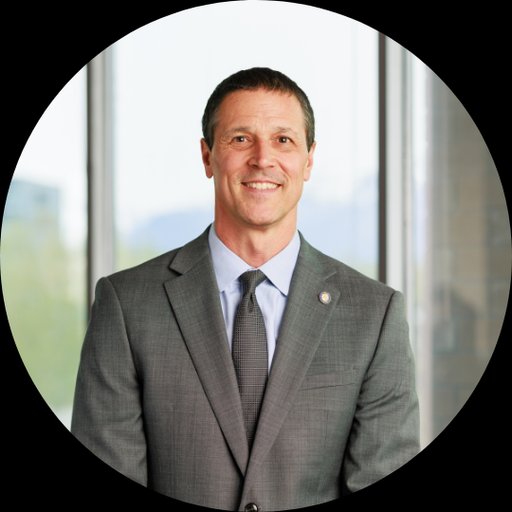
Kameron Perez-Verdia
Assembly Member · Anchorage Assembly
Rich Kirtner
PendingChair of the Justice Committee · Alaska Black Caucus
Tafilisanoa Toleafoa
PendingExecutive Director · Pacific Community of Alaska
Thea Agnew-Bemben