Alaska Legislature: Joint Budget & Audit - July 16, 2026 8:30am
Alaska News • • 131 min
Source
Alaska Legislature: Joint Budget & Audit - July 16, 2026 8:30am
video • Alaska News
Articles from this transcript
Alaska lawmakers order audit of Board of Fisheries process
The Alaska Legislative Budget and Audit Committee voted unanimously Thursday to commission a special audit of the Board of Fisheries, examining whether the board followed its own statutes, regulations, and public-notice requirements from October 2023 through July 2026.
Alaska legislative auditor resigns after 34 years, replacement process underway
Chris Curtis submitted her resignation as Alaska's legislative auditor effective August 30, ending more than 34 years with the division. A three-person subcommittee will review applicants and recommend a nominee to the full committee in August, followed by separate House and Senate confirmation votes.
No audio detected at 0:00
No audio detected at 27:00
Good morning. I call to order the Legislative Budget and Audit Committee. Today is Thursday, July 16th, and the time is 9:18 AM. Please silence all cell phones. We have the following members present: Vice Chair Fields, Representative Josephson, Representative Kopp, Representative Colombe, Speaker Edgeman, Senator Steadman, Senator Giesel, Senator Wielechowski, Senator Kawasaki, and myself, Senator Gray Jackson.
We have a quorum to conduct business. I don't see any other legislators in the room. First, I'd like to thank Sophie Tenney from House Records and Zach Lorhorn from the LIO office for supporting our committee today.
I'd also like to recognize Representative Stutes. Thank you for being here. We have a really busy day ahead of us and it is my intent to adjourn this meeting. Well, it was going to be adjourned at 9:30, but that is not going to happen. But we are going to move as fast as we possibly can because we have other meetings to attend shortly after.
So if there are any questions or comments before we begin, doesn't look like any. Okay. We are at agenda item number 2, approval of agenda. Vice Field Chair, may I please have a motion for approval of the agenda? I move and ask unanimous consent that the Legislative Budget and Audit Committee approve the agenda as presented.
Thank you. Seeing no objection, the agenda is approved. We're now on agenda item 3, approval of the minutes. Mr. Vice Chair, may I please have a motion for approval of the minutes? I move and ask unanimous consent that the LB&A Committee approve the minutes of the meeting on April 22nd, 2026.
Thank you. Seeing no objection, the minutes are approved. We're now on agenda item 4, legislative auditor hiring process. For the benefit of this committee and all legislators and the general public also, I want to take a couple of minutes to share a preview of the hiring process for the position of legislative auditor. Chris Curtis has served over 34 years with the Division of Legislative Audit and was approved by the legislature on March 2, 2012, to serve in her current position leading the division as legislative auditor.
But a few weeks ago on June 26th, sadly, in my opinion, Chris submitted her letter of resignation to the committee with an effective date of August 30th. I worked with Ms. Curtis and Stacy Bentley, the HR manager, to revise the job description for this critically important position. And the job announcement was posted to Workplace Alaska on Monday, July 6th, and it closes on Friday, July 24th. So following the close of the recruitment period and consistent with past protocols, I will appoint 3— a 3-person subcommittee to review the resumes, conduct interviews, and recommend a nominee to the full committee for approval. So it's my intent to present this— the list of qualified applicants to the full committee along with a recommended nominee at our August meeting.
After the nominee is approved by the full committee, I anticipate that we will appoint the recommended nominee to serve as acting legislative auditor until his or her nomination is voted on separately by the House and the Senate or in a joint session at the first possible opportunity. So with that said, are there any comments or questions before we move into executive session? Okay, great. Seeing none, we're now at item number 5, executive session. The committee will now be going into executive session for the consideration of the preliminary release of 4 sunset audits and a contract amendment and also to receive an update on a special audit.
Mr. Vice Chair, may I please have a motion? I move and ask unanimous consent of the Legislative Budget and Audit Committee go into executive session under Uniform Rule 22, discussion matters the immediate knowledge of which would adverse—.
October. We are now out of executive session and we are back on the record at 9:59 AM. The following members are present: Representative Fields, Vice Chair, Representative Josephson, Representative Kopp, Representative Colombe, Speaker Edgeman, Senator Steadman, Senator Giesel, Senator Wielechowski, Senator Kawasaki and myself, Senator Gray Jackson. So we still have a quorum to conduct business. During the executive session, we discussed the topics that were listed on the agenda.
And next, the committee is going to take action on two of those topics. Mr. Vice Chair, may I have a motion for the preliminary release of the sunset audits to the agencies for response? I move and ask unanimous consent that the Legislative Budget and Audit Committee release the following preliminary sunset audits to the agencies for response: Board of Chiropractic Examiners, Board of Barbers and Hairdressers, Board of Dental Examiners, and Statewide Suicide Prevention Council. Thank you. Is there any objection?
Okay, seeing none, the sunset audits are released to agencies for a response. Okay, next, contract amendment related to cybersecurity assessments of select state IT systems. Mr. Vice Chair, may I have a motion? I move and ask unanimous consent of the Legislative Budget and Audit Committee approve an amendment to the Division of Legislative Audit's contract with SystemSoft to extend the project timeline and expand the scope of the work for a new total not to exceed amount of $262,450 to be paid from existing funds. Thank you.
And I will object for the purpose of discussion. Miss Curtis, please tell us about this amendment. Thank you. Good morning, my name is Chris Curtis. I'm your State Legislative Auditor.
At the April 22nd, 2026 Legislative Budget and Audit Committee, this committee approved a legislative audit contract with SystemSoft, which is a cybersecurity firm, to conduct a comprehensive security review of 3 state systems. Today we are asking for the committee's approval of an amendment to that contract to expand the scope of work to include a new mobile application for an additional contract amount for $17,700. We didn't know this mobile application existed when we did the RFP. So we need to add that to the scope of work. We are also asking for approval to amend the contract's work schedule to accommodate a delay in implementing one of the systems that is subject to the review.
With the addition of the mobile application to the contract, the new contract cumulative amount not to exceed is $262,450. And the Division of Legislative Audit has availability within our budget to absorb the additional cost. Mr. Chairman, I object. Thank you. I remove my objection.
Are there any other objections? Okay, great. Seeing none, the motion is adopted. We are now at Agenda Item 6, Special Audit Request Regarding the Board of Fisheries. Mr. Vice Chair, may I have a motion for the special audit request for the Board of Fisheries?
I move and ask unanimous consent the Legislative Budget and Audit Committee approve the special audit request related to the Board of Fisheries. I will object for the purpose of discussion. Discussion, and I welcome Representative Stutes and her chief of staff, Matt Groening, to explain this request and to answer any questions. Thank you. Welcome.
Thank you, Madam Chair and members of the Legislative Budget and Audit Committee. For the record, my name is Louise Stutes, and I represent Kodiak, Cordova, Seward, and several smaller coastal communities. A request for a special audit of the Alaska Board of Fisheries process and adherence to its own policies, regulations, and statutes. The audit request itself is in members' packets and also posted to BASIS for the public. I know we're under a time crunch today, so I will keep my comments brief.
I've had the honor of serving as the chair of House Fisheries Committee for 8 years. In that capacity, I hear from stakeholders across the state on a variety of fishery issues. A common theme that in the eyes of the public is growing more severe each year is the board's adherence to a transparent public process, ethical conduct, as well as its own policies, regulations, and statutes. These concerns were proven factual when our own Attorney General recently overturned 5 regulation proposals adopted by the Board of Fish, citing ethics acts violations. Board decisions and consequent— are consequential, often impacting thousands or tens of thousands of Alaskans within a single action.
It is for these reasons that the board's processes and and procedures are by law transparent, ethical, and with ample opportunity for public comment. Again, the audit request on BASIS and in members' packet contains more context for the concerns as well as what exactly we are asking to be examined in the audit. But I want to make one thing perfectly crystal clear. The legislature should not be involved in allocative decisions. That is wisely what the Board of Fish is for.
This audit request does not address the outcomes of board meetings or how the resource was allocated. It's only about whether the board is following the law and sound public process in making those decisions. There is ample evidence and stakeholder concern to warrant an objective and impartial audit of this process. Given this, as the body tasked with confirming board members and executive branch oversight, I believe it's the legislature's duty to initiate an independent review of the Board of Fisheries and to ensure they are compliant with applicable policies, regulations, and statutes. And with that, I would be happy to answer any questions.
Are there any questions? Senator Kawasaki. Thank you. Thank you, Madam Chair, and thank you for bringing this special audit forward. I had a couple of questions regarding just the process and exactly what you're asking for.
So I'm reading the letter that was accompanying this dated July 8th. It talks about the regulatory actions, and I don't know who thinks that they are increasingly lacking in transparency. Or unethical, but I think that's rather inflammatory language. I'll just say I know some of the members of the Board of Fish and I think they're pretty open, but the question has to do with the complaints of the board. Let's see the question.
So there's a couple things that you're requesting as far as these out-of-cycle board considerations, and it seems to me that at least some of these bullets are— they're things that can be just researched. They're factual, and I'm just wondering why an audit was necessary for that.
Thank you for the question. Through the chair, Representative Kawasaki, it has become fairly evident that there has been a lack of transparency in some of the decision-making that has been made, and I think that that has been evidenced by having to have the Attorney General step in and negate several of the decisions that have been made by the Board of Fish. I'm— we're concerned about the lack of public process. The Board of Fish is tasked with allocating our resource in a fair and transparent way, and I am hearing from our stakeholders that they don't feel that that has been exampled very well. Let me just say it with that.
Through the chair, Senator Kawasaki, I think in relation to the reference to ethics violations, the Attorney General herself cited ethics violations in overturning the 5 proposals that are referenced in the letter. There are several other meetings and proposals that are under litigation right now, and I believe that consistently we have been hearing concerns over the course of you know, Representative Stutes' 8 years as Fisheries Chair, that folks are concerned about the process and whether it's being followed. And I think that's exampled in a number of ways. But, you know, I believe there were several letters that were written to the board by legislators after the February meeting, after the March meeting, talking about the process. The board never responded to any of those letters.
I feel like given the breadth of stakeholders' concerns and with current litigation, the AG overturning several proposals, and the amount of concern as Fisheries Chair that Representative Stutes has heard, it felt like it was appropriate to have an objective and independent look at the board's processes and procedures. Follow-up? So, I mean, I don't know if those reflect sort of an unqualified opinion or even kind of a qualified opinion about whether they're transparent or not, but the last bullet talks about you're trying to determine whether the process has been operated in a transparent manner. Feels like you might have an opinion on that, and then I'm wondering how, And that might be a question directed to the legislative auditor, how that would be determined.
Through the chair to Senator Kawasaki, I'm certainly happy to have the auditor respond. We worked with her rather closely in crafting these parameters. But what I do know is the state has set out certain parameters that these boards need to adhere to in making decisions. These boards, and particularly the Board of Fish, is making decisions that affect people's livelihoods. So we want to make sure that they're doing it within the parameters that have been laid out in statute by we as legislators and as the state.
That's all we're asking for is, are we living within— is this board living within the confines that have been laid out for them in order to make these decisions? Again, as I say, that affect— that are affecting people's livelihoods. Anything? Just finally, I just think I want to make sure that the request is targeted at the board process and whether the processes are being adhered to. And so it's not an opinion.
Like, if I guess, you know, I guess that Mr. Greening mentioned that a board— the board received letters and they— that weren't responded to. I don't know that that's necessarily outside of the process. They might just not want to respond to letters. I don't know that they're required to within statute or regulation, but I do know that, you know, there's a process. If, if there's a disagreement, you can litigate and you can go to Superior Court.
And that seems like that process should be separate from this process if we're just trying to make sure that the board is following its process.. And that's what Division of Legislative Audit can do. Through the chair, Madam Chair, to Senator Kawasaki, I, I tried to make it in my statement perfectly clear. We're not addressing any decisions that have been made by the Board of Fish. We— our intent through this audit is to address the process in which these decisions are being made and that the process that has been laid out and established is being complied with in making these decisions.
Through the Chair, if I might add something to that briefly. Certainly, please. Through the Chair, Senator Kawasaki, I would note that the second page of the document you are referencing is the actual audit request. So the bullets are the only thing that we are directing the legislative auditor to do. Those are very clear criteria.
The only one, as you pointed out, that might be somewhat subjective is determine whether the board has operated in a transparent manner and/or provided adequate public notice. I think that would be more for the legislative auditor to speak to how she would determine that. But as the representative said, we worked with the legislative auditor on crafting this request so that they were quantifiables that they could come back with results on. Thanks. Would you like to hear from the auditor?
Senator Kawasaki? If she's gonna— there's other questions. Okay, I can wait. Okay, thank you. Um, Vice Chair Fields and then Senator Wilkowski.
Uh, through the chair, I just wanted to thank Representative Stutes for bringing this request to the committee, and I support it and look forward to learning more. It does seem like some unusual decisions intervening in that board's decision, so thank you. Thank you. Senator Wilkowski. Thank you.
Um, someone reached out to me and Just on the dates that you're requesting, it's November— I think it's November 28th, 2023 to July 1st, 2026. And I think the first fall meeting was October 12th, 2023, and I'm just wondering if we should expand it to include that entire fall meeting schedule right through the present. Through the Chair, Senator Wilkowski, you're correct. The fall work session was in October. The date was chosen because that was the Cook Inlet meeting when kind of the meat of what was taken up at the fall meeting started.
I don't think we'd be opposed to stretching it backwards, but I will let Representative Stutes speak to that. Through the Chair, Senator Wilkowski, no, I certainly wouldn't have any opposition to that whatsoever.
Senator Wilkowski. I would also be interested in hearing from the auditor too about the scope of this. We have a letter that expressed some concern about the time that this might take. I would be interested in hearing the auditor's perspective on that. Thank you.
Chris, would you join us please? Thank you.
Good morning. I am Chris Curtis. I am your state Legislative Auditor. Through the Chair, Senator Wielechowski, you want to state your question and I will be able to respond. Thank you.
If I could, Madam Chair.
Just the— I know you helped craft this. We talked before the meeting and just wanted to give you an opportunity to talk a little bit about the your ability and your staff's ability to handle this and whether you think it's tailored narrowly enough so that it's not going on a fishing expedition and whether or not it's— because I know there's— my understanding is there's thousands of proposals and just your ability to do this in a fashion that best uses the state's limited resources Thank you. Through the chair, Senator Wielechowski. Legislative Audit actually did a similar review on the Board of Game about 8 years ago. So we're very similar, very similar processes, advisory committees, proposals, Division of Fish and Game, I mean Department of Fish and Game.
We're familiar with the Board of Fish meeting process. In fact, we've had done a few over the last 20, 25 years, reviews of Board of Fish meetings. So I feel we definitely have the resources we've created. Members know we have just recently created a performance-only section within our office, so they will not have to stop and start the audits when they, when they roll onto financial or federal. So they'll be focused only on performance audits.
So I believe we'd be able to start this fairly quickly. Which is unusual for the Division of Legislative Audit. Yeah, no, I have no concerns about our ability to conduct the audit. I always make sure that an audit request, that we have adequate criteria. We need criteria.
What is our criteria? The, the board's process is set out in regulation and statute, and that's what we will use to help evaluate and determine and answer the audit objectives.
Thank you. Are there any other— um, okay, uh, Representative Josephson and then Representative Kohl. Thank you, Madam Chair. Ms. Curtis, uh, in alignment with Senator Kawasaki's comments, the— what's important to me is that the criteria on page 2, which are more sort of written in a neutral fashion, are what guides your office so that you have no preconceived notion of any result in your findings. I assume that that's how you would approach this.
Representative Josephson, through the chair, we conduct all of our audits in accordance with auditing standards that require that we maintain our independence both in fact and appearance. Yes, I have no concerns about that. To be able to address these objectives using objective criteria. We will gather sufficient appropriate evidence like we always do for every performance audit we issue, and we will come back to the committee with an independent objective report. Follow-up?
Certainly. And the fact that the Attorney General designee did as noted and froze or somehow overruled orders. That, I assume, is a curiosity for your office, but not— I mean, I view that the Attorney General's office is— it's a political arm of the administration in some respects. Some respects it's not. But that's not dispositive to you.
It's just a— it's an interesting note, but it's not self-directive as to what you might find. Through the chair, Representative Josephson, if you're asking whether we will include that information as evidence in the audit, and the answer is absolutely. It's informative, it's factual. That would—. If we didn't, we would be deficient.
We will be also be collecting other evidence. We will be having interviews, we'll be reaching out to stakeholders, we'll be examining meeting meetings, we'll be looking at meeting minutes, we'll be looking at the process. We'll be doing all kinds of audit procedures. Follow-up? So I thought you were going to say absolutely not, and you said absolutely so, and I understand that.
But I guess where I'm going is, Attorney General's— Attorney General's opinions are— they're featured in the statutes all the time, but until there's a Supreme Court decision, they don't They're not dispositive of anything. You—. Are you going to have an independent legal judgment or are you going to say, well, Attorney General Mills said that this was so, I guess it's so? That's my question. Ah, through the chair, I, I've never— I'm always objectively reviewing Attorney General opinions.
Thank you. Thank you. Representative Kahlom. Thank you, Madam Chair. Through the chair, so to Miss Curtis, so it sounds like you could get this audit done maybe faster than usual.
I find, you know, we request audits and it's like 3 years later, and this seems pretty time sensitive as to what the representative was saying, these people's livelihoods. Do you have any timeline on how fast this audit could happen? Through the chair, if we get up and going in August, possibly by next session, but it won't come to this committee. Would never have it done that early because it would have to be done in prelim to you by December, final in January. We won't make that, but I would think generally 4 to 6 months of field work depending how big the team is.
It's hard to say exactly, but these meetings are very extensive. It took us at least 2,000 hours to do the board of game audit. So it all depends on the, you know, how big the team is. Follow-up? I guess I maybe just a comment, Madam Chair.
When I look through the bullets, there are some real measurable things that the audit— the auditor would be looking at. You're mentioning Fishery Statutes and Regulations, Administrative Procedure Act. Regulation, Executive Branch Ethics Act. So it sounds like there is a measure here. We've got these things.
And what has the board done? In my understanding, that's how— that's kind of how the audit would proceed. Yes, through the chair. Okay. And if I can have one more question to Representative Stutes.
Is there a reason for the dates that you picked, the 23 to 26? Is there something that started in '23 that Like it's a very specific amount of years. Just curious on why that—. Through the chair, through the chair, Representative Colon, that is when we were getting— as, as the chair of Fisheries, that's when a bulk of my complaints came in from constituents and we started looking and thinking and there was complaining that there wasn't a fair process. Let me just— it was the opinion of the stakeholders that there has not been a fair process, and that's about the time it started.
Matt? Just to add on to that, through the chair, Representative Kahlom, the representative was absolutely correct, but I think there was also some sensitivity in working with the legislative auditor not to go too far back because then it really would get bogged down if we said, you know, look at a 5 or 6-year period. 6 Years would be 2 board cycles. So I think we kind of looked at one board cycle, and as Senator Kawasaki pointed out, to truly get there, I think you'd want to go back to the August or the October work session. But okay, Mr.
Thank you. Representative Kopp. Yeah, I just wanted to note for the record, Madam Chair, that I fully support the request by Representative Stutes. I don't think we have a board, a regulatory board in state government that is more sought to be weaponized by activists. And the process does matter.
That's what the auditor has clearly said she's looking at, is process, to make sure that that is fairly followed. And I, I think it's in all of our interests to make sure that the process is good for all the user groups. And there is really no reason to oppose good process being followed. And I appreciate Representative Stutes bringing this forward. The media record is replete with concerns from constituents all across Alaska and every user group about what's happening with our Board of Fish.
So thank you, Representative Stutes. Thank you, Senator Wolekowski. Thank you. For Ms. Curtis, you were asked by Representative Josephson about the Attorney General decision in Area M, and, and there's some people who disagree, as, as most people disagree on just about everything that happens with Board of Fish, but there are some people that think the Attorney General acted inappropriately. Win in their Area M decisions.
And, and is that something that you'll be evaluating under this, um, rather than just taking the Attorney General opinion and sort of taking that as the gospel? Is—. Are you going to look into the Attorney General's decision to avoid the Area M regulations? Because that seems, that seems to be completely appropriate too. Through the chair, when I look at court decisions or Attorney General's, usually they cite case law And it's what they cite that I find is more informative in the arguments that they— and it's a piece of evidence, a piece of information.
Representative Josephson. So on the issue—. Through the Chair—. On the issue of authority they cite, there's undoubtedly case law they're not going to cite. So would you refer that matter to the attorneys in the Terry Miller Building to get their opinion as well?
Through the chair, it would be really hard to say right now what we are going to do until we start doing it.
It is— we haven't even started the audit. I can't tell you what the procedures will be. But we have a— generally we have a planning phase, a survey phase where we gather all kinds of information about an audit topic. And then we develop the scope of fieldwork. They bring that scope to me and I— like I said, an auditor position— and we talk about, you know, resources and timelines and what procedures they have in place to accomplish what we think.
So it's—. I really don't feel that this is an appropriate discussion because we don't really— we haven't even started the audit. But I can tell you that I am— I— I would be remiss not to read the— I haven't even looked at the opinion from the Attorney General, but the audit team will certainly put their arms around it as with other evidence and include it in their review during the audit. Senator Murkowski, just to clarify, if you found that the Attorney General acted inappropriately, I assume that's a, that's a path that you would pursue.
I really— so you are asking me whether if I found the Attorney General acted inappropriately, I would have to probably consult legislative legal or outside counsel depending on the subject and whatever we are looking at to inform us, legislative audit team, about what decision they made. It's not uncommon to seek additional legal advice when evaluating something. Thank you. Madam Chair. Oh, I'm sorry.
I'll defer to Representative Stutes if she would care to comment. Thank you. And I'm hearing kind of the flavor of this conversation, and I truly appreciate it, but I would like to remind the committee this audit request is not based on any outcomes of what the Board of Fish has done. It is based— we are asking it based on the process on which those outcomes were determined, determined. The process, not the end result.
That's the request of this audit, and I just want to make sure that that's very clear to the members of this committee. Thank you. Thank you. Speaker Edmond. Yes, maybe a couple questions for the auditor, if I might, Madam Chair.
You and I talked briefly before we convened this meeting, and my line of questioning was about— was basically about reproach. Is the Board of Fish or any other arm of state government above reproach? And I think— not to put words in your mouth— but your response was that you're authority is quite expansive in terms of, as a legislative budget auditor, you've got standing in the Constitution, as does the Board of Fish, by the way. But you have the ability to audit almost any arm of government, any sort of recipient of state funds, as I understand it. And your field of work over the years, the Division of Budget and Audit goes back many, many decades.
You know, you've audited just about every moving thing out there, if I recall, as a long-term legislator. And this issue is always going to be controversial. I'll join with Representative Kopp's comments that, that there is a lot of concern out there on a number of fronts about the Board of Fisheries, as there always is, right? I mean, I, you know, I grew up as a fisherman, and I can tell you back in the '80s there concerns about the Board of Fisheries and yada yada. But, but my question to you, I think everybody here knows, once the audit is completed, it'll be presented to the committee for further evaluation by the legislature.
Isn't that how it works? Certainly, through the chair. The audit is an independent— it'll be an opinion based on sufficient appropriate evidence. We bring it to this committee, we present it during executive session. This committee will decide whether or not to release it, but this committee has never not released it because it's an independent process.
This committee has never kept an audit report from being released to the public.
You want to—. Yeah, I just want to follow up. Yeah, please. Through the chair, but it's likely that this is going to contain recommendations, right? And as I look at page 2 of the memo, I'm seeing that this is going to be under the purview of fishery statutes, regulations, the Administrative Procedures Act, executive branch—.
Ethics Act. Ethics Act. And I would presume probably other sort of benchmarks that you're going to measure this against, because I think admittedly there are some subjective sort of criteria involved in this. Through the chair, absolutely. We'll have the criteria, I would say objective criteria, which we will evaluate evidence against during the audit process.
And likely we will have recommendations that come out of the audit.
So like any other audit, the board will have an opportunity to respond. Mm-hmm. Absolutely. Absolutely. We will work very closely with them.
They will see a draft before this committee sees a draft. Okay. Would you like to continue, Commissioner Richmond? Yeah, just very quick. I just want to say that anything with fisheries is controversial.
And I can hear it around the table here. I hear lines of questioning that I've not heard on other audits. I could tell you that it feels to me like we're auditing the oil industry or something here.
And fair game, fair enough. And I've got constituents who are probably on both sides of this issue. But I think to have a fair audit and I trust what your division does and I trust that the outcome will be objective. And again, it lands really in the lap of the legislature to take this into sort of any action step. So I just want to remind that to everyone.
And through the chair, we have done several Board of Fish audits over the years. It's not that we have never audited the Board of Fish. I think the last one was '98 or 2000. It's been a while. But we just added the Board of Game, I think, 7, 8 years ago.
So thank you. Any other questions before we move on? Okay. I want to thank Representative Stutes and Matt Groening for your delivery, and I withdraw my objection. Are there any other objections?
Thank you, Madam Chair. Senator Wilkowski, you're welcome. Just on the date, Madam Chair, I think we heard— I think I heard the sponsor say that they would be open to just changing the date to include the, the full fall cycle, which started October 12th, 2023. So you'd like to change the date? I would, if I—.
Okay, I don't—. There's no objection. I don't know if we need a motion to, to change the date. I don't know. Objection.
I'm sorry, there's no objection. Okay, probably. Again, Chris Curtis, legislative auditor. In the past when we have, um, amended the audit request, we simply, um, see if the committee is amenable to amending it. And if they are, you just, um, you say it on record and you make the motion to adopt it as, um, amended.
Okay. Do you want to restate? Yeah, Madam Chair, I, I— the, the, the audit request currently asks to cover from November 28th, 2023 through July 1st, 2026, and I would request that, uh, it begin on instead on October 12th, 2023. Thank you. So let's take a brief recess.
We're back on the record at 10:34 AM. Vice Chair Fields. For clarity, I'm just going to restate the motion. I move and ask unanimous consent the Legislative Budget and Audit Committee approve the special audit request related to the Board of Fisheries and that the audit cover October 12th, 2023 through July 1st, 2026. That simply provides clarity for the full audit period as referenced by Senator Wilkowski.
Thank you. And I'll object for the purpose of discussion if there's any discussion on that. Seeing none, I remove my objection. Any other objections?
Seeing none, then the motion is approved.
Okay, we are now at agenda item 7, adjournment. Do any members have any comments before we adjourn? No? Okay. Well, anyway, note that we're planning to hold, uh, the next meeting on either October— not October, I'm sorry, August 19th or the 20th.
We've pulled members for their preference for a date and time, and we are just waiting for a few more responses before we confirm the date and time of the next meeting. And I just wanted to take a moment to thank committee members for always making attending this meeting a priority. I really appreciate that. And I want to thank Chris and her staff for doing— always doing a great job on our behalf. And lastly, I want to thank my staff, Jeff, for making my job easy.
With that said, we are adjourned at 10:36 AM.
Speakers in this transcript

Andy Josephson
Representative · Alaska State House
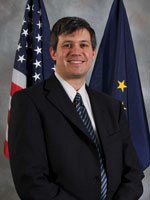
Bill Wielechowski
Senator · Alaska State Senate

Bryce Edgmon
Representative · Alaska State House
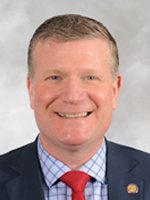
Chuck Kopp
Representative · Alaska State House
Gray Jackson
Member, Senate Community and Regional Affairs Committee · Alaska State Senate

Julie Coulombe
Representative · Alaska State House
Kris Curtis
State Legislative Auditor · Division of Legislative Audit

Louise Stutes
Representative · Alaska State House
Matt Gruening
Staff to Representative Louise Stutes · Alaska State Legislature
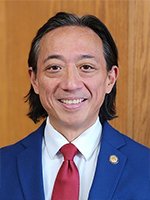
Scott Kawasaki
Senator · Alaska State Senate

Zack Fields
Representative · Alaska State House