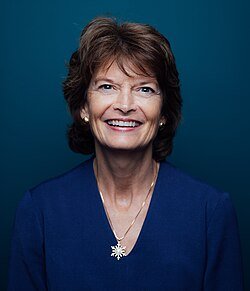
Senate Indian Affairs (Murkowski): Hearings to examine the nomination of Mark Cruz, of Oregon, to be Director of the Indian Health Service, Department of Health and Human Services.
Alaska News • • 103 min
Source
Senate Indian Affairs (Murkowski): Hearings to examine the nomination of Mark Cruz, of Oregon, to be Director of the Indian Health Service, Department of Health and Human Services.
video • Alaska News
Articles from this transcript
No audio detected at 0:00
Good morning. The committee will come to order. It's my pleasure this morning to be able to welcome to the committee Mr. Marc Cruz, the nominee to be the director for the Indian Health Service at the Department of Health and Human Services. We are graced this morning in our committee room to have a leader and a colleague from the House join us, the Chairman of the Appropriations Committee, the Honorable Tom Cole. And Chairman, I know that you have a very busy morning over there.
Ordinarily, the Vice Chair and I would give our opening comments, but I think I would like to defer to you this morning as a as a courtesy for time for your introduction for Mr. Cruz, if you would like. Well, thank you very much, Madam Chair. That's incredibly gracious. We're gracious, honestly. It is very gracious of you.
And very, very pleased to accept that generous offer, and I'll deliver my remarks, if it's okay with your permission, then I'll exit the room so I can get to my markup. We expect that. Thank you. Thanks for your consideration. Mr. Vice Chair, it's good to see you again as well.
Good morning to everyone. I'm very proud to be here to introduce my friend Mark Cruz, who's been nominated to serve as the Director of the Indian Health Service. But first, I want to extend my thanks to President Trump and Secretary Kennedy for this nomination and for instilling such a focus on tribal health issues. Mark's nomination reflects the administration's continued commitment to strengthening the federal government's relationship with our tribal nations and and ensuring that Native communities have strong leadership at the helm of their primary health institution. On top of that, I want to recognize the broader work that Secretary Kennedy's department has undertaken to strengthen the IHS and improve outcomes across Indian Country.
HHS has made real progress on investments and expanding access to care. Not to mention, just last week, they convened the first White House Council on American Indian Affairs meeting. This work matters, and today's nomination of Mark Cruz continues that momentum. On a personal note, I've known Mark for many, many years, and it's been amazing to watch his professional journey and his unwavering commitment to serving tribes across this nation. Mark and I first met in the summer of 2011 during one of my codels to South Dakota, which focused on tribal relations.
Mark was teaching at a high school on the Rosebud Indian Reservation at that time. Even at our first meeting, Mark immediately stood out to me, not just for his knowledge and work ethic, but also for his genuine respect and care for tribal communities. Later that year, on December 2011, we reconnected at the White House Council on Native American Affairs Tribal Leaders Summit at the Department of the Interior. Following that meeting, Mark joined my office as a legislative fellow focusing on tribal policy and funding issues. During his time on my staff and throughout his congressional career, we had the opportunity to work closely together on a number of different Native American issues.
Among them were the passing of the Tribal Labor Sovereignty Act in the House and improvements to tribal education— the tribal education system. Our advancements on these issues gave me a front row seat to Mark's steadfast leadership and dedication. He listens, he's talented at relationship building, he asks questions, he is knowledgeable, and most important of all, he never lost sight of who the work was for—our tribal communities. Those experiences, along with many others throughout the years, gave me confidence early on that Mark was a leader. Since then, I've watched him continue to grow as a public servant, and throughout all that growth, he's maintained respect for tribal sovereignty and and a clear understanding of the federal trust responsibility.
The Director of Indian Health Service is an important job. It requires someone who can lead and navigate challenges while at the same time keep Native Americans at the center of every decision. At a time when improving tribal health outcomes in Indian countries remains both an urgent challenge and a shared responsibility, I know Marc will rise to that challenge. So today, if you take one thing out of my remarks, let it be this: I support Mark's nomination, and I can confidently say there is no one better suited for this role. He's a leader, he builds bridges, and he works across the aisle.
He knows that Native American issues and interests are genuinely bipartisan and in most ways nonpartisan. You either believe in tribal sovereignty or you do not. And you either understand the trust responsibility of the United States or you do not. Mark understands both. As a member of the Chickasaw Nation, I know firsthand how important it is to have tribal representation here in Washington, D.C., and it's an honor and a privilege to be one of those strong voices for our tribal nations myself.
I know Mark is also up to this task as a member of the Klamath Tribes himself. His upbringing and experience will give him an insight into this role that very few have. If he is confirmed as the head of the IHS, Indian Country will be in good hands. I'm so proud of Marc for how far he has come since those days when I first met and began to work— and we began to work together. And I'm grateful for his dedication to tribes and to public service.
I have every confidence that Marc will be successful in this role as IHS Director, and that under his leadership, the Indian Health Service will continue advancing its missions and improving health outcomes for tribal nations and Native Americans across the country. I encourage you to move forward with this swift confirmation of Marc Cruz. He will never let you or Indian Country down. Thank you, Madam Chair. Thank you, Chairman Cole.
Thank you. I'm sure that Mr. Cruz appreciates those words, very kind. I want to show my appreciation and just extend my thanks for all of the work that you have done for Indian Country. Your leadership in the House over the decades in this area has been extraordinary. And as the chairman of the Interior Appropriations Committee, where we work on these budgets.
I know that Indian Country and Native people across America have a good strong leader and support over there. So we appreciate your words on behalf of this nominee and again, your good work over on the House side. That's very kind of you, Madam Chair. Thank you very much. And I won't leave till I'm excused.
I know whose house I'm in. You may be excused. Thank you very much, Madam Chair. Mr. Vice Chair, thank you. Good luck over there this morning.
Thank you. Thank you so much.
Well, we shall start our hearing then. Again, we're considering the nomination of Marc Cruz to serve as the Director of Indian Health Service at the Department of Health and Human Services. President Trump nominated Mr. Cruz for this position. On June 1st, 2026. Mr. Cruz, it's great to be able to welcome you to the committee, and, and I offer my congratulations on your nomination and my thanks for your willingness to step into this position.
I appreciated the opportunity that we had yesterday for the discussion. Um, you made a couple points yesterday that I felt were, um, really compelling and are worth repeating here today because I think that they demonstrate a very clear understanding of the role that you have been nominated for and the responsibilities. First, you said tribal consultation is a process, not an event. Think about that, how important it is, because so much of the time around here tribal consultation is just kind of a check-the-box exercise. We meet for one meeting and boom, we move on to something else.
But you say tribal consultation is a process, and I could not agree more. Meaningful consultation requires ongoing engagement, trust, and accountability, and you're certainly going to be doing a lot of it as director if you are confirmed. You also noted that HHS is a federal department that touches the lives of Native people from birth to death, and this observation reflects both the scope of the department's responsibilities, but also the importance of just getting it right. You've got a full spectrum here. The director of IHS is the most senior Senate-confirmed official at HHS, charged with carrying out the federal trust responsibility and advancing the agency's mission of improving health outcomes and addressing longstanding disparities that face American Indians and Alaska Natives.
And if confirmed, you will oversee healthcare services delivered through federally operated facilities. Support tribal health programs operating under self-determination and self-governance authorities, and work with urban Indian organizations that provide critical services to Native people living in urban communities. You'll also be called upon to understand the unique challenges facing Native communities and to help develop practical solutions that improve access to care and health outcomes. And while you do not come from the career ranks of IHS, your experience gives you a strong foundation for this position. Your lived experience in Native communities, your service as First Tribal Senior Advisor to Secretary Kennedy, and your previous work at the Department of Interior as Deputy Assistant Secretary for Indian Affairs have provided you with valuable perspective and experience.
I also recognize your role in advancing the President's FY '27 budget proposal for IHS, which includes an 11% increase in funding, continued advanced appropriations, and full funding for contract support costs and 105L lease obligations. You noted that the budget submission reflected partnership and consultation with tribes. I think this is really important for every agency that fulfills the federal trust. Responsibility. The committee has received more than 40 letters from tribes and tribal organizations that support your nomination, and those letters will be included in the hearing record.
I've also heard myself from tribal leaders in Alaska who have spoken highly of your understanding of the unique legal and policy framework that governs native health care and tribal programs. So, Mr. Cruz, I, I don't usually say it before we've actually gone through the hearing process, but I am looking forward to supporting your nomination., and working with the Vice Chairman and our colleagues to move your nomination through the committee. IHS needs a confirmed director. You know there's a lot of work ahead of you. We continue to face significant challenges, including workforce shortages, behavioral health needs, aging health facilities, and ensuring that tribal self-determination remains at the center of federal Indian health policy.
And these are— these are issues that not only require sustained attention, but real partnership throughout it all. So, looking forward to hearing more from you this morning about your vision for IHS and your priorities. I anticipate that members will have additional questions for the record, and I will look forward to your responses to those as well. So again, thank you for being here. Congratulations on the nomination, and I will now turn to to the Vice Chair, Senator Schatz, for his comments.
Thank you, Chair Murkowski, and thank you to the nominee and his family for being here. If confirmed as the Director of IHS, Mr. Cruz will manage a multibillion-dollar budget and approximately 15,000 federal employees. He will also be the most senior Senate-confirmed executive charged with carrying out the agency's mission and will be expected by statute and tradition to fulfill the federal government's trust and treaty obligations to provide health services to American Indians and Alaska Natives and improve their health outcomes. At a time when IHS faces persistent workforce shortages, aging infrastructure, and ongoing concerns about service delivery, this committee has a responsibility to carefully examine whether any nominee is prepared to meet the demands of this position from day one. This responsibility takes on added significance as tribal nations navigate proposed changes across the federal government, including actions that may affect the delivery of trust and treaty obligations that are often happening without meaningful tribal consultation.
So in today's hearing, I look forward to hearing how Mr. Cruz, if confirmed, plans to strengthen the quality and access to healthcare services for American Indians and Alaska Natives, improves operations, and addresses challenges facing IHS, especially the workforce shortage. These duties are critical no matter which party is in the White House, and so today's hearing is an opportunity for Mr. Cruz to demonstrate his commitment to serving Native communities and his readiness to provide leadership, expertise, and the advocacy necessary to uphold the federal trust responsibility. I thank the Chair for convening this hearing, and I look forward to hearing from Mr. Cruz.
Thank you, Vice Chair. Mr. Cruz, the rules of our committee require that all nominees be sworn in connection to their testimony. So we will now swear you in before you testify. I would ask you to rise and raise your right hand. Do you solemnly swear that the testimony you are about to give to the Senate Committee on Indian Affairs shall be the truth, the whole truth, and nothing but the truth?
I do. You may be seated. Now before you begin your statement, I will ask you 3 questions that I address to each nominee that comes before this committee. First, will you be available to appear before this committee and other congressional committees to represent departmental positions and respond to issues of concern to the Congress? Yes, Chair.
Are you aware of any personal holdings, investments, or interests that could constitute a conflict or create an appearance of such a conflict should you be confirmed and assume the office to which you have been nominated by the President? No, Chair. Are you involved or do you have any assets held in blind trusts? No. Very good.
So, Mr. Cruz, um, again, we're pleased that you are before the committee here today. I would ask you to proceed with your testimony. We do have your full written testimony that each of the members have, so however you would like to truncate that or expand on that, we appreciate it. If you have any friends or family that you would like to have recognized, we also welcome that as well. So you may begin.
Great. Wákleesi, Chair Murkowski, Vice Chair Schatz, and distinguished members of the Senate Committee on Indian Affairs. I'm Marc Cruz. I'm deeply honored, as are my family, the Klamath Tribes, and my fellow Oregonians, that President Trump has nominated me to serve as the 12th Director of the Indian Health Service. My life has been profoundly shaped by people who took a chance on me growing up in a rural community.
I am forever grateful to the families who opened their homes, gave me rides to games, or made sure I had a meal. In that same spirit, I like to make a few acknowledgments. First, I want to thank Chairman Tom Cole for his generous introduction. He gave me an opportunity right out of grad school and has been a constant source of advice, counsel, and support throughout my career. Second, I want to thank my brother Cougar for being here today and recognize my sister Shawnee, who couldn't join us.
I also honor my late brothers Cody and Victor, who remain in my heart.
I want to give a heartfelt thank you to the many friends that I have here in the room. Many from my hometown of Klamath Falls, Oregon, and my tribal delegation, Chairman Ray, Angie Wilson, who runs our health, and Councilman Jackson, and my best friends Kyle and Blake. I also want to recognize the BIA director who's joined us here today, a good fellow friend and Oregonian. And I want to thank the people who have sent prayers both traditionally and by text message. They both count.
I appear before you today humbled and grateful, ready to share my story and my vision for the Indian Health Service. As a proud citizen of the Klamath Tribes, a first-generation college student, and a former foster child, as is far too often, I come from a broken home. I'm the son of a deported drug dealer and a lifelong addict. I'm also the grandson of Barbara Unive, who, after overcoming colon cancer at the Santa Fe Indian Hospital and leaving a comfortable life in Dixon, New Mexico, she returned to Klamath to raise me and my siblings. Her love and sacrifice made everything that followed possible.
In some places, it takes a village to raise a child. In Indian Country, it often takes an auntie or a grandmother. For more than a year, I have served as senior advisor to HHS Secretary Robert F. Kennedy Jr. I thank the Secretary for creating this position in response to tribal leaders' requests and for entrusting me with that role. I work closely with department colleagues, tribes, and advisory committees to address the variety of issues that come before the department.
That also means going to your states, such as Alaska and New Mexico and Oklahoma and North and South Dakota. Amongst others, where I coordinate and collaborate with other federal agency leaders to address issues brought forth by tribal communities and promote healthcare affordability and improve nutrition in Indian Country. If confirmed, I am committed to continued rigorous engagement and follow-up. Life in Indian Country can be extraordinarily difficult. As a former high school teacher on the Rosebud Reservation, I saw firsthand the devastating effects of suicide, substance abuse, missing and murdered Indigenous people, gangs, economic hardship, and chronic disease.
While these challenges persist, I have also witnessed the extraordinary dedication of healthcare providers, teachers, and law enforcement officers, both Native and non-native, who walk into our communities every day and work tirelessly to empower the next generation. Last summer, I visited the Rosebud Hospital. While I saw the real challenges with workforce, facilities, management, my spirit was lifted when I heard someone call out, "Mr. Cruz!" It was one of my former students from St. Francis who is now working the front desk 12 years later. In that moment, I was powerfully reminded why I'm called into this work. Committee members, I firmly believe that tribal consultation is a process, not an event.
Tribal leaders in Congress can count on me to engage early, listen carefully, and be transparent. I am realistic about the challenges but optimistic about what we can achieve together. With strong federal, tribal, and urban Indian health partners, outcomes will continue to improve. We see this in the work to return traditional first foods, the Secretary's work to address the chronic disease epidemic, work in the special diabetes program, amongst many others. If confirmed as director, what I will bring is direct lived experience in the communities and systems I would oversee.
My family, my friends, and my tribal community will live with the consequences of that work I do for decades to come. I would welcome that challenge and I'd be honored by the opportunity. Thank you for the consideration of my nomination. Sĕpkečə.
Thank you, Mr. Cruz.
We will now begin a round of questions. I am going to ask consent to include in the hearing record the letters of support that we have received for Mr. Cruz's nomination, so they will be included. Let me ask first about the dual role that you will be taking on. You're going to continue to serve as Secretary Kennedy's Senior Advisor for Indian Health while also leading IHS. Obviously, both roles are critically important.
IHS is central to fulfilling the federal government's trust responsibility to provide the healthcare to American Indians and Alaska Native, but many issues that impact tribal communities extend well beyond IHS and across HHS. We were talking about them just yesterday. It's everything from Head Start, it's LIHEAP, it's some of the domestic violence programs, child welfare, homelessness. There's so many other areas. Now, HHS is— I was going to say undergoing, but they are— they have announced pretty major reorganization.
We held an oversight hearing here in the committee to ensure the federal trust responsibility and the tribal programs were protected throughout any restructuring. But one of the things that we heard very clearly at that hearing was that tribes need strong advocates within the department who understand how decisions across HHS impact our Native communities. So, can you just speak to, first of all, this dual-hatted responsibility that you, you have, but also how you will elevate tribal issues across the entire department, and as there are discussions about organizational changes within HHS itself, how we ensure that not only it's meaningful tribal consultation, but protecting these programs that serve Native communities. So often it doesn't— the programs themselves don't have tribal in the title, but again, the impact to our Native families is quite considerable. Can you speak to these issues?
Thank you. Yeah, thank you, Chair. First, to Your question about the dual role, the Secretary created this senior advisor position and I'm the first such to do this job. And so, we're still figuring out a lot. But as you mentioned, there's a lot of work in— of tribal affairs in the different operating divisions.
A piece of my work in that role has also been to work closely with the Indian Health Service. Thankfully, we have a couple of political appointees there. You know, one of my hiring philosophies is to hire people smarter than myself. So, we have Dr. Hartwig, experienced family provider, and Clayton Fulton, lawyer, who are helping within Indian Health Service. If confirmed, I would look forward to closely working with them and taking on some more of those management responsibilities.
That the IHS director is responsible for. But what's surprising to me is that it's taken so long for that senior advisor position to be created. But it's also surprising to hear that the IHS director hadn't had a meaningful role with the secretary prior to this senior advisor role being created. So in a way, if confirmed, I would have— I would be dual-hatting, but I would essentially be preserving that close relationship with the Secretary. And as we manage within the departments, that is just a critical relationship to have because we do hear about a number of issues from tribal leaders and tribal health departments and our urban partners about issues that are occurring in different operating divisions.
And in my current capacity, I get to troubleshoot that. In a future capacity as director, again, if confirmed, I would continue to do those things and advocate even more ferociously for the equities of our tribal partners and our urban Indian partners. So, I see them as very complementary. The IHS director is an important advocate for Indian Country within the department. And I think that both are achievable and they're not mutually exclusive.
And the final point is I also hear all the time about the silos that HHS has artificially created. We get it in QFRs. We've seen it in GAO reports. The beauty of this role would be to be able to navigate between OPTIV and OPTIV and be a part of budget formulation conversations in ACF. In other operating divisions.
And so I look at this as a positive and a win for Indian Country. Well, it is a challenge, and it's one that I hope every morning you wake up and you think, how am I going to reinforce the tribal priorities at all these levels within a massive department? Where most of the people around you are not focused on the needs of Indian Country. Mm-hmm. And so for you to be that advocate within the department and continuing this role as senior advisor, I do think is important.
I think it's pretty telling that you note that there has been somewhat of a disconnect, I'll just phrase it that way, between the IHS director and and the department itself and the Secretary's office. And maybe that's why we have struggled sometimes over the years with a— just a lack of connectivity there. So we're putting a lot on your shoulders here, but making sure that you are first and foremost thinking about tribal interests and the interests of Native Americans, Alaska Natives, and Native Hawaiians every day is where we want you to focus. Absolutely. Vice Chairman.
Thank you, Mr. Cruz. Thank you for being willing to serve, and thank you for the conversation yesterday. We talked a little bit about the IHS staffing problems, and under The current administration, IHS's attrition rate reached a 4-year high, 15.3% in 2025. You know what this does to service delivery.
We talked yesterday about housing, about pay scale, about Indian preference in hiring.
But in the written correspondence, you tended to focus a little bit more on Indian preference in hiring than the other things. And I told you I was open to modifications if they were a real impediment. I just don't want them to be the scapegoat. It seems to me that if you're being asked to hire— to look first at a tribal member, that's sort of intuitive anyway. Because it's hard to keep people in these jobs in healthcare, and to the extent that they belong to those communities, they tend to stick around.
And so it's just a smarter investment, but nobody's prohibited from hiring someone who is not a tribal member. Um, and so I, I just wanted to put a fine point on what do you actually think the problem is with the IHS staffing shortfalls? Yeah. Thank you, Vice Chairman. As I noted, this has been a long, persistent challenge of the Indian Health Service.
And in my current capacity as senior advisor, I've worked with the Indian Health Service team to understand why for decades we've heard of this vacancy rate fluctuate. And We can, and you know, GAO's looked, you know, independent observers have looked at this. And as we noted, it's a number of factors, housing opportunities, education opportunities, a variety of factors. But when I really push back, like those are well documented again for a while. But then I see my 638 tribal partners who also have a duty to hire and provide direct services.
Why are— why is their vacancy not 30%? So that's where I want to look to, uh, their expertise, their experience, and then ultimately their flexibilities that IHS isn't subject to. So the more we can bring authorities and flexibilities to IHS to end this long-time vacancy rate, the better. And if it's a matter of our hiring managers, um, you know, being overly cautious, like, I want to understand why and where that comes from. Yeah, the other thing is under 638, you can, you can do different things, right?
You do the pay scale's different. Yep. That's probably the main thing. Like, intuitively, if you're trying to fill a job, the more you pay, the the more applicants you're going to get. Absolutely.
And so, the 638, that authority is, to me, probably the dispositive one. They can hire J-1 visas, and they can provide additional benefits. And so, the reason I care so much about this is frankly twofold. One is, like, this is the problem, right? You can't run any healthcare delivery service with a 15% attrition rate.
And so, it's extremely important that we actually identify the rate-limiting factors and not the potential scapegoats. Mm-hmm. And one of the things this committee has been very good about doing is sort of whatever disagreements Democrats and Republicans have or may have had in the past or continue to have regarding DEI and all of that, we sort of hold harmless what we're up to because of trust and treaty obligations. And so I was a little worried that it was like, it's preferences in hiring, and then we're down a road where there's a whole sort of swarm of internet trolls on both sides of this equation, and we're not like figuring out what's the damn problem. Yeah, seems to me if you're talking about flexibilities, it's not necessarily that 638 has unique flexibilities on hiring preferences, but just they can pay more, provide more benefits, and hire different people.
And so I just want your commitment to attack this problem As if I didn't know which political party you belong to, because that's my expectation for you as IHS Director. Thank you, Vice Chair. You have my commitment to work with you on it. Like, longstanding problem that I want to get after, and I want to just be honest about the situation. And at the end of the day, my priority, if confirmed as Director, is patient care.
I'm tired of visiting facilities where they've had double-digit vacancy rates. And I really want to work closely with my team. I've been a fierce advocate internally for hiring exemptions and put together a robust 2026 hiring plan. So this is going to take time. We didn't arrive here in 18 months, and it's going to take a concerted group collaborative effort to get out of it.
So I look forward to working with you and your team. One final question: do, do we have your commitment to be responsive personally if any member of the Indian Affairs Committee has any question? Will you call them back within a reasonable timeframe? Yes, Vice Chairman. Thank you.
Thank you. Senator Smith. Thank you, Chair and Vice Chair, and welcome to the committee, Mr. Cruz, and thank you for our conversation last week. It was very helpful to me. So here's what I'm wrestling with.
You clearly have an understanding, a firm understanding of the federal government's trust and treaty obligations to tribal nations and to Native people, and you have the support of tribal leaders in Minnesota, which is of course very important to me. Yet you also have served as senior advisor to Senator— to Secretary Kennedy during a time of great tumult in the department. This administration has gutted public health, health research, mental health programs, which in my view has caused real harm to Native communities, even if IHS was spared. And as you have said, the Department of Health and Human Services touches all aspects of life for Native people, not just— it's not just the IHS. So I'm trying to reconcile this.
And I want to ask a couple of questions to try to get at this. The first question has to do with the 1115 Medicaid waivers, okay? So we know the Centers for Medicare and Medicaid Services recently published guidance implementing a provision of the one big beautiful bill that makes it harder for states to offer services like traditional healing in Medicaid programs. But essentially, states are now being required to resubmit existing 1115 waivers and prove that a service is budget neutral. And you've touted the use of these waivers to expand access to traditional healing.
So, can you talk about this? How would this new budget neutrality requirement, you know, have an impact, or how might it impede access to services traditional healing? Thank you for that question, Senator, and I really appreciated our conversation and the heartfelt nature of it. Specific to your question around the Section 1115s, so I am generally aware. I don't work at CMS directly.
I wasn't involved in that rulemaking. However, I have seen correspondence from tribal organizations that have provided their views and feedback on these regs. Some of it's been positive. Some of it has asked for additional work.
I will work closely with the DTA team to understand what that budget neutrality actually does for the traditional healing. But the Secretary and I have been supportive of those methods. You know, it's kind of an all hands on deck.
What we know is what works for one person may not work for another. So that's why we've been supportive. Well, we can follow up on that and further that conversation. I think it's an example of why it's so important that these, you know, these sort of broad-based changes in Medicaid that have a big impact on Native communities, that that is well thought through. Let me follow up just a little bit more clarity on the question that Senator Murkowski was asking about dual roles.
So will you, which office will you work out of? Will you work out of IHS, or will you stay in the Secretary's office? Like, how will that work? So, thank you, Senator. A lot of those logistics we're still working out if confirmed, right?
It's predicated on a positive vote. So, if confirmed, I will be showing up in Rockville. That's the duty station of the Indian Health Service Director. I've also know that I will keep an office near the Secretary where I currently— the one I currently occupy. So you would imagine going back and forth a bit?
Yeah, absolutely. And a lot of our leaders do. I see our HRSA administrator, I see our CMS administrator, and we have our all-political meetings. Oftentimes senior leadership from different OPDIVs are staffing the Secretary in meetings or briefing him. And so having that—.
I'm sorry, so you would continue, and then will you be paid out of IHS or out of the Secretary's office? Is that figured out yet? I haven't—. We haven't figured that out, but my understanding is if I encumber the IHS position, I would have to be paid out of IHS. Okay, okay.
Senator Schatz was getting at that a little bit, but getting at this next question a little bit. It has to do with big hullabaloo at the beginning of the Trump administration about how there was this sort of a blanket all DEI initiatives are are bad and need to be thrown out. This happened everywhere, and it was really, in my view, very unfortunate how Native people got caught up in that, as if providing particular attention to Native people was part of some broader DEI initiative. Can you just commit that in this role that you will ensure that programs that are serving tribes and the Native Hawaiian community are not considered DEI or sort of cut because of the misconstrued connection between DEI and those tribes and those programs. Yeah, yeah, I'm aware of the DOJ clarification last spring, and I will support the trust and treaty responsibility that the federal government has for tribal partners.
Okay, and just one last quick question. Will you support advanced appropriations for IHS and strong funding in upcoming budgets? I support the president's budget request that does include advanced appropriations. Okay. I have a follow-up question on urban Indigenous communities, but I'll submit that to the record.
Thank you. Thank you very much. Thank you, Senator Smith. Senator Lujan. Thank you, Madam Chair.
Mr. Cruz, good morning. Good morning, sir. Thank you for taking time to come by the office. Very much appreciated the conversation. As you've heard from all of my colleagues, I share with Democrats and Republicans here how important IHS is to our constituents, to the people that have entrusted us with these responsibilities.
In New Mexico, you're familiar, you've visited recently. To the nation, to the Navajo Nation, as well as a few other sovereign nations as well. Yes, Senator. As you know, IHS serves as a backbone of healthcare for communities. And I remain concerned anytime I get a call from a constituent or see someone at their home or if they stop by and visit me, they see me out on the farm doing something and tell me what happened, and it's not a good story.
Nowhere is this more evident than at the Gallup Indian Medical Center, which we spoke about in my office. Yes, sir. One of the largest Native-serving medical facilities in the entire country. Now, GIMC contends with persistent drinking water issues, as you're aware. People from IHS have visited over there.
As a matter of fact, when I brought up in a hearing here that the drinking— that there were signs around the hospital that people shouldn't drink water. Someone from Washington, D.C. ordered them to take the signs down. Not fix the water problem. Take the signs down. That's not leadership.
That probably put some of my constituents in harm's way. Now, I hope that the United States knows that we cannot allow a facility of this importance to keep operating under these conditions. Getting a new facility built is not optional, it's imperative. As I've shared with you, this facility was left out of the FY27 budget because it was deemed not, quote, shovel ready. So my question is, in this new role, will you commit to working with the Navajo Nation to ensure that the project is shovel ready so that it will be included and it is ready in time for the next budget cycle?
Senator, thank you. I really enjoyed our conversation, and specifically about my visits to your state. Um, when I walked in, in my current capacity as senior advisor, one of the areas I wanted to look at was our construction program, because there's no more direct signal of one's commitment to health than a modern, clean, safe facility. And when I saw that IHS had 8 projects on their 1993 list, my jaw dropped. And unfortunately, Gallup Indian Medical Center is one of those projects on that list.
And I asked the basic question, why has it taken 33 years to clear this list? And what is the plan of action? And so, um, what I can share is I want to make sure that those remaining projects get on a path towards completion. So whether it's environmental review, permitting, I want to understand that. If it's design-build, I want to understand that.
And then I'm also actively monitoring where projects such as the one in White Mountain Apache are. So from being on the list through ribbon cutting, I want to know where each of those are. And then I also want to know where the resources are going to come from to finish those projects. I have fundamental issues with the way the federal government completes Indian schools, Indian Justice Centers, Indian hospitals and clinics. We pay with cash up front.
It's just not a very efficient use of a big capital with big facilities. And I think that's been part of the challenge we've seen over 33 years and why it's taken us this long to get where we are. So yes, I am firmly committed to putting those projects on a glide path out. It's going to require resources. Just know there's no bones about it.
The latest estimate I received to get those 8 projects done was $8 billion. My annual appropriation in that line item is just under $200 million. Doing quick math, it's going to take us about 40 years to get those 8 projects done. That's unacceptable. So is this a flaw in the budget?
Did the budget leave these projects out? And is that something you'll advocate to correct and get the— and ask for $8 billion in the president's budget? Because the president's budget didn't ask for $8 billion. So, Senator, what we did was within the authorities that we have at HHS, we created a $1 billion NEF commitment. So that was a strong step by the secretary to recognize and acknowledge that problem.
And then I look forward to working with my colleagues at OMB to—. Mr. Cruz, I'm sorry to interrupt. There's my time's running out here. If the problem is $8 billion, if that's the need, then the request is $8 billion. I look forward to— It's not $1 billion so we can say we're going to do better.
That's failing. And I'll blame every other president and every other administration that came before the 33 years. They didn't fix it either. I'm here now. You're here now.
President Trump is here now. Secretary Kennedy is here now. Are we going to fix it? Are we going to come back in a year and say, well, we put another $100 million, we're not making anything better? And so I hope we can get there.
The last question I have here, sir. Well, I also want to thank you. I raised an issue with you and your team. Yes. About a position that was taken by HHS and IHS with the sanitary entity about what I would call a bad decision, an arbitrary decision about treatment of GRT to Santo Domingo Pueblo.
Yes, sir. After we met, I was informed that Santo Domingo Pueblo got a letter or a communication that said that that notification, that internal guidance memo, was rescinded. Is that true? Yes, Senator. I want to say thank you for that.
And to all my colleagues, just as we fix tax issues, I certainly hope that we can do a policy change here so that this confusion is not created at any one of these facilities again to misspeak over tax treatment to sovereign nations as well. And Mr. Cruz, I won't ask you this in the hearing. I'd ask for you to respond in writing. But is there any action that's been taken by Secretary Kennedy while he's been Secretary of IHS or HHS and IHS under him that you disagree with? And I have a list of terminations, problems across the country.
I'm really interested here because this will help us understand the priorities that we can expect to be addressed. And Madam Chair, as I turn the— turn my time back to you and as it expired, I also want to say that maybe Mr. Cruz should have been nominated as Assistant Secretary of Indian Affairs. And the reason I say that, when Senator Smith asked him a question about making a commitment to consultation with tribes, Mr. Cruz didn't hesitate. He said yes. I'm still waiting for the Assistant Secretary of Indian Affairs to say that he will commit to consultation with tribes, and I just don't know why that's hard.
So I want to commend you for your response today as something that we should all take seriously with consultation for that. Thank you for the time, Madam Chair. Thank you, Senator Lujan. Senator Cortez Masto. Thank you, Mr. Cruz.
Thank you. Along with my colleagues. I so appreciate you meeting with me and taking the time. Congratulations on your nomination. Let's talk about the dual role.
One thing we didn't talk about, I think there is an opportunity with this dual role that you have. I'm conflicted as well because I think there's going to be times when the secretary is going to be issuing, issuing some sort of edict which may conflict with Indian Country, and you're going to have to make a decision. But there's also an opportunity here, and I want to put this in front of you. Senator Rounds and I introduced a piece of legislation that's called the Stronger Engagement for Indian Health Needs Act. And what it actually does is it elevates the IHS director position to assistant secretary.
Why? Because right now, in addition to the workforce recruitment retention challenges, IHS leadership can't directly hire or fire their own employees. You don't have a lot of authority to do anything. And by elevating it to assistant director, I'm hoping it addresses a lot of the challenges we're facing right now. So you have a great opportunity in your senior advisor role, along with what you're doing now as the director of IHS, to see if that should be elevated.
There's legislation out there. I would ask that you would consider that and take a look at the legislation and let us know and report back to us if that makes sense. Would you be willing to do that? Absolutely, Senator. And really enjoyed our conversation and the needs of the Nevada tribes.
Angie's in the room here with me. I'm really glad that I have her counsel on speed dial. And yeah, absolutely happy to look at that. If confirmed as director, I want to understand my full hiring and firing authorities. And if there's legislation out there that would potentially give any IHS director those authorities, happy to review that and work with you and your team.
Thank you. I want to talk a little bit about the staffing that you and I had talked about as well. My understanding, IHS already faces a 30% staff vacancy rate and chronic underfunding, as we have talked about. Because of this, and this is something that's consistent, and I'm going to agree with my colleague Ben Ray Lujan, it's consistent under any administration right now. This is our frustration.
And so because of that, Markwayne Mullin, when he was here, we introduced a piece of legislation called the IHS Workforce Parity Act, and that's to strengthen recruitment and retention by providing greater flexibility for providers in IHS. So I would hope that you would be willing to look at legislation or some opportunity to work with Congress to help strengthen that recruitment and retention. That's going to be your biggest problem, as you well know. You and I talked about in the provider country, not just finding the providers, but in geographic locations. You know, some of our tribes are 3 or 4 hours away from an urban area.
It is very challenging. So I'd hope you'd be willing to consider legislation like the one I've introduced with Markwayne Mullen. Yes. Thank you, Senator. It's a persistent challenge.
Well-documented problem. I'm willing to look at all methods to reduce that vacancy rate, get more people into our hospitals and clinics to provide these services. I'm supportive of education pipelines. We have a— we just signed off on a wonderful partnership agreement with Haskell Indian Nations University in Lawrence, Kansas. We worked jointly with the Department of the Interior on some land.
We're going to build a bigger clinic on campus there, and we're also going to get more nursing students. I, if confirmed as director, I'd love to work with organizations such as AHEC and identify where can we get more nurses, where can we get more behavioral health specialists, where can we get more dentists. So it— I'm very eager. Where I see challenges, I also see opportunities, and that's why it excites me. And I wake up every morning knowing that I get to advocate for Indian Country and be that ambassador, if you will, within the department and build those relationships because governing is relationships.
And I feel like in the year in my current capacity, we've shown some success and a few wins. We've had a secretary that's engaged more with Indian Country than any of his predecessors. And so I'm really looking forward to going through this process and if confirmed, continuing and taking that to the next level as IHS Director. Thank you. And then we also talked about this, and I, I need your thoughts and commitment on addressing this issue.
Throughout my career, protecting children and other vulnerable populations has been a core priority. Mm-hmm. Given past high-profile failures within Indian Health Services involving the sexual abuse of Native American children by medical providers, Ensuring safety and accountability is a top concern. And so my question to you is, if confirmed, what specific steps will you take to ensure that IHS facilities are safe environments for children? Absolutely, Senator.
I take this issue very seriously. I find it repugnant, and it's some of the darkest pieces of our society. And if confirmed as director, I will utilize every authority, any legal authority under the director's purview to root out that disgusting and despicable behavior. I will have zero tolerance towards any matter that I become aware of, and we'll make sure that, um, under the processes laid out in IHS, that if it's criminal referral, that that happens. If it's active investigations, that those occur.
Occur in a timely way that's responsive to the victim and their families. Thank you. Thank you, Mr. Cruz.
Thank you, Senator. Mr. Cruz, you and I had an opportunity to speak a little bit about 105L lease payments and the concern that I expressed that it's this balance we've got to continue supporting tribal self-determination while we also address the funding pressures that are associated with both contract support costs and 105L. And I don't expect you to, in 1 minute or less, be able to solve the problem, but I do recognize that you have— you have some history and some background in this, in your experience at both Interior and HHS. And so what I would like is your commitment to work with this committee as well as those of us on the Interior Appropriations Committee and our tribal leaders to really figure out how we are addressing the many issues that are in front of us with contract support costs and 105L. Yeah, absolutely, Chair.
I love 105L leases. I think they are— have really improved infrastructure in Indian Country. They've been a critical tool to our 638 partners. So I do eagerly look forward to working with you and your team on this matter. This is a policy area I'm personally invested in, having been there for 105L lease number 1 at the U.S. Department of the Interior..
And so, it's one of those really powerful authorities that does a lot of good, but can go sideways very quickly if misapplied or, you know, mismanaged. So, look forward to working with you. And it's also unique because the governing Part 900 regs apply to both the U.S. Department of the Interior and U.S. HHS. And so, we— I've seen it. Having been at both, like we have different views about different matters on the same reg and the same words on a piece of paper.
So it would look forward to that conversation. Very exciting. I think it is an important one and one that we're sitting here in the authorizing committee now. But again, I mentioned my role on the appropriations side of it and just having some, some level of, of predictability when it comes to budgeting. As you know, these are challenges also that we have to reconcile.
So I look forward to ongoing engagement with that.
Speaking a little bit about tribal self-governance, you— we've been expanding self-governance across HHS for a period of time.
In my view, some good improvements and developments. But we also know that we've got some barriers to this as well. I am going to be introducing soon, with the support of my Vice Chair here, the Native Children's Commission Implementation Act, which we're really quite excited about. We're going to be proposing in that targeted self-governance pilot that is focused on SAMHSA programs, again, looking to ways that we might be able to provide tribes with greater flexibility. And so, I think you have shared it with me privately, but can you share with the committee here your views or your support for the goal of expanding self-governance opportunities across HHS, and hopefully your commitment that you can work with tribes and those of us here on the committee and in Congress to identify some additional areas and ways that we can move these efforts forward.
Yeah. Thank you, Chair. Self-governance really excites me, and strong supporter. So, I've been very clear with the advocates when asked, and, you know, the secretary is on the record, both publicly and in congressional testimony, being generally supportive of the concept of self-governance going— expanding beyond Indian Health Service. The challenges is our authority, and that's going to take a congressional fix.
You know, our OGC has looked at this sideways, up and down, tried to get there and get creative. We just can't. So we are going to have to work together. And I look forward to working with you and your team on that to do so. Just a couple of observations really quick.
You have the contract support costs, 105L matters that you always have to be aware of when it comes to 638 land. But also the staffing that goes behind it. You know, it takes human capital and personnel to approve both the contracts, the Title I contracts and the Title V compacts, the review of the audits. There's just a lot of human capacity that is involved. And so right now, all of our OPDIVs are not set up that way.
So that would take, you know, additional capacity and resources from Congress. We will definitely look forward to working with you on that. Senator Rounds.
Thank you, Madam Chair.
Mr. Cruz, first of all, thanks for the opportunity to meet in our office. I appreciated it. I really thought that you were thoughtful in the way that you responded to a number of the inquiries we made with regard to improving the quality of life in Indian Country, and in particular with 9 Treaty tribes within South Dakota, we care about trying to improve the quality of healthcare, the delivery of that on a tribe-by-tribe basis, recognizing their autonomy and their sovereignty, but also recognizing that a lot of the challenges are similar in each one of those rural areas. In— Mr. Kruse, in your testimony you mentioned that one of your top priorities is Improving purchased and referred care. I, I agree that significant improvements are needed.
That's why we've introduced the S. 1055, the Indian Health Service Emergency Claims Parity Act, and S. 699, the Purchase and Referred Care Improvement Act. The Indian Health Service Emergency Claims Parity Act would move the PRC's emergency notification requirements from 72 hours to 15 days. The Purchased and Referred Care Improvement Act would require IHS to develop procedures to reimburse beneficiaries for approved PRC services within 30 days and make sure that IHS addresses any unintended costs for beneficiaries with approved PRC claims. I wanted you to talk a little bit about those two because on the one side right now, if you're telling people you've got to be able to make a notification within 72 hours or you're not going to pay the bill, seems to me to be really unfair to people that are in an emergency situation. I think 15 days is much more appropriate.
And the second part on it is, is these folks have a tough time maintaining a good credit rating anyway. But when it comes right down to it, when they're going to start getting billed for the fact that they can't get a bill paid within 30 days, and it's because— and it's an obligation that we have at the federal level, and it's not getting taken care of by IHS. That really does hurt some of the poorest of the poor within our country. Can you talk a little bit about how important those reforms are and your thoughts about trying to get those, uh, should we get these passed, that we get that included and operational as soon as possible? Thank you, Senator, and I really enjoyed our conversation.
For the record, it was my toughest meeting with the Senate Indian Affairs Committee members because South Dakota has some of these naughty-thorny issues. And based on our conversation, I went back, talked to a couple of my colleagues at Indian Health Service to understand what that looks like and why we don't already do that. You know, 72 hours seems kind of arbitrary to me. So if confirmed as director, I would continue to look at the Indian Health Service team, understand that, and work with you and your team on this legislation. Because at the end of the day, my priority is patient care.
And I want to make sure that if a tribal member who happens to have an emergency in Rapid City and end up at the hospital there, you know, while they're up there for the weekend or shopping, you know, that they're not harmed financially or otherwise. Because they didn't turn in their receipt soon enough for reimbursement. So I wanted to err and, and be cognizant of the real-life challenges and make sure that the PRC program works for our beneficiaries today in contemporaneous times, and that it ultimately works because we have the resources there. We have the know-how and the knowledge, and so it just makes sense to provide those patients that flexibility. Well, I look forward to working with you.
I think our tribes have made it clear that they think that you will do a good job for them, and I intend to support your nomination. But I really want to get to the bottom of some of these issues that our citizens simply shouldn't shouldn't have to contend with year after year. And these are some that should be fixed. Absolutely. It's only fair.
The other item that I just want to just touch on briefly is right now I think sometimes there's a concept there within Indian Health that suggests they're trying to figure out a way not to pay a bill than to pay a bill. When you start talking about coming from the wrong county within a state, and you're not being treated in the same county that you're being treated in, or you're not supposed to go to a particular facility because it's in a different county than what you live in, therefore they won't touch the billing. I think we all agree that that's foolish. We've tried to fix that in the past, and then we found once again this challenge out there. And I think you and I talked about it a little bit in my office, but this is one that I think has to be resolved.
Yeah. Yeah. So, Senator, thank you for bringing this matter to my attention. I know I flagged it for the IHS team and happy to provide a written update on where we are with that on the QFRs. No, look, I appreciate that and we'll give you that opportunity as well.
Thank you, Senator. Thank you very much. Thank you, Madam Chair. Thank you, Senator Rounds. I always appreciate the questions that you have and understanding some of the healthcare challenges that you face.
In your region because it is very different than what we have experienced in Alaska. And it always hasn't been good in Alaska. Believe me, it's been pretty tough. It was very tough initially. But we are in a different place now.
We've got 229 federally recognized tribes in Alaska. And yet through what we've been able to do with self-determination, self-governance, in working through our Alaska Tribal Health Compacts, it's really quite remarkable. And I think that Secretary Kennedy saw that in his visit last summer when he came. Not only are we building infrastructure that meets the need, but we are in a place where our ability to deliver care is probably some of the best example that you will see in Indian Country, and some would argue that in rural areas, how we have done it through our compacting is the promise and the model for that. And I'm not suggesting that we can take the Alaska model and replicate it everywhere, but it is a reminder to me of the extraordinary disparity that we have when we think about situations in your state of South Dakota and what Native people experience, the failures that they experience.
It makes me feel proud of what we've been able to do, but it makes me It challenges me to make sure that it should not depend on where you live. If you have a system that is designed to— or a system that is there to protect Native people and to provide for their care, that care needs to be good and consistent throughout. Madam Chair, if I could just respond, and I really appreciate your thought process on this. In South Dakota, we have the 9 treaty tribes. These are tribes that by treaty have established their sovereignty, but they've also established a relationship, a direct relationship with the government of the United States.
And part of that agreement was the issue of healthcare and responding to the healthcare needs. So our tribes, they have an understanding that this is by treaty right, should be provided by our government. And they're frustrated because as a treaty right, they— I think there's a thought that it should be provided and that we shouldn't have to be fighting for it all the time. Mm-hmm. The challenge that I have, because I don't think it's up to us to tell them how to get that healthcare provided to them, but we should be working with them in a consultative way to make it deliverable based on what their needs are and the way that they would like to work with the government on it.
And so whether it be by compacts, by 638s, or directly through Indian Health, I've shared with them that this is a decision that they need to make, but we will help where we can to try to facilitate that final decision that they do. And I personally think that IHS needs to be a payer, but not necessarily the direct provider. I think that might be more efficient and provide a higher quality if we went directly to organizations that already exist within our state that whose responsibility is providing healthcare, whether it be a healthcare network or otherwise. But this is a decision that the individual tribes need to make, and then we need to help them follow through on whatever they think is the right way to provide it for their people. And I just would look forward to working with you to try to work that in a way that works for them.
Absolutely. Thank you, Senator. Thank you. Thank you, Madam Chair. Thank you, Senator Rounds.
Let me ask a couple more quick questions here to you, Mr. Cruz.
Sanitation funding. We have made some, some good inroads as a result of the bipartisan infrastructure bill.
We just recently received the FY26 IJA sanitation funding allocation. These were good, they're important, and, you know, for those that have waited far, far, far too long for sanitation infrastructure. It is most welcome. I am concerned though, because we know that the infrastructure funds are winding down. And in fairness, these funds were designed to address the unmet needs.
It wasn't intended to replace the need for for sustained annual investments. So we have to continue to build on this in a way that allows us to operate and maintain these systems long-term. So a question to you is how we ensure that we've got solid base funding going forward for operations and maintenance.
As we move forward on this, I— when I think about the role of just basic sanitation in meeting healthcare needs of Native people, regardless of where they are, to me this is pretty basic. Clean water to drink, to wash your hands, keep your family clean, it's pretty basic and it goes to healthcare. So can you speak to that? Yeah, thank you, Chair. Um, I am on the same page, same wavelength as you when it comes to the importance of sanitation and the importance to health.
Um, a couple of thoughts. Um, I understand IHS has gotten the last of that IIJA funding out. There are over 2,000 active projects. I look forward If confirmed, I look forward to ensuring those come to completion. I also look forward to working with the team on lessons learned and identifying and advocating for robust resources to continue that work.
I think a lot of good has been done in this space. Look forward to being partners with you and the committee and the Indian Health Service staff to continue that momentum. The other thing, as I was asking about this when I went back after our conversation, is, you know, tribes add their projects to this list. So it's an— I always ask, like, why is it— why does it seem to grow? Or like, how do we not get ahead of it?
You know, it's one of those things where things change over time, and, you know, people can add projects to this list, and IHS stands at the ready to work with them on it. And You know, it's about identifying the need and us doing our job to come be effective advocates and then go work with them to get those projects in their communities. So I look— I'm eager to get more involved in this component of the mission of the Indian Health Service. Well, I appreciate that, and I invite you up to the state anytime. You know, I look forward actually to the day when I have somebody coming out from Washington, D.C. to understand some of our situations and challenges.
And I look forward to the time when I have a hard time finding a village that is still lacking running water and clean drinking water. And unfortunately, I've got a whole long list of them. And at the same time that you think about what that means just from a hard life, I bet if you wanted to do a direct correlation to the health of the children in that village that doesn't have the drinking water versus those— and just clean water to wash in— versus those communities that do even have minimal I think the statistics would speak for themselves. So let me turn to Senator Hoeven. We had a great conversation here this morning with our nominee.
Thank you, Madam Chair. Appreciate it very much. My office received letters of support for Mr. Crews' nomination to serve as Director of IHS from both the Standing Rock Sioux Tribe and the Turtle Mountain Band of Chippewa Indians, and I would ask the Chairman for unanimous consent to enter these letters of support into the record. Absolutely. Uh, and Mr. Cruz, thanks for coming to visit with me.
Appreciate it. Um, one of the big challenges, modernizing, um, IHS. Mm-hmm. Uh, you know, all healthcare is going through the same techno— technological revolution that everybody else is, maybe even more so in some ways with AI and everything else. What are your thoughts on how you're going to, uh, but IHS needs to modernize.
Yeah. Um, what are your thoughts on how you're going to do that? Uh, thank you, Senator. I think first and foremost is, uh, my vision and goal is when you walk into an Indian Health Service hospital or clinic, you can't tell the difference between, um, a county or other private provider. And we see that in our 638 space We just see some of the most magnificent facilities.
You know, travel to Oklahoma, River People in Arizona. The Secretary and I have gotten out into Indian Country to see some of these just amazing investments into tribal communities. And so, what I'd like to do is, you know, take those lessons learned from our 638 partners and see what we can do on the direct service side.
Um, the other issue that I'm aware of that we're going to need to spend some thinking time on and planning on is the electronic health records. That's a significant investment, and I think that's probably one of the system's biggest deficiencies right now, uh, especially when you compare it to private or other models, is we really We really want to make sure that IHS's patients are not impacted by having this antiquated legacy system. So that's something I'm eagerly looking forward to learning more about, engaging with the Indian Health Service team, and coming up with solutions to bring Indian Health Service into the next generation and provide modern, clean, and safe health options. You say you've been out some with the Secretary. You mean Secretary Burgum?
Is that who you're referring to? Secretary Kennedy, sir. Secretary Kennedy. Yeah. Well, that's good.
And I like you mentioning the 638. I think that creates real opportunities. That was actually— that was going to be my next question, but you went there. I think that gives you flexibility to work and empower tribes as much as you can. And they're at different levels and different places.
And so that flexibility is important. The other thing that's really important is that you've got a lot of people medical professionals that actually want to volunteer time. And the credentialing process prevents them from doing it. So you've got not only doctors, but dentists and other medical technicians and folks who would like to go out to the reservation and volunteer some time, but they have problems getting credentialed through the IHS process. What can you do about that?
And I brought this up before at this committee and It's still a barrier. Yeah, absolutely. Look, we want to take advantage of all the opportunities that come forward. And so I kind of alluded to this in my testimony. I hire, you know, my goal is to hire smarter people than myself.
One such person is Dr. Hartwig, who's a political appointee at Indian Health Service. And so I'd rely on her expertise around how you do some of these partnerships. What goes into the state licensing and credentialing. Because we, we are in 37 different states, sometimes that gets a little tricky. And so I would really have to work with the Indian Health Service career professionals and rely on their advice and their experience on how we do take advantage of people who do want to come in good faith and help ensure that American Indian and Alaska Native patients have quality health options, even if it is on that temporary basis?
You need to, because I think you're missing, you know, highly skilled help that's available if you don't. Define success. So if whatever point you finish in this job, you look at it and say, okay, you succeeded. What is that? Define that.
Yeah. Thank you, Senator. I think putting that '93 construction list on a glide path to completion, um, is just one of the passion projects of mine. I think also, uh, the EHR is a critical component, making sure that we have a game plan. We're not going to solve it overnight.
It's going to take tribal consultation, engagement with all of our partners, tribal and urban. To ensure that we're providing a plan that is implementable and realistic. So those two come to mind. And then three is building a strong team around me, the, the, in providing that stable leadership. And then I think finally my, you know, last line of thinking is I want to— every step in my life I've tried to leave someplace better than what I found it.
You know, that's a traditional teaching of ours, and I look at this opportunity being the same. I want to find— I want to leave IHS better than I found it. Yeah, I think, you know, you mentioned building that team. If you walk out and you've strengthened that team and they're doing a better job, that's something that, you know, outlasts you and is a great legacy. So again, Thank you for stepping up, and we look forward to working with you.
Thank you, Senator. Thank you, Senator Hoeven. And Mr. Cruz, I'm glad you raised the issue of electronic health records and the modernization effort. Big, big challenge, but has to be done. Yeah.
But just in terms of investments, it's my understanding, you know, you're looking at almost a billion-dollar price tag hashtag here, but it's not just the cost. You've got timelines that are involved in it, but also how this transition is going to impact those self-governance tribes that have already invested in their own systems. So how you reconcile that Yeah. Good luck to you, sir. I mean, it's going to be a challenge.
And I mean, we see this in other departments and other agencies, you know, most notably within the VA and the DOD. They've been saying for years that they're really going to align their systems. But in fairness, DOD is waiting for VA to align with them and vice versa. And so you have kind of a square-off that's just been hard. I mean, they're getting there, and I shouldn't compound their problems by being critical about it, but it is an observation that it is not as easy as just writing or getting the funding authorization for it.
There is a great deal of effort that will be required, but it is something that is required. So a big, big part of your challenge there. Well, I think you've gotten a wide range of questions this morning from members of the committee. We will keep the hearing record open for the next 24 hours, but we would like to get these submitted by the end of business tomorrow so that we can do what the committee needs to do next, which is hopefully move you to a markup. So I appreciate the honest and direct responses that you have given to folks, and with regards to any questions for the record that will follow, that we would expect a level of the same.
But we thank you for being here. We thank your friends and supporters for being here to support you and for your willingness to step up and serve. And with that, the committee stands adjourned.