Assembly Regular - August 26, 2025 - 2025-08-26 17:00:00
Alaska News • • 254 min
Source
Assembly Regular - August 26, 2025 - 2025-08-26 17:00:00
video • Alaska News
No audio detected at 0:00
Grand Peaches, Grand Peaches, all you deserve sweetness, self-sweetness, self. When you have ambitions in your life, I know perfect moment to reach out and try. Grand Peaches, Grand Peaches, all you deserve sweetness, self-sweetness, self. When life is auspicious, when you listen, it solves the way.
Just listen to the message you're receiving. Heartless. Harmonious. You will never find it, but bet you a person tell you, go change your mind. Go do things for fun.
I know that it was stolen, but go be a child for once. I lit out a lamp. I let it break off. I licked it right off there with another bone. Life is too short.
You're stressed out enough. Let go of those chains that keep you so tight and tough. You know I love you, but what I want so bad is to see you grow, to see you laugh. Fulfill your desires and prove them all wrong. Even yourself, Mama.
Make it and hurry along. Why don't you go visit the summertime? 'Cause it miss you. A begging message from your daughter.
Daughter, why don't you start sipping on tea? Go get yourself some love. Why don't you follow that dream? Oh! Braille Peaches, Braille Peaches, all you deserve.
Serve, serve. If you have ambitions in your life, there's no perfect moment to reach out and try. Braille Peaches, Braille Peaches, all you deserve.
Looking for the silver line, wish the stars would all align.
Oh well. I've been cursing at the sky, let the rain fall from my eyes. I've lived a thousand lives. You can't have my heart, you can't hold my mind. I won't stay, I won't change.
You can't have my heart, you can't hold my mind. I won't share, I won't change. Where's the ground? I keep falling off the edge.
Lost my ground, now you're heavy. On my head. Yeah, so full of love, so full of pride while I sift through all my vices. Like I'm running out of time, you're scorching my mind. Propane to the fire, ignite my desire.
I can't ignore the flame. You can't have my heart. You can't hold my mind. I won't stay. I won't change.
Where's the ground? I keep falling off the edge.
Lost my ground, now you're heavy on my head. Yeah, where is the ground? Feels like I'm falling.
I lost my crown. Feels like I'm falling.
Where's the ground? I keep falling off the edge. Lost my crown. Now your hands are good on my head.
Yeah.
Yeah.
A highway memorial to fill up some space.
And maybe the moon's only pretty cuz it's far away.
And she only wants me 'cause I'm keeping his place. It's all the same. It's all the same. It's all the same.
Meaning to find. Look hard enough.
The reason you're here is the cause of your tears. And check every mark. Cut the loss.
Quite the lot, but just you watch.
I'm better than this. Just you watch. It's all the same.
It's all the same.
It's all the same. Yeah, it's all the same. It's all the same.
The leaves are turning faster. With no sign of slowing down. And the birds fly south, so winter comes with the snow to blanket the town. The midday skies are clear and blue with a cool breeze in the air. You bundle up all nice and warm and snug with something that's warm to wear.
And the midnight sun is gone away with the fall colors to show. A time to think on memories of a time I used to know.
All is quiet with no one round, but your voice is singing loud. So sing away so all can hear, so the lost can all be found. And the midnight sun is gone away, with the fall colors to show. A time to think on memories of a time I used to know.
And the midnight sun is gone away with the fog comes to show. A time to think on memories of a time I used to know.
Sattva the lake on the summer days.
The wind through the shade made for a cool place.
To watch your subtle ways. What do I really care about? Am I afraid to make a noise?
What if this will be forgotten? I hope it was not.
What do I really care about?
Nothing at all.
I hope it was nice.
The dogs are all at play. Tell me it won't change. While putting off the work, delaying to just simply wait. To be tough.
Somewhere away, what do I really care about?
What do I really care about? Am I afraid to make it known? What's this world Garten. I hope it was nice. What do I really care about?
Nothing at all.
I hope it was nice.
What do I really care about?
Nothing at all. I hope it was nice.
Where there's no boundaries to have and nowhere to go. Don't let them take your shine, don't let them steal your mind away from you. Said if they owed you money, I won't need a penny from you. Oh, you, you're stronger than you think. Don't let these wounds sting.
I promise you'll own it, 'cause you're 4, 5, 6, sometimes 2 girls in one. 'Cause if your roof is dead and your house caves in, then nobody else at fault. Think I did something bad, I did something bad. I have a question and they ask. Say, if they owe me money, if they owe me something, let's go run and spend it all.
Say, I'm not very lucky. If they owe me something, let's go run and spend it all. I'm so very lost on things that ain't going my way. I've been on both roads and the grass is greener over on this side. Let me take you down looking one after every turn.
It scares me like it do, but it's all the rules I always lose. I wake up and begin to choose.
Good evening, everybody.
Welcome.
I now call to order this regular meeting of the Anchorage Assembly. Tonight is August 26th, 2025. 5:00 PM. Madam Clerk, would you please call the roll?
Um, I understand Mr. Myers is excused. He's excused. Member McCormick? Here. Member Martinez?
Present. Member Baldwin-Day? Present. Member Johnson? Here.
Chair Constant? Here. Vice Chair Brawley? Here. Member Volland?
Happy to be here. Member Silvers? Here. Member Rivera? Present.
Member Gerker? Here. Member Perez-Verdia? Here. Chair Constant, you have a quorum.
Thank you. Mr. Johnson, would you please lead us in the Pledge of Allegiance? Yes, Mr. Chair. I pledge allegiance to the flag of the United States of America and to the Republic for which it stands, one nation under God, indivisible, with liberty and justice for all.
Thank you. And Mr. Rivera, would you please read the land acknowledgment? Yes, Mr. Chair. A land acknowledgment is a formal statement recognizing the Indigenous people of a place.
It is a public gesture of appreciation for the past and present Indigenous stewardship of the lands that we now occupy. It is an actionable statement that marks our collective movement towards decolonization and equity. The Anchorage Assembly would like to acknowledge that we gather today on the traditional lands of the Dena'ina Athabascans. For thousands of years, the Dena'ina have been and continue to be the stewards of this land. It is with gratefulness and respect that we recognize the contributions, innovations, and contemporary perspectives of the Upper Cook Inlet Dena'ina.
Thank you, Mr. Rivera. Next, we will move to minutes of previous meetings. We do have minutes from the meeting of August 12th, 2025, regular meeting. It's item 4A. I'd like to ask for a motion to approve.
Move to approve. Second. Motion to approve by Miss Barley, seconded by Mr. Voland. Is there any discussion?
Seeing and hearing no discussion, I'd like to ask unanimous consent. Any objection to the adoption of the motion?
Seeing and hearing no objection, the motion is adopted. Item 4A is passed unanimously. Next we have the mayor's report. Madam Mayor.
Thank you, Chair Constant, and good evening everyone. It's It's really fun to look out and see former members of the assembly here tonight among other members of the public. I appreciate the opportunity to share a few updates before we dive into the evening's agenda. First, I want to take a moment to acknowledge an important milestone. In 1975, the City of Anchorage and the Greater Anchorage Area Borough united to become the Municipality of Anchorage.
That's half a century of growth growth, resilience, and community spirit, not to mention a lot of assembly meetings and public testimony. Our 50th anniversary, or what we are calling Munification— and I think, Vice Chair Brawley, that may have a— that may have been a term that you coined— is not just about looking back at where we've been. It's about looking ahead with renewed energy and considering how we will work together to shape the next 5 decades, and I really appreciate the community of communities that we are, um, and how folks from Girdwood to Eagle River, Chugiak-Birchwood, Eagle River, Turning Arm celebrate local pride and local control too. In the coming months, there will be several opportunities to join in celebrating this anniversary, starting with our MOA 50 kickoff on Friday, September 5th. The summer's final night market at Town Square Park.
The full calendar of MOA50 events is available at muni.org/50, where you can also share your own stories about Anchorage, participate in games and activities, and sign up to host an affiliated event. Huge thanks to Assembly legislative team and my team also for pulling all of these events together. Next, I want to commend the exceptional public safety work demonstrated last week in the interagency law enforcement operation at the Chelsea Hotel. This significant effort was led by the FBI with critical assistance provided by the Anchorage Police Department. This collaboration was instrumental in ensuring a successful outcome, directly enhancing the safety and security of our community.
This operation is a powerful example of what can be achieved when law enforcement agencies work together, and it underscores our commitment to public safety in the municipality. My sincere thanks go out to all the officers and all the agents involved in this effort. Finally, I want to extend my sincere gratitude to our entire municipal team for their extraordinary efforts earlier this month during the Trump-Putin summit at J-Bear. Hosting an event of this magnitude on short notice is a really big undertaking, and it required immense coordination, long hours, and unparalleled professionalism from multiple departments, from APD and AFD to emergency management, traffic, our administrative staff, and more. Municipal teams played an important role in ensuring that the summit proceeded smoothly and safely.
These accomplishments reflect the strength and spirit of our municipality. So thank you everyone for that tremendous effort. Um, thank you. I look forward to a productive discussion tonight And Mr. Chair, if the body is amenable, I would love to invite APD Chief Case up to speak more about the interagency operation and answer any questions members may have.
Chief Case.
Welcome.
Thank you, Madam Mayor and, uh, Mr. Chair. So I just wanted to add some, some comments about, uh, the, the Chelsea Hotel and that operation. First of all, I think it's really important for us always to recognize the collaboration that we use here locally and statewide with our federal partners, our state partners, uh, throughout the municipality. We simply couldn't be as effective as we are without that relationship that we have with some of our partners.
This is an FBI-led case. You know, since 2020, we've had well over 1,000 calls for service specifically at this hotel. That does not include all of the surrounding areas and the impact throughout the neighborhood that, that started in and around this hotel, and that's impacted that community. And so in the last year, there's been a pretty heavy emphasis on making what happened on the 22nd come to fruition. We had multiple jurisdictions out there.
Certainly also thank the U.S. Attorney's Office for pushing this case forward. At the end of the day, what happened is, you know, we— the federal government along with the Anchorage Police Department executed a couple search warrants on that particular day of the hotel and two residents. Two arrests were made, thousands of rounds of ammunition were seized, firearms were seized, $35,000 in cash. And a substantial quantity of controlled substances that will be tested at a later date, but, um, certainly the theory was a lot of fentanyl that was taken out of that area. And so that's the criminal portion of it, and once that portion moves on, the police department stayed in the area.
We continue to remain in the area because when you run these types of operations, we know that that's not the end of it. Some of the people that were coming and going from that neighborhood they're going to continue to come and go from that neighborhood in search of what they were getting at the hotel. And so making sure that we have continuous resources, not just police resources, but outreach efforts as well in the area so those folks that need some sort of assistance can also get that as well. So it kind of again shows the, the municipality's continued effort to not just enforce the law and make sure that we, we prosecute those that need prosecution, but also provide services that that, that need those services. Within a couple hours at the end of the operation, there were already 3 individuals that some of our partners were able to get into treatment.
So just covering that broad spectrum and how we respond to not just crime but some of the underlying issues that have led to some of the chaos within the neighborhood.
I have Miss Brawley in the queue for you, Chief. Yeah, first, um, thank you. I know this has been a huge problem in the Spinard neighborhood for a long time, time, probably since well before I moved here, but I remember hearing about it for the last decade or so. So thank you for the efforts and the coordination. My questions are, um, I saw in the paper there was comments about some displaced residents and getting outreach.
I'm just wondering, um, has— have those folks who were staying there and were not part of this, hopefully, criminal operation, have they been moved to somewhere else or have other lodging? And then the other question is, will there be kind of ongoing law enforcement presence in the neighborhood? Because I know, I know there's still folks hanging around there, and obviously that's a sensitive area now. So just kind of wondering what happens next. Thanks.
Through the Chair, Member Brawley. Yeah, so the, the coordination— I just met with the U.S. Marshals. So once the federal government seizes a property, it goes to the U.S. Marshals Services.
So that's technically who the property is in custody of. And so I just had a meeting with them today on coordinating with folks that were staying there, getting property back. And, um, so far I'm not aware of the coordination with where they're going, where they're— where a new place for them to stay is. But certainly their property, uh, we were in the hotel today trying to get property back from one of the, uh, one of the residents. And, and then we're also setting a couple dates out with, uh, with the U.S.
Marshals to continue that. Thanks. And then, sorry, my other question was about ongoing law enforcement presence there. Yes, we've increased our, our law enforcement presence, although different So I don't want to confuse the two, although different, but when we did the abatement in Davis Park, kind of similar to that response to where once the abatement was done, uh, we had additional officers in the area that stayed in and around. So kind of twofold that we want to take place when we're in and around the area.
Number one, we don't want crime to spread throughout the neighborhood and the businesses, and we also want to continue to provide outreach within the neighborhood as well.
All right, Chief, I have a self-briefing in the queue. Mr. Constantine. Thank you. Um, so thank you first. I think that we've had a number of calls over the year or two about that location, so thank you first to you and all of your team, all the Joint Task Force.
I do have a question that has been raised about how a location gets 5 years, 1,000 calls when AMC 880 is in effect. Can you kind of detail what the department was doing in relationship to all those calls? Was there a review? Was there an ongoing conversation? Because, um, if we're getting locations, even commercial locations, of that number of calls, hopefully you guys have the tools you need.
Uh, it— yes, Mr. Chair, it's a great question. So the, the challenge with going through the, uh, AMC 880 process when you have a criminal enterprise that's taking place is you pick a path. In one path, the path you pick is the path you go down. And the theory was, is producing this, we had a pretty significant drug seizure involving that hotel in 2020 that started this process off.
That was of a volume that was a federal level, and so, you know, our task force officers with the FBI started working that case. You know, that ebbed and flowed, so, you know, I can't get into details as to why that ebbed and flowed, but that's why we took the criminal route pretty much from day one. You know, in a perfect world, it wouldn't take 5 years but if you go down the civil route, then, then the criminal piece is kind of gone. Thanks. And I'll just end where I started.
Thank you to you and your team for ensuring that that place got broken down. Thank you. Thanks. Anyone else? All right, thank you, Chief.
Anything else? Nope. Thanks, Mayor. Okay, I'll also give a brief report. Good evening, everybody.
Welcome to our regular business meeting. Tonight we have the awesome fortune to kick off the 50th anniversary of the unification of the municipality. Unification. It's an especially exciting night because we have with us all kinds of great historic figures, people who have sat in these chairs. We even have some who are going to sit in some of these chairs with us.
We have former members of the assembly, several from District 1, which are present. I think we have a majority. Um, also we have former youth members, we have incoming youth members. I saw at least one come in, and so it's awesome that we are able to sit here together and begin the conversation about the 50th anniversary, what it means for now, from then, and to the future. So from now through November, we'll celebrate with many events.
As you've heard, you'll learn more at muni.org/50. That's 5-0. This is a great opportunity to learn about the roots and how we began envisioning and what we will be doing for hopefully the next 50 years. So I hope you'll find a way to become involved. We start the celebration tonight with a performance by Soul Society of Alaska.
So when we come to the resolution that honors the 50th anniversary, we'll also have a little bit of talent. You see them up in the front row if you're in the room, and this is just a small taste of the longer performance that you'll see on the 50th Anniversary Night Market on Friday, September 5th at Town Square Park. Ed Washington will also be performing there with food booths and vendors and all kinds of good times. Speaking of Town Square Park, I want to recognize all the hard work this summer that's going into improving this local treasure. I want to give thanks to the Parks and Rec Department for all of their work in beautifying and kind of taking back certain parts of the park and eliminating some of the graffiti and just cleaning the place up.
I'd also like to thank the Anchorage Downtown Partnership for their Thursday night concerts and other other events, and the administration for making the park a priority, and finally the voters for approving a bond to meaningfully improve and fix some challenges in the park. I would also like to thank my friend Zanita Stetsnova for starting the Friday night markets, which have been a great addition to the downtown scene, bringing vibrancy and activation to Town Square Park on Friday nights all summer long. If you haven't been in a while, the place is beginning to surge with energy and activity, and I really encourage you to come out to the night market on September 5th to help us celebrate 50 years of the municipality. That'll be before our next meeting, so it's within just a couple weeks. It's energizing to see what the future holds for Town Square Park.
Now, on the regular business of the municipality, I would like to note that we have an annual Municipality of Anchorage employee survey that's out in the field. So for any municipal employees who are listening, the survey kicked off yesterday and runs through September 15th. It's really important to the assembly to understand how employees are working and how their satisfaction is and what's working, what's not working, so that we can help to improve from the legislative and budgetary side, uh, the operation of the municipality. The mayor and her team have already implemented many things based on the feedback from the 2024 survey, so I hope municipal employees can feel confident that your input is listened to and valued by both the administration and the assembly. So please take your time.
Also, the assembly's work on housing. As you can see on the agenda, the municipality is working on a number of items to spur more housing development and get ahead of the crisis that we've been facing, in which it's so challenging to find a place to live, especially an affordable place to live. We're getting some initial indications that the sum of this work is definitely leading to more housing construction. In fact, we've heard from the administration that housing permits have increased by more than double. In the last year, housing permits that are filed and starting construction.
We include a summary of that work in the initial results in our most recent assembly newsletter. If you haven't received that, please sign up at muni.org/assembly and we'll send you regular communication about the business that we do here. And so I do know that we expect a number of folks who are former assembly members. I'll just name the ones that I can see here. I would like to welcome Heather Flynn.
I'd like to welcome Patrick Flynn. I'd like to welcome Pete Peterson. I'd like to welcome Joey Sweet, who served as an interim member. Mika Bell served as a youth member. And I don't know if I missed anyone else who's in the room, but I would like to shout you out and say we will come to our celebration after we get through a number of the 10As.
So it's 10A7, and we'll begin the celebration. Ed Carlson. Ed Carlson. I don't think we've ever met. Welcome, Ed.
And, uh, Oh, Ted Carlson. Hello, Ted.
So at risk of missing anyone, I'm sorry. Welcome, Ted Carlson. I think you're the senior, maybe, so high-risk assumption. So, um, with that then, I'll just say that, uh, this is regular meeting. As we get to our business, we're here to do the work of the municipality.
Please help us to create a climate of respect in the chamber. By refraining from personal attacks or speaking out of turn, shouting or clapping and pacing unless clapping is in order with the item. Keep signs to 8.5 by 11 inches or smaller. Keep the aisles clear unless you're here to testify. If you're here to testify, please line up at the dais.
If a point of order is called, please stop speaking so the chair may rule on the point of order and the record is clear. If rules aren't followed, the chair may interrupt speakers to call for compliance, and if compliance with rules doesn't occur, the chair may pause the meeting. If an actual disruption occurs, the chair will give a warning, and if the disruption persists or happens again, the person will be asked to leave. Other than that, I think that's my report. Welcome everybody, let's have a great time tonight.
And the next step is, uh, committee and liaison reports. We'll start with Mr. McCormick. No reports. Thank you. Thank you, Mr. Martinez.
Thank you, Chair. Quickly, the next Community and Economic Development Committee will meet on Thursday, September 4th. At 9:00 a.m. at the Permit Center. Additionally, Chair, I reported to you and to Vice Chair Brawley a recent appointment from the National Association of Counties, but I wanted to put that on the record for my colleagues as well. I've been appointed by the new incoming president of the National Association of Counties, J.D.
Clark, as one of the vice chairs of the Housing Committee for the Community Economic and Workforce Development Steering Committee of the national organization. This is This is an opportunity for me to continue aligning the work that we're doing here and really, Chair, celebrating our work on a national stage. And every conference that I've attended this year and every online interaction with respect to what's happening in housing across the country leads me to off the call saying we are leading the way. We're out in front. We're doing things that other locations, other counties are looking toward.
And so I continue to hope to both learn from and then also bring out our successes to other counties across the country. Thank you, Chair, for your support on continuing to be that liaison, and I look forward to continuing that work. Thank you. Thank you. Ms. Baldwin-Day.
Thank you, Chair. I have a brief report from the Anchorage Metropolitan Area Transportation Solutions Policy Committee, also known as AMATS. For those of you who are unfamiliar with AMATS, it's, uh, it's a place where local and state government representatives meet to coordinate federally funded transportation projects in the municipality. It is a mechanism for both local representation and local control, local autonomy. And I wanted to share a couple of things.
First, at our policy committee meeting last week, we approved a high crash network map, which is the result of a lot of data collection by a couple of members of the AMATS team that actually illustrates where in Anchorage we have the highest rates of crashes of all sorts, automobile to automobile, automobile to pedestrian or bicyclist. And there's an associated table with that map that really sort of tells the story of road safety in Anchorage. So for those of you who have been tracking the pedestrian fatalities and injuries, that might be something of interest to you if you Google AMATS, A-M-A-T-S. 'Anchorage,' you will get right to the page. I believe the map and the table will be available sometime later this week, if not early next. There's a wonderful team of folks working on making sure that map is publicly available.
So if you would like a little insight, please feel free to take a look there. Additionally, we held a work session yesterday which was dealing with an evolving disagreement about— between the State Department of Transportation and the municipality with respect to the authority of AMATS over state projects. And you'll likely be hearing more about that, but that work session, the video, if you're interested in taking a look, is available online as well. So for those of you who are transportation nerds and you'd like to understand what's going on, please feel free to access that also on the AMATS page. Thank you so much.
Thank you, Ms. Balderrande. Mr. Johnson. Yeah, thank you, Mr. Chair. The Infrastructure Enterprise and Utility Oversight Committee had a very busy meeting on August 21st, so I'll try to move fast.
On the Port of Alaska modernization project, we got update relating to the sprung structure. There'll be an invitation to bid for the foundation and construction work, um, with anticipation work taking place next year. They're also working on a 5-year plan to replace the fenders. Those are the cushions that go between the cargo terminals and the vessels. Uh, there's work happening on a cargo terminal transportation optimization study.
This is how the vehicles that move the goods off the ships and around, how they move about the port. For POL2, that's the second petroleum terminal, it was built in the 1980s and we're finding that it is deteriorating faster than expected, so looking at options to keep it operational. Also coming up before the assembly at our next meeting in September will be the design contract for Cargo Terminal 2. Relating to the Port of Alaska surcharge. This is how the municipality funds much of the work for the port modernization.
We had a preview of the anticipated surcharge for 2026. We anticipate it will go up some. In terms of what that means for actual commodity prices, this should be in the neighborhood of 3 cents for a gallon of milk, 16 cents for a sheet of plywood, or $20 for a pickup truck. From, from Solid Waste Services, they're in the process of upgrading their software, which has not been done since 2014, so Certainly needed. This should improve customer service.
I think it should provide a better user portal. It'll also offer fleet telematics for SWS trucks, AI analysis of the waste going into the trucks, and other benefits of that nature. And finally, from the Alaska Water and Wastewater Utility, update on several projects: replacing damaged pipe around Bergah, rehabilitating Pump Station Number 2, some fixes to their King Street fuel campus, um, and a few other items, but I'll leave it there. Thank you. Thank you, Mr. Johnson.
Ms. Brawley. Thanks. A couple reports. First, for the Budget and Finance Committee, the committee met on Thursday, August 21st. We heard our usual budget to actuals updates, looking at where we are in the year, and continued discussion of a draft resolution of the fiscal year 26 Budget priorities.
And just a heads up to members, um, I would expect that you'll see that on the agenda for September 9th. The next meeting is Thursday, September 18th, uh, and in City Hall, Room 155. Um, second, I'll give just a very brief update as an— as one of our Alaska Municipal League, uh, liaisons, and I'll leave the rest of that to Mr. Rivera. Um, but just to say, uh, there's an item tonight on our agenda that we will not be pulling and reading, but it celebrates the 75th anniversary of the Alaska Municipal League The league is working to get at least 75 resolutions from member communities, so we're doing it a little bit earlier. But just to say, most of the celebration will take place in Anchorage in December at the annual conference.
So stay tuned for more information. And I would definitely invite members of the public as well as members of the assembly and from the administration to attend the conference in December. Lastly, from the National League of Cities, I serve on the Energy, Environment, and Natural Resources Committee. I went to a conference in Columbus, Ohio last month. Part of the function of committees is to prepare policy resolutions.
And so this committee is working on updating a number of resolutions that go to the full membership of NLC to adopt in the fall at the city summit. Another one that we're working on in draft form is really the importance of critical science and data monitoring, such as weather data, and its importance to communities, particularly in the times of natural natural disaster. So I've been working with a group to move that one through the committee process. So we'll see more in the fall, and again, that's one of the ways that the National League of Cities sets its federal advocacy priorities on behalf of cities, towns, and villages. Thanks.
Thank you, Mr. Breyer. Mr. Golan. Thank you, Mr. Chair. I just want to put a fine point on Member Baldwin-Day's report regarding AMAPS and the work session that we had yesterday.
She presented that very diplomatically, I'm going to be a little more spicy. The work session was quite revealing, and I highly encourage my colleagues to go back and please review it. There is a substantial difference of interpretation on who has authority over National Highway System projects in Anchorage.
Alaska DOT and PF is asserting that they alone have unilateral authority over those projects, even the ones that are within the AMATS boundary, that they control the funding, the time, and the scope of those projects. And that AMATS, which includes a designee of the mayor, two assembly members who are appointed by the chair, a designee from DOT, and a designee from Department of Environmental Conservation— it's a five-member voting board— they are saying that that voting board called the Policy Committee does not have any authority to alter the scope or the timing of NHS projects. So there's a major issue of local control. In that work session, we heard clearly from Federal Highway Authority representatives who were present that they do not share DOT's interpretation, that instead they are aligned with the, uh, the interpretation of the municipality that is the MPO, the— that AMAPS has authority over those projects that are within our boundary. DOT is also trying to assert that we need to open up the operating agreement in order to change our boundary.
The Federal Highway Authority, we heard in the work session, does not agree with them on that either.
There have been allusions to wanting to make efforts potentially to change the composition of the Policy Committee so that potentially the governor would be able to appoint more seats on the Policy Committee. So there are major things at play right now, and I think, I guess what I hope is that that conversation can continue to work through the AMAPS process, but also that at some point, Mr. Chair, we may want to have an executive session on that so all the colleagues can be briefed by our municipal attorneys. Thank you, Mr. Chair.
I would just provide a brief note that we are aiming to have a special meeting on September 12th to do legal briefings, and so I would recommend coordinating with municipal attorney to ensure that they're prepared for that briefing. So you'll see that notice go out pretty soon. And also, um, I would be remiss if I didn't quote a predecessor who labeled DOT, quote, the most mature bureaucracy in the state of Alaska. And so, um, Miss Silvers, nothing to report, thank you. Mr. Rivera.
No audio detected at 1:04:00
Uh, thank you, Mr. Chair. The next meeting of the Quality Municipal Services and Ethics and Elections Committee will be meeting— will be tomorrow, Wednesday, August 27th, from 12 noon to 1 PM at City Hall, room 55. There are two items on the agenda: an overview of AO 2025-91 dealing with public notice and a discussion on language access for elections. There will be a meeting of the Municipal Audit Committee on Thursday, September 4th, from 11:30 AM to 12:30 PM at City Hall, Room 155.
Our only agenda item will be to review the 2023 ACFR— that's the Annual Comprehensive Financial Review, which is our major audit, uh, which was issued on August 15th. Congratulations to the team for getting to this point. All are welcome at either meeting. Last, a quick liaison report. Uh, 60 to 70 administrators, managers, mayors, and assembly and council members gathered a couple of weeks ago in Utqiagvik for the 2025 Alaska Municipal League Summer Legislative Conference.
Although some of the planned discussions didn't occur because of council cancelled flights due to volcanic ash. Those who made it in were able to have some really thoughtful discussions about the fiscal and policy future of our state, with topics ranging from education to DOT. Yes, we are not the only community that has issues with DOT. As I understand it, FAST, which I think is what the MPO in Fairbanks is called, they're also dealing with a hostile takeover.
To federal uncertainty, it was a great convening. The only request I'll put out there is that I hope that more assembly members are able to make it to future convenings. Other communities make it a point of pride to send large contingents to these conferences. I'm pretty sure that half of the Juneau assembly was there, so they could have probably had a meeting of the Juneau Assembly in Utqiagvik if they wanted to.
They do notice when Anchorage doesn't show up to these things. That's it. Thank you, Mr. Chair. Thank you, Mr. Royer.
Mr. Gerker. Nothing to report. Thank you, Chair. Thank you, Mr. Gerker. Mr. Presverdia.
Thank you, Chair. I'm glad you had an opportunity to meet, to visit my home community, Utqiagvik. I have two updates today. One is a review of the last Assembly Public Health and Safety Committee. Just a few things to go over.
There was an update from the Office of Emergency Management reviewing the emergency public information warning system, what was really helpful. We also got an update on the Golden Lion and the RFP that's gone out to hire a new behavioral health specialist organization to be there and at other places as well. We got an update from the Anchorage Police Department on their technology advancements and other updates there. The other update I want to give is on the Assembly Housing and Homeless Committee. We had an update from the year-end emergency cold weather shelter, RRS, which is the organization that really monitors that for us.
It was very positive and demonstrated that the level of coordination and collaboration and communication among providers within our city has drastically improved over last year. Also, there was an update from the administration on year-round shelter efforts. They reported on the new location out in East 5th Avenue, and we had a robust discussion about that. Looking forward to see how that evolves, as well as a discussion on camp cleanup and abatement and some of the updates and where we are with that. And then finally, There was an update on the emergency rental assistance.
So if you were not able to attend that meeting, I encourage you to go back and listen to it. There was a lot of really helpful information there. And finally, upcoming is the Housing and Homeless Committee meeting, which is going to be on September 17th. So hope you can join us there. Thanks.
Thank you, Mr. Presverdia. All right, then that now brings us to the addendum to the agenda. Before we get to the addendum, we're going to go ahead and address late on the table items, which incorporate any late on the table items. We have a couple tonight, so, or a few, I should say. We have 3.
Um, one of them is supplemental, one of them is for introduction, and one of them will require a vote. So I'll start with the supplemental item, which is 10G7A, Assembly Memorandum AM unnumbered 2025 to Ordinance Number AO 2025-9. 9.96, An ordinance of the Anchorage Assembly submitting to the qualified voters of the Municipality of Anchorage a ballot proposition amending the Home Rule Charter to authorize a 1% sales tax to fund the, quote, Penny for Progress strategic investment program. So that item is laid on the table. Next, we'll go ahead and take up the item that needs a mover, a second, and a third.
It's item 10G.8, which is AO 2025, unnumbered, an ordinance of the Anchorage Assembly submitting to the qualified voters, the Municipality of Anchorage ballot proposition amending the Home Rule Charter to authorize a tax on short-term rentals. Move to introduce and set for public hearing on September 23rd. Second. Third. All right, so we have a motion to introduce and set public hearing for the 23rd of September by Mr. Vohland, seconded by Ms. Brawley, and third by Ms. Baldonday.
Takes care of that item. Next, we have the final laid on the table item, which is 10B4, Resolution AR-2025, unnumbered resolution of the Anchorage Assembly proposing a formula for allocating a portion of the municipal room tax dedicated to the promotion of tourism industry to a designated tourism promotion nonprofit. This item will require a supermajority vote to be laid on the table for a laid on the table procedures. Mr. Move to lay on the table. Second.
Miss Brawley moves, Mr. Wallin seconds. You want to speak to it, or shall I? Yeah, just very briefly, and then Chair Constant can add. Um, this item is, uh, really attempting to speak to the ongoing contract negotiations regarding use of a portion of the bed tax, um, for tourism promotion. And so the idea is, um, that that contract, I believe, needs to be— there's a, there's a critical piece of it that happens on September 1st, and so our next meeting is not until September 9th, and so we wanted to make sure to get this in the record, um, so that it can be part of that discussion.
And I will just add, we're not asking the members to pass this tonight. We intend, if the members allow it on the agenda, to pull it, but it then becomes subject to the conversation happening between the parties as they move to the negotiations this week, so, and next week. It's tricky, I know. I can see Mr. Rivera thinking. So, um, it's time sensitive that this enters the realm of the communication is the why.
And Mr. Johnson, um, thanks. I guess I'm also trying to, to wrap my head around this. So as I understand it, if it's introduced, it will be pulled, and then the intention is to put on the agenda for our next meeting for action on it. And I'll just say briefly that that's unusual in the sense that the intent is to get this into the room with the administration and the vendor as they're making discussions happen this week. And so our next— this and next week before we meet on the 9th.
[Speaker:ED] I mean, it seems that it's already out there, right, in the public and then visible.
I think most members here are familiar with my feelings about the use of the late on the table procedure and I, I don't love it, but I guess I understand the, the intent here, and perhaps we could make an exception. But I, I would have felt much better if this had gone through the regular channels.
Mr. Rivera. Uh, yeah, thank you, Mr. Chair. So can you describe who the parties will be who are in this negotiation?
Bill Fawzy and the current vendor who is receiving and performing the Duties. So then I have a question for Mr. Fawlesi, which will— your response will determine whether I support laying this item on the table or not. And that question is, will you make it clear that this resolution has not been voted on by the assembly and does not represent the voice of the assembly?
Um, as that would reflect its current status, yes. Great. Then, then in that, um, circumstance where that will be made clear I suppose I could support laying this item on the table. Thank you. Mr. Voland.
Yeah, I think it's interesting, um, to contemplate indicating our support for a negotiations process when the assembly hasn't formally spoken as a body, and I feel a little bit of discomfort with that. I'm the second on this, but wanted to have a discussion. Is it not possible to have it introduced and set for public hearing on—. There's no public hearing required, and that's not the point. I guess maybe speak to why it's so critical that—.
And so the conclusion of the negotiations won't happen before the next meeting. It's just putting a framework out so that all the parties know there is a conversation happening publicly and that this is the framework that's been worked out by a number of members in the conversation, and we do intend to seek your support for this, or for an amended version, but we also want to make sure it is on the table in the conversation that they're having. That's really the gist, getting it on the table, not concluding it.
Ms. Bryle, you want to answer? Yeah, and I'll just add very clearly that this is, um, essentially a proposed negotiating point. It is not simply stating support for the negotiations. Those are going to happen regardless. And so this is, um, proposing a, a more formal statement on policy.
I'll add one last thing. Um, if you have the opportunity to read, which you will, um, it does not set this as our rule. It says we provide some guidance to the administration and allows them to make decisions on how to frame the policy. And so that's part of the discussion that we'll have in the upcoming— it was not set out as a black and white, this is what it shall be. It is set up as just guidance.
Mr. Presidio. Thank you. Just want to just voice my concern that my concern is not about the merits of this. It's the concern about process. And I don't agree that it's a healthy process to lay something on the table to indicate potential support when we haven't had an opportunity to debate it.
It seems disingenuous. This. So unfortunately, I will be a no on laying it on the table. Thanks. All right, thank you everybody.
We'll go ahead, if there's no one else, members, I proceed to vote.
Item has failed to be laid on the table. Sorry, Bill.
He'll be back before us at the next meeting.
Can you please prepare that for introduction, Dean? Mr. Gates?
All right, so that concludes the— that part.
I'd like to go ahead and ask for a motion to incorporate the addendum as printed and distributed in the late on the table items. So moved. Second.
All right, so motion to incorporate has been made by Miss Spraulley, seconded by Mr. Walland. Any discussion? Like to ask unanimous consent. Seeing and hearing none, members, uh, that item has been incorporated.
So next, we don't— we have appearance requests on the agenda, but we don't have anyone signed up tonight.
So that then brings us to the consent agenda. We'll go ahead and go down the dais, pull the items.
Start with you, Mr. Presidio. Thank you, Chair. No items tonight. Mr. Kirker. 10 Delta 10.
Mr. Rivera. Thank you, Mr. Chair, uh, 10A6.
10A6. Ms. Silvers. 10A3. Is that it? Mr. Boland.
No items, thank you, Mr. Chair. Ms. Braly. Thank you. 10A7 for reading, and then 3 items on behalf of the administration, or the request of the administration: 10D8, 10D16, and 10— sorry, 10D18.
All deltas. All right, thank you. Um, that's 10A7, 10D8, 10D16, and 10D18. Mr. Johnson. I'd like to chair, uh, 10A4 and 10G2.
10A4 and 10G2.
Do you— is he trying to change the date on that one or some other function? Change the date. What date would you like? Second meeting in September, the 23rd. So I direct the clerk to take care of that, and then we're not to pull the item.
All right, if, if that change has been made, and then I think that we've made this statement publicly, then yes, I, uh, do not need to pull that item. All right, thank you.
Um, Ms. Baldwin-Day. No further item, Chair. Thank you. Thank you. Ms. Martinez.
Chair, was 10A1 pulled? Not yet. I was requested to pull it for presentation. Thank you. 10A1 is pulled by Mr. Martinez.
And, um, Mr. McCormick, uh, 10A2.
So we have 10A2 pulled twice. Mr. Martinez just pulled that one. Oh, gotcha, got it. Okay, okay, so 10A1 is Mr. Martinez, 10A2 is Mr. McCormick. Okay, is that everything, folks?
I'll go and read the list. 10A1, Mr. Martinez. 10A 2, Mr. McCormick, 10A3, Ms. Silver, 10A4, Mr. Johnson. We're not pulling 10A5, 10A6, Mr. Rivera, 10A7, Ms. Brawley.
Then we have, uh, 10D8, Ms. Brawley on behalf of the administration, 10D10 by, um, Mr. Kirker. 10D16, Miss Braly, on behalf of the administration. 10D18, Miss Braly, on behalf of the administration. Sorry, did I miss anything?
10A7 was Miss Braly. Anything else? Seeing, hearing none, then I'll go ahead and ask for a motion to approve the consent agenda minus the pulled items. So moved. Second.
Moved by Mr. LaValle. Who's second? Ms. Baldwin-Day. Ms. Baldwin-Day, thanks. I heard it, I just didn't hear from whom.
Motion to approve by Mr. Wallen, seconded by Ms. Baldwin-Day. Any discussion? Seeing, hearing none, I'd like to ask unanimous consent. Any objection to the motion? Seeing, hearing no objection, the consent agenda has been passed minus the pulled items.
That brings us now to item 10A1.
10A1, Resolution R2025-248, Resolution of the Anchorage Municipal Assembly Recognizing and Honoring George Felder for His 24 Years of Service with the Municipality of Anchorage. This item was pulled by Mr. Martinez. Move to approve. Moved by Mr. Martinez, second by Miss Brawley. Like to ask unanimous consent.
Any objection? Seeing, hearing no objection, item is passed. We'll go ahead and Who's reading? Mr. Gerker. Who's presenting?
Mr. Martinez. Come forward, Mr. Felder.
Whereas George Felder was hired as an employee of the Municipality of Anchorage in October of 2000, and whereas he was a dedicated associate librarian and information specialist of the LUSAC Library in the Adult Services Division from November 2003 until his retirement on June 30th, 2025, and whereas he was awarded the municipality's Individual Welcoming Workplace Award in 2021 for his continued efforts to make his colleagues feel not just welcome at work but recognized, included, and supported at the library, and whereas his caring and patient attention to APL patrons and Anchorage residents as individuals with diverse and varied needs is unparalleled. Now therefore, the Anchorage Assembly recognizes and honors George Felder for 24 years of dedicated service to the Municipality of Anchorage, the Anchorage Assembly, and the community. [FOREIGN LANGUAGE] If you'd like to come forward, you can say some words. The microphone, just hit that mic button there.
No audio detected at 1:22:00
There's a button here. Hold on. Welcome. First of all, I'd like to thank God that I had the opportunity to live. Secondly, I did my last 13 years in the military, United States Air Force, here in Alaska.
I've been able to go to the most remote sites and do a lot of different things.
My primary gratitude is that I was raised by my mother to serve my community. And regardless of anything else, I have tried to do my best to be there for what makes everything best for everyone. I thank you for your service. I thank you for the opportunity to come here and say something. But more than anything else, please, please continue the work to take care of this unique, amazing state.
And the municipality workers here at this library, they help a lot of people. They do tons of research. Somebody let them know they are appreciated. These are great people. I thank you all.
I bless you in the name of the Lord Jesus, and I'll be around. 'Cause I'm covering for a sick pastor and his wife. I hope to someday establish a ministry for visitation to those people that are shut in. If you know any avenues to get something like that started, let me know, 'cause I'm ready to roll. My wife is tired of me being home.
Thank you.
All right, next we have item 10A2, Resolution R2025-253, Resolution of the Anchorage Assembly Recognizing Anchorage Water and Wastewater Utility for 2024 National Association of Clean Water Agencies Peak Performance Awards. This item was pulled by Mr. McCormick. Move to approve. Second. Moved by Mr. McCormick, seconded by Mr. Gerker.
I'd like to ask unanimous consent. Is there any objection? Seeing and hearing none, the item has been adopted unanimously. Um, who is reading and who's presenting? I'm reading.
Mr. McCormick is reading. Mr. Gerker is presenting. Welcome. All right, whereas Anchorage Water and Wastewater Utility's 3 wastewater treatment facilities were recognized for excellent environmental treatment services during 2024 and awarded National Association of Clean Water Agencies Peak Performance Awards for outstanding compliance with their National Pollutant Discharge Elimination System and Alaska Pollutant Discharge Elimination System permits. And whereas the Asplund Wastewater Treatment Facility serves the Anchorage Bowl and received a Gold Award in 2024 for 100% permit compliance for zero permit violations.
And whereas the, the Eagle River Wastewater Treatment Facility serves Anchorage's northern communities and received a Gold Award in 2024 for 100% compliance for zero permit violations, and whereas the Girdwood Wastewater Treatment Facility serves the Girdwood area and received a Silver Award in 2024 for having less than 5 violations with its permit, and whereas these outstanding levels of service are only possible with the professional staff at each facility dedicated to operational excellence, for which the AWWU Board of Directors has unanimously congratulated their efforts and whereas the utility continues to invest to protect the health and welfare of the public and the environment by providing responsible water and wastewater services today and long into the future. Now therefore, the Anchorage Municipal Assembly hereby resolves that Anchorage Water and Wastewater Utility is recognized for receiving these prestigious Peak Performance Awards for excellence in the delivery of wastewater treatment services to the citizens of the Municipality of Anchorage and for advancing a new standard of excellence in passed and approved by the Anchorage Assembly on this 26th day of August, 2025.
Thank you. Through the chair, David Persinger, General Manager, Anchorage Water and Wastewater Utility. It's really an honor to receive this award on behalf of the utility, but it's really on behalf of our 285 professional staff that work 24/7 365 to make sure that these plants operate at their peak performance and that we get these awards. So again, it's, uh, it's really a dedication of our staff, and it's thanks to the support of the assembly as well as the administration.
Thank you.
All right, next we have item 10A3, which is Resolution AR 2025-256. 255, Resolution of the Anchorage Municipal Assembly recognizing August 26, 2025 as Women's Equality Day and celebrating the ratification of the 19th Amendment and recognizing women who are continuing the fight for equality. This item was pulled by Miss Silvers.
Whereas the past—. Miss Silvers, hold on, we need a motion to approve. Oh, um, motion to approve. Second. Second.
Moved by Miss Silvers. Was that Miss Baldwin-Day? Miss Baldwin-Day? Yeah, Miss Baldwin-Day has seconded. Okay, so I'd like to ask unanimous consent.
Is there any objection? Hearing and seeing no objection, the item has been adopted unanimously. Miss Overus, uh, who's reading and who's presenting? I'm reading. And is someone here to receive it?
All right, Miss Brawley, go ahead.
Whereas the passage of the 19th Amendment prohibited the states and federal government from denying the right to vote to citizens of the United States on the basis of gender. It was officially ratified on August 18, 1920, after nearly a century of protest. And whereas August 26 was designated as Women's Equity Day by a resolution introduced by Congresswoman Bella— battling Bella Abzug in 1973 to commemorate the years of sacrifice, hard work, and perseverance women in the United States endured —leading to the ratification of the 19th Amendment, and whereas women have continued to organize to exercise their rights, and from the National American Woman Suffrage Association came the League of Women Voters that is still impacting election turnout and facilitating voter education, and whereas in 2020 Austin Quinn Davidson was appointed acting mayor from October through June 2021, becoming Anchorage's Anchorage's first woman mayor, and on May 31st, 2024, Suzanne LaFrance was the first woman elected as mayor of Anchorage. And whereas in 2022, Mary Peltola made history as the first Alaska Native woman elected to Congress and the first woman to represent Alaska in the House, and today 21 women serve in the 40-member Alaska House, making it the first time either the state or Senate will be a majority woman. And whereas, despite these successes, guaranteeing women's rights continues to be an issue with women facing professional challenges, domestic violence, and other obstacles to their well-being and success.
While we acknowledge the progress that has been made, we encourage Anchorage to keep supporting its female constituents by remaining dedicated to furthering gender equality. Now therefore, the Anchorage Assembly celebrates women's Equality Day and pays tribute to women of the past, present, and future who continue to protest, advocate, and legislate for women's equal rights and equal treatment. Passed and approved by the Anchorage Assembly this 26th day of August, 2025.
Turn on the mic. Please state your name for the record and then you'll have the floor. Penny Goodstein, I'm with the League of Women Voters. Hi, I'm Erin Torgerson. And we're both with the League of Women Voters Anchorage.
And thank you, it's a great day since it's the anniversary of the 19th Amendment. And the League of Women Voters, as it said here, is an offshoot of the suffrage movement. And also the Anchorage chapter of the League of Women Voters is 75 years old this year. I'll be brief. I'll just say that I've only been a member of the league for a few months, but many of my colleagues have been there for 20, 30, 50 years.
I know they are motivated by a sense of civil service and a love for Anchorage. So thank you for recognizing them. And I know that they thank you, too. We have Heather Flynn over there who's been a member for a long time.
Hold on, hold on. Actually, it's, it's Mr. Vohland. Yeah, thank you. Um, I just always, when we do this every year, want to take a moment to acknowledge our women colleagues who serve alongside of us and do an incredible job. So Member Silvers, Member Brawley, Member Baldwin-Day, thank you for serving with us.
And then of course our awesome clerk Jamie Hines and her team, and all the women that are on that team. Thank you for all that you do to support the assembly and really to make the municipality a better place. And it would be remiss not to also mention the municipal attorney, Miss Gardner, the municipal manager, Miss Wynn Pearson, as well as our mayor, Mayor LaFrance. Mr. Rivera. Uh, thank you, Mr.
Chair. My former Midtown colleague Members always made it a point during this resolution to encourage more women to run for office, because it would be great if at some point this body was majority women. I don't think it's ever been. We got close a few years ago, but just want to do that right now since we have this resolution before us. Thank you.
Yeah, and an election is coming.
Okay, next we have item 10A.4. 10A.4, Resolution R2025-256, a resolution of the Anchorage Municipal Assembly honoring Steve Rebuffo for his nearly two decades of service and leadership to the Municipality of Anchorage and Danyong Port of Alaska. This item was pulled by Mr. Johnson. Move to approve. Move by Mr. Johnson, seconded by Ms. Baldwin-Day.
I'd like to ask unanimous consent. Is there any objection to the motion? Seeing and hearing no objection, the motion is adopted unanimously. Um, I— who's reading? Who's presenting?
I'm reading. Ms. Baldwin-Day, you have the floor. Thank you. Whereas Steve Rabuffo served the Municipality of Anchorage with distinction since 2007, first as Deputy Director and later as Director of the Port of Alaska, And whereas Steve stood watch at the port through 3 name changes and 7 mayoral administrations, providing consistent professional leadership through periods of significant change and challenge. And whereas Steve helped ensure uninterrupted port operations during the magnitude 7.1 earthquake of 2018 and its thousands of aftershocks, as well as throughout the unprecedented disruptions of the COVID-19 global pandemic, keeping Alaska's supply chain stable and secure when it was needed most.
Whereas under Steve's leadership, Port of Alaska has remained a vital hub of commerce, supporting 90% of the goods for 85% of Alaska's population and ensuring consistent operations despite the challenges of aging infrastructure, seismic activity, and global supply chain disruptions. And whereas Steve's work to advance the Port of Alaska Modernization Project, or the PAMP, Camp, a complex and essential infrastructure initiative that aims to ensure long-term resilience and supports economic security for the entire state, will benefit generations of Alaskans to come. And whereas Steve brought to the port over 30 years of distinguished service in the United States Air Force, retiring at the rank of Colonel, and applying his expertise in logistics operations and strategic management to the benefit of Alaska's critical supply chains. And whereas his collaborative spirit, tireless work ethic, and unwavering commitment to public service have earned him deep respect from his colleagues, port tenants, and community partners alike. Now therefore, the Anchorage Assembly extends its deepest gratitude to Steve for his years of leadership at Don Young Port of Alaska and wishes him all the best in retirement.
Passed and approved by the Anchorage Assembly this 26th day of August, 2025.
Mr. Bofo. I've been trained on this.
Well, imagine my relief to find out that the band was not for me.
But I do want to say thank you. I want to say thank you very much for this, for this recognition, albeit undeserved, but appreciated very much nonetheless. But I especially want to say thank you for allowing me me to run the port for a little over, almost 18 years. It's a, it's an important job, and, uh, and I couldn't be more grateful for the opportunity that all the assemblies over the course of that time and all the administrations over the course of that time who, uh, who let me go ahead and continue to do it in spite of how challenging it is sometimes to get along with me. But it's appreciated very much.
And I especially want to say, say thank you for the incredible staffs that the port has had over all of those years. You, unless you work with them every day, you really don't have an appreciation for just how smart and dedicated they all are. And your port is in very good hands. And, and I leave knowing that. That and wishing everybody all the best for the future.
So thank you very much for this. I will, I will cherish it for the rest of my days. Thank you. All right, next on the agenda we have item 10A6, Resolution AR 2025-259, a resolution of the Anchorage Municipal Assembly recognizing September as Hunger Action Month and supporting the elimination of hunger in Anchorage. This item was pulled by Mr. Rivera.
Move to approve. Second. So motion to approve by Mr. Rivera, seconded by Mr. Boland. Um, I'd like to ask unanimous consent. Is there any objection to the adoption of the motion?
Seeing and hearing no objection, the item is passed unanimously. Uh, who is reading and who's presenting? Mr. Presverde is presenting and Mr. Rivera is reading. Yes. Welcome.
Thank you, Mr. Chair. A resolution of the Anchorage Municipal Assembly recognizing September as Hunger Action Month and supporting the elimination of hunger in Anchorage. Whereas September is designated as Hunger Action Month across the United States, and whereas in Anchorage there are roughly 36,740 food insecure people, including more than 10,000 children. And whereas Anchorage is committed to raising awareness about the need to combat hunger in every part of our city and to provide additional resources that citizens need.
And whereas Anchorage has a strong anti-hunger network comprised of food industry, faith-based, tribal, public, and nonprofit organizations committed to addressing hunger. And whereas the Supplemental Nutrition Assistance Program, SNAP, serves as the most effective program fighting hunger in the United States. Providing an important resource to food insecure individuals. And whereas the United States Congress passed a budget reconciliation bill enacting $187 billion in cuts to SNAP over the next 10 years, which is expected to raise costs, increase poverty, and reduce food assistance for thousands of Alaskans. And whereas demand at Food Bank of Alaska's network of food pantries across the state continues to rise.
And whereas Food insecurity in Alaska has been further compromised by rapidly rising costs and a decline in our fisheries. Therefore, the Anchorage Assembly resolves September is Hunger Action Month and encourages all citizens to give their time and financial resources to the Food Bank of Alaska or other entities in Anchorage's anti-hunger network to help our neighbors in need. Those resolutions shall be effective immediately upon passage and approval by the Assembly. Passed and approved by the Anchorage Assembly this 26th day of August, 2025.
Hi there. Welcome. You can turn the mic on and then you'll have the floor. Please state your name. Mr.
Chair, members of the assembly. My name is Grace Hegman Lohmann. I'm the advocacy manager at Food Bank of Alaska. Thank you for the opportunity to recognize September as Hunger Action Month. This is a month about activating our community, whether you're an individual, a business, an organization, or a local body of government, your voice and your action matters.
When we work together, we can make sure that every Alaskan has the food they need to thrive. Thank you. Thank you.
So the next item is kind of the big item. It's item 10A.7, Resolution R2025-258, a resolution of the Anchorage Assembly celebrating the 50th anniversary of the unification of the city of Anchorage Anchorage and the Greater Anchorage Area Borough and honoring the golden anniversary of the Municipality of Anchorage. This item was pulled by Miss Brawley. Move to approve. Second.
Motion to approve by Miss Brawley, seconded by Mr. Voland. Like to ask unanimous consent, but first I'll say we have a band here who we're going to invite to perform a small song. I'm sorry, Mr. Peterson, I tried to get the memo to you to bring your guitar. And so we'll have the band and then we'll do the reading and invite members up to be part of the conversation. So if I'd like to ask unanimous consent, is there any objection to the motion?
Seeing and hearing no objection, item has been approved unanimously. Welcome forward, please.
Give me a ticket for an aeroplane.
Ain't got time to take no fast train.
All the lonely days are gone. I'm coming home. Yeah, my baby, she wrote me a letter.
I don't care how much I got to spend. Got to find my way back home again. All the lonely days are gone. I'm coming home. Yeah, my baby just wrote me a letter.
Said she wrote me a letter. Said she couldn't live without me no more.
Now, now, listen, Mr. Kansas City. Got to find my way back to my baby.
I don't care how much I got to spend.
Got to find my way back home again now. Oh, the lonely days are gone. I'm coming home. Yeah, my baby just wrote me a letter.
Yeah, that's Spike on the tinner sacks.
Said she wrote me a letter, said she couldn't live. I beg no more, Mama, please. Hey, now listen, Milton, can't you see? I've got to find my way back to my baby Baltimore, yeah, now. Dark and lonely.
Anyway. Give me a ticket, 5 and hour plane.
Ain't got time to take no fast train.
All the lonely days are gone. I'm coming home. Oh yeah, my baby, she wrote me a letter.
My baby, my My baby wrote me— she wrote me a letter! My baby wrote me a little of her love... My baby wrote me a letter over there... I bet Betty Abbott you wrote me? Come on home now, ma' babe...
Come on home outta mahoney... Ma Baby wrote me a letter. Bet Betsy Abbott ya wrote me?! A letter ova loooveeeeee!!! Yeah!
Ba-baby wrote me a le-ter ovah-looooovvee. Okay, we are the Soul Society. Reason why we're here is to promote the 5th of September down in Town Square Park. Please come out and see us. We like to have fun with folks, and you folks, so come on out and see us.
Also, we'd like to remind you that you can look us up on Facebook and see what kind of crazy stuff we're into— so anyway that's pretty much it! She wrote me a letter of love my baby wrote me a letter of her love... My Baby Wrote Me A Letter Of Her Love by Bobby Darin The Dukes of Hazzard [FOREIGN] Thank you. All right, thanks a lot. Yeah.
No audio detected at 1:48:00
So next, before we read, I'd like to ask all the former assembly members and former municipal staff and anyone else who's a member of the municipality, come forward. We're going to read this next resolution in honor of all of you and us. So please come forward.
Um, Miss Brawley, you'll be reading. Uh, someone's presenting. Miss Baldwin-Day, the stack. If for those who would like a copy of the resolution, we'll make sure to generate one for you.
Madam Mayor. All right, Miss Brawley. Yeah, thank you. And for those who are interested in being in a photo, I think we're going to take a break after this and do a big group photo as well, so please stick around. With that, I will read— hard act to follow with the music— um, so a resolution of the Anchorage Municipal Assembly recognizing— oh, sorry, I'm reading the wrong one— celebrating the 50th anniversary of the unification of the City of Anchorage and the Greater Anchorage Area Borough and honoring the golden anniversary of the Municipality of Anchorage.
Whereas, on September 16, 1975, following a special election approving the merger of the City of Anchorage and the Greater Anchorage Area Borough, the newly unified Municipality of Anchorage was officially established. And whereas, prior to unification, from 1964 to 1975, the city and borough operated as separate governments, often with overlapping and at times conflicting responsibilities. Resulting in confusion and inefficiencies in essential services like police, zoning, and building codes; and whereas unified municipal governments address some of those challenges by consolidating authority under a streamlined home rule municipality encompassing 1,961 square miles and today representing more than 40% of Alaska's population; whereas the unification of the City of Anchorage and the Greater Anchorage Area Borough was accompanied by voter approval of the municipality's first charter, its foundational government governing document, and the inclusion of a municipal bill of rights affirming the values of representative democracy, citizen participation, and local self-governance that continue to guide Anchorage today. Whereas leaders navigated the transition from dual governance to a strong mayor unified system in the establishment of community councils, which fostered local engagement across neighborhoods, ensuring voices from Eklutna, Chugiak and Eagle River down to Girdwood and Turnagain Arm continue to shape the Municipality of Anchorage's future. And whereas, for 5 decades, leaders have recognized that governing a community made of many communities calls for navigating ongoing tensions and carefully balancing diverse interests.
And whereas, the Municipality now celebrates MOA 50, a commemoration of the past 50 years, including a kickoff event on Friday, September 5th, community partner events throughout the fall, story— or neighborhood storytelling features, a scavenger hunt game to highlight community hidden gems, and a neighborhood time machine of historical installation maps across town. And whereas the Assembly's Legislative Services Office has created www.muni.org/50, number 5-0, as the central hub for information about the 50th anniversary, featuring historical events and sorry, historical resources, event details, community stories, and opportunities for residents to participate in celebrating Anchorage's golden anniversary. And whereas the municipality, in partnership with the Anchorage Parks Foundation, recognizing that it sits on the traditional homelands of the Dena'ina Athabascan people, commissioned Sebastian Garber, a local Dena'ina artist, to develop 50th anniversary artwork grounded in our history and motivated by our future. The design features a minimalist icon derived from the municipal seal against a bright civic blue, celebrating Anchorage's rich heritage and reflecting gratitude for the past, present, and future Indigenous stewardship of this place, and with the Anchorage Parks Foundation incorporating the artwork into its Indigenous place names and wayfinding project to further honor and share this heritage. Now, therefore, the Anchorage Assembly resolves— and there's a few— Section 1, that the Municipality of Anchorage proclaims September 16, 2025, as the official 50th anniversary of unification, honoring the spirit of cooperation, resilience, and vision that created our unified local government.
Section 2: To celebrate the rich history of Anchorage, from its roots as a bountiful indigenous homeland to a dynamic home rule municipality, MOA 50 will acknowledge the individuals and civic innovations that have helped shape our shared legacy, including 1975 charter commissioners Jane Anvik, Lisa Parker, and Joe Josephson, former assembly members, former Anchorage mayors, the Native Village of Eklutna, and the public servants who have worked for and with the municipality over the last 5 decades. Section 3: To encourage all residents to participate in MOA events kicking off September 5th and continuing through November, including the night market, local storytelling, scavenger hunt, nerd night, and neighborhood time machine installations, and to contribute personal and community histories to commemorate where we've come from and where we're headed. Section 4, that we can— that we look forward with optimism, welcoming bold ideas for the future, strengthened community bonds, and inclusive civic engagement that builds on the last 50 years of government and looks forward to the— to a bright next half century for the municipality of Anchorage. Passed and approved by the assembly this 26th day of August, 2025.
All right, so I know, uh, if you are all representative of anyone like us, that you could probably fill several minutes at the mic, but I, I would like to invite you to come forward and make short comments about the past, the present, or the future of the municipality from your perspective, but brief. We don't have 3 minutes each, so we welcome you all though. And there is a microphone.
I didn't— yeah, there's a little— there we go. Heather, Miss Flynn. It's been more than 30 years since I sat in those seats. I would like to acknowledge the best training I got for sitting in those seats came from 57 years member of the League of Women Voters. That's the training.
I would also like to acknowledge and thank my son Patrick and his sister Lucy for tolerating the time that I spent at this table.
I'm Miko Bao, former Youth Assembly rep, um, and I just want to say thank you all for your continued service Anchorage has a bright future with you all here caring for the community. So thank you.
Go for it, James. Jim Kubitz is my name. I spent two terms on the assembly, 6.5 years. Yes, I was part of the group that changed the election from October to April. That's why they had an extra 6 months there.
But I do have to say that John Asplund was brought up tonight. My best friend growing up in Spenard was Dave Asplund, his son. And I grew up in the Asplund family when he became borough chairman. So I knew a lot about that when I was going to high school back in those days. But I'm going to admit in front of all you that I voted against unification.
I cannot tell a lie. Us Spenard people really didn't, weren't sure we wanted to be part of downtown back in those days, but I think it turned out okay. I have a lot of stories I could tell, but I enjoyed my time on the assembly. One lady used to call me, I'll tell this quick story. I told Heather this.
Older lady used to call me and always ask me questions about the agenda and what's going on. I was very, you know, open with her and she was so appreciative of all the information I'd give her. Then I left the assembly and she called me me one night and she said, Mr. Kubitz, I have a question. I said, I'm sorry, but I'm not on assembly anymore. She said, well, I know that, but I, you know, I always ask you when I really need to know something.
I said, well, what is it? She says, tomorrow, tomorrow is we're going to change our clocks because of daylight savings time. Do I move the clock forward or do I move it backwards? And I love that story because that's That's what being a good assembly member does, is having relationships with people that depend on you. Thank you.
Hello. It's been a while since I've been up here, but it was an honor to be the first youth representative up here, and it's so great to see so many people who supported me during my time as the youth representative now on the dais next to where I was seated. So thank you, guys.
Well, good evening. It's been a little over 2 years since I sat in one of those chairs, and I don't miss it a bit.
But I do want to thank you, uh, and thank the band. I know how much work it is to come and set up and play Just One Song. So I think another round of applause for the band would be a good idea.
Uh, John Weddleton, it hasn't been that long since I've been up there, but I— memory fades. I don't remember all the music, but it's awesome. So, you know, I've said many, many times to people, because they think of the city as one unified government and that everything applies to everywhere top to bottom. And I said, no, we're not so much a city as we are a conglomeration of service areas. And that really describes more of what we are, and it's an incredible hassle sometimes, but it also makes us a very special city.
So I hope we stay somewhat that way for a long time. Thanks.
Anyone else? Ms. Dern, welcome. Well, thank you all for your continued service. It's fitting I'm here today while we're celebrating women in leadership My daughter just graduated from college. She went outside and I thought we might lose her.
But actually tonight she's flying out to get all her stuff and come back up to Anchorage because she got a job locally. And that is exactly what I wanted when I decided to put my name in the hat to serve. I was not elected, but honestly, I, I was humbled by my time and letting my daughter know that she had a place here in leadership in Anchorage. Is precisely why I think she's coming back. So thank you for your continued leadership.
Last and least, I'm Patrick Flynn, and I'll just be brief. Hearing you guys talk about AMATS, I will quote— I will quote the—. Actually, Mark Twain didn't say but should have said. Said, history does not repeat itself, but it does rhyme.
Mr. Carlson, do you want to take the mic?
Ah, okay. Well, thank you all, and I'm going to defer now to the Vice Chair just a brief update on some of the events and opportunities, because this is just the kickoff, and we hope to see more of you over the next several weeks as we move towards the 50th Ms. Brawley. Yeah, thank you. And if you were listening carefully to the resolution, this will be a little bit of a repeat, but, um, I encourage everybody to grab one of these cards.
I see there's some right there. I believe there's some in the lobby, and we'll make them amply available. They have not only some information about the 50th and the website, but on the back they also have an events calendar. So I'm not going to read everything on here, but I will give some highlights. One is the Friday, September 5th night market.
We will see our great band performing there, as he said during his remarks, and also just really celebrating that time downtown in Town Square. So come, it'll be fun, bring your families. So that is next Friday from 5 to 8 PM, Friday the 5th, so not Labor Day weekend but after that. And then there's a number of other ones on here, I'm just going to highlight a couple. One is actually on the 16th, on the anniversary, there is the Bonnie Sosa Tuesday Night Fun Run.
So for those who want to do that or watch other folks running, it's over at Goose Lake Park, 5 to 7 PM, and I believe the mayor will be speaking at that event. Another one that's exciting that our community councils and folks down in Girdwood and others have been organizing is a Neighborhood Flix Fest. So there'll be some movies you can watch outside. That is Thursday, September 25th from 6 to 8:30 PM. It's not in one location, but there will be multiple locations.
So check the website for one that's close to you. And then I will keep going down and I'll say one of our biggest events is going to actually be in November. So it's a Friday, November 7th, also on First Friday at the Anchorage Museum. That will be a really fun exhibit focused on the municipality. We'll bring together a lot of really great leaders and dignitaries from the city's past.
Please spread the word if you're in touch with other former members, other former mayors, all— everybody who would want to show up. We'll have a lot of fun there. That will be 6 to 9 PM, again, Friday, November 7th. So mark your calendars for that. And then lastly, I'll just note the neighborhood time machine I'm really excited about.
If you're in a public building in the near future, you will see some maps on the ground. So it'll be a map from a different decade depending on what part of town it is and really show you kind of what that neighborhood looked like. So you can try to find where your house is or where it was or maybe, you know, before it was built. So check those out on the ground or on the floor. And thanks, shout out to Claire Ross, our Legislative Services Director, who brought that project to fruition.
And then lastly, the Hidden Gem Scavenger Hunt. So there's still a little time if you want to submit a hidden gem on the website. We're accepting them through, uh, Saturday, August 30th. And otherwise, we'll be soon putting out a scavenger hunt for folks to, uh, we're crowdsourcing kind of the top 10, so you'll be able to go check those out and have some fun and just really share what's special about the municipality from your perspective. And I think that's it for now, so just look for these cards.
Thanks. And I will close by offering that we have with us again Miss Flynn, Mr. Carlson, people who served this municipality a long time ago, Tucked into the audience, there is Jacob Lavarias, who's actually one of the youth members who has just recently been appointed. We'll have that item before us at our next meeting. And so we have the newest reps as well. So we have the continuum of history before us and we're living it.
And it's just an honor to serve. It's an honor to have you who have served, and it's an honor to help those who will serve in the future. Thank you, everybody.
So we'll have an opportunity for the band to break down probably in just a few minutes. Um, we'll be taking our dinner break. So, um, next item we have is item 10D8. 10D8 is AM638-2025, recommendation of award of non-encumbering contract Contract for professional planning services with Dowell for the Municipality of Anchorage. Miss Barley, move to postpone to the meeting of September 9th.
Second. Motion to postpone by Miss Barley, seconded by Mr. Voland. Any discussion? I'm just working out some kinks on that one. All right, any further discussion?
Seeing hearing none, I'd like to ask unanimous consent. Any objection to the motion? Hearing no objection, the item is postponed to the meeting of September 9th. Next we have— oh, September— no, was it— it's the 9th. I'm sorry, we had previously been asked for the 23rd, but they asked us the 9th.
So, um, next we have item 10D.10 AM641-2025, recommendation of award of a contract to Quality Vans and Specialty Vehicles for 2 specialty vehicles. This item was pulled by you, Mr. Gerker. Mr. Gerker, move to approve. Second.
Motion approved by Mr. Gerker, seconded by— was that Mr. McCormick? Mr. McCormick. Mr. Gerker. Yeah, this, uh, I'll be really brief in this.
This might be a stupid question, but I'm a politician and that's never stopped me before. Um, question is to the administrator: is this replacing two current vehicles or is this two brand new vehicles we're bringing online? Can somebody from the administration tell me that? Through the chair, Member Kerkour, I think I'm gonna have to ask the Chief of Police to clarify on that, if this is a replacement for existing SWAT vehicles or if this is augmenting our fleet by adding new vehicles.
I miss which member asked that question. Mr. Chair, Member Gerker, this is adding 2 new vehicles to the fleet through a federal grant. Okay, thank you, sir.
Any further discussion? Seeing, hearing none, members may proceed to vote.
On a vote of 11 to 0, AM641-2025 is passed the body. Next we have item 10D16, which is AM650-2025 Amendment 2, sole source contract with Restorative Reentry Services LLC, RRS, for professional third-party oversight of municipality-operated emergency cold weather shelter. Miss Brawley. Move to approve. Ms. Brawley moves, Mr. Rivera seconds.
Motion to approve, Ms. Brawley. Yeah, thank you. Um, the request was to pull this simply to make an amendment, so I'm going to move a verbal amendment. Um, so on both lines, uh, third— this page 1, lines 31 and 36, the end date of this contract is supposed to be 2026, so, so changing 2025 to 2026. So there's a motion to amend by Ms. Brawley.
Is there a second? Second. Okay, seconded by Miss Rivera. Um, any further? Uh, yeah, I'll just briefly note that, that the intent was always 2026.
If you look at the back under the fund certification— sorry, under the fund certification— it has both years. So this is simply a typo. So, and I would speak briefly to the fact that it is not common practice for the assembly to amend memoranda of the administration, but the administration has asked us to make this amendment, and therefore Therefore it is in order. So, um, any further discussion? Seeing, hearing none, members may proceed.
Oh wait, it's on the amendment. Is there any objection to the amendment? Hearing and seeing no objection, the amendment is approved. Now we're back on the main motion as amended. Any further discussion?
Seeing, hearing none, members may proceed to vote.
On a vote of 11 to 0, AM650-2025 has passed the body, or 650-2025 as amended. Next we have item 10D18. 10D18 is AM656-2025, recommendation of award contract with Callan LLC for investment consulting and advisory services for the municipality. This item was pulled by you, Miss Brawley. Yes, move to postpone to the meeting of September 9th.
Second. Motion to postpone by Miss Brawley, seconded by Miss Baldwin-Day. Any discussion?
Hearing and seeing none, um, I'd like to ask unanimous consent. Any objection? Hearing and seeing no objection, this item is postponed to the meeting of September 9th. That takes us through our consent agenda. We will now take our regularly scheduled dinner break and we'll be back in just a little bit.
Of char. Scoop of vanilla didn't make it quite far before the juice starts dripping on down. If we— I hope that nobody stays mad at me. Oh.
Oh, which way is up in your eyes? I hope I don't come down. Right, we're going to go ahead and get started. Thank you. I'm going to go ahead and start us with 11A.
11A is Assembly Memorandum AM599-2025, Anchorage Water and Wastewater Utility Board of Directors Appointments. Um, the action was postponed from 8/12/2025. Assuming there is no motion— is there a motion? Move to approve. Miss Barley moves to approve.
Second. Second by Mr. Johnson. Any discussion? Hearing see none, members may proceed to vote.
I guess you got to say it on the record.
Daniel's absent for the rest of the week. Uh, here comes George. I think Daniel is probably gone for the rest of the evening.
So, Mr. Martinez, we're taking a vote on the appointment.
Thumbs up.
Nope. All right, call the roll.
Thank you. On a vote of 10 to 0, AM599-2025 is passed. We're going to not move item 12 12, just so folks know, that'll be on the agenda next meeting as well. There were some last-minute moves, there's a realignment of certain corners of the boundaries of the Track J that we dedicated that will just bring it into conformity with the port's needs and the park's needs. So, but we'll take no action on this tonight.
Next up we have Item 13A, which is AO 2025-73, an ordinance, the Anchorage Municipal Assembly amending Anchorage Municipal Code Chapter 2.30, Rules of Procedure for Assembly, to clarify the procedures for the chair granting appearance requests and make a motion to postpone indefinitely non-debatable when it closes the public hearing. On an agenda item, the public hearing was continued from 6:24 and 8:12. Public hearing is open again. Anyone who should be heard on this item? Anyone at all?
Seeing and hearing none, public hearing on this item is now closed. What's the will of the body? Move to approve. Second. Moved by Ms. Rivera, seconded by Ms. Baldende.
Anyone wish to speak to the item? I'll speak to it, Mr. Rivera. Thank you, Mr. Chair. Yeah, I'll just speak briefly.
Um, so over the years, the assembly has passed a variety of ordinances refining our internal processes and how we run the meetings. We're always going to be fine-tuning our process as the body changes, best practices evolve, or a new unexpected scenario pops up. I think this ordinance falls in line with that trajectory. There are two aspects which in my opinion need further refining, and this ordinance, uh, I think artfully addresses both of them. The first is how we deal with the motion to postpone indefinitely being used at an assembly meeting before the public hearing.
This ordinance streamlines the process and allows the chair to call on the mover to make a quick and debate-free-ish rationale for the motion, and for the chair to call on the main sponsor of the item to make a quick rationale against the motion if they wish. The idea being that this type of motion, again, before the public hearing doesn't spark a lengthy debate on the dais without hearing from the public first. The second item is from the Chair dealing with appearance requests, and I'm happy to— if the Chair would like to speak to that one, but it's also a pretty easy cleanup item. In my opinion, these two simple changes don't hamper on the rights of the public nor us as elected officials. Elected officials because we still have other rights available to us like the motion to override the ruling of the chair.
Thank you. Mr. Constant. Thank you. Yeah, and just to the point on that second part, there's nothing to stop the assembly if a member of the public makes a persuasive argument asking to be heard from making the opportunity under 230 and a motion to suspend the rules to be heard.
But what it does do is make sure that we don't get a 13th member who makes a request at every meeting, which there will have been some times when certain members have— of the public have come and made serial requests, and this just closes that gap because we treat it as a custom up until now. But we decided since this ordinance was coming before us to make it part of the code.
Anyone else? Seeing and hearing none, members may proceed to vote.
On a vote of 9 to 1, AO-2025-73 has passed the body. Next we have AO-2025-85, an ordinance, the Anchorage Assembly repealing and replacing Anchorage Municipal Code Section 10.50.037 regarding the bar safety hour program to eliminate the application review and issuance processes. Also, there is an S version that incorporates change to Sections 10.50.00 and allows the clerk to discontinue the recording. So, um, this item— the public hearing was continued from the meeting of May 12th. Public hearing on this item is now open again.
Anyone wish to be heard on this item? Anyone at all? Seeing, hearing none, public hearing on this item is now closed. What's the will of the body? Move to approve the S version.
Second. Miss Brawley moves the S version. Mr. Rivera seconds. Miss Brawley. Yeah, thank you.
So I want to really clearly state this does not change the bar safety hour, the idea that bars are not allowed to serve alcohol after 3 AM, but there's— but they may remain open until 4 AM to allow folks to sober up, to get a cab so that you don't have a rush of people going outside who are still intoxicated, trying to kind of manage that, that issue that we've seen downtown and other places. So the S version simply still says the bar safety hours should exist, but it removes the idea that we would have a registration. So currently there is a permit system. There's only a few, maybe 3, maybe not even that many establishments that use it, but everybody has said that the policy itself is effective. So this simply just removes kind of some red tape.
And then also, if a bar is found to be violating this, let's say they're serving until 3:59 AM or otherwise violating these terms, then they would still be subject to a violation and enforcement like any other other part of our licenses. And so this doesn't take away a tool, it simply takes away some of the just the hassle and the staff time and all of the, the rigmarole that that needs while allowing that policy to be in place.
Any further discussion?
Hearing and seeing none, members may proceed to vote on the S version.
On a vote of 10 to 0, AO 2025-85S has passed the body. Brings us to our new public hearings. Item 14A, AO 2025-49, an ordinance of the Anchorage Assembly amending Anchorage Municipal Code Section 21.03.070 to establish 3 distinct procedures for amending the comprehensive plan based on proposed amendments anticipated open impact. Public hearing on this item is now open. Miss Brawley.
Move to continue the public hearing and postpone to the meeting of October 2nd— or sorry, 7th. So the motion is to continue the public hearing to October 7th. Moved by Miss Brawley, seconded by— is that Miss Baldwin-Day?
Any further discussion? Go ahead, Miss Yeah, thank you. Just to say, I was speaking with Member Voland about this ordinance and debating whether to move it forward or not. We opted partly because Mr. Voland is not here currently, but also wanting to continue the conversation with the planning department as there is an active comprehensive plan update happening. And so this gives, this gives some additional time and also time to address some of the potential legal issues in here.
Thanks. Any further discussion? Seeing, hearing none, members may proceed to vote.
Motion is to postpone. 10 To 0. That item is postponed to be back before us on October 7th. Next we have item 14B. 14B is AO 2025-78, an ordinance of the Anchorage Assembly approving the final negotiation Execution of the crane use agreements between the Municipality of Anchorage, Don Young Port of Alaska, and Matson Navigation Company of Alaska LLC to state the terms of operation for the cranes located at the Don Young Port of Alaska terminals and easement license included therein.
This item— this public hearing is now open. Anyone wish to be heard? Ms. Brawley. Move to continue the public hearing and postpone to the meeting of September 23rd.
So there's a motion to continue the public hearing to September 23rd is our second. Second. Seconded by Mr. Rivera. Ms. Braly. I would defer to the administration, but I believe they are still working on terms of this.
Ms. McPherson. Through the chair to Vice Chair Braly, that's correct. Um, we would respectfully request that this be continued until the second meeting in September to allow for the finalization of a few provisions of the agreement that are still— we're still working through, um, in accordance with some direction from this body and some desire cares of the administration. So thank you very much for that. So I'm gonna go ahead and ask for unanimous consent on the motion to continue the public hearings.
Any objection? I didn't see any objections. Unanimous vote, 11-0. Next we have item 14C. I'm sorry, forget ahead of you, Madam Clerk.
AO-2025-88 is an ordinance amending the official zoning map and approving the rezoning of approximately 2.1 acres from I-1 Light Industrial District PDC, Planned City Development District per AO 2006-46S for original townsite subdivision, Block 1 Lots 1 to 5 and Block 2 Lots 1A and 2 to 6, generally located east of C Street, south of West First Avenue and West Cordova Street, north of Westward Avenue and Anchorage. Public hearing on this item is now open. Miss Brawley. Move to continue the public hearing and postpone to the meeting of September 9th. Second.
So Miss Brawley has moved to continue the public hearing to the meeting of September 9th, seconded by Mr. Rivera. Miss Brawley. Yeah, thanks. This is also the request of the administration, just taking a little more time with this item and, and ability to answer some questions. Thanks.
All right, um, is there any further discussion on the motion? Seeing and hearing none, I'd like to ask unanimous consent on the motion to continue the public hearings. Objection? Seeing and hearing no objection, item has been continued to the meeting September 9th.
Next we have Item 14D, AO-2025-90, an ordinance of Anchorage Municipal Assembly to allow on-site consumption of marijuana by smoking or any method in licensed retail marijuana establishments with an endorsement consistent with state law by amending AMC 1080, Licensing and Regulation of Marijuana, Section 1665, Secondhand Smoke Control Ordinance, Section 14.60.03, 2103.105, and 2105.055, and waiving Planning and Zoning. Public hearing on this item is now open. Anyone wish to be heard?
So the microphone is off, just click the button on. And welcome, please state your name, what part of town you're from. You'll have 3 minutes.
You gotta hit the button to turn on the mic. Thank you. Welcome.
Thank you. Hello, my name is Don Enslow from South Anchorage. As a retired safety and health engineer for 40 years and a stage 4 cancer survivor with a father that's died of lung cancer, I'm really concerned about potential exposure to cancer-causing chemicals. My career was focused on exposure for coworkers and ensuring they were protected and following correct safety procedures to reduce their risks to chemical exposures. It is clinically proven that cigarette and vaping smoke contain cancer-causing chemicals.
Secondhand marijuana smoke contains many of the same cancer-causing substances and toxic chemicals as secondhand tobacco smoke. Furthermore, ventilation systems cannot eliminate the health harms from secondhand smoke exposure.
So for our families and friends and grandchildren, please do not support this legislation. At the very least, take the time to do more research as to the potential health effects of this ordinance and urge a delay in the review of this legislation to spend more time to research and understand the potential health impacts tax. Thank you so much for the opportunity to share my thoughts. Thank you. Thank you.
Anyone else wish to be heard, please come forward. You can leave the microphone on.
Welcome. Please state your name, what part of town you're from. You'll have 3 minutes.
Good evening, my name is Emily Neenan. I'm the Alaska Government Relations Director for the American Cancer Society. Cancer Action Network. I have just hit my 24-year anniversary in this role, which means that I started working for the Cancer Society in time to celebrate the 1-year anniversary of smoke-free restaurants in Anchorage back in 2001. I just wanted to offer myself as a resource.
I have a long history working on this issue and working through all the various iterations So happy to be a resource and won't take up more of your time. I urge you who are going to look at this seriously to take more time and have a more full discussion about it. Thank you.
Thank you. Welcome. Please state your name, what part of town you're from. You'll have 3 minutes. I'm William Backstrom of Fairview, but I was raised in the back in the secondhand smoke, and I did smoke smoked for 4 and a half years.
But when you smoked and you stop smoking, it's worse. It's there. And I— my mom worked with people. My mom never smoked, but she was around secondhand smoke all her life. And then she— then all of me and my dad quit at the same time.
And my mom was working in an office, a state office, and 4 people people smoked and she was the only one that didn't smoke. And I'm like, you know, I wish— I mean, you get secondhand smoke and I don't— I mean, I was at the fair and somebody was smoking marijuana and it nauseated me. It was outside, it was right next to me. And the lady went up to it and told the guy to stop it or she's going to get the security. But thank you.
All right, thank you. Anyone else?
Anyone at all? Seeing, hearing none, the public hearing on this item is now closed. Let's move the body. Move to continue the public hearing to the meeting of October 7th. So the motion would be to reopen the public hearing and then continue it?
Yes. Okay, Mr. Martinez has moved to reopen the public hearing and continue it to the meeting of what, October 7th? All right, is there a second to the motion? I'll second it. Moved by Mr. Martinez, seconded by Mr. Rivera.
Any discussion? Motion— Mr. Martinez, you want to let it I encourage my colleagues to consider what they heard from the testifiers and take more time with the questions that you may have. One of the things that in talking with folks specifically, even just this evening, um, there's an opportunity for educating folks about what this particular item is, what the context of the legal history has been, and I think a lot of folks aren't necessarily as clear here. And so additional time is warranted, and, and I think an opportunity for all of us to learn and, and increase the education opportunity.
So I encourage a yes vote. All right, Ms. Silvers.
Um, I think I'm ready to dispatch with this tonight, so I'm going to be a no on continuing.
Anyone else on the motion?
Seeing and hearing none, members may proceed to vote.
On a vote of 4 to 6, the motion to postpone has failed.
So we're back on the main motion. Any discussion? Ms. Brawley.
Thanks, um, I'll move to postpone this item indefinitely. Second. There is a motion to postpone indefinitely by Ms. Brawley and a second by, uh, Ms. Silvers. Ms. Brawley. Yeah, thank you, um, and, and I do appreciate the the, um, the invitation to reopen this discussion.
I guess for my part, I feel, um, that one, that voters have already spoken, um, and not that long ago. And I feel, um, that I suppose we could just take a vote on this item tonight. I think if we postpone indefinitely, then it does leave more opportunity to bring back a new item and potentially take more time with that if that's desired. But I don't see how this this is, uh, I don't know how we would go against the will of the voters so, so soon. Thanks.
Mr. Martinez.
Thank you, Chair.
I'm going to start off with, um, I encourage folks to not vote to postpone indefinitely, um, but nevertheless I wanted to just clarify a couple of things as we have the opportunity here. I'm just pull this up, Chair. It's been asserted the will of the voters, and I think I'll begin with that.
Chair, in 2014, Alaska voters made it clear that they approved legalization of marijuana in all of its forms.
That included every form of consumption at that point. And it was about freedom, regulation, and responsible adult use. So the will of the voters was to allow legalization in all of its forms. After legalization, the state-built regulatory framework and local governments, including Anchorage, began cautiously implementing it. In 2019, this assembly— not members here, although some may have been on this body.
Member Weddleton mentioned that he was when he left, before he left this evening— began in 2019 when allowing on-site consumption of edibles only And the question about inhalation came to voters as a plebiscite in a different climate around the health concerns of secondhand smoking when we already had a smoking ban. And that proposition failed.
Today, 5 years later, we're in a different place. Today, the state has fully developed strict rules for on-site consumption, including an all-the-way-through inhalation with requirements for ventilation, employee protections, and separate areas from retail.
Other municipalities, including Fairbanks, have moved forward successfully on alignment with the state's and the voters' intent of allowing consenting adults to have access to cannabis in all of its forms. This ordinance corrects that imbalance and creates a narrow exemption to our smoking ban only for licensed retail establishments, marijuana establishments, only in designated areas, and only under the strictest of safeguards as best as we can. These safeguards include smoke-free employee monitoring stations, ventilation that prevents exposure to the public, and daily consumption limits to prevent overuse. This conversation is essentially around public health, ensuring that there are on-site site and safe regulated places that do fulfill the voter intent. Secondly, today— and this is one of the points that I hope for clarification— I had a conversation in the hallway around like, does this, does this allow on-site consumption to happen?
And let's be clear for everyone, whether this passes or not, on-site consumption in Anchorage is permissible all the way up through inhalation of smoke. So for folks who are saying, or who are thinking, that this somehow will allow on-site consumption in Anchorage— no, it already is allowable. And we have endorsements coming forward for businesses who are going to be moving in that direction. What this particularly does is creates another endorsement for the smoking. So even if you were to have a café, it doesn't necessarily qualify you for having a smoking area.
It is a special higher level of endorsement in alignment with the state regulations. From an economic development perspective, which is really where this comes from because it's about the voter intent but also from my vantage point, the CEDC, the Community Economic Development Committee, are the ones that hears the applications. We're the ones that often hear the, the conversations around, uh, the businesses themselves. And strengthening the industry is also about making sure that we have, uh, safe places to be that are not— that don't put people in harm's way, like what we heard out in the street. So just consider anecdotally, smoking in the street today, marijuana, legal, legal marijuana, you can buy it in the Well, but technically it's illegal to smoke in the street today.
And technically, the only place it's legal to smoke your legally acquired marijuana today is in a private property. So you must own the private property, 'cause if you're a renter, you probably have an agreement that you can't smoke indoors. So you're at the risk, if you are a medical patient and use this for any of those purposes, or just recreational adult, under your own consent. So let's be clear, this ordinance doesn't undo the 2020 vote, it responds to it. Voters said no to unrestricted smoking, and I don't disagree.
What we're proposing here is careful— what I'm proposing here is carefully regulated inhalation in line with state law and best practices. By passing this today, we honor the original intent of the voters in 2014. We also align with the state regulations and our peer municipality while honoring the secondhand smoking ban as best as we can with the smallest cutout for these particular endorsement establishments, which will be very difficult to get, hopefully striking the right balance between liberty, public health, economic opportunity, and taking the next step forward in a legislative process that was deliberate thoughtful, and I think it's about time that we fulfill the voter's intent from my vantage point. But again, Chair, this is— I'm not religious about this as much as it seems like a next logical step in the discussion of from where the voters were to what the economic and technological conditions are today. Thank you.
Thank you, Mr. Martinez. Next on the queue, we have Ms. Baldwin-Day. Also, I'd note that Mr. Voland has joined joined us on the phone. Thank you, Chair.
I think I, uh, I appreciate that there are public health concerns associated with this particular ordinance. I think I'm, uh, I'm really more interested in the public safety concern, uh, of what happens post-consumption. So I'm curious if I could ask a couple of questions of Chief Case.
Good evening, Chief. Thank you. I, I'm wondering if there are any— if there, if there is technology available that allows someone to assess in an objective way or an empirical way someone's level of intoxication relative to marijuana consumption, similar to a breathalyzer. For alcohol? Is there anything that exists in that realm?
Through the chair, Member Baldaway, a little bit of a complicated question, so give me a little grace here and back it up a little. So the, the test that's originally done for both alcohol and marijuana— and I'll use both as comparison because I think it helps us understand a little bit better— is standardized field sobriety tests. And that's, that's the base level. Once you start moving forward and you determine that somebody's under the influence of marijuana assuming it's just marijuana, not alcohol, because if it's alcohol as well, we go down the alcohol road because the alcohol road is much easier, it's much more consistent, it's been tested, and we know that a 0.08 is recognized in all 50 states as being that minimum level of standard to where somebody is too impaired to operate a motor vehicle. On the marijuana side, a little bit different.
There is not a recognized— recognizable number and there's not a test that can be administered as easily as a breathalyzer test on the alcohol side. So generally what happens, particularly in the state of Alaska, is once an officer determines that or believes there's reasonable suspicion to believe that— or, excuse me, probable cause to believe that somebody's under the influence of marijuana while operating a motor vehicle, then they go through a search warrant process to be able to determine the level of intoxicant in their blood, but it's not a standard level. So it's not, you know, 0.5 micrograms is the level to— that's been accepted. So it's a little bit challenging, right? Like, it's not only what's in their blood, but it's also the manner of driving.
If we're talking about an operating under the influence, it's the way they perform their field sobriety test. It's more of a totality of the circumstances and whether or not it can go be presented in front of a jury and convince them that based on everything that that intoxicating substance was— is what, what caused the impaired driving or the collision or whatever caused the officer to stop the driver. That's helpful. So, so it sounds like there's, there's a lack of clarity. With respect to marijuana intoxication versus alcohol intoxication, we, we have an objective test, an objective metric with alcohol that we don't necessarily have yet for marijuana.
Would that be a reasonably accurate summary? Yes, we have decades and decades of data points on the alcohol side. We do not have that on the marijuana side. And you can look at different states that have done different, various different testings and the way their statutes are written, but it, it, it's still all— everyone's kind of at the same place. They're trying to navigate this kind of at the same speed at the same time.
Gotcha. Okay, um, how, how do you see this playing out from a public safety standpoint? Does an ordinance like this pose a challenge for enforcement for your officers? Anything marijuana and driving related always poses a challenge from the standpoint of what I just got done saying. It's just, right, it's not a tested system.
It's not— if there was a test and we could do standardized field sobriety tests, this would be an easy enforcement and it would have be easy to collect data and tell you. Even after the years of having marijuana available as legal consumption, the data that we have based on impaired driving records is challenging to pull out of the system. Sure, okay, thank you. That, that's really helpful and that answers my questions.
I, I think that, and I think that really encapsulates my concerns with this, with this particular ordinance, recognizing that, you know, perhaps we do have some differences in technology now that we didn't have years ago when marijuana was legalized. The fact that we don't yet have technology that removes harmful particulates. We can remove smells, but not particulates that are carcinogenic from marijuana smoke. And the fact that we cannot objectively measure, nor can we legitimately enforce safe driving to me says that this is premature, at least from my standpoint. And so I, I will be, I will be a yes vote on postponing indefinitely.
I think this is something that if in the future the technology existed that we could treat marijuana consumption in the same way that we do alcohol consumption and have an objective metric for measuring intoxication, I might feel differently. But at this point, I think it's very premature. Thank you.
So, first, yes, so I support our small businesses, including the cannabis industry. I'm not convinced that this change is really supportive of the industry. A large number of studies have shown that non-smoking laws had no economic effects, or in some cases they actually led to increase in economic activities in bars and restaurants. Restaurants, including in New York, which saw a 12% tax receipt increase for bars and restaurants in the year after passing smoke-free laws. Cannabis shops sell many products that aren't inhaled, including CBD oils and edibles, and customers who purchase these may be reluctant to shop in establishments that have smoking bars as a part of them, particularly knowing that air filtration systems provide inadequate protection against secondhand smoke, and they're not a replacement for smoke-free workplaces.
In fact, I have not received a single email or testimony, uh, from a cannabis shop or the cannabis industry asking for this AO to be passed.
According to current CDC guidance, using fans, air conditioners, air purifiers, and ventilation systems does not get rid of secondhand smoke. Um, the CDC states that smoking in another room will not protect from secondhand smoke It says that secondhand smoke can travel through doorways, cracks in walls, electrical lines, ventilation systems, and plumbing. The state code as written doesn't actually even require the best filtration systems, making it even more inadequate to protect people from the effects of secondhand smoke. Um, it only states that the filtration must remove visible smoke, completely ignoring gases and small particles that are more difficult to remove.
This code change risks opening up the door to the tobacco industry to say, well, if people can smoke cannabis indoors, then why can't we have smoking rooms for tobacco products as well? It's estimated that 41,000 people die per year from secondhand smoke. So is this really a door that we want to open back up? Finally, and most importantly, a similar proposal was rejected by the voters in 2020. We talked about that.
But by a 27-point spread. So that's a pretty clear mandate not to pass this. Thank you. Mr. McCormick. Thank you, Chair.
I'd like to start. I absolutely respect people's personal liberties and choices, and the Alaska voters clearly voted to legalize cannabis back in 2014. And I understand the appeal to want to provide a safe and legal place for people to consume I don't dismiss that article, but the people of South Anchorage voted, uh, 5 years ago, my district specifically, 67 to 33, to not support this. And I just don't see enough evidence, uh, that circumstances have changed radically to overturn their vote. My job is to respect the will of my constituents, and I will do that here tonight voting to postpone indefinitely.
And if this were to come forward, I'd like to see it back in front of the voters.
Mr. Gerker. Thank you, Mr. Chair. You know, there's a certain irony to talk about voter intent when we're talking about marijuana here in the state.
The gentleman from East Anchorage mentioned that, well, the voters intended in 2014 to legalize and make marijuana accessible all over the state. That's vague. That's very vague. The voters in 2014 said, yeah, what the hell, we're smoking it, we might as well make it legal. What this ordinance does today, though, is it is a repeat of what we've already had.
We've already rehashed this out, no pun intended. In 2020, the voters rejected this 2 to 1. I know, I know. The voters rejected this 2 to 1. There's nothing that's changed.
The regulatory framework isn't— it hasn't caught up. Like you just heard from Chief Case, there's nothing that's changed. That's, that's made this— makes me think this would be any different for the people if this were to go before them again. I don't see how we could possibly vote to approve this right now. I'll be voting to postpone indefinitely.
Mr. Martinez. Thank you, Chair. In 2020— 2020, rather, in 2019, where this assembly, or the assembly at that time, voted to allow on-site consumption and And the plebiscite that you're describing in 2020, there was no business in 2020 that I'm aware of in the state of Alaska that had an onsite consumption all the way through inhalation. So it would be accurate to say that at that time there was no information to know whether it would work or not. That would be fair.
But it would not be fair to leave it there. What would be fair to say is that at least for the last couple of years There have been businesses that have been operating, and I don't think we've heard from any part of the state some of the concerns we've heard here today in real life. So just wanted to make sure that we're clear about that. Um, and secondly, again, just to, just to make sure we use this opportunity for education and putting things on the public record, um I am not an engineer, but I do know about a thing called negative pressure rooms. And I do know that there is the ability for hospitals to have highly infectious and contagious and toxic things isolated and separated.
I do know that we have high— we have technology to be able to have serious conversations different —than 5 years ago, different than a decade ago, even when the voters voted initially for adults to have access in all of its forms. And all of its forms legally. So just to follow up on that. So there is the technology available. And it's also an interesting thing about when voters voted on this initially in 2014, as I recall, the rhetorical narrative was essentially parity with the alcohol industry.
To treat it like alcohol, regulate it like alcohol, tax it like alcohol. We've pretty much done all of the above except the regulating like alcohol part. We're taxing it now, we're applying the taxes as well, so that's happening there. And what I heard from the chief was there's so much data available for alcohol for so many years of having data available because of access to consumption and access to the testing, something that we learned over time. So today, my question, Chief, you want to come back up?
I have a question for you.
Because I just want to make sure that at the very least, folks don't walk away with a Pollyanna vantage point that somehow this is the item that's going to open up the floodgates of marijuana consumption in Anchorage. All right, today smoking is banned and illegal in Anchorage. Marijuana consumption of smoking is not accessible, it's not legal even in code. Is that accurate? Yes, sir.
So a business that's going to have an on-site consumption lounge will have that today whether this passes or not, all the way up through smoking. Correct. So essentially, the form of consumption is being separated from the ability to consume so that people today can consume, they get pulled over, they run through the rigmarole, you learn, you fine, you do what you need to do with that case. That happens today. Do you know when you pull folks over, when you're running the field sobriety test, what form of consumption they used?
Through the chair, Member Martinez, I would say that generally when there is a consumption that is inhalation, uh, not vape, but a traditional inhalation, generally, yes, that is very easily detectable. But that's the one. Why? Because the odor.
So a field sobriety test because of the odor— where, Chief? From the car or from the person in the vehicle? Is that where the odor is when we have that interaction with the person? Uh, vehicle and/or person, yes. And there's a distinct difference in smell between burnt, used, and unused marijuana.
I appreciate that. So essentially today the public health concern is the adult who can legally get it but who doesn't own their home, they're smoking in a car? That's what it's— that could happen. That's the, the lane that I'm tracking with respect to— they don't have today in code where they could legally go.
So yeah, you wanted to jump on that? Yes. So the question is, is they can get it legally and then go in the car and smoke? Do you find that happening a lot? Okay, right on.
So the question of the where is part of this narrative today for, for my colleagues, to the intent that we have legalized, and then where can folks do that particular aspect? Because in our code you can go all the way up to inhalation. But not that particular aspect. And I don't know what people's preferences are, but it seems interesting to nuance one of the forms of consumability for a product that was voted on in its totality. And so my colleagues will ultimately decide.
I think this is a really important conversation for the public because we're not going to put this ball back— it's not going to go backwards. More and more young people are exposed to this. And I mean, I had a conversation with my 70-some-odd-year-old mama today who's about to have a reconstructive surgery, and she's like, I don't— and she's an old Christian, Puerto Rican, Latina— she's like, I don't want to see nobody doing that in my neighborhood, but if they have a place to go, then that sounds like a good idea. So it's complex, but I appreciate that on the street Street, where you find the interaction is often because someone was smoking in a place that they shouldn't have been, usually in their vehicle. Thank you, Chief.
I appreciate that. Don't go far, Mr. Constant. Thank you. It'll take me a minute to get to you, but I don't want you to go far.
First, um, I recognize where everyone's at on this, and I, I honor that each member has their own reasons to be where they are on any question before us. But I will say the nanny state is alive and well. For sure, here we are, an argument that the voters said 5 or 6 years ago is not persuasive. If it was a simple shall we adopt this code question, this question could come back once a month if a member wanted to be be harassing and irritate everyone, and maybe once it would land. So, um, it is complicated.
We do have alcohol package stores and bars. We do allow places for people to get intoxicated in public. We don't have that for marijuana. I think one of the points Mr. Martinez was just making is that there is a set of people who have no lawful place where they could consume this legal product. That's a reality.
People who are renters who have a landlord that says no, tourists who visit or stay in a hotel. We have a two-class society, but there's nothing new about that. We've had a two-class society forever, and poor people are always left to be in the streets. So that's one of the factors here. I want to thank you, Chief, though.
Your comments, um, they demonstrate a long and thoughtful approach to this question We've been through this a few times, and your knowledge about the testing procedures and measuring intoxication for people who are under the influence of marijuana was spot on. I would only offer one small modification, that there really isn't a test to demonstrate intoxication even with a blood test at this point, unless you're testing for the actual THC, not the metabolite, because all the tests that are currently used are the metabolite, and that could be a month old. Old, not today or an hour ago, not demonstrating intoxication. But everything you said I agree with, and that's why I kept here to say thank you for being wise to these issues and not just offering what a lot of other jurisdictions might offer, which is just talking points against the matter using whatever nonsense that they could gin up. So thank you for being educated.
Welcome. That's it. And so To my peers, I will just say that there is a class issue here. To me, that's the bottom line of this. I'll always support the opportunity to equalize for people in our community to have a right for a place to be.
And, um, but again, I don't judge anyone for the way that they decide on these questions. That's why we're here collectively, to make decisions. So with that, I would say if there's no one else, members may proceed to vote. Motion is postponed Definitely.
Member Volland, is he unmuted? Angel?
Member Volland?
Are you still there? Are you still there, Daniel? We'll just proceed.
On a vote of 7 to 3, the motion to postpone indefinitely has passed the body.
Next we have our quasi-judicial hearings. We have about 5 items, 6, 8 items Item 15A, AR 2025-237, a resolution of the Anchorage Municipal Assembly stating conditional protest regarding a new restaurant eating place license.
Oh, before I move on to that, do we still have students in the audience here who are here for their classrooms? There were a couple that were here. We might have scared them off. Not the youth member, not the youth member, but others. Nope, Mr. Rivera, I think I think we've gone too far.
Thank you to the high school students who attended our meeting in the early part. And so for youth members, um, just as a practice, we don't have them participate in alcohol and marijuana licensing issues. And so this would normally be the time we would excuse our youth members to go home if they want, but they can stay in the audience. So now we'll get back to Item 15A, Resolution R2025-237, a resolution of the Anchorage Municipal Assembly stating its conditional protest regarding a new restaurant eating place license number 16374, Roberto's Restaurant LLC, DBA Roberto's Restaurant, located at 1407 West 31st Avenue, Anchorage, Alaska 99503. The public hearing on this item is now open.
Anyone wish to be heard on this item? Anyone at all? Seeing and hearing none, public hearing on this item is now closed. What's the will of the body? Move to approve.
Second. Moved by Miss Spradley, seconded by Miss Baldwin-Day. Any discussion? Seeing and hearing none, members may proceed to vote.
A vote of 10 to 0. AR 2025-237 has passed the body. Now we have item 15B, Resolution AR 2025-238, a resolution of the Anchorage Municipal Assembly stating its conditional protest regarding the renewal of beverage dispensary license number 217 for Fish and Cut Bait LLC, DBA Willewa, located at 609 F Street, Anchorage, Alaska 99503. 5-0-1. The public hearing on this item is now open.
Anyone wish to be heard on this item? Anyone at all? Seeing, hearing none, public hearing on this item is now closed. What's the will of the body? Move to approve.
Moved by Miss Spraulley. Second. Second by Mr. Rivera. Any discussion? Seeing, hearing no discussion, members may proceed to vote.
On a vote of 10-0, AR2025-238 has passed the body. Next we have item 15C, Resolution AR2025-239, Resolution of the Anchorage Municipal Assembly stating its conditional protest regarding the renewal of beverage dispensary license number 200— that's an old one— for Anchorage Ale House LLC, DBA The Continental, located at 2830 C Street, Anchorage, Alaska 99503. Public hearing on this item is now open. Anyone wish to be heard on this item? Anyone at all?
Seeing, hearing none, public hearing on this item is now closed. What's the will of the body? Move to approve. Second. Move by Miss Barley, second by Miss Rivera.
Any discussion? Seeing, hearing no discussion, members may proceed to vote.
On a vote of 10 to 0, AR 2025-239 is passed the body. Next we have item 15D, AR 2025-240, Resolution of the Anchorage Municipal Assembly stating its conditional protest regarding the renewal of package store license number 156 for KYJ Corporation DBA In-N-Out Liquor Number 1 located at 3601 Arctic Boulevard, Anchorage, Alaska 99503. The public hearing on this item is now open. Anyone wish to be heard? Anyone at all?
Seeing and hearing none, public hearing on this item is now closed. What say all the body? Move to approve. Second. Moved by Miss Brawley, second by Mr. Rivera.
Any discussion? Seeing no discussion, members may proceed to vote.
On a vote of 10 to 0, AR 2025-240 is passed the body. Next we have item 15E, AR 2025-241, resolution of the Anchorage Municipal Assembly conditionally approving the continued operation under the current marijuana licenses and conditionally approving the renewals of marijuana licenses for cultivation licenses Anchorage Bowl number M12317, Wobbly Moose M30782, retail licenses— excuse me, we're reading, I think we got to read through them all— retail licenses The Green Room AK M10646, Wobbly Moose M3078, manufacturing license Anchorage Bowl M12318, 8. Public hearing on this item is now open. Anyone wish to be heard?
Anyone at all? Seeing, hearing none, members may proceed to vote. Oh, I didn't put it— okay, I'm sorry. I'm sorry, hold on. Public hearing is now closed.
Now, uh, what's the will of the body? Move to approve. Second. Move by Miss Brawley, second by Mr. Rivera. Sorry, I got distracted.
I got a text from Mr. Bond. Um, any discussion? Seeing and hearing none, members may proceed to vote.
On a vote of 10 to 0, AR 2025-241 is passed the body. Next we have item 15F, Resolution AR 2025-242, a resolution of Anchorage Municipal Assembly regarding renewal of municipal marijuana retail license M30783. For Wobbly Moose LLC, DBA Wobbly Moose, stating the assembly's conditional protest to the renewal. Public hearing is now open. Anyone wish to be heard?
Anyone at all? Seeing and hearing none, public hearing on this item is now closed. Let's roll the body. Move to approve. Second.
Moved by Miss Bradley, second by Mr. Rivera. Any discussion? Seeing and hearing no discussion, members may proceed to vote.
On a vote of 10 to 0, AR 2025-242 has passed the body. Next item is item 15G, which is Resolution AR 2025-245, a resolution of the Anchorage Municipal Assembly approving a marijuana license and special land use permit for Liberty, Liberty, ER LLC, a marijuana retail sales establishment with license number M25169, doing business as Green Degrees Cannabis Bar and located at 2421 Spenard Road. In the B3 District within Lots 6-12, Tract A, Hillstrand Subdivision, Lots 23-25, Block 1, Anderson Subdivision. Uh, the public hearing on this item is now open. Anyone wish to be heard on this item?
Anyone at all? Seeing and hearing none, members may proceed to— public hearing is now closed. What's the will of the body? Move to approve. Second.
Miss Brawley moves, uh, Mr. Rivera seconds. Now any discussion? Seeing, hearing none, members may proceed to vote.
On a vote of 10-0, AR 2025-245 is passed the body. Next, the final item on the agenda is item 15H, Resolution AR 2025-246, Resolution of the Anchorage Municipal Assembly Approving a Premise Modification to an Alcohol Special Land Use Permit for Theater License Number 963 for Top Hand Industries LLC, doing business as Crush in the B-2A Central Business District Core, located at 621 West 6th Avenue within Anchorage Original Townsite Subdivision. Thank you. The public hearing is now open. Wish to speak, please come forward.
Welcome. Please state your name, a part of town you're from. The microphone's off, so you got to turn it on. Yeah, you're on. Welcome.
Please state your name, what part of town you're from. You'll have 3 minutes. Thank you. Good evening, Chair and members of the assembly. My name is Cody Castello.
I'm the president, chief operating officer of Alaska Center for the Performing Arts. Thank you for the opportunity to speak today. On behalf of ACPA Inc., I'm here to voice strong support for the passage of the update to the conditional use permit for the Performing Arts Center. This update allows us to fully realize the work done by many over the past few years to evolve our theater license in a way that elevates the patron experience, aligns with national industry standards, and drives new revenue to support expanded services. Across the country, performing arts venues have modernized their policies to allow for beverage consumption, including alcohol, inside the theater.
This approach has become a standard part of the overall performing arts experience and is one our patrons have been asking for us to provide for years. Passing the conditional use permit allows us the opportunity to fully serve our patrons and mindfully care for all. The PAC has a proven track record of operating responsibly for over 35 years. This past summer, we hosted and tested a number of events of all sizes specifically to refine operations approach in preparation to responsibly support expanded services upon your approval of the conditional use permit changes. We will continue that elevated standard with robust, robust operations and a security plan.
For the Atwood Concert Hall events, we staff over 60 personnel plus concessions and security, approximately 40 for the Discovery Theater, and approximately 20 for the Sydney Lawrence events. These teams are are fully dedicated to ensuring safe, welcoming experiences for our patrons, staff, and artists. ACPA Inc. is equally committed to continued evaluation and evolution of the expanded program integrating into the PAC's overall services. We look forward to working with all patrons to ensure the provision of the best possible experience for everyone. Uh, our operations has the ability to evolve as we work work with our concessions provider and patrons to develop options of service within our abilities.
No audio detected at 3:05:00
But if we don't pass, our hands continue to be tied. This change is about elevating the patron experience, meeting community expectations, while ensuring the PAC remains a place where everyone feels welcome. Thank you for your time.
All right, thank you. Welcome. Please state your name, what part of town you're from. You'll You have 3 minutes. You're good to go.
My name is Dick Roston. I'm a member of the Board of Directors for Alaska Performing Center of the Arts, Inc. I'm a mostly retired business lawyer. When I was more active, I worked at several— I was active in the rewrite of Title IV of the Alaska State Statutes on Alcohol. I was also involved in drafting the ordinance for the Anchorage for mandatory carding in package stores.
The— I'm in favor of the proposal here, among other reasons that which Coda Costello stated. It is very common in venues outside, and it elevates the patron experience. In addition, even in our own community, the Bear Tooth Theater Pub is another example of a public venue where people can go and consume alcohol, you know, within the theater. I think it elevates experience, and I think it also will bring added revenue to Performing Arts Center, which is badly needed. As most of you are aware, it's a building that is old and tired, and any funds we can raise to bring it into better repair and modernize it are welcome.
Thank you.
Thank you. Welcome. Please state your name, what part of town you're from. You'll have 3 minutes. Good evening.
My name is Erin Keeling. I live and work in the 501 zip code area. I am director of audience services at the Alaska Center for the Performing Arts. My employer ACPA Inc., the nonprofit arts organization tasked with managing and operating the municipality's downtown treasure known as the PAC. Our shared vision within the context of live theater is to create the highest level of patron experience while serving the needs of our guests.
Stemming from 37 years of experience in serving the Anchorage arts community, we request that you approve the PAC's expanded beverage consumption area application. Why should we make this change? Intermission is just not long enough to navigate the lobby, to make use of facilities, to enjoy concession offerings, and to return to one's seat in time for the start of Act 2. A yes vote will accommodate parents with small children, greater serve patrons navigating with mobility assistance, and welcome guests from our elderly demographic. Even without mobility challenges, 2,000+ patrons in a multi-level lobby rushing about presents a safety concern worthy of problem solving.
The proposed service area would improve the greater theater experience, supporting the safe and slow consumption of alcohol. And with the allowance of all beverages beyond water into our theaters, you'll also be supporting the diabetic who needs a drink of juice, and you'll be saying yes to the guest who simply wishes to sip on their soda. ACPA Inc. is in the business of creating magical, memorable theater moments. Concession purchases are a part of that. For close to 4 decades, the PAC has been without violation.
What we do have is a long history of patron complaints. "I paid for my beverage. Why can't I drink it?" And, "This doesn't make sense." ACPA, Inc. also works diligently to notify patrons of any performance details that may influence their experience. No intermission. Yes intermission.
Flashing lights at the end of Act 1 and sounds mimicking gunshots at the start of Act 2. We will surely add notice that the concessionary beverages are allowed in the theater, thus honoring our guests the continued right to decide for themselves what experiences are right for them. Thank you for your time and attention and for your yes.
All right, thank you. Welcome. Please state your name, what part of town you're from. You'll have 3 minutes. Hi, my name is Tali Birch, T-A-L-I, and then Birch like the tree.
I'm writing— or I'm here today also to support approval of this resolution. The modifications consistent with the intent behind the legislature's recent updates to its alcohol statutes and aligns the PAC, as others have mentioned, with other live theater venues across the US. Um, while the modification, as others had mentioned, may end up increasing revenue— um, some people won't buy a glass of wine if they can only drink it in 15 minutes. I'm not one of those people, but I have friends. Um, even more importantly, it will advance the convenience and experience for many of the patrons.
And I told my kids on the way here tonight that if we get alcohol on there, they could probably also bring their sodas in at some point. The ACP has a long history of responsible stewardship of patrons' experience and their safety. I would, you know, ask you to think of the organization as an organization that can be trusted with both a thoughtful and a responsible rollout of this modification to its permit. In respect to the broader context, the challenges that the PAC faces are substantial. The facility is aging.
It needs significant reinvestment. And along with other downtown businesses, as I know you all are aware, it shoulders a heavy burden in regard to the challenges facing our homeless population. So the conditional use permit tonight, that won't solve those problems, but it is a step the assembly can take to show support for the future of this beloved institution. And thank you for your time. So don't go anywhere.
Um, just quickly, uh, Tally Burch, we honored— I'm going to take a moment of personal privilege— the 50th anniversary of our municipality today at the beginning of our celebrations, and I would be remiss if I did not speak your father's name, Chris Birch, uh, who is a member of this body who served with honor, and, uh, here you are to represent him. So glad to have you here. Thank you, and thank you all, because I, I realize coming here what a good gift to our community is that you all sit on this assembly, because these meetings can feel long at times, and I've only been here since round 7. So thank you. Please also share with your family that we want to hear.
I want to thank you very much. In the 50th. Thank you. All right. Sorry for the distraction.
Welcome. Please state your name, what part of town you're from. You'll have 3 minutes. Thank you. My name is Jeff Jesse, and I'm an alcoholic with a couple of decades of recovery.
And I'm assuming that you all have read my Compass piece or the email that I sent you, so I won't repeat that. I will ask you this. If you invited someone into your home or if you were in someone else's home and you knew there was somebody there who was in recovery and had struggled with alcohol, but you chose to drink in their presence anyway, which is not necessarily unacceptable, would you go sit next to them on the couch so that they would be right next to you while you drank? I think most people would say no. And that's really the issue here.
It's not opposition to the PAC being able to have alcohol in the theater. It's the fact that it's overly broad. Uh, their premise description includes all the theaters, every seat at every performance. There are many instances where it's possible to have alcohol in one area of a location and not in others. Uh, what I would ask you today is to delay consideration of this, not to vote against it, but to give the PAC an opportunity to sit down and look at how they can mitigate some of these concerns about patrons.
No audio detected at 3:13:30
And this is a public building— patrons who will be uncomfortable and potentially even at risk of having alcohol consumed right next to them. Uh, I did get a pretty positive response from the chair of the board who indicated that they are exploring a process for patrons to make seating or accommodation requests to avoid sitting directly next to alcohol consumption. I'm certainly willing to engage in that conversation. Like Dick Brosten and Bob Kline— Bob Kline and I co-chaired the Title IV committee that worked hard on that major alcohol revision legislation a couple of years ago. And believe me, we had a lot of disagreements along the way, but we managed to find a way to accommodate both the interests of the industry, uh, and the interests of people that were concerned about public health.
I noticed that, uh, in the criteria, uh, for you to approve, uh, this type of ordinance, it says any significant adverse impacts anticipated to result from the use will be mitigated to offset to the maximum extent feasible. Well, it was just a conclusory statement that no negative impacts are anticipated. Well, I'm telling you, there's gonna be a negative impact on me if I have to sit next to somebody that's drinking. And if you're in recovery, there certainly is a negative impact. Just give us time to work out a modification to the site so that we can accommodate both drinking in the theater and people in recovery.
Thank you very much. Thank you. Welcome. Please state your name, what part of town you're from. You'll have 3 minutes.
I'm William Backstrom from Fairview, and there's a, you know, I went to the rodeo and they have the wet side and dry side, and one of the things I, you know, one of the reasons why I sit on the edge, because I'm scared of walking going through between people and tripping. Now you got somebody that's got alcohol in it, and I've been around, and I got— and I was at a— and I love going dancing, and I'm a good dancer, and people say I'm probably one of the best when I go to the bars, but I don't drink. But I was at a, uh, that Sushi Box at the fair, and I was out, and I was just sitting there, and somebody came up and spilled alcohol on my arm. Arm and my pants. Now if you're working— now if you're in a, uh, like a suit here and you come and somebody comes in and spills stuff on your clothes, it's embarrassing.
And a lot of times I feel like when I walk through here and think I feel like I'm going to trip. Another thing is I'm tall and that, and, uh, just, uh, I just don't think this is a good idea. And, uh, and, uh, it's just, uh, They don't, they don't even— I don't even think they allow regular drinks in, in a lot of places. Thank you.
Welcome. Please state your name, what part of town you're from. You'll have 3 minutes. Hi, good evening members. My name is Robert DeLucia.
I'm the owner, general manager of Crush Bistro and Bottle Shops, and appreciate you considering this ordinance. I've been managing alcohol in the alcohol industry for 30 years. Um, certainly some strong feelings about it. Um, we have a great track record on our own, but we also have a great track record over at the ACPA as well. One of the pieces of this ordinance that I find appealing for me personally in owning this liquor license is that it does promote safety and it promotes clarity for our staff.
Currently, when you're talking about a 15 or a 20-minute period and trying to adjudicate whether someone is going to safely consume alcohol, it's a little bit of a crapshoot, you know. So someone's coming up to the bar with 5 minutes to go before curtain and you're trying to decide whether or not you should actually sell them this beer or not. In your head, you generally know that it's probably not a good idea to give somebody 5 minutes to drink a beer before heading into a theater.
So in a lot of ways, this ordinance solves some pretty big safety concerns for me. Secondly, we want the ACPA to be successful. For the ACPA to be successful, they need revenue. You know, if we're talking about looking at sales, you know, in my computer system, the last 10 to 5 minutes before the show starts or before the second act begins, are dead zones. We're working, we're working, we're working, and then the next thing you know, the sales pretty much stop because it's very rare for anybody to want to try to have a hurried experience when they're talking about trying to enjoy a beverage.
No audio detected at 3:18:30
And so there's no doubt, even in some of the test runs that we've made this summer, that extending that ability for guests to buy product and then take that product into the theater is going to no doubt increase revenue both for me as a business person and for the ACPA. And then lastly, I think we're overlooking a big piece of this, which is we're talking about alcohol, but because of the logistics of this situation, it's an all-or-nothing thing for beverages to go into the theater. It's not going to be possible for us to easily determine, you know, as guests are entering the theater, what what beverage is in what cup. And so because we can't allow alcohol into the theater, we can't allow anything into the theater. So not only does this allow a better experience overall, but it allows kids to have soda, kids to have juice, people to, you know, have, you know, a better evening, which is what they're out there for.
No audio detected at 3:19:30
So in a lot of ways, I find this ordinance to be a real win. And certainly there are concerns. I understand people not wanting to sit next to intoxicated people or people that are drinking, but we've navigated that on airplanes and other theaters in the past, and I think we can again. Thank you. Thank you.
All right, um, welcome. Microphone just got turned off. Please state your name, what part of town you're from. You'll have 3 minutes. [Speaker] Roger Branson.
I'm a longtime mental health advocate and I call Eagle River my home. I work a lot with folks in homelessness and substance abuse issues are very challenging for those folks and how they navigate it. And for people in recovery, they need to know that they have pathways that are supported and are safe. And how we treat these pathways for different classes of the community or for different substances. And there just seems to be a disparity there.
And on behalf of folks in recovery, I would ask that you pause this and allow more time for argument to to be discussed. Thank you.
Anyone else wish to be heard?
Please state your name, what part of town you're from. You'll have 3 minutes. Okay, uh, Jamie Lopez, East Anchorage. So, uh, wasn't planning to talk on this, but I was kind of moved by a couple people here, including this gentleman right here. And so, uh, in the past, you know, I'm not against alcohol in any particular way, but I used to to frequent the bars a lot, uh, 3 to 4 days a week.
And I was the type of person where I was a social drinker. I could start and stop at any point in time, and I didn't have the chemical dependency issues that some people have, or even the mental issues with that, because it was just either, yeah, you know, I drink or I don't drink. But not everybody has that ability, and so I can definitely understand some of the concerns this, where if you were mixing people together and they do not have the, the mental capacity to say, uh, you know, I, I can't do that, and then they get tempted and then they go for it, uh, then, you know, you could be sending someone back years or decades or whatever depending on how the outcome is. So, you know, maybe it's not a bad idea to think this and see if there's a wet and a dry side, or, um, you know, if multiple levels, like maybe a mezzanine or something else else is specifically what, but there are ways to work problems and you just have to be willing to look at it and see maybe it's worth taking a shot at. So that's pretty much all I wanted to say on this.
Thank you.
All right, anyone else wish to be heard? Anyone at all? Seeing, hearing none, public hearing on this item is now closed. What's— well, the body move to approve. Second.
Motion to approve by Miss Baralee, seconded by Miss Baldwin-Day. You want to speak to it first, Miss Baralee? No, I'll defer to others. All right, I have myself in the queue. Mr.
Constant. Thanks. Um, so I want to support this, and I hear the concerns of a few folks, and by the emails we've received, the question of can we find a way to, um, set places where people who are not alcohol users or in recovery can have a space within the theater to enjoy the show, or do we create a hostile environment for those people in order to create a comfortable environment for others? And so I'd like Miss Costello for you to come forward, please. I'd like to ask a couple questions.
I think I kind of heard a bit of a concern from Mr. DeLucia that it's hard to manage who goes in and goes where with what kind cup because you can't tell once you've sold the item. But is it feasible for the center tix to identify a section of the theater and sell tickets in that area that would be identified as no alcohol? That way, what person who finds themselves in a position wanting to see it without alcohol can and knowingly can. And then issues of management of that could be after the fact when John Smith with the beer comes into that section and says, I'm sitting here, and they're like, but you, you bought a ticket that said no, the, the ushers could work it out. Is that feasible?
Potentially. Uh, there's a number of challenges that we have to put this up on its feet to be able to evaluate. It's one thing to work it out on paper, but then when you put it in real time, um, those things can get challenging. There's a few elements of equity that we need to look at from a pricing structure point of view. Just simply saying wet side, dry side can be very difficult in terms of making sure that we have enough different priced tickets in each category available for everyone to, um, select from.
So that's one element that we're looking at, um, depending on the size and layout of the theater, including the scaling that happens from the producer or presenter. That's where we also have to work event by event to really understand what the options are. It's certainly something that we're looking at. I can't necessarily guarantee that at this time, but it's part of our overall operations plan and, and the structure of how we can move forward. Over the summer, we did multiple events.
We did Atwood events, we did— which is the larger theater, 2,000 seats. We have obviously a lot more flexibility in a space of that size than some of the smaller spaces. But one thing that I'm really pride— that we pride ourselves on is our ability to work with individual patrons to reseat people as needed when a concern comes up, whether it's someone is wearing strong perfume and I have an allergy, or they might have a concern about someone's behavior, or in this case, we're talking about consumption. So my head immediately goes— and there's going to be a whole debate here, so who knows where we end— to like something along the lines of a condition that says 40% of the seats must be reserved for no alcohol at point of ticket sale. That way patrons will know they're buying into a place that isn't, and then sort the details out.
No audio detected at 3:26:00
And maybe if something along those lines gets included into this, there is some kind of a time period period before that gets implemented to give you a test case, run it, figure out how it works, update the computer systems. I can imagine your IT people coming back at CenterTix and saying, well, no, we need a whole new software program to do that because we have one seating chart, right? And for each— anyhow, I don't know the complexities, but my mind goes right to that place where, I mean, Borealis Theater does it. Beartooth was used as an example. They do it.
It is doable. Obviously every show is different. You wouldn't sell alcohol with Hadestown coming back because it's Anchorage School District. So it's not like it's black and white, but I don't know where the debate's going to go, but my head is along the lines of figuring out a percentage and putting a rule in there that just says figure it out. So, okay, well, I'm going to cede the floor back.
And I, and I'll just add one more element that, you know, like you brought up the Hadestown example. Clearly we're going to work with all of our clients as well, and if there's an event event, you know, I always use the example of Shen Yun. When they come to town, they have a very specific requirement, and we don't sell any alcohol at that event altogether. So giving us the flexibility to be able to have this opportunity is what we're seeking. Thank you.
I do support that. I just— we got to figure out some, some buffers, but generally speaking, I'm behind you on that. Next, Miss Baldwin-Day.
Thank you, Chair. You, you were walking down a similar path, I think, than I was, although I'm I am disinclined to treat that as part of the conditional use permit, and what I hear is a really strong commitment on the part of the director and the board to explore a workable means of sober seating. And I think that, that commitment— I don't, I, I don't hear a need for us to adjudicate a percentage simply to reinforce that a conditional use permit comes with responsibility to the public. And I think the Alaska Center for the Performing Arts understands that really clearly. So it sounds like this is something that they have already been thinking about, already been working on, and I think that that alone speaks to the commitment that they have to make the PAC accessible for everyone, including the members of our community who are in recovery.
So that is point A. And then point B, I think I'm really compelled as someone who has frequented the PAC both for— with my children and without, that it's always really troubled me that people were trying to put down an entire beer or a glass of wine or a glass of champagne in, you know, 12 and a half minutes, um, you know, less if you're trying to build in a bathroom trip. To me, that models irresponsible consumption, and that's not what I want my children to see in a public venue, and that's not what I want to model for my children in a public venue. And so I, I see this as a way for our community to model more responsible consumption of alcohol, um, social consumption that, that does not try to put down an entire beverage in that length of time. Um, and as a parent, I also appreciate the fact that my kids could take their San Pellegrino into the theater with them.
That was always a a big fight was who gets to try to like shotgun the San Pellegrino before we have to walk back in the theater. So, um, yeah, I think that, that to me this, this models what responsible consumption ought to look like, and it, it does give people an opportunity to, um, to treat alcohol in a more respectful way. So I, I'm very much in support of this. Thank you. So I just have a little bit of a point of information, I think, um, Chair.
This is a quasi-judicial matter, so can you tell us what kind of leeway that we have in this vote?
I think that your question should be directed to counsel, but at the same time, I think you should develop your question a little bit more because what kind of leeway? You can vote yes or no. We can make amendments. But I think frame your question a little, and the council will be the best to answer.
Um, so, Council, uh, this is a quasi-judicial matter, um, and so what kind of leeway do we have here, um, to vote, uh, based on our personal preference, um, versus, uh, voting what's legally before us?
Um, uh, thank you for the question, uh, Member Silvers. I think, uh, you generally have a standard where you need to base your decision, and I guess each individual vote is an individual vote, but the overall decision outcome of the vote needs to be based on, um, some rationale, I guess, and it can't be arbitrary or capricious or unreasonable. And so you sort of measure that compared to what the law allows. And, uh, if it's just a personal preference, at least you need to tie it to something in the standards for approval for a special land use permit, which is in the staff report. It's listed each of those numbered paragraphs.
And I think that one of the persons that testified, and I reviewed this as well in our code at the criteria for approval of this special land use permit, looks to the factors and criteria for approval for conditional use permit in 2103-AD. And in those D7, which you mentioned, is, um, I had it up a second ago. It's probably the one most relevant that you could rely on, which is, um, whether there's any significant adverse impacts anticipated to result from the use, uh, will be mitigated or offset to the maximum extent feasible. So if, I guess, you were going to tie that to, um, some rational sense of why you're voting no, be you don't think it's mitigated in that sense, in that way. And I hope that answers your question.
Yeah, thank you. I would offer one more layer of kind of consideration relative to your question. I think that you are asking— your question elides to a point of certain votes we take are ministerial, like we really kind of must vote yes, like on certification of elections unless there's some flagrant major violation. You really must vote yes, especially if you're on the ballot and lost your election or whatever. And so This isn't one of those votes.
Quasi-judicial votes are just supposed to be based on the facts before you and the findings of the body. And so, but you are not compelled to vote this way or that as long as you have a rational reason that isn't arbitrary, capricious, or unreasonable.
Thank you.
Mr. Rivera. Yeah, thank you, Mr. Chair. Um, generally, um, I am in support of this item, of the SLUP, um, and I am not sure that the SLUP is the best place for us to be putting, uh, specific conditions.
Um, I don't even know if there is really a good place for us to be putting specific conditions like this. Um, it may be that this is just something that we hold the PAC to account to working these things after the fact, which I know probably makes some people nervous. Um, what I did hear today though was from the PAC clear commitments that they do want to work on this issue. And so I will certainly strongly suggest to the PAC that they work with Recover Alaska and other recovery organizations on these issues, um, just a quick survey of how other jurisdictions handle these issues. These types of partnerships and issues are dealt with collaboratively, creatively.
So I know that there are solutions, and I think we just need to empower our folks to make something happen. Thank you. Miss Braly.
Yeah, thank you. Um, boy, I am torn on this one, um, partly because, uh, some names were invoked that I spent a lot of time with, a lot of work on the state law changes. And I remember this, um, this debate came up, and, and the, the law has been changed since then, but it was not part of that effort because despite kind of a lot of advocacy on it. Um, I do appreciate To reiterate the comments about kind of, I guess, managing potential impacts of this, I do actually have a question for Ms. Costello as well. I know she'll be walking up.
And I know that we've talked about designated areas and so on. I guess I'm wondering more specifically, if this passes, you know, knowing that there's already a season, et cetera, kind of how would this be implemented between, say, now and the end of the year? You know, I think you talked about kind of a phased rollout, or, you know, realistically, what would this look like if I go to the PAC in October, for example? Well, we would take the learnings from the summer and apply them immediately, which already we've made the decision that generally we would not keep service open during Act 1 per se. So we're not encouraging in and out and increased consumption during that time.
No audio detected at 3:36:00
We're literally looking at just enjoying the beverage that you purchased during the regular window of purchase time, either before the show or at intermission. So we already tested both options. We saw what was working and what wasn't, and we would apply that. In terms of, um, additional implementation and how we would integrate our operations into existing events that are already on sale and open for deciding where you're going to sit, I think we'd really have to look event by event. To see how the layout of seating is already happening and put things in place that we can also continue to test and see what works best for giving options to patrons, how that integrates into the box office, um, what kind of communications we would need to put out there and what kind of structure we would need to be putting in place.
I mean, um, Mr. Constant brought up the, um, you know, very real world of IT when it comes to ticketing. So just looking at all those options, um, so that we can probably use the '25-'26, uh, season as continued testing, uh, so that we can move towards full integration. Thanks. And I know you mentioned, um, for example, the school district has specific rules around not serving alcohol at those events, um, but for something like, say, um, I guess other kind of kid-oriented shows, do you imagine still selling alcohol to parents or I guess what is the, you know, because there's kind of adults-only shows, there's not really kids-only because they don't drive themselves.
But, you know, but ones that are oriented towards kids that aren't schools. Well, I think that that's going to be very much a collaboration with each presenter as well as establishing best practices as we see how things are moving and working very closely with our concessionaire. And pulling best practices from around the country, which we've already been doing in terms of how we evaluate which events it makes sense for and which events we, we don't sell for. But we already have mixed, mixed crowds in the lobbies for everything from The Nutcracker to Arctic Entries. So it really is a mixed crowd, and we have had great success at ensuring that everyone is safe.
Thank you. Yeah, and I think there's— there are certainly ways to mitigate this. I think for my part, I am still, I guess, still swayed by health policy arguments, but I also understand that the PAC is looking to diversify revenue. I know that the scale of this is going to be modest compared to the full scale of the revenue that the PAC needs and the capital improvements. So hopefully folks' expectations are managed there.
But yeah, I guess I'm still contemplating how I want to vote, but I feel pulled in multiple directions. I completely understand. And I think I just want to also point out that the driver in this— well, revenue is a need, yes, but the driver in this is years of patron feedback and requests for a different experience and our own observations of behavior when it comes to how people are consuming with limited time. So thank you. Mr. Gaines.
Thank you, Mr. Chair. First, I want to thank you for adding that a decision has to be based on facts in the record, but also when I was listening to Mr. Rivera speak, I was reminded that we have an alcohol code for special event use permits for alcohol provisions that allow the assembly to modify the conditions of approval. It's CNR 2103-40(C)(7)(E), and I just want to read it real quick. At any time, the assembly may, at its discretion, modify the conditions of approval of a special land use permit for alcohol in accordance with subsection (c)(5)(c).
(C)(5)(c) mentions that it may modify conditions when the assembly finds it's warranted by public safety concerns or negative impacts on surrounding properties. So I just want to point this out that maybe tonight you don't have what you need in the record to make an adverse decision. But as things go forward, because they've never done this before, maybe things will come out where you need to bring it back and add a condition of approval about the time or space where they can serve in non-alcoholic area or whatever. I just wanted to point out that in the code, the assembly can bring this back at any time. Time, if you see the need to modify conditions of approval, I guess that's one option you should be aware of in our code.
And of course, the other is not making a decision tonight but postponing if we need more time.
Mr. Martinez. Thank you, Chair. I have a question for Cody, if you wouldn't mind coming back. Miss Costello, yeah, you may want to sit closer to the front if While this item is still open.
Thank you for being here.
In the spirit of learning and inquiry, do you all currently do an alcohol check upon entry to the building?
With individual patrons? Yeah. No, we do not. So theoretically, a person could come into a performance already smashed. Oh, you mean in terms of— are you talking about possession of alcohol or them being under the influence of alcohol?
There's a two-choice question. I love the answer to both, but I was thinking of under the influence. Um, well, certainly our concessionaire and, and all of our security and usher staff are trained to observe behavior. So yes, if we see someone that's under the influence, our team talks with each other and makes sure to report report that to those serving behind the bar to bring them to their attention if they themselves have not noticed them. In terms of bringing alcohol into the theater or into the building at all, you know, we do have a weapons detection system that does catch some things that have a certain volume, but it's not catching, you know, if what you have in your tin water bottle is water or vodka.
We don't have a mechanism for doing that, but we do observe behavior, and I think we observe it very well.
Tonight we've heard a little bit about the idea of sober seating. Have you ever heard of the concept of secondhand drinking? I am assuming that's someone giving alcohol to someone else. No, no. Similar to secondhand smoking, it's the secondary effects to others around the drinker.
Or the smoker. And so when you think of places where alcohol is consumed with some degree of quantity, you're usually dealing with degrees of security and other mechanisms to deal with not only the sober place to be separated, but the potential negative effects of the drunk patron, the secondhand drinking. Aspect. We heard, um, Mr. Baxter, for example, describe that. So bad behavior, or— well, he was at an event, somebody spilled a drink on him.
So, sure, the ripple effect. Yeah. How do you all understand or process that? Uh, we train our usher staff and our security team that is there at every single event, our house management team, again, for observing behaviors and removing disruptive patrons. If we have a complaint from one patron about the behavior of another We address it immediately, and it does include removal at times.
Is that sort of— is the training a certified program, a certification training for— not for—. I mean, for our security contract security or certified security personnel? Yes. I mean, we don't certify them. Okay.
And I don't know, maybe legal can help me with the answer to this question. Is there a difference between between the venues and the need for security or the additional security, like, for example, a bar? Is there— I mean, we're talking about very different venues and different aspects, but I want parity in the conversation as best as I can. And so making the distinction between the fine drinker at the PAC versus the less fine drinker somewhere else, I'm just curious to what is the PAC's responsibility if there is, uh, additional alcohol being available, do we have additional requirements for security or training for other venues that are not the PAC, for example? I just don't know that.
You get back to me on it. Um, Mr. Martinez, yes, I think we'd have to get back to you on that. Right on. And, well, that only reinforces where my position is this evening with respect to— I think there's additional information here. And on its face, I think this is— these are, generally speaking, if I approach today, these are kind of seemingly benign conversations, but there's really a great opportunity to better understand the ecosystem of this particular venue, the opportunity for drinking at the venue, the safe spaces.
And so it seems like there's a lot of learning opportunities, but I just couched that around a venue within walking distances of several bars. So it's a downtown venue. And I just wonder about the parity of the public health question and how you all better maybe need some support to— that maybe we require in other places. And I'm just learning a little bit. But if you have any thoughts about that.
I mean, I, I think we are incredibly staffed for each event. I mean, like I said, it's like 60 for the Atwood, 40 for the Discovery, and 20 for the Sidney Lawrence Theatre. Um, it's a combination of contract security, trained usher corps, and our own house management and front of house staff, including additional back of house security. I think that we have a lot of eyes and support around us for, for each event, and we've been doing this for 35-plus years, and this is just an added element. But we don't see this as a need to add 20 more people or anything into the, into the team.
We— I think we're very efficient, but, and very effective at managing the spaces and the services at the Performing Arts Center, and I look forward to being able to offer patrons what they've been asking for. So thank you. Right on. Thank you, and I appreciate your time. Thank you for being here.
And my, my encouragement to colleagues would be on parity.
The, the distinction between where, where certain things are like more acceptable or not, I think, is challenging for me. Um, and so from the space of— I hope that we can think of like where alcohol is, if there's certain training that we want to see as best practice, that maybe that's the sort of thing we think about as policy to support the businesses, um, so that they can move it forward. And as was described tonight, responsible consumption of things. But, uh, I wonder about the training and I wonder about the parity. And so So that's just where my wonderings are tonight, but thank you, Cody, for the question— the answers.
All right, Mr. Johnson, you can take me out of the queue. All right, so, um, I— because you hadn't spoken, I jumped you in the queue. Um, I have a question now. I'm in the queue, Mr. Gates. Um, so I had previous question was going to be along the lines of Can we put a condition in the special Annie's permit that states that we recognize that the requirement of sober space or space that's safe for sober patrons is important and we want them to find a way?
But I think that's not the way to do this now. And I'm going to take a step back from that and I'm going to rebut something that you said, Mr. Gates. And maybe you said it in a, in a kind of an exploratory way. I think you said that the record doesn't demonstrate that an impact would be not arbitrary or capricious relative to our— what we've heard or found today. I can tell you about my challenges with Mr. Jesse before, but he presented on the record tonight a clear fact that could be utilized to argue that it is unsafe because there is no space for people in recovery.
He said, I am a person in recovery and this would harm me. And so the record has demonstrated tonight that a member could vote no because of that under the code section you cited. I will say that that to me is factually based. Eva— Mrs. Gardner, you have your hand up. Thank you, Chair.
Um, just wanted to point out you know, the criteria that the Assembly is supposed to consider are laid out in the memorandum that you have. And one of them is you have to consider whether any significant adverse impacts anticipated to result from the use will be mitigated or offset to the maximum extent feasible. And I think some of the testimony and concerns you've heard tonight do fit into that category. And then paired with Mr. Gates' comment earlier, you are allowed to impose conditions. Right.
What code says, you may impose such special terms and conditions or modify existing conditions governing operation of the licence as are in the public interest and consistent with the purposes of the title. So between those two things, I think the Assembly does have the ability to impose conditions on, you know, related to the testimony you've heard tonight. I would caution that you would want them to be clear and fair and also able to be followed, so not something that is ambiguous or are, you know, vague, because they are supposed to be enforceable, and the lack of follow-through and complying with conditions is something that then you'd want to be able to have that come back to you. But they would need to be clear enough that somebody could comply. That's actionable, right?
And so I just wanted to correct— it was asserted that there wasn't a record sufficient to make that argument, and I would say that clearly there is such a record tonight. Now, I'm not interested in making that record and finding tonight tonight. Um, what I'm more interested in now, because I tried to chew on this— if we aren't going to do a, a condition that says you will do this, but we have heard from the Performing Arts Center that they are thinking about this and they are talking with the community and they are interested in this, then I think what we ought to consider— and I don't love making sausage on the dais, but it's early, we're not that tired— is a whereas statement in which we We cite that the petitioner has stated they are willing to work with and come up with a solution, which will then be part of the record should we find ourselves in a place in the future where things aren't working out so well because of whatever circumstances that arise. And so I think at the least we should consider adding a whereas clause that in the testimony we heard them willing to work with the community to come up with a solution. Condition.
That way it's not just lost in the vapors of he said, she said. And so to Mr. Rivera, your point about where does it go, it really does go in the special land use permit if we have found a condition. But if we have not found a condition, then it goes in the whereas. And so I would like to ask the members to take a 5-minute break that I can do some wordsmithing with council so we don't do it on the dais. So, okay.
You want to go, Ms. Baldwin-Day, then we can go— I can go start my work and we'll take a break when you're done. You have the gavel. Thank you, Chair. Um, I, I think I was, I was just going to point out Mr. Gates' previous comment that the assembly may modify the conditions of the approval of a land use permit at any time. And so I think I'm less inclined to make make sausage on the dais and to approve this conditional use permit, understanding that, uh, the Alaska Alcohol Beverage Control Board actually has its own training requirements.
TAPS cards are required for anyone who's serving alcohol. I am quite sure that Crush is complying with those regulations. Um, we have a, we have a responsible community partner here who has said that it is part of their overall operations plan to offer some kind of sober seating, and I, I think for me, that is enough tonight to approve this conditional use permit and to remain mindful of the feedback that we continue to receive from members of the community who might really want to experience the shows at the PAC in a sober fashion, and that we commit as a body, rather than allowing this to be lost to the sands of time, we commit as a body to continue to be mindful of this, understanding that the PAC is going to be before us frequently over the next year or two with respect to other capital improvements that need to be made to their facility. So I, I don't believe that this is going away, and I don't think we need to amend a conditional use permit, um, when this entire conversation is now part of the public record. Like, this— we, we have stated, it has been stated multiple times that this is the intention of, of the PAC and moving forward.
So I'm satisfied with where we are and personally ready to vote.
All right, thank you. Um, so Mr. Constant is working briefly on an amendment. I think we discussed having a very short break, um, and then members would have an opportunity to weigh in on that after they've seen the language. So we'll take a 5-minute break.
Yeah, it is one. Uh, we're coming back on the record now, everyone. Um, Miss Brawley, on my behalf, yeah, I will move to amend. Um, this would be adding 3 whereas, uh, lines, and this is on page 1 starting line 11. I'm just going to read them, but they're also in our emails.
Whereas—. They'll be on the board, I'm sorry. Oh yeah, and they'll be on the board as well. So should I start reading? Yeah.
So whereas people in addiction recovery experience challenges from being around alcohol consumption, and whereas the Anchorage Center for the Performing Arts has committed to working with recovery advocates to mitigate challenges and assure a supportive environment And whereas AMC 21-03-040 C7E and C5C allow the assembly at any time, at its discretion, to modify the conditions of approval of a special land use permit for alcohol when the assembly finds it is warranted by public safety concerns or negative impacts on surrounding properties, for example, if complaints are received about the current modification. Now therefore, 4. That's the end of the amendment. I second.
So, um, thank you, um, Ms. Costello, want to come forward?
I just— my question really is, does that statement there that says the Alaska Center for Performing Arts has committed to working with recovery advocates, is that a true statement?
That we're committed to working with recovery efforts. Is that what you said? We said advocates, but advocates, yes, yes, to mitigate challenges. Okay, so then there's— we're not misstating anything there? No.
Okay, so, um, to my peers then, I would just ask for your consideration for this amendment in the sense that it just provides a really clear record that there are people with concerns. The organization has said said that they will manage the concerns, and if they don't, then we have the authority already under the code to come back and address those concerns. It's just a simple way to make sure that the record accurately reflects the wholeness of the conversation that we just had. So I'd urge your support, please.
On the amendment, Mr. Gerker. Yeah, thank you, Mr. Chair. Uh, really quickly on the amendment, look, what they are trying to do was not novel. Innovative in the slightest.
You go to any sporting events here in town, you go to multiple stuff, nothing what they're trying to do right now is novel. What we're trying to do is when we're getting into the level of minutia here with trying to manage business from the dais is, is, is novel, and I don't think appropriate. I will be a no on this amendment. Miss Silvers.
I guess my concern is, um, especially since this is a quasi-judicial matter, uh, are we treating this business differently than we do similarly situated businesses? So are we treating them differently than the restaurants that are surrounding them downtown that serve alcohol? Are we treating them differently than we did the Bear's Tooth? Um, we heard about, you know, when people are on an airplane And so I just, I have some concerns with this being a quasi-judicial manner, matter, and we're treating them differently than we would similarly situated businesses.
Ms. Bradley. Thanks. I guess I would make the argument that we are not acting in an arbitrary manner. It is certainly possible to address conditions specific to, to a specific type of alcohol license. So the theater license, unless there's another one now, there's only one in the state.
It is a different type of license. And so we aren't regulating it differently than its other theater licenses because there's just the one. Arguably, it is also a municipal facility. So it is— it does have a lot of different audiences, general purpose. And so I would also argue it's different than a private business, although certainly it does operate, you know, it needs to make money to sustain itself.
And I think where the concerns about arbitrary or capricious come in are more if we're saying two bars that are very similar, one is a friend of mine, the other is an enemy of mine, and I'm treating the one that's the enemy differently. That is an arbitrary because it's based on who owns it or some other criteria. But I would say that it is certainly possible to treat different establishments differently, especially if their characteristics are different or unique. And I think in some ways the PAC is very unique, even different than other theaters in the town. Thanks.
So I have myself in the queue. Mr. Constant. Yeah, I just don't understand. Reality is different than the testimony.
If we're going to talk about treating them the same as we treat other entities that are similarly situated— sporting events were raised— there is a dry section and a wet section of the Sullivan Arena. There is not open seating and alcohol on all sides. There is actually, literally right now So what's being argued is if we don't require that they have a wet side and a dry side, which they've asked us not to do, and I've conceded we're not going to do that, if we don't do that, we are now treating them differently. So not supporting this is actually treating them differently than all the other businesses. And so the arguments are all moot in a sense because the center has agreed that they are willing to do this, and this is in the whereas statements, not in the effective clause.
Causes. This is the preamble, and the preamble is you will work together to make sure that people don't cause havoc, and if they cause havoc, you will fix it, lest we have to use the code that already exists to come back in and fix it ourselves. And so the Beartooth is another example that was used by another member. The Beartooth has a wet section and a dry section. When you go to the Beartooth, if you are young, not 21, you must walk up the stairs and sit upstairs in the balcony and look down on all the people drinking the you cannot be downstairs where the people are drinking the beer, watching their movie, or watching their show.
And so if the argument is we want to treat similar businesses similarly, then you must actually vote to add a condition, at least if you're going to be consistent with your own reason. But I'm arguing that there is a lesser step here, the lesser step being that we just get them to agree, and they did agree, that they will work with the advocates That's it. That's all this amendment does. I would ask your support. Mr.
McCormick, in that vein of treating like businesses likewise, and the examples brought up of the Sullivan Arena, it's municipality owned, is their permit modified of one side has to— okay, one side has to be dry, one side— and then same with Bear's Tooth, is there— can— yeah, if their conditional license is that way, or if this is just internal policies that stay in place once their permits are approved. I can say that the licensed facility and premises are developed on a map. The map is submitted to the assembly and approved. The map is also submitted to AMCO and approved. Correct me if I'm wrong, anybody, but I'm pretty sure that they have unto themselves adopted a map that we have accepted as the factual basis.
No audio detected at 4:02:30
And so yes, essentially. But this petitioner is before a whereas, if I might, telling us we're not quite there yet. We would like to do this experiment a little, figure out how it works, and do the right— and maybe have to come back and add some difference of maps or whatnot. But at this point, the application is broadly for every square foot of the inside. And all we're saying here is there's some work to do.
And it's a whereas. Again, it is a preamble. It is not the effective language. Gotcha. Thank you.
Anyone else?
That— then members may proceed to vote on the amendment.
On a vote of 7 to 3, the amendment has passed. We're now back on the main motion as amended. Anyone else wish to speak? Seeing, hearing none, members may proceed to vote.
On a vote of 10 to 0, AR 2025-246 is amended as passed the body. Good luck. Yeah, do good. With that, then we conclude our agenda and we will take audience participation. If you wish to be heard, now is your time.
Please come forward.
Welcome. Please state your name, what part of town you're from. You'll have 3 minutes.
Mic is off.
I'm William Backstrom, live on Fairview area, and, uh, I have a, a friend that in it. We're in— there's 4-H at my church, and she would like to have sheep in Anchorage. And people are allowed to have barking dogs in their thing, yippy dogs. And I feel like— I got a question. If a person wants to have a sheep Can they go to the municipality and have approved?
That's my question. And the other thing is I want to talk about is I, I feel like there's a— I think there's, there's a northern pike in some of the lakes around here. The northern pike are bad for the salmon. Also, they eat ducks, baby ducks. And I think we needed maybe if we do have northern pike in these lakes around here, I think we got to work on something to get rid of them.
And, uh, I like— and, uh, like out in Big Lake, my, uh, you don't see waterfowl on Big Lake because there's northern pike. Thank you. Thank you. Please come forward, don't stand in the back. I'm going to start the clock when you start your march up here.
Welcome. Please state your name, what part of town you're from. You'll have 3 minutes.
All right. Jamie Lopez, East Anchorage, formerly Coalition for the Homeless. So let's see, where are we? If you haven't gone to the state fair, you got a couple of days. Go in and enjoy it.
We got past reefer madness. We got past Pinot Grigio and Merlot madness. And we still have homeless madness. Uh, haven't quite gotten past that one yet. And, uh, it's like a slow-motion train wreck, and it is coming.
And winter is approaching, and I'm sorry, uh, I, I'm not seeing anything yet. So, uh, it's sort of string theory, and you have branches and trunks, and they can go, uh, in positive outcomes and they can go in negative outcomes. And I'm seeing, uh, the worst ones sort of coming But all that said, so typically, you know, don't discuss certain things, but this time I think I am. So, you know, there was the Davis Park abatement, obviously people got displaced from that one. And what you have when you have nothing, you have community, because all you really have is each other.
And when you're stripped of that and you're displaced and you're pushed in this amount of times, The people that are looking out for each other are not there all the time. They go in different directions. And sometimes people do look out for each other. And that's something that's difficult right now. And there was a woman named Amanda Shatters, and she was at Snow Dump.
And she had schizophrenia, and I knew her. And occasionally I'd take food to her and see her and around. And so shortly after David's park abatement, She was found dead right off Boniface. And so typically with these sorts of things, they don't get reported in the media. They don't even get reported by APD.
And they sort of get swept under the rug. But she existed and she was out there and now she's no longer with us. And so this is sort of some of the consequences of policies that people don't see see the 2, 3, 4 dots down the line. And Circle K is about to shut down operations in the Mountain View area on September 1st. And so as a result of Davis getting invaded, people don't have access to providers to provide them food.
As a result, you have increased theft, margins become less, and suddenly that business is about to shut down, which will potentially increase food desertification. Desert over in that area. Additionally, people don't know it or not, but people are depending on that area to get water in the area, and that will now be removed. And so certain things like this you don't see right up at the front, but, you know, you can if you start to see things in a greater picture. So discussion for another time.
Thank you. Thank you. Anyone else wish to be heard, please come forward.
Please state your name, what part of town you're from. You'll have 3 minutes.
Hello, I'm Miss Sophia O'Neill and I am a resident of Eagle River.
Exhibiting the values of loyalty, integrity, and courage are rare, especially courage on behalf of others. Equally so, to willingly endure so others won't have to Since May, I have not attended an assembly or committee meeting, choosing to dedicate my time to a family that has served our country and whose members have endured consecutively the hardships of separation of service, a forced retirement, another job loss in the family, and worst of all, the death of their head of household. Each in of itself is difficult to endure, so consecutively, so support was needed, and when asked to help, I did not hesitate. We have the choice to assist, ignore, or do what we can. If we have the ability, we have the responsibility.
So I have helped to organize a fundraiser to help them meet their expenses. It is by permit but through the municipality, and it will be held in the downtown park of Eagle River. It will be managed by volunteers this Saturday, and all proceeds go to this family and to help support their sustainability. Please stop by and please lend your support. Thank you.
Thank you. Anyone else wish to be heard? Anyone at all? All right, we'll move on to Member comments? Mr. Presidio.
No comments, thank you. Thank you. Mr. Gerker. No comments, thank you, Chair. Mr. Rivera.
No comments. Ms. Silvers. No comments, thank you. Ms. Brawley. Hope to see you next Friday, September 5th, at the night market celebrating the Meany 50th.
Thanks. Mr. Johnson. No comment. Ms. Baldwin-Day.
No comments, Chair, thank you. Mr. Martinez.
Thank you, Chair. Just one quick comment. You mentioned something tonight that really resonates with me, and I'm going to just kind of let it sit with me for a while. You described class struggle in our community, and it really hits home to me as something to be deeply thoughtful and reflective, and it just reminds me of why I serve on the body, representing a lot of folks who you don't see at meetings, who I would otherwise call the voice voice of the voiceless. Thank you, Chair.
Thank you. Mr. McCormick? No comments, thank you. And I would echo the comments of the Vice Chair. You have this little blue slip with all these amazing events that are starting to ramp up over the next several weeks.
Members, attend where you can. The one that I probably didn't speak about is on the 13th, History of Older Neighborhoods at the Beartooth, where you can in fact buy a beer if you sit down on the bottom floor and enjoy a story David Remer. It is a good time, so I hope you can attend, and I'll talk with you soon. I'll ask for a motion to adjourn. So moved.
We are adjourned.
I know that it was stolen, but go be a child for once. I let out a laugh, I let it rip off. I licked it right off and went for another bowl. Life is too short, you're stressed out enough. Let go of those chains that keep you so tight and tough.
You know I love you, but what I want So bad is to see you grow, to see you laugh, fulfill your desires and prove them all wrong. Even yourself, Mama, make it and hurry along. Why don't you go visit the summertime? Cuz.
Speakers in this transcript

Anna Brawley
Vice Chair, Anchorage Assembly · Anchorage Assembly
Kameron Perez-Verdia
Assembly Member · Anchorage Assembly
Member Gerker
PendingAssembly Member · Anchorage Assembly
Robert DeLucia
PendingOwner, General Manager · Crush Bistro and Bottle Shops
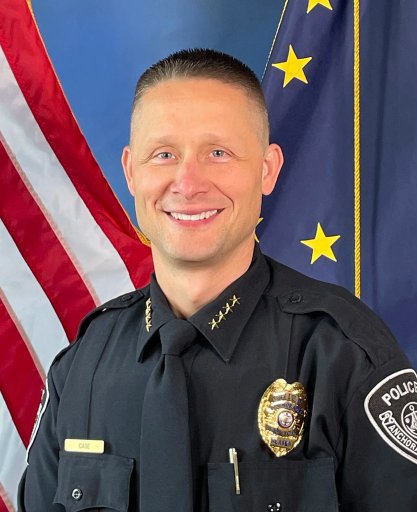
Sean Case
Police Chief · Anchorage Police Department

Zac Johnson
Assembly Member · Anchorage Assembly