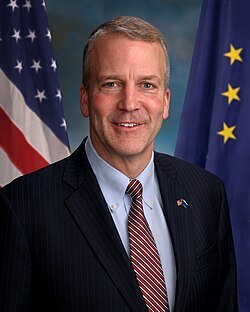
Senate Armed Services (Sullivan): Closed hearings to examine the posture of the Department of the Air Force in review of the Defense Authorization Request for Fiscal Year 2027 and the Future Years Defense Program; to be immediately followed by an open session at approximately 11
Alaska News • • 131 min
Source
Senate Armed Services (Sullivan): Closed hearings to examine the posture of the Department of the Air Force in review of the Defense Authorization Request for Fiscal Year 2027 and the Future Years Defense Program; to be immediately followed by an open session at approximately 11
video • Alaska News
0:00
Speaker A
—Dallas Airport, what's being done to prevent the spread of the Ebola virus. I'm Neal Augenstein. Why some people around here say they're reluctant to visit the ER at D.C.'s newest hospital. I'm Scott Gellman. A rainy afternoon in store.
0:14
Speaker E
It's 10 o'clock. From ABC News, I'm Sherri Preston. Multiple sources confirm that Acting Attorney General Todd Blanche will meet with Republican senators today as more of them speak out about the president's so-called anti-weaponization fund.
0:31
Speaker E
Blanche to address them during a closed-door conference meeting. Here's ABC chief White House correspondent Mary Bruce. A growing number of Republicans outraged. I don't support it. I mean, it's a— you can't do that.
0:43
Speaker B
If someone is damaged by the federal government right now, there is already a process in place to be able to get restitution for that.
33:54
Wicker
All right, the hearing will come back to order. I want to thank our witnesses for a very informative classified session. Now we begin the public portion of this meeting. I welcome back Secretary Mink. General Saltzman and General Wilsbach.
34:13
Wicker
I thank them and their families for their service. The Department of the Air Force has requested $338.8 billion for the next fiscal year. The figure reflects the fact that deterrence is not free and that weakness invites aggression. Um, at this point, I'm going to submit the rest of my opening statement. For the record.
34:43
Wicker
I understand that Senator Reid is at a very important meeting of the Appropriations Committee, and he may very well want to submit his opening statement for the record also. So at this point, I thank Secretary Mink and recognize you, sir, for your opening statement.
35:06
Speaker A
Thank you, Chairman Wicker. Uh, ranking member Reed and distinguished members of the committee, uh, thank you for the opportunity to come here today and talk through the 2027 Department of the Air Force budget request. I'm proud to represent 680,000 airmen, guardians, and civilians of the Department of the Air Force, as well as their families and loved ones. After the events of the last year—Operation Midnight Hammer, Absolute Resolve, and now Epic Fury— I don't think anyone doubts that the Space Force and the Air Force are the most capable in the world. But today we are in the middle of a generational shift in how we employ air power and space power.
35:43
Speaker A
Advances in autonomy, adaptive manufacturing, AI, microelectronics, and more give us unique opportunities to drive down cost and drive up effectiveness across the board. However, our adversaries recognize that opportunity every bit as much as we do. Those adversaries, particularly China, are modernizing at a very rapid pace. To stay ahead, we must innovate faster in everything that we do. That means staying ready to fight tonight, next month, next year, next decade.
36:13
Speaker A
Unfortunately, for the past 25 years, the DAF's budget request has been the smallest relative to GDP in its history. At the same time, the nation has asked more of it. To meet its mission needs, the DAF was forced to shortchange both foundational readiness and much-needed modernization. Fiscal year 2027 President's budget breaks that pattern with a $338.8 billion request for the DAF and a 34% increase over last year. I'll start with our investment to win the fight tonight, foundational readiness.
36:45
Speaker A
Boosting readiness requires increased and stable funding, particularly given the age of many of our platforms. The FY27 budget increases our foundational readiness investment by up to 34%, providing a jump needed to truly recover. We're also looking at ways to operate more efficiently by accelerating decision-making, reducing barriers to entry for industry, and leveraging innovative contract structures. The DAS lean budget over the last years has also resulted in a $50 billion facilities maintenance backlog. This is compounded with the way we have traditionally done MILCON which results in cost almost twice what a commercial construction would.
37:26
Speaker A
To reverse that, the '27 budget requests nearly double the investment MILCON in facilities sustainment, restoration, and modernization, which we will couple with the new authorities we've gotten from Congress. Thank you very much. Such as progressive design-build. Second, production, particularly of munitions. While we, while we retain enough munitions worldwide to meet mission needs, We need strong factory lines to sustain and bolster our stockpiles.
37:55
Speaker A
Therefore, this budget leverages existing commercial production capacity and takes full advantage of multiyear procurement for our most critical munitions. We expect 39,000 weapons to be delivered by FY33. We are also developing weapons almost as capable as our high-end munitions, but at a fraction of the cost and at a much higher production rate, which will enable that 39,000 delivery. I'll note that while the money in this request is essential, time is our most precious resource, and the department will focus on companies that can quickly scale production while still broadening the industry base to ensure competition in the future. That leads me to number 3, modernization.
38:36
Speaker A
The DAF is currently engaged in the broadest program of modernization in its history. While not every program has been perfect, we have seen much success with our new proliferated space architectures, collaborative combat aircraft, F-47, B-21, and our command and control and battle management systems. The FY27 request accelerates those successes and applies lessons learned from across the board. To that end, we are transforming acquisition. We are empowering our new portfolio acquisition executives, or PAs, and their teams with the authorities, resources, and talent they need to accelerate capability delivery.
39:13
Speaker A
We have delegated nearly every authority we are legally allowed to down to the PAs. We are realigning portfolios to match mission outcomes. Our end state is all DAF acquisitions aligned with the PAE structure to ensure consistent, simplified, and rapid decision-making across the entire Space Force and Air Force. Finally, our most decisive advantage remains our people, the airmen and guardians who make everything possible. This budget invested in them.
39:39
Speaker A
That includes a 5 to 7% pay raise for military, larger bonus pools for incentivizing high-performance civilians, increases to military end strength, and a 300% increase in dormitory investments. In conclusion, this budget represents a disciplined strategy to meet our threats. While FY27 does represent a major increase in our budget, we are ready to execute that budget. Much of the new funding will accelerate mature programs with established contracts. Regardless of the final total, we will remain accountable and transparent to Congress and the American taxpayers.
40:13
General Wilsbach
Thank you very much, and I look forward to your questions. Thank you very, very much. General Wilsbach, you're recognized. Good morning, Chairman Wicker, Ranking Member Reed, and distinguished members of the committee. I'm proud to represent 665,000 total force airmen serving our nation.
40:28
General Wilsbach
Thank you for the opportunity to appear before you today and your continued support for airmen and their families. The United States Air Force exists to provide the nation with decisive options at both speed and scale. Every day, our airmen deliver that capability by controlling the air, holding targets at risk, moving forces and supplies across the globe, and underpinning the joint force with these combined efforts. As illustrated in recent operations such as Operation Midnight Hammer, Absolute Resolve, and Epic Fury, they do it professionally, and without pause. We operate in an environment where distance no longer guarantees sanctuary, networks are contested, and adversaries are fielding capabilities specifically designed to deny us the advantages we've relied on before.
41:16
General Wilsbach
That reality drives our focus: readiness, modernization, and taking care of airmen and their families. Readiness is the ability to generate combat power quickly operate in contested environments, and sustain operations over time. Today, our airmen are meeting the mission but are doing so while managing significant strain. We are flying aircraft that in many cases are older than the airmen who maintain them. We are operating at a high tempo across multiple theaters and doing so while preparing to be ready for any future conflict.
41:54
General Wilsbach
Our fiscal year 2027 budget request prioritizes restoring depth in our force by increasing funding for flying hours, munitions, maintenance, and advanced training that reflects the reality of today and tomorrow's fight. Weapon systems sustainment funding increased to over $24 billion and flying hours to nearly $10 billion. We are focused on readiness that continues to remain credible and can deliver effects. Modernization is not only about replacing old platforms with new ones, but evolving how we fight. Speed, survivability, and decision advantage will define future conflict.
42:37
General Wilsbach
It requires a force that is more connected and adaptable. To this end, we are increasing our research and development funding by 27% to over $50 over $57 billion. The fiscal year 2027 budget request will accelerate our modernization programs. We are advancing the F-47 and collaborative combat aircraft to increase combat mass and complicate adversary targeting. We are upgrading our current fighter fleet to ensure it remains viable while also investing in long-range strike, advanced munitions, and resilient command and control.
43:13
General Wilsbach
Additionally, our nuclear enterprise remains foundational. Investments now will sustain the modernization of the triad through the Sentinel, B-21 Raider, and upgrades to the B-52 and the E-4B. These capabilities ensure that our deterrence remains credible and ready. Third is taking care of airmen and families. We ask a lot of our people.
43:34
General Wilsbach
Frequent moves and operational stress take a toll. Our Air Force continues to invest in improving options for healthcare, childcare, and spouse employment. Therefore, our budget request strengthens quality of life. We are executing the largest investment in our dormitories in over a decade of $2.7 billion in FSRM and $330 million in MILCON for a total of $3 billion. We are looking for solutions to meet the housing needs of our families with a request for $1.3 billion while funding new construction projects to address child care capacity short— Falls by adding about 1,700 child care spaces.
44:14
General Wilsbach
The Air Force exists to be the best possible fighting force for our nation. We are building a force that can operate under pressure and deliver effects anywhere in the world. That requires sustained investment, disciplined choices, and an unwavering focus on our people. With your support, we will ensure they have the tools, training, and the backing they need. Thank you.
44:36
General Saltzman
I look forward to your questions. Thank you very much, General Wilsbach. General Saltzman. Thank you, Chairman Wicker, Ranking Member Reed, distinguished members of the committee. Thank you for your support for the Space Force and our nation's guardians.
44:48
General Saltzman
As the past year has demonstrated, space is more vital than ever to our economic prosperity, our national security, and the effectiveness of the joint force. However, our adversaries are constantly working to take away our military and economic advantages in the space domain. To defend our nation's interests in space, the Space Force must do more than grow. We must evolve to meet the challenges of this new era. To that end, the FY27 budget's landmark investment of $71.1 billion for the Space Force represents a generational opportunity to position the force to meet the rapidly expanding threats and demands of the nation.
45:22
General Saltzman
I know some of the budget percentage increases being considered sound big, but let me put those in perspective. There are at least 25 individual military installations inside the United States that each have more personnel than the entire Space Force. And the top 10 of those installations are all at least twice the size of our service. And the Space Force budget in comparison to other services will still be less than 5% of our nation's total military spending, an extraordinary value on return on investment for the nation. That investment is a critical down payment to meet the accelerating demands on the service.
45:55
General Saltzman
In 2025, the Space Force saw a drastic increase in mission requirements across space access, global mission operations, and space control. This trend shows no signs of slowing. To position the service for this mission growth and inform our future needs, the Space Force has been working hard to define what we believe our future operating environment will look like over the next 15 years. And then based on that, we designed our objective force structure, which will provide a vector for our service's investments to meet the nation's expanding needs and defeat future threats. Increases in the service budget and in strength are a national security imperative.
46:32
General Saltzman
That is why the FY27 budget boosts our top line by almost 130% and our end strength by 27%. The proposed budget paired with this increase in end strength will allow the Space Force to recruit and train the guardians we need, build vital— excuse me— build vital space capabilities for the joint force and the nation, and provide the support and infrastructure that the mission growth demands. Today, we deliberately build a cadre of space-minded warfighters. Equipped with the skills required in an increasingly contested and evolving domain. We are preparing our Guardian officers to seamlessly integrate with the joint force.
47:08
General Saltzman
We are bolstering the development of our enlisted force to ensure they become technical space warfighting experts. And we are developing our civilian Guardians so that they can best provide their unique expertise, ensure continuity of operations, and bring a depth of support across the mission sets. In order to execute all of our expanding missions, It's imperative that we responsibly and effectively convert this increased appropriation into combat capability and warfighting advantage. Unlike the other services, the majority of our budget, nearly two-thirds, is dedicated to developing and fielding new systems instead of personnel or operations and maintenance. That is why the Space Force is so focused on taking advantage of this once-in-a-generation opportunity to enhance our acquisition processes.
47:53
General Saltzman
All with the goal of accelerating the fielding of vital combat space systems at the speed and scale required for each mission. To that end, newly empowered portfolio acquisition executives are positioned to make better and faster program trades, expediting our ability to deliver combat-credible systems on operationally relevant timelines. We're simplifying our approach to requirements, bolstering our relationships with industry and allies, and ensuring our vital Guardian workforce is expertly trained in the complex task of acquisitions. Unlike other services that are modernizing existing systems, the Space Force cannot modernize what it does not have. We are creating some of these innovative capabilities for new missions from the ground up, particularly in space control, where we are investing in all categories of counter-space systems necessary to deter and defeat aggression in space.
48:43
General Saltzman
Additionally, we are aggressively pursuing more resilient space architectures that can withstand attacks and continue to operate through an extended conflict. This includes expanding our resilient missile warning and tracking initiative that provides life-saving alert to troops worldwide, enhancing satellite communications to connect joint force units and commanders around the globe during battle, and growing our space-based sensing and targeting architecture to hold adversary forces at risk through space-based AMTI and GMTI anywhere in the world. But the added manpower, missions, and capability require commensurate increases in the structures that support them. So the FY27 budget request also includes the required milcon to ensure our guardians are fully supported. The Space Force has laid the organizational foundation to find the compounding threat and delivered the blueprint required to counter it.
49:31
General Saltzman
Now we must build those structures and systems to ensure domain superiority for years to come. With a continued advocacy from Congress, our guardians stand ready to deter aggression, protect our space-enabled way of life, and have called upon fight and win. As I conclude my final presentation to this committee as the Chief of Space Operations, let me say thank you for enabling our successes and for the opportunity to highlight the exceptional work that our Guardians are doing every day to secure our nation's interests in, from, and to space. I look forward to your questions. Well, thank, thank all three of you, and thank you particularly, General Saltzman, as you prepare to move on to another phase of your career.
50:14
Wicker
For the record, Senator Reid was at a meeting of another important committee when we began this hearing. I submitted my opening statement for the record. You are now recognized, Senator Reid.
50:33
Wicker
I will adopt the wise posture of the chairman and submit my statement for the record. And I think it would be appropriate if you went ahead and added some very important recognition.
50:51
Reed
Well, obviously I want to recognize and thank General Saltzman for his service, remarkable service in creating, not just shepherding, an organization, Space Force. So thank you very much, sir. Gentlemen, thank you all for your dedication, and please convey our sincere thanks to the men and women, both uniformed and civilians, who you lead. Thank you. I think that reflects the feeling of the entire committee.
51:15
Wicker
I will defer my questions until later. Again, there are other important meetings going on today, and members will have to be going in and out. But at this point, Senator Fischer is recognized for questions, and And then to be followed by Senator Reid. Thank you, Mr. Chairman, and I too would like to thank all of you gentlemen for your service, and General Salzman, I wish you the best in your future endeavors.
51:41
Speaker I
Thank you very much. Secretary Mink, how would the investments proposed in this budget request scale the Air Force munitions production?
51:54
Speaker A
Significantly. I think by the end of the FYDEP, it will I think the total procurement is on the order of 39,000 weapon systems, and we're really taking two kind of paths here. There are a number of the weapon systems that we've had in production for years. We're scaling up those productions, but at the same time, we're looking at a whole family of much lower-cost munitions that we can scale more rapidly and are, to be honest, more cost-effective in the long run. The combination of those two is what this budget submission allows us to get after, kind of sustaining— What date will that be?
52:30
Speaker A
You said by the end of the FYDEP. Yeah, by the end of FYDEP, so it'd be '32, '33 timeframe, 39,000 weapons. It's a public hearing and I just wanted to make sure I'm— So yes, significant—. I apologize, Senator Fischer. Significant advancements in the number of weapons, which is critical for both the high-end and the low-end fight.
52:49
General Wilsbach
Thank you, and General Wilsbach, how's the Air Force rapidly fielding emerging technologies such as the counter-drone systems that we're all very interested in, in order to protect our airmen? Yes, Senator, thank you. So over, well, this budget request has around just over $10 billion, and that's all of the department, not just the Air Force, but all the services for just this purpose. And this, this year we're fielding additional systems at some key bases. One of them is in your home state, and many other places we also have fielded some systems the Army has previously deployed to our bases in the Middle East.
53:37
General Wilsbach
And in— as we continue— and all of those are counter-drone? Yes, well, counter-drone, counter-one-way attack, and counter-cruise missile. As well as, as we go into '27, that will continue to expand. Ultimately, Senator, we should have some system protecting all of our bases, and we'll get to that in future years. Thank you.
54:00
Speaker I
Mr. Secretary, or General Wilsbach, in the fiscal year 2027 budget request, it also includes $1.4 billion for developing collaborative combat aircraft. In this setting, can you explain why we need those CCAs and what progress has been made so far on developing those systems?
54:23
Speaker A
I, I think a short response and turn it over to General Wilsbach. The CCAs represents a, an extremely cost-effective way to bring combat power into the fight. Essentially, they're very low-cost fighters that will operate collaboratively with our, our manned aircraft and deliver much more cost-effective capability. General Wilsbach. Yes, correct.
54:47
General Wilsbach
I agree with the Secretary and Senator. What this allows is additional mass in the, in the target area, in the area of engagement that creates a number of more problems and dilemmas for your adversary and allows you to, allows you to win. The first series of collaborative combat aircraft will be designed for air-to-air flight. In the future ones, we can decide what else capabilities they will have. Thus far, both— we have two vendors that are making aircraft for us.
55:18
General Wilsbach
They both had multiple flights. The autonomous systems are working. We're learning from it and adjusting as we go. But we're very, we're very pleased with the progress. Good to hear.
55:34
Speaker I
General Salzman, the Space Force is requesting a significant increase in funding and in personnel. For FY27. Can you explain to not just this committee but to the American people why that growth is required, and how would the investments proposed better position Space Force to operate in this worsening threat environment that we face? Thank you, Senator. I appreciate that opportunity.
56:03
General Saltzman
I think it's, it's pretty clear that space has become critical to our Economy, it's been critical to our national security and certainly the Joint Forces' effectiveness. The new missions that have been given to the Space Force are gonna require something on the order of about 40 new squadrons. That represents an increase of about 2,800 Guardians and another 2,000 civilians just to do the work of the new missions being added to address these threats and continue to provide the support to the Joint Force that we've had. The new systems alone are gonna require 10 new program offices. To do the acquisition work to bring those systems and deliver them to the field.
56:40
General Saltzman
So that growth in the new missions and the squadrons that are required to operate those systems is what drives the manpower and the increase in budget for the systems. Thank you, and thank you again, General, for overseeing the vast accomplishments of the Space Force to date. Thank you. Thank you very much, Senator Fischer. Senator Reid.
57:01
Reed
Thank you very much, Mr. Chairman. Mr. Secretary, the Air Force is requesting in total an increase in F-35 aircraft and F-15EX aircraft. The F-35 increase would go from 24 to 38 and the F-15EX from 18 to 24. However, all of the increase of 14 aircraft for the F-35 production is in the reconciliation request, not budget.
57:31
Reed
And on the other hand, all the 15EX increases are in the discretionary budget. That raises the question, what will you do if you do not have a successful reconciliation bill?
57:44
Speaker A
Thank you, thank you, Senator. Yeah, the department looked at this as one integrated request. There was no prioritization done between reconciliation and base this funding. Again, as, as we get more data on what the top line will end up being, there will have to be a discussion about how we prioritize. Everything we have in the budget is, is critical.
58:11
Reed
We understand that we sometimes have to do prioritization, so we will, we will, we will, we will continue to shoot for what we need to do the job. But if, if the budget's at a lower rate, we'll have to work on how we prioritize. Well, it's an interesting concept because usually that The Department of Defense comes to us with their priorities in place, representing the president's budget that is given to this committee, not an additional request in the Budget Committee for reconciliation funds. That is, I think, a bad practice to get into. And I would— I think, unfortunately, I think you're going to have to make some tough choices.
58:51
Reed
And with respect to the number of aircraft and with respect to other issues. Let me just switch, and Mr. Secretary, General Saltzman, the concept has been that all space assets are in the Space Force. That requires consolidation from other services as well as from the Air Force to the Space Force. Mr. Secretary, are we— how are we doing in that consolidation? Let me put it that way.
59:22
Speaker A
Well, I think we're, we're doing well in the consolidation, and the, the discussion we just had on the, the end strength of the Space Force needing to grow is, is representative of that. As, as the missions continue to increase across the Space Force, they need the people to, to manage that. So I think it's going well, but there's going to be a significant growth in the Space Force to meet that demand. General Saltzman. Okay, I would just add that, um, which wasn't true 5 years ago, as of today, the U.S. Space Force controls operates 100% of our satellite communications for the military, 100% of our missile warning space-based capabilities and ground-based, P&T, so we have consolidated.
1:00:03
General Saltzman
Pulling the Space Development Agency in from, out from under OSW proper into the Space Force is another consolidation effect, so we've taken to heart the fact that the Space Force needs to be accountable for all those programs, and we've done that consolidation. What do you consider to be still outstanding outside your scope that you have to bring in? I don't, I don't think there's any additional capabilities that currently exist in other services or external. I think it's about as all, all of our services grow and consider the importance of space, we're gonna have to rightly put it in the right service given the missions that they're considering to be done from space. Thank you, sir.
1:00:42
Reed
Mr. Secretary, we have been spending billions of dollars in the Persian Gulf And we're still waiting for a supplemental to arise, which further complicates the budgetary situation. We're looking at the President's budget reconciliation and a supplemental.
1:01:04
Speaker A
How soon will you need the supplemental funds so you avoid serious readiness problems and other constraints? So the— The administration is working through the process to address the spending in the Gulf. The department is, as we do in every year, as we get closer to the end of the year, is working how we essentially manage the cash flow going to the end of the year, and we continue to do that, and we will manage it. Have you already, or let me, General Wilsbach, what readiness issues have arose given this unexpected or unplanned operations in the Gulf?
1:01:48
General Wilsbach
I wouldn't say that we've had any arise because of EPIC Fury. We already had them, readiness issues, because of underfunding, weapon system sustainment, flying hours, and parts, so they were established before EPIC Fury started, and we have obviously supported our forces that are in the Middle East, and we've pushed, you know, we've pushed parts and we've pushed people over there so that we could execute at the top, at the top level. Thank you very much. Thank you, Mr. Chairman.
1:02:21
Senator Cramer
Thank you, Senator Reid. Senator Kramer. Thank you, Mr. Chairman. Thank you to— thank you, all three of you, for being here and for your service. And a special thank you, General Saltzman, for your incredible leadership during the youthful season of that new force, and you've brought it along nicely, and we just, we appreciate you very much, more than you probably could know.
1:02:42
Senator Cramer
Mr. Secretary, you've talked a little bit, both you and General Wilsbach, about Sentinel. Maybe elaborate a little bit, because I think just not so many years ago, almost seems like months ago, the dramatic information and data that led to the Nunn-McCurdy seemed almost to doom it for some people, not necessarily for people up here, but just as dramatic has been the recovery, it seems to me, and having been out to Vandenberg with you, having been out to Hill and Promontory, spent a lot of time with General White, I think that was a stroke of genius to get him overseeing the entire modernization effort. Maybe give us a little bit of a picture of that recovery, even to the point where it looks like we might even be on track for accomplishing Milestone B this year. Maybe give us a sense of how all that could be possible in this—. So I think it's actually a good example of what we're trying to do with all the PAs, the acquisition transformation across the entire department, where you put extremely talented leadership in charge, gave them the authorities to help manage the requirements, that was a big part of this is, is, is working with the requirements community, which is quite broad in some of these programs, to get down to a set of requirements that are executable with the money and the timeline, uh, making sure the program was funded well, uh, and then working, uh, really collaborative with, you know, this is the largest Public Works project since the last Minuteman program, or since the last ICBM program.
1:04:18
Speaker A
So working with all the players that are involved in delivering that, and they made huge huge progress. We're looking at PDR of the program this year, weapon systems testing going on, the new modular approach to how we're gonna build silos and the launch control facilities. Basically getting a good team and giving them the ability to work those requirements to accelerate and make it executable is what's done the job. And then we, to be honest, we properly resourced it. I mentioned in my comments that because of the low budget flexibility we've had over the last, really, decades.
1:04:52
Senator Cramer
There wasn't only readiness cuts made, some of these big programs, we were probably pretty optimistic on the cost, and that, that got us into a hole, and so we're, we're making sure we don't do that anymore. Well, since you bring it, bring that part of it up, and I appreciated those comments, what are the lessons that we've learned? And, and I'll just give you my sense of bias, I, maybe we should think about maintaining you know, on a more regular basis, um, and modernizing systems rather than just do a new one every 50 or 60 years. It's amazing how much institutional knowledge you lose in 50 or 60 years. I mean, have we learned— have we learned our lesson?
1:05:31
Speaker A
I believe— I believe we have learned our lesson. We need to make sure we keep remembering those lessons as we go forward. But, you know, it's always a balance, right? Well, always, always has to be prioritization making. Made within the programs.
1:05:45
Senator Cramer
We spend a lot of taxpayer dollars. We need to make sure we're executing it as efficiently as possible. Well, let's document it well and memorialize it for future generations. As long as I have you talking about acquisition, I do still remain a little bit concerned about the lack of meaningful competition in the proliferated low-earth acquisition efforts. I know you and I have talked about that, but it's my understanding that the two most recent procurements the AMTI and the Space Data Network were technically competed.
1:06:19
Senator Cramer
However, the timelines, the RFI, were such that only one was able to really respond. Maybe help us better understand maybe two things: the need for speed and, and why that might be the case on the one hand, and on the other hand, what are we doing to, um, to ensure that we're investing in viable second and third source providers so that we don't end up in some sort of a monopolistic situation or vendor lock. So I think you kind of hit our strategy right there. There was a need for speed in some of these programs and just the critical nature of some of these capabilities has drove us to push in what, what we can get into production right now. And we're driving that way.
1:07:00
Speaker A
But on this, on the other hand, as you mentioned, both with AMTI and many of the other programs, we are carrying multiple other vendors so that we can grow competition in the first place to make sure we have this continual, uh, competitive industry base going forward. But I'd also say is that in, in many of the programs, uh, and again, AMTI is an example, we have multiple contractors that are competing that will deliver and come up to speed in time. But SBI, Space-Based Interceptor, very broad field. And many of the other programs, we have a very broad field of, of competitors. Both primes as well as some of the, the New Start new entrants vendors, and in many cases are performing very well.
1:07:43
Senator Cramer
It sounds like you're balancing the, the message well. It's, it's important, obviously, what we say and, and the kind of demand signals we send to industries. Thank you. Thank you very much, Senator Cramer. Senator King.
1:07:57
Senator King
Thank you very much, Mr. Chairman. I want to join my colleagues in congratulating you General Saltzman, on your illustrious career and your years of service, I started out as a skeptic on this committee about the necessity of a Space Force, and you have largely made me a believer. I think what you're doing is incredibly important, and I think you've pursued it in a very thoughtful, systematic, and impressive way. I also— I do want to note that I looked through the budget documents and In both the Space Force and the Air Force, there's a category called mandatory spending.
1:08:34
Senator King
There's no such thing as mandatory spending except in areas where there is a legal obligation to expend the money. Mandatory spending is a term of art in government budgeting, and it refers to principally Social Security and Medicare. There's nothing mandatory about part of your budget. It's being put in this budget as a part of reconciliation which is a bypassing of the normal administration of appropriations in the Congress. It's an abdication of the Congress's appropriations responsibility, but it's also a usurpation of that, of that.
1:09:11
Senator King
This so-called mandatory spending, which is almost 20% of the budget that's been proposed, General Saltzman, is— goes through no oversight process, no committee process, no appropriations process. Is a purely partisan process which is inconsistent with the way appropriations have been done here for time immemorial. And since I've been in this body, the majority has changed 4 times, and I would suggest to my colleagues that using appropriation reconciliation in this way is a very dangerous precedent. Now, having said that, different subject. Mr. Secretary, one of the things we've talked about in this committee very frequently is right to repair.
1:09:56
Senator King
And there's been a lot of talk this morning about readiness. One way to improve readiness is to be able to repair our aircraft on— I almost said on the fly, but in the— on the ground without waiting for the manufacturer to send us a part. In my view, we should A, buy the IP for any platform that we buy, and B, We should have 3D printers in every hangar. I hope that this is an area that you will pursue with your procurement people, because as you know, readiness in the Air Force is an issue. Depending upon the airframe, 50, 60% readiness, sometimes higher, sometimes lower.
1:10:35
Speaker A
Do you agree with me that we really need to stress our ability to repair our own equipment and to do so on a timely basis? Absolutely, Senator. And, and as we look particularly at the new programs going forward, that's a big focus, uh, to make sure we have that right. Um, and to some degree, back to our discussion already, uh, some of these programs, the decisions made were, were trying to save costs wherever possible, and, and those kind of short-term decisions did not prove to be cost-effective long term. And we're trying to— to be honest, we're trying to reverse a lot of that now and going forward.
1:11:16
Senator King
I also believe this is an area that there's been multiple proposals with respect to congressional language associated with access to data rights. And I think all those things are necessary to make sure that going down the road, we have that right to be able to do that. I hope that you will pursue that actively because Having a $100 million airplane that can't fly for want of a valve or a part is, is, is malfeasance. And so I think that's an important way to attack that, that problem. Mr. Secretary, the other thing that's concerning me is the speed of adaptation.
1:11:56
Senator King
We have had a tremendous lesson in Ukraine about adaptation where a country that 3 or 4 times as large has now been stopped cold on the battlefield by Ukraine's incredible adaptation and utilization of drone warfare. I fear that we're still stuck in a kind of longer-term sclerotic process of procurement, and it's got to be the perfect weapon rather than an 80% weapon that we can then innovate as we're, as we're moving forward. Drones and directed energy are two areas that I think we're, we're just slow to adapt. We're still knocking down $50,000 drones with several million dollar missiles. And I know we're moving in that direction, but I think it's got to move much, much faster.
1:12:46
Senator King
We can take a lesson. In fact, I think we should benchmark against Ukraine in terms of productivity level, speed of innovation. And cost. I hope that's something you'll take back to the department. Yeah, absolutely.
1:12:59
Senator King
I think you probably heard me say time and time again that we not only have to be innovative, we have to innovate faster than all of our potential adversaries, or in the end we end up losing. And so that is our focus going forward. It's the militaries that adopt the new technologies the soonest that win. The Battle of Agincourt is probably one of the best historical examples where the longbow overcame a very vast, supposedly vastly superior French army. So let's remember the Battle of Agincourt.
1:13:28
Wicker
Thank you. Thank you. I hope we all agree that the Forged Act has gone quite a long way in moving us away from the previous sclerotic process.
1:13:44
Senator Kaine
Senator Kaine. Thank you, Mr. Chairman. Thank you to the witnesses. Um, one of the costs of the Iran war has been in rising fuel prices. The estimate as of today is that American consumers have paid $40 billion more for fuel just because of the Iran war.
1:14:05
Senator Kaine
The estimate is Memorial Day weekend, a time when people will drive to see family or drive to the beach, is going to cost about $3.5 billion more in fuel costs for Americans just over the coming weekend. And the estimate is that by the end of 2026, the American public will have paid $193 billion in excess fuel costs because of the Iran war, based on projections. In the preparation of the, of the president's budget, I know the way it's done, the different units for example, Air Force, Space Force, do budget submissions, and those work their way up through the chain of command and to the Office of Management and Budget. Um, my understanding is the president's budget submitted to us did not include any costs that were costs related to the Iran War, because the— it had largely been prepared and submitted through this budgetary chain of command before the Iran War started. There is a portion of the Air Force budget that is a big portion, that's the purchase of aviation fuel, and I'm assuming that in the Air Force budget the aviation fuel number was based upon a supposed or predicted price for fuel.
1:15:29
Senator Kaine
Um, can you tell me, General or Secretary, what the budget price for aviation fuel is in the PB and what it actually is today? Because as we're grappling with writing this bill, we're going to have to take into account the new reality. Um, the, the— on the commercial side, I've been reading that aviation fuel has increased by about 50%. But how about in terms of the President's budget for the Air Force for fuel purchases, and compare the budget to what the current number is, please? Yes, Senator.
1:16:03
General Wilsbach
So we did account for an increased flying hour cost from last year to— or from '26 to '27. And you're— like you said, we, we figure that number, you know, well before the market determines what the actual cost will be. Some years it's more, some years it's less. And so we, we will adjust our dollars if we end up having to pay more per dollar for a gallon of fuel, if it ends up being more than, than we assessed. Do you know what the assumed per gallon cost was in the PB that we're analyzing right now?
1:16:43
Senator Kaine
The increased cost in flying hours was roughly about a 10— I believe it's about a 10% increase of what we anticipated from last year to this year. So you took last year and you Again, just kind of— We did, and that's what we did. —Imposed an increase by about 10%. Yes. If what I'm reading is accurate, that on the commercial side aviation fuel has increased by about 50% since February 28th, would that be similar to what the prices for aviation fuel necessary for Air Force operations would be?
1:17:17
General Wilsbach
Well, the current market price isn't necessarily what we paid because we've bought the fuel in the past. Right, you have some long-term contracts, you have some storage. We do. So the specifics of this will be known at such time when it's, you know, when we finish burning the fuel. Yep.
1:17:33
Senator Kaine
But I imagine you've got some people who are looking at the price of aviation fuel pretty carefully. Have you reached any conclusion about whether your 10% suggested increase is going to be close to where we are, or are we going to be needing to look at a significantly greater fuel cost? It's hard to say at this point, but what I'll tell you is this is routine for us. Every year the cost of flying hours changes from the time we budget for it to the time we execute it, and we, we work it out with moving money around in various accounts to cover down on the cost. Do you know whether that's a factor that's being contemplated in the preparation of a potential supplemental bill?
1:18:16
Speaker A
I mean, obviously this isn't just an Air Force issue, aviation fuels, but by all the service branches is this one of the items that's being contemplated, Mr. Secretary? Yeah, it's— we looked at the total cost. I think when the Secretary was— I don't know what committee he was at, but I think Jay Hurst mentioned we were looking at about a $29 billion impact. And I'm fairly confident that includes the total cost, including some of the O&M fuel costs. And it really depends on how long those costs stay high to what would be the impact.
1:18:53
Senator Kaine
So it really depends on that as well. Yeah, well, just, just I'll conclude, Mr. Chairman, just to order of magnitude. We're going to have a very, you know, I think a challenging debate today. It's going to be a very long day on a reconciliation bill where we're proposing to spend $70 billion for ICE and CBP. We gave them $140 billion last year, of which $100 billion remains unobligated.
1:19:18
Senator Kaine
But, but that $70 billion for ICE and CBP that we're going to talk about with some degree of intensity today, compared to the, the prospect of $193 billion being paid by American consumers between now and the end of the year just because of this war, that gives you some sense of the challenge that American families are facing. And I suspect as we're looking at the military budget, we're going to see a similar need to adjust it pretty dramatically because of fuel costs. With that, Mr. Chair, I yield back. Thank you very much.
1:19:50
Wicker
Senator Hirono, are you ready for your questions? Well, just need it. Thank you very much.
1:20:02
Speaker I
General Sullivan. Thank you, Mr. Chairman. Thank you. Uh, this— the Space Force is planning to build up to 7 additional telescopes on Haleakalā to support space domain awareness. Monitoring and tracking the increasing number of objects in orbit is critical to supporting the joint forces.
1:20:26
Speaker I
However, Haleakalā also holds cultural significance to the Native Hawaiian community, and I know you are currently reviewing public feedback for the final EIS, which is scheduled for publication this fall. And given the unique environment and cultural sensitivities of Haleakalā u, will you commit to continue to work with and, um, oh, in incorporating the concerns of local stakeholders to ensure transparency and community engagement as the Space Force prepares to make a final decision on this Project. And I'm sure that you are aware that we are engaging in some pretty important leases— the Army, the Navy, etc. So, uh, what you're doing on Haleakala is part of all of that activity by our services, and it is really important to our community that their voices are heard. So I'd like your commitment that that will be happening.
1:21:18
General Saltzman
Yes, it's happening. Haleakala is a very important site for us. It's also— we understand the cultural significance to the community, and we take it very seriously and we are committed to working with them as we move forward. Thank you.
1:21:34
Speaker I
For Secretary— Mr. Secretary, timely procurement of a capable airborne command and control and tracking capability is vital to our forces in the Indo-Pacific, especially as the remaining E-3 planes are phased out and funding for a potential replacement The E-7 Witchtail was originally not included in the Air Force's FY27 budget, but just last week, Secretary Hicks said reversed course and told the House he had just sent a budget amendment to OMB to restore the funding. And I'm not clear on how much the restored funding is, but Mr. Secretary, can you clarify where things stand regarding funding for the E-7? Yes, Senator. Thanks. We have submitted a budget amendment.
1:22:25
Speaker A
I do not believe it's on the Hill yet, but it's approximately $1.5 billion in '27, and then we'll work the out years as we do the '28 budget build.
1:22:39
Speaker A
And again, what was the driver is when— when it was never that the program wasn't important. It was that at the time we were looking at about an $890 billion top line. And at that, at that top line, a number of important programs were cut, including the E-7. We had to have the space-based AMTI. We wanted to have the E-7 capability, but under the budget constraints it was cut.
1:23:05
Speaker I
But now with more budget flexibility, we put it back in. I think it's important because that whole program has encountered a number of delays, as you probably know. General Wilsbach, funding for the Joint Base Pearl Harbor-Hickam Airfield Development Plan remains a continuing concern of mine, and I raised the issue on Tuesday with Admiral Caudle and received his commitment to ensure the Navy support for planned facility restoration. And I'm particularly concerned about the runway restoration and repair projects will be, uh, uh, on schedule, not delayed. Given your background as a commander of Pacific Air Forces and your current role, I'd like you to briefly discuss the importance of these upgrades to the joint forces in the— joint force in the Indo-Pacific and get your commitment to continuing to work closely with the Navy to ensure that these projects are completed on time and on budget.
1:24:10
General Wilsbach
Mahalo, Senator. Thank you for the opportunity. I was actually just in Hawaii last week and we actually went around and looked at the taxiways and the runway and we had had a discussion. Thank you for your continued support. Hickam Air Force Base is a power projection platform for the entire Pacific, for the Air Force, and really for the entire joint.
1:24:33
General Wilsbach
Air Force. We use that as a spot to refuel, refit, to move cargo and people from the Pacific back to the States and vice versa, and so it's an incredibly important power projection platform for the nation. That agreement between the Air Force and the Navy, in my view, was about time, I would say, and so I want to just make sure that it continues, and this is certainly an issue that you brought to my attention. Thank you very much. Thank you, Mr. Chairman.
1:25:05
Wicker
Thank you, Senator Blumenthal. Thanks, Mr. Chairman.
1:25:14
Senator Blumenthal
The war in Iran— in Ukraine has provided a lot of lessons. I think you would agree.
1:25:25
Senator Blumenthal
Beyond drones and air defense, the conflict has underscored how essential essential fighters, that is aircraft, space-based surveillance, satellite communication, electronic warfare, and resilient command and control networks are in a highly contested fight like that one, or any for that matter. At the same time, Ukraine has shown how difficult it is to operate in an environment that's shaped by persistent surveillance. GPS jamming, advanced air defenses, cyberattacks, and long-range precision strikes. Ukrainians have fought back and pushed back the Russians because they've made use very ingeniously and creatively not only of drones but of all kinds of other instruments that disable the Russian aggression.
1:26:24
Senator Blumenthal
Assumptions the United States has relied on for probably decades, particularly around air superiority and uncontested access to space-enabled systems, can no longer be taken for granted in a future potential conflict.
1:26:44
Senator Blumenthal
The administration is now committing tens of billions of dollars to next-generation fighters and missile defense and space systems. Specifically with China in mind. Are any of the lessons of Ukraine applicable to the potential conflict with China?
1:27:04
General Wilsbach
Thanks, Senator. I think one of the biggest lessons to take away, which perhaps is the reason why the conflict is drawn out for so long, is neither side established air and space superiority, and they go together. You have to have space superiority in the 21st century if you hope to achieve air superiority because of the reliance we have on our systems in space, communication and navigation, timing. So that— the fact that neither side ever established air superiority is why it's drawn out to a really long conflict, which is why our our budget emphasizes air and space superiority with a number of the systems that we're wanting to field. But the United States is not going to establish air superiority against China if there is a potential invasion of Taiwan, is it?
1:27:59
General Wilsbach
We actually intend to try to establish air superiority, and it's, it's important not to confuse air superiority with air supremacy. Air supremacy is much like what we had in Afghanistan, where we could fly around anytime, anywhere. But what you saw in, in, in, in Iran, both, you know, just recently and other times, we would establish air superiority where we would establish a, a maybe a smaller part of the airspace where we can fly around and execute the missions that we would like to do. And then you would maybe get, get out of that airspace and you would no longer have air superiority, but you didn't care because you're not there anyway. I think that's an important distinction.
1:28:44
Senator Blumenthal
Uh, do you foresee Ukraine establishing or moving toward air superiority? I would probably defer that to my, uh, the EUCOM colleagues, but It's possible that they could, and it's also possible that Russia could, but what we're seeing is neither side really ever achieving air and space superiority. But the trend there, in, in my view, simply on the basis of non-classified information, is that the Ukrainians, in their use of drones, in cyber, in satellite intelligence have come a long way, farther than the Russians have done. Would you agree? We certainly have.
1:29:38
General Wilsbach
I go back to, Senator, the foundational lesson that I've taken out of that conflict is the principality of establishing air and space superiority allows you to do so many other things with your military to achieve objectives. And the lack of having air and space superiority really limits you to the objectives that you can achieve. Thank you. Thank you very much. Well, thank you, Senator Blumenthal.
1:30:07
Speaker E
Senator Slotkin. Thank you. I apologize, I sound like I'm smoking a pack of cigarettes a day. Um, I am not, um, but, uh, I'm a little bit under the weather. Um, I want to start out by thanking Secretary Mink and General Wilsbach.
1:30:26
Speaker E
I just— we had some important things culminate in Michigan in the past week on Selfridge Air Force Base. We worked with you all on commitments after the president made the decision to replace the fighter mission at Selfridge Air Force Base, and I know that's been a really big and complex problem set for you all, and I just want to thank you for doing that. Yesterday, the state of Michigan per our discussions, approved on a bipartisan basis. We have a split Democrat and Republican House and Senate approved $152 million to start work now on the runway at Selfridge, which I know unlocks a lot of what we're able to do there. So thank you for putting into the FYDP in the next 5 years almost $800 million into upgrades there.
1:31:20
Speaker E
We, of course, would like you to move some of that forward now that we've lived up to our end of the bargain. But this is a genuine thank you. And I'm really proud of how my state over the past 12 years have worked— state, local, federal, Democrat, Republican. Everyone's done their part. And this is a huge deal for us and a huge deal for our economy.
1:31:41
Speaker E
So I just— I want to thank you.
1:31:45
Speaker E
I also want to say you both should come to Michigan. And see it in action, we'd love to have you come through one of our Gantt chart conversations to see the puts and takes, and we'll be sending you a formal invitation. I do also want to raise the issue— break, break— of PFAS in Oscoda, Michigan. This is PFAS contamination of a very pro-military community that lives near the closed Air Force Base Wurstmiths Air Force Base, um, that have been dealing for the better part of 20-plus years with contamination that came from that Air Force Base. They have been through the wringer, and yesterday we're told by Air Force officials that they're now further delaying the cleanup commitments they had made for another 5 years.
1:32:40
Speaker E
Um, I'm, I'm sure no one at the local level, um, put together that you all were coming up here for your hearing. Um, the— and so I, I just The Air Force has in recent years been working more productively on the ground with the, with the residents there and made commitments. But there are plumes of this contamination in like under lakes that host YMCA camps. It's at risk of going into other lakes and into the Au Sable River, things that are just fundamentally why people buy property and live up there. Um, and so I, I have to ask again, you know, again, this long precedes you, um, but I just ask you to think about what it's like to be a family in that community.
1:33:26
Speaker E
Um, and be— some of the residents there have the highest PFAS blood levels of anyone in the entire world. Um, and they have been put off and put off and put off since 2010. We finally got to a decent commitment and yesterday we're told it's another 5 years. So while I'm thrilled with what we've done on Selfridge and genuinely thank you, I have to ask that you pull in the troops, your people on the ground, and say, what are we doing to this community? Because the other thing that happened this week is the Trump administration on Monday notified that they are reverting and going back to old PFAS standards standards, changing the federal standards through the EPA.
1:34:12
Speaker E
So if you're in this community, you're just feeling like whatever progress we made, two steps forward, we're now going to take about 10 steps back. So can I get some commitment that you'll just pull the folks together and, and try and understand what— why we'd have another 5-year delay after 20 years of waiting on the Air Force? So, Senator, thanks again. Thank you for the support at Selfridge, and it's going to allow us to get the airplanes in there and leave them there. So I really appreciate that.
1:34:44
Speaker A
Yeah, on this side, we will continue to support— we doubled the PFAS investment in the FY27 budget submission to keep getting after these problems. We— I think we are making progress there, you know, with a number of things. Significant resources spent and we're starting to do cleanup. I am still trying to get to the bottom of where that 5-year delay is coming from. I will figure out where that's coming from and I will get back to you on it.
1:35:11
Speaker E
But we are not, we are not changing our commitment. Yeah, we'll, we'll follow up. I hate to congratulate you in one breath and thank you in one breath and then ask, but I just, you would be doing the same thing if you were in my position for people who have waited 20 years to drink their local water and swim in their local lake. I yield back.
1:35:32
Senator Warren
Uh, Senator, thank you very much, Senator Slotkin. Senator Warren. Uh, thank you, Mr. Chairman. President Trump's war with Iran has raised prices across country and around the world, and this means higher prices for the Pentagon as well.
1:35:46
Senator Warren
Sometimes those price hikes will be a direct consequence of the war, like the rising cost of jet fuel, as Senator Kaine discussed this morning. But it also creates a big opportunity for defense contractors to sneak in extra price hikes to pad their profits with American taxpayers. The Air Force has experienced this price gouging firsthand. The Department of Defense's Inspector General found that Boeing charged the Air Force more than a fair and reasonable price for one out of every 4 spare parts that the Air Force bought, including charging 80 times more than the commercially available cost for a plain old soap dispenser. And for anyone who wants to do the math on that, that's, for example, a $10 soap dispenser that now costs $800 when the Air Force buys it.
1:36:44
Speaker A
Now, the IG recommended requiring Boeing and other contractors to notify the Air Force of any price increases above 25%. Secretary Mink, would it be easier for the Air Force to keep costs under control if companies had to affirmatively disclose when prices shoot up by more than 25%? So, Senator, I'm not— I'm not familiar with the specific number you quoted, but But we do have, in many of our contracts, we do have requirements to— matter of fact, they can't raise prices. Matter of fact, as we go to many of the fixed price contract structures, multi-year fixed price contract structures, the contractor is not allowed to raise costs. I appreciate that you put that in some contracts, but I'm actually asking a somewhat different question, if I can, and that is, what is the baseline for every defense contractor working.
1:37:43
Senator Warren
Last year, the House and the Senate's NDAA included my bipartisan Transparency in Contract Pricing Act with Senators Ernst, Slotkin, and Grassley, and it would implement the IG's recommendation. Unfortunately, it was removed in conference, and the reason I'm asking you about this and asking you for is we want to try to get this across the finish line, and I'd just like your help on that. Well, Senator, I'll take a look at that, and I will definitely get back to you if we have any suggestions there. But I will— I mean, I don't want to mince words here that we support any help from the Congress to get improved access to data rights. To be honest, that's one of my biggest concerns is data right access.
1:38:35
Senator Warren
In, in, in those sorts of things, but happy to work with the committee on that. Let's pick up on data because I agree with you. Let's do this one and try to get it across. But one of the things that's happening is that defense contractors monopolize their repairs by improperly labeling repair data as proprietary, even when the Air Force had rights to the data, and then banking on it being too hard for DOD to catch the mistake in how they had labeled it. RAND found that Boeing's inappropriate restrictive markings on software prevented the Air Force from repairing the KC-46 itself or contracting with somebody else to do it.
1:39:20
Senator Warren
So let me just ask you on that one, Secretary Mink, would rules incentivizing contractors to provide accurate markings allow the Air Force to repair aircraft both faster and improve readiness. Any help to support, you know, right to repair, I think is the broader term that we use, and access to data rights is a big part of that. Is— yes, is important. Good. I'm trying to get us in as much detail as we can here.
1:39:49
Senator Warren
You know, this committee has heard from senior military leaders across the services. That they need right to repair. Mr. Chairman, I'd like to submit a letter from Senator Sheehy and I that we sent to this committee collecting that testimony for the record. Is there objection? Without objection, it will be submitted and received.
1:40:08
Senator Warren
Okay. And I just want to do one more quickly if I can, because big contractors are trying to trick us by offering an alternative to right to repair called data as service. Which is really pay-per-view. And it's a module that keeps the big contractors in control. The Air Force knows how unsustainable that model is.
1:40:31
Senator Warren
When it wanted to access the repair manual for the AC-130J, Lockheed Martin charged the Air Force $900 per page just to look at the repair manual. So, Tackling the broken contracting around sustainment and pricing would be transformative for our readiness. The GAO has found that obtaining needed technical data could save billions of dollars just for ship sustainment. Extending that to the Air Force's programs could be huge. The Air Force has already found that making its own C-5 pressure door handle could cut costs for that by 95%.
1:41:15
Wicker
So I look forward to working with the chairman and the ranking member to try to get more of this into our NDAA and all the way through and signed into law. Thank you, Mr. Chairman. Well, uh, thank you, um, thank you much, Senator Warren. And you were able to talk long enough to allow Senator Rosen to arrive, and she is now recognized.
1:41:40
Senator Rosen
Thank you, Chairman Wicker, Ranking Member Reed, for holding this hearing. Thank you to our witnesses today and for serving our country. Appreciate you. And so, Secretary Mink, I want to talk about presumption of exposure parity. As we discussed last year, service members who served at locations that other U.S. government agencies has deemed contaminated, like the Department of Energy considers portions of the Nevada Test and Training Range to be, should have the same presumption of radiation exposure as DOE employees who served alongside them.
1:42:15
Senator Rosen
They're just asking for parity. But because DOD does not consider places like the Tonopah Test Range to be a location where contamination occurred as DOE does, and because the service records of those stations there are data-masked, these veterans can't prove to the VA that they ever served there. This is a problem that DOD has the power— you have the power to solve this. So, Secretary Mink, recognizing that this is a DOD-wide problem, not singular to the Air Force, I have several questions. What progress has the department made to identify service members who served within the NIDRR at DOE-covered facilities, locations which DOE considers contaminating, and will you commit to providing the VA with adequate documentation of these veteran services?
1:43:06
Speaker A
Yes, Senator, uh, thanks for the question. It's, it's protecting the health both on active duty and retired of our, of our service members is critically important, and we do continue to work that. The general focus has been trying to get to the data, uncover all the data and then provide, uh, you know, dose ratings and those sorts of things to the VA so that the VA can make an assessment on, on how you're working on this. Can you commit to a completion date? Yes, we are, and we, we've made, we've made some progress on that, but it's something we need to continue.
1:43:39
Senator Rosen
Will you come to talk to us about when your completion date will be? Because I have veterans who are waiting on this very thing in order to get the care that they desperately need. They were injured in their service and they need some help. I also want to ask you a question if you'll commit to classifying the NIDR as a location where contamination occurred. That puts the DOD in parity with the DOE.
1:44:03
Senator Rosen
It is not right that one agency says contaminated, so civilian employees are covered and our veterans are not. Uh, Senator, we will continue to work on this issue and How long? I don't know if I— I don't know if I actually have the authority to designate the entire thing, but, uh, but so how long? So you said you're continuing to work on it. You don't even know if you have the authority.
1:44:30
Speaker A
Let me tell you, you need to come talk to us because how long this has been going on since tests have started in the 1950s. So, Senator, maybe be very clear. We do have the authority to work through and make sure that we've uncovered the data so that we can provide it to the VA so that we can get the proper care for those. Declaring all of the test range, uh, not all of it is, is something that, that the authority— I'm not sure I have. I appreciate if you come speak with my office and we can get into this in more detail.
1:45:01
Senator Rosen
I also want to ask you about the C-130J basing. As we've discussed, the Nevada Air National Guard's 157th Airlift Wing in Reno flies the Dangerous Modular Airborne Firefighting System, the MAFFS, They fly it with the legacy C-130Hs. As the only MAFFS unit still flying H models, the only one, upgrading to C-130Js would provide increased power and cargo capacity for fire retardant, which equals increased flight safety and firefighting capability. In fact, during the summer, C-130Hs fully loaded with fire retardant can't even take off from Reno with a full tank of fuel due to heat and elevation. The high rollers have maintained a greater than 95% mission-ready rate in spite of operating, maintaining an aging fleet with a dwindling supply chain.
1:45:47
Senator Rosen
So it is no surprise that the 192nd Expeditionary Airlift Squadron was tasked and able to deploy across the Atlantic 72 hours after receiving orders in support of Operation Epic Fury, and then again picked up on 72 hours' notice to move into a completely different AOR and mission set at the drop of a hat. On behalf of all Nevadans, I want to thank them for answering our nation's call, and I pray for their safety. But Secretary Mink, given all of this, and with another basing decision to be made after Congress appropriated another 8 C-130Js in recent years, can I have your commitment that the 157th Airlift Wing will finally receive the C-130Js they need and deserve to complete their mission.
1:46:37
Speaker A
Senator, commit to working through the strategic basing process to allocate those airplanes as we go through the criteria. I would say this, Senator. I want to tell you, we have worked on that strategic basing effort. I've seen the spreadsheets. There were 4 places.
1:46:54
Senator Rosen
They got them allocated. There were 4 more. We were first on the list, and then we were dropped down to the last one. We have completed everything. There's nothing more to work through.
1:47:03
Senator Rosen
It was a different decision. Please come again to our office and we can show you how we have met every criteria over the last so many years. Thank you. Thank you, Senator. I, I do just want to just reinforce the fact that they do great work.
1:47:17
Speaker A
There's no question about that. We're so proud of them. They're amazing. So are we. Um, but, but the H models, you know, that's a very capable platform.
1:47:25
Senator Rosen
You're right, it's not as— not— it doesn't have the exact performance of the J model, but that is a those platforms have a lot of life left in them. So we take all those things into consideration. Well, we will have a discussion in my office about, um, we were first on the remaining 4 bases that were supposed to get them and when we got moved to the last. So that's a different discussion. I see people are waiting.
1:47:49
Senator Rosen
Thank you, Mr. Chairman. Thank you, sir. Thank you, Senator Rosen. Senator Sullivan. Gentlemen, thank you for your service.
1:47:55
Dan Sullivan
I think I think all three of you are doing an exceptional job, so thank you. I want to thank you also. You made the decision to get the 4 KC-135s to Eielson.
1:48:11
General Wilsbach
Every other Chief of Staff of the Air Force and the Secretary of the Air Force committed to me to doing that for 10 years, by the way, and you are the two who did it, so thank you. Can you explain why that is so important, not just for Eielson, but for the national security of America on the KC-135s. The, the geography of Alaska allows it to be a very strategic location, mainly because, especially for air power advocates, because we can get to just about anywhere in the northern hemisphere within 9 hours of flying time. If you if you went in a straight line. Now obviously, international borders don't always allow you to do that, but we can project power from Alaska better than a lot of other places in our country.
1:48:58
Dan Sullivan
And so having additional air refuelers at Eielson helps us to project more power. Thank you, gentlemen. And on that, I wanna talk about the other big initiative in the president's budget, in the Air Force's budget, and that's the Fighter Town Recapitalization. General Wilsbach, I appreciated the classified briefing on that, but can you and the Secretary walk through again that, which is a huge investment in the, in the Air Force's budget, a request of a close, essentially $7 billion, $2 billion to be appropriated this year, but why is that such a national security priority for the Air Force and highlighting that.
1:49:48
Speaker A
Uh, yes, Senator, the kind of along the lines of— and this is what I'm talking about, is the J-Bear recapitalization. Yep, the J-Bear recapitalization. Just as the general was saying, it's a very strategic location, making sure that the infrastructure— and, and yes, it is about $7 billion across the FYDEP, uh, to do that fighter talent recap. So just due to the location and criticality of it, need to make sure the infrastructure there is, is, is, is good. And that's, that's the investment, General.
1:50:21
Dan Sullivan
The only other thing that I would add is that for years, you know, we've been operating out of some pretty old facilities and built in the 1950s, a lot of them at J-Bear, right? Yes, Senator. And so this, this brings us up to the 21st century And as we're operating 5th generation aircraft from Elmendorf, we'll have buildings that are commensurate with the technology in the aircraft. General, as a former ALCOM commander, can you talk about the importance of, again, what you were talking about in terms of Alaska's strategic location, but this Fighter Town recapitalization, the F-22s that already exist at JABEAIR, the F-35s that already exist at Eielson, over 100 fifth-generation fighters. How do our adversaries view that, given what you talked about?
1:51:15
General Wilsbach
We're so close to them and can be in their backyard in a matter of hours, especially if we go supersonic. Well, I haven't talked to them about this, but if I was them, I'd be worried. And the thing that I would be worried most about is the, is the J-PARC, the airspace that's between Eilson and Elmendorf. And I'm, I'm sure they watch what we do in there and they can see the capabilities that we have with our fifth-generation aircraft, which is extraordinary. But that airspace allows us to train at the highest levels, frankly, just about anywhere in the world because it's big enough and it has the capabilities to replicate the threat.
1:51:57
Dan Sullivan
And so that, that J-PARC airspace is a crown jewel. So the, um, the Fighter Town recapitalization is $7 billion, doesn't include what we've done in terms of the new runway at JBear and the JITC expansion, which are already happening. We're breaking ground on the JITC expansion, close to $400 million, uh, in the budget, and we pretty much finished the new runway at J-Bear. Can you talk about those and their importance? And really, as many, many Air Force officials have told me, with that expansion, J-Park, the new runway, the Fighter Town recapitalization, that J-Bear is now looking to be certainly one of the most important Air Force bases on the planet Earth.
1:52:48
General Wilsbach
Now, the runway extension is going to allow continuous operations regardless of winds. Previously, the north-south runway was really too short when the runway condition was either wet or icy and the winds were out of limits for operations. The about 2,000 feet extension on the runway allows— no, almost no matter what the winds are, you know, aside from a completely iced-over runway, we're going to be able to operate all year round, day and night. So you just have a lot more access to the airspace and you can get off the airfield and do real-world missions if, if you need to do that. Uh, the, the, uh, the JITTC, the training center, test and training center, uh, will allow a much more realistic, uh, training, uh, for all the crews, um, both at Eielson and at Elmendorf, and people from other parts of our country will be able to go there and use that facility.
1:53:42
Dan Sullivan
When they're doing Red Flag and other exercises? You, you, you could, absolutely. Great. Thank you very much, Mr. Chairman. This is a really exciting time for JBARR and Eielson, and I appreciate the leadership of General Wilsbach, Secretary Mick, and General, we'll get to you with some Q4s because what you're doing is important as well.
1:54:04
Wicker
Thank you. Thank you very much, Senator Sullivan. Senator Budd. Thank you, Chairman. Gentlemen, thank you for being here.
1:54:10
Dan Sullivan
Thanks for all you do for our airmen, for our guardians. Secretary Mink, thanks for supporting my Air Power Acceleration Act a few weeks ago, especially for the provision to increase the F-15EX fleet by an additional 200 aircraft. I think that's the right number to recapitalize the current— the 8 current F-15E squadrons. So after the 6 initial 15 F-15EX bases receive their aircraft, What's your vision for where the aircraft next go?
1:54:44
Speaker A
Yeah, Senator, and appreciate your support on that critical platform, critical what, what you do in your state to support that platform. We really appreciate that, and it's been demonstrated time and time again how, in, even in combat, how good a platform that is. With respect to as we build those out, you know, we'll, we'll set up a strategic base in the strategic basing criteria to go off and work that. I can't say exactly where they're going to go, but it'll be a combination of active and Guard and Reserve units that'll be looked at. Thank you.
1:55:16
Dan Sullivan
Secretary, continuing with you on the topic of these 15 EXs, what's your plan to stand up the 2 squadrons at Kadena Air Base in Japan as quickly as possible? The background, I've been seeing constant fighter deployments to Kadena for almost 5 years now, fill the vacuum of the F-15Cs that started leaving in 2022, I believe. Yes, I believe we start—. Looking through my numbers here, I think we actually deliver the first aircraft next year. Is that right?
1:55:45
Speaker A
General Wilsbach, if you want to add in. Yeah, I think it's next year. We finish by '28 or '29. '28. '28.
1:55:51
Speaker A
Thank you. So as you know, Senator, we're pushing hard to ramp production. Boeing has fallen behind a bit. A lot of it's due to the strike, but we're working closely with them to increase production to get well beyond 2 per month, which will not only enable what we're doing in Korea, but also the rest of the bases around the world. Thank you.
1:56:12
Dan Sullivan
Anything else to add, General, on that? No, Senator. Yeah, thank you. Secretary, another piece of my Air Power Acceleration Act is the provision to allow multiyear procurement for the F-35 and for the 15EX. Can you describe the benefits this authority would bring to the service, to the industry, and to the taxpayer?
1:56:30
Speaker A
Multiyear procurements? Yes, Senator. This increasing our flexibility to use multiyear procurement is just critically important. F-15 is an exemplar of that because the instability in the production rates and the unknown future, the contractor just couldn't make the investments necessary to, to tool up and improve and really modernizing how they're doing production of that aircraft. So, so doing that, that long-term stability allows a contractor to do those things that eventually save the government money and allow us to produce those aircraft quicker.
1:57:09
Speaker A
So it's, it's important there. F-35, not only on the aircraft production but also on the parts production, right? Having a stable long-term multi-year contract on parts as well as the aircraft themselves, or spacecraft in that case, or in other cases, is just super important. Year to year is, is inefficient, but it also doesn't allow us to do the things to, to improve the systems going forward as well. Thank you very much for the answer.
1:57:43
Dan Sullivan
General Wilsbach, on pilot retention, I helped introduce the RETAIN Act with Senator Shaheen, and a lot of my colleagues on this committee joined me. So this bill aims to boost pilot retention through monetary and non-monetary incentives. Can you talk a little bit about what the Air Force is specifically doing to help better pilot retention? Yes, Senator, so I would say we have a trifecta approach. The most important one, I believe, is pilots wanna fly, and so getting them in the cockpit and flying multiple times a week is the biggest complaint that they have that they're not getting to do.
1:58:21
General Wilsbach
And so the '27 budget dedicates $24 billion to weapon systems sustainment, which will generate additional sorties, and then the $10 billion for flying hours will allow the pilots to get more sorties. That's the first of the trifecta. The second one is incentives via pay. There's a monthly, monthly, uh, your, your flight pay and then the bonus. And so Congress has helped us out this year with maximizing those amounts, and the '27 budget requests that maximization as well.
1:58:53
General Wilsbach
That, that's meaningful to the families. And then the last one is quality of life measures, and probably the biggest complaint we hear is too many moves. And so we've instituted a number of programs where pilots can choose to stay at locations for longer periods of time and reduce the number of moves, and that provides stability for their families. So those three features are things we believe are going to help us with retention. Very helpful.
1:59:24
Speaker B
Thank you all. Chairman, uh, thank you very much. Senator Peters, you are recognized. Thank you, Mr. Chairman. And thank you, gentlemen, for being here, testifying here today, and certainly appreciate the opportunity in our closed session prior to this open session to talk about a number of important issues.
1:59:41
Speaker B
Secretary Mink, as you know, in April 2025, President Trump visited Selfridge Air National Guard Base in Michigan and announced that Selfridge would be receiving 21 F-15EXs in addition to the previously announced KC-46s. In preparation for these aircraft, the Air Force requested the state of Michigan to fund Selfridge Runway Encroachment Project. And as you know, and you heard today, and have heard before today as well, that this project is critical to ensure on-time military construction. And the Michigan legislature actually passed that funding and signed into law, so accomplishing a checkmark on a critical piece piece of all of that. This was following months of advocacy from folks at the state, local, and federal level, and now with the state delivering on the funding, I think it's imperative that we move forward as quickly as possible.
2:00:35
Speaker B
When we met last month, General Wilsbach— or when we met with General Wilsbach, you shared that successful completion of all necessary military construction project, including the state's vital contribution, will make, and I like this phrase you said, it'll make it the finest guard base in the country, quote. So I'm going to quote you often on that because that is wonderful. So my question for you, sir, is do you have a commitment to work to actually accelerate as much as possible Selfridge military construction projects? We want to make sure not only does it live up to the finest base in the country, but understand, and I've been around long enough, know until shovels get in the ground and things start moving, uh, that things could occur at some point that will slow that down. And if we slow that down, that could potentially impact actually bedding down those aircraft in a timely fashion.
2:01:25
Speaker B
I would certainly love to work with you to see if there are ways that we can accelerate the timeline that you have put out. Again, appreciate your commitment. We've had amazing conversations about this. I know you're fully committed, but I also believe that any kind of acceleration ensures for sure that this actually gets accomplished. Just love to have your thoughts on that and hopefully a commitment to try to figure that out.
2:01:47
Speaker A
Yeah, sure, Senator. And I, I don't— I didn't write it down. I think I may have said the most capable guard base. I don't know if I said the finest. I may have said the— you said the finest.
2:01:57
Speaker B
Yeah. Yeah. The general did. And I love his words. I really do.
2:02:02
Speaker A
No question with 21 F-15s and as well as the tankers, it's It's going to be a very, very capable, uh, uh, guard base, as, as, as many of our guard bases are. So, so again, thank you for the work. As we discussed many times, the key to the, the state's investment was to get the runway done in time for the F-15s to show up so that we actually wouldn't have to move them until the runway was fixed and then come back. So that, that dramatically simplifies and lowers the risk of being able to to keep the aircraft there once they show up. So again, thank you very much, really, really appreciate that.
2:02:39
Speaker A
Um, and, and I'm sure as you're also tracking, there's about $800 to $900 million of additional milcom that has to occur there, not just for the F-15s but for the, the KC-46s as, as well. Uh, so we are, we are, we are looking now at, with the flexibility now that the state has approved the funding, uh, looking now at what options do we have to, to to pull things back in, potentially with some funding flexibility that that gives us. So we're working on that and we'll get back to you on that. No, I appreciate that and appreciate your efforts on that and look forward to getting that completed. I've also been working with the Air Force for years to address the PFAS contamination, particularly at Wurtsmith Air Force Base in Oscoda.
2:03:24
Speaker B
And I certainly recognize the complexity of this cleanup effort. I've been working on it as I said, for years, and I also appreciate the time and energy that the Air Force has dedicated to it and the continued communication we've had related to the cleanup that it's done correctly. But I am extremely concerned and disappointed by some recent reports that show that cleanup efforts may be delayed by as much as 5 years, with remedial action construction now set in 2035. That's 25 years after contamination was first identified in the state. You know, we just, we just can't keep this community waiting forever.
2:04:01
Speaker B
It's unacceptable. We need a cleanup done right and we need it done as soon as possible. And if there's a way to get this cleanup back on track, whether it's a matter of funding or some other factor, we need to pursue all those options. So really, my question for you is, is how can we get this back on track. I'd love to have your commitment to, to work with me to try to figure out how we can reassess that, that delay.
2:04:28
Speaker B
And as part of that, I'm hoping you could provide me and the community— and the community desperately needs this— a detailed rationale for why this delay was announced. And I'd also like to know the current status of ongoing interim remedial actions at the site and how this delay is now going to impact those remedial actions that are going on in the site. And I hope you agree with me, Secretary, and I know you care about these issues. We've had a lot of discussion about it, but certainly the community deserves to have more detailed answers than they're getting right now. And I hope I could have your commitment that we could get that done and meet with your team, have my team meet with yours, whatever it takes, and have an opportunity to let everyone know that this will get done and hopefully much sooner than what is being contemplated now.
2:05:14
Speaker A
Yes, Senator. Absolutely. We do take these issues serious, both for our airmen and for the local community. So I'll go back to you on that. I'm actually trying to dig up where that 5-year delay came from.
2:05:26
Speaker A
I actually can't find where that has— that, that, that is actually going to occur. But I'm going to dig into it and get back to you on it. I appreciate it. Thank you for your efforts. Thank you, Mr. Chairman.
2:05:37
Wicker
Thank you, Senator Peters. And gentlemen, there will be an unusual amount of questions for the record, and, and Mr. Secretary, you'll be able to supplement your answer to Senator Peters in, in your follow-up answers to the record. We're almost through, but General Sullivan, this, this may be the last question you ever answer before this committee, and I want to give you an opportunity. You pointed out this is a lot of money that we're asking for. Every bit of it is, is justified.
2:06:21
Wicker
It's, it's 124% increase in the budget alongside a 27% increase in end strength, and you're going to be standing up a lot of very essential things on something that is relatively new. Assure us and assure the taxpayers and the public that, that we will be able to absorb this amount and actually put it to work and, and put these capabilities in place in, in short order. Well, thank you very much, Senator, for the opportunity to say that. It is a historic increase, 124% in one year, Mostly, obviously attributed to the 12 or 15 new systems we're bringing on, the number of people we're going to have to bring on to operate those systems, the program offices to do the acquisition work, the mil-con that's necessary to build out the resiliency. We're taking some constellations that were 4 or 5 satellites and turning them into constellations of 300-plus satellites.
2:07:30
General Saltzman
This is not inconsequential investment, but what I can tell you is we've done the design work. The architecture is in place, the contract vehicles are in place. I'm looking at my numbers here, about 90% of the budget requests are already on existing programs. Only 7.6% will require new starts, for example. So we believe we have the structure in place, the contract vehicles in place, the design work has been complete, and now we can simply add the resources, attract the new personnel, train them and spend the money that's being allocated to the Space Force.
2:08:07
Reed
Thank you very much, and Godspeed to you. Senator Reid, do you have further questions? No, sir, just again to thank everyone here, and congratulations. Well done, General Sullivan. Thank you.
2:08:19
Wicker
This concludes the open portion of today's hearing. I want to thank our witnesses, and for the information of members, questions for the record will be due to the committee within 2 business days of the conclusion of the hearing. And with that, we are adjourned.
No audio detected at 2:08:30
No audio detected at 2:09:00