Governor Dunleavy: Magatte Wade - Why Ownership Changes Everything: Resources, Rights and the Road to Prosperity
Alaska News • • 64 min
Source
Governor Dunleavy: Magatte Wade - Why Ownership Changes Everything: Resources, Rights and the Road to Prosperity
video • Alaska News
0:00
Mike Dunleavy
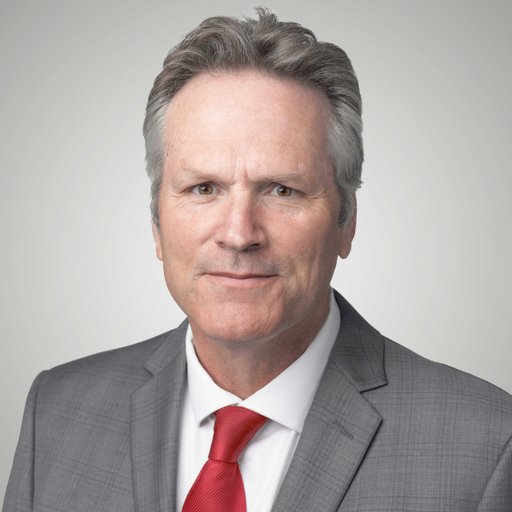
So we got a special guest here as a speaker and you know, we try and make sure that we have a great mixture of issues, views, etc. At this conference. We don't want it to be just one monolithic conference that just focuses on only one subject. The overall subject, of course, is energy, but there's so much that goes into that and it's really, it's not, I don't think it's value added just to make it a standalone perspective. So I want to say I am honored because I spoke with Magatt.
0:36
Mike Dunleavy
So I'm honored to introduce our closing keynote speaker, Magatt Wade, whose work and message have inspired conversations around entrepreneurship, economic freedom, innovation and human potential across the globe. I'm always fascinated. I've visited other countries, right. But I basically stay in America. It's a big country.
0:58
Mike Dunleavy
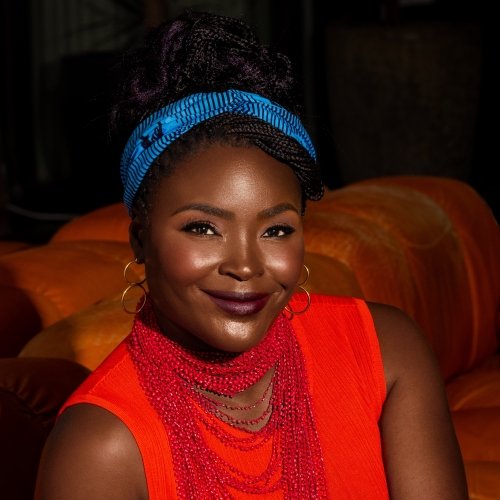
Stay in Alaska because I love it. But I'm always fascinated when we're able to have an individual that has lived, born and raised in another country, lived in other countries, then comes to America to give a perspective. And I think that's what's going to be exciting in this next talk here. So Magatta is globally recognized as a globally recognized entrepreneur, author and advocate for, for economic development who has dedicated her career to advancing opportunity through business, innovation and bold leadership. She's a senior fellow at Atlas Network and has been recognized by Forbes as one of the 20 youngest power women in Africa.
1:33
Mike Dunleavy
I'd say she's not just Africa, it's here in America too. She has also been named a Young Global Leader by the World Economic Forum and as a TED Global African Fellow. Magatt is the best selling author of quote, the Heart of a Cheetah and the host of the Magatt Wade show where she explores entrepreneurship, economic empowerment and the power of innovation to transform communities and nations. So folks, please join me in a warm welcome from Magatt Wade for a presentation why Ownership Changes Everything, Resources, Rights and the Road to Prosperity. Let's give it up for Magog.
2:14
Mike Dunleavy
Where are you?
2:23
Magatte Wade
Good morning or afternoon? I'm never sure.
2:30
Magatte Wade
Better now? Yes. Thank you and thank you so much, Governor. Thank you to all the organizers for having me. I don't know if it's good morning, good afternoon, but usually I like to start by saying English is not my first language, it's only my fourth language.
2:45
Magatte Wade
So bear with me. If sometimes I make up words, put them in a weird order or anything like that, just chuckle and do it for yourself, right? So that's usually what I ask of you guys. So we put that out of the way. So let's, you know, this is no longer a problem.
3:01
Magatte Wade
I was very excited when the governor and his colleagues invited me to come, because I have to tell you, I look at this great nation, America, which, by the way, now is my country. I'm very. I can't begin to tell you how proud I am to think of myself as an American. So thank you.
3:28
Magatte Wade
So, guys, what I want to share with you today is just my story, because at the end of the day, I know that this room is packed, packed with entrepreneurs, it's packed with engineers in the energy sector, and you guys are doing amazing work. But oftentimes I think life takes you away too much from, at the end of the day, the why of what you're doing and why what you're doing matters and why you should pause for a second and thank yourself and congratulate yourself for what you've been doing, especially when you belong to an industry that has been the villain. Energy has been battered, battered by some people who understand nothing of how the world works. So hopefully, by the time I'm done, I hope you guys will understand why you work in the energy sector, whichever part of it you are taking care of, why that work. Without it, none of us would be standing here.
No audio detected at 3:30
4:26
Magatte Wade
We would not be able to have a civilization that we have today. So I think that's really important, and everybody needs to remember that. With that in mind, let me just take you on the journey. I was born in Senegal, the west coast of Africa. And right around age 2, my parents looked at me and made the decision that so many African parents before them made and so many others since then keep making to this day is to look at your child.
4:53
Magatte Wade
Who here has children? Almost everybody. So now think about it. You look at your child, she's 2 years old, and you say, the best way for me to serve you is for me to leave you. So my parents took off, and in that case, they went to France first.
5:13
Magatte Wade
So my parents became economic migrants. They left not because of taste, not because France were so much better. They left. They left because of hunger. And so they left.
5:24
Magatte Wade
And I stayed behind in the care of my grandmother.
5:29
Magatte Wade
It was a great time of my life. But some five years later, when I was around seven, my parents called for me to be reunited with them in Germany, where they were at the time. So they had gone from France to Germany. Imagine this. The only caretaker I've ever known my whole life.
5:47
Magatte Wade
Now I have to live. And I don't know for you, how many of you here are Grandparents or have grandparents.
5:57
Magatte Wade
How would you feel if I literally ripped you away from your grandchild or from your grandparents? That's what happened for me. And I felt a tremendous sense of injustice. I did not know why this was happening. I did not understand why this was happening.
6:19
Magatte Wade
But all I knew is how it felt. And something about it felt wrong.
6:28
Magatte Wade
So I leave my grandma and I arrive in this country called Germany. And I look around and I'm thinking to myself, how come these people have this and we don't? And the visa I was talking about in my case was take it back home. And my grandma says, my God, time for your shower. Oh, I knew I had a good 45 minutes to an hour to take that shower.
6:48
Magatte Wade
Why? Because I knew that grandma would have to get a stove of coal going, fan it, fan it, fan it, put a pot of water on it, wait for it to boil, then we put it in a bigger bucket, mix it with some cold water so it's safer for my skin. And then somebody stronger than her would drag it to the shower area. And there, at last, some 45 minutes to an hour later, I can proceed to take my shower here in Germany. Mom says, my God, time for your shower.
7:12
Magatte Wade
I'm thinking to myself, lady, where is a bucket of warm water? I am not getting butt naked in this winter. So where is it? And she's like, oh, come on, you silly, just jump in. So I jump in the shower, I'm turning the knobs around, the water's coming down at the temperature that I want the pressure, you can play with it.
7:26
Magatte Wade
And I'm just literally need to look behind me. This was my reaction.
7:34
Magatte Wade
Who is playing a trick on me here? Literally, where is this water coming from? Because I came from a non piped home, forget heating this stuff. And so when I saw that, I thought to myself, yeah, how come these people have this? And it was the same thing about the grocery stores that had more type of apple and bread that my little brain could count, and then the paved roads.
7:56
Magatte Wade
And it was just like that about everything.
8:00
Magatte Wade
So eventually I thought to myself, how come these people have this and we don't? That question was obsessive for me. And it eventually became, how come some countries like mine and so many in Africa are poor and others, us, Australia, New Zealand, you name it, are rich. What's going on here? I spent my whole life trying to come up with that answer.
8:20
Magatte Wade
And I've heard it all to this day. Some people with a straight face on who have the ears of some of the most influential People in the world, very smart people. I would argue otherwise, saying it's the iq. Fury, darling, it's not your fault. It's just that blacks and browns are simply not as smart as whites and it shows in the state of their nations.
8:43
Magatte Wade
To this day I am having to sit at tables where these things are being discussed. Others, it's malnutrition or lack of, or you just need more education. And on the education part, I say, you see, among some of the businesses that I have, we have a virtual school where we have mentors, math mentors that they're all based in Eswatini, tiny nation somewhere in Africa. These are math degrees. Do you know with a math degree what you get to do when you're in a place like the U.S. you, you work for hedge funds, you work for AI companies.
9:18
Magatte Wade
You work for so many of these places where you make probably six figures very easily, if not more. These kids, when I first hired them, do you know what they were doing? Raising chickens.
9:32
Magatte Wade
So you just go tell them they just need one more degree that's going to help them. Good luck with that. And then I heard others say, oh, it's just because Africans are lazy and it's because racism, colonialism, slavery, you name it. But I'm thinking to myself, none of these things make sense because let's take the colonialism one. It's a big one that most people will throw at you.
9:54
Magatte Wade
Well, Ethiopia has never been colonized, yet for the longest time has been the poster child of poverty in Africa. Botswana, conversely, has been colonized, yet has been one of the top performers in Africa. So I'm not thinking this is making any sense. And then for those people who think there's something inherently wrong with me or people like me, I say to them, that's interesting because if there was something so wrong about me and who I am, then how do you explain that the minute I get to cross over to another nation that's wealthy, I get to self actualize? By the way, did you know that half of the black doctors in America are from Nigeria?
No audio detected at 10:00
10:33
Magatte Wade
Right. And so many of them were entrepreneurs. We're accountants. We're all of those things. Okay, but you said I was worthless, so that too makes no sense.
10:44
Magatte Wade
And I continue on with my life. Eventually, after business school in France, I decided that France is going to be too small for my ambitions. So I took the hell, I took off. I'm going to try not to swear here. I took off and I came to America because guess what?
11:03
Magatte Wade
Hollywood sold me. America. Hollywood said, this is the best country to go to. You're going to have your American dream and anybody doesn't matter where they start. You work hard, you'll get there.
11:14
Magatte Wade
So I packed up. I could have gone at that point anywhere in the world. And I chose this great nation and I came here. And America did deliver for me at a very early age. So here I am, one thing leading to another.
11:27
Magatte Wade
I first landed in Columbus, Indiana, and after a while I made my way and found my way in San Francisco in the heydays of a debt con boom and started working for companies like Netflix and Google when most people couldn't pronounce them. I got lost so many times going to Netflix because it was in the middle of nowhere, south San Jose. They were in one of the worst part of town because we were just getting started. So anyway, it was just so amazing. And there I was doing really well for myself.
11:53
Magatte Wade
But eventually one day I had something that I could call nothing else than an existential crisis.
12:06
Magatte Wade
You don't know this because you don't know me. But if I have to be honest with you, I am truly, truly a haunted person. What haunts me. What haunts me is stories and stories and stories of people who from Africa.
12:30
Magatte Wade
My country, Senegal is sadly known for a place from where you have so many people coming from laying right now dead at the bottom of the ocean somewhere in the Mediterranean, because they packed themselves into little fisherman's boats trying to cross over to Europe in search for a job. My parents did the same thing, except they didn't have to go that journey. They went a more safe route. But oftentimes the boat capsizes, you end up at the bottom of the ocean. The Mediterranean is one of the greatest graveyard for Afro Senegalese people.
12:59
Magatte Wade
We're talking very young people.
13:03
Magatte Wade
When they don't take the sea route. Somewhere above England from a plane, a body drops. Because somebody thought it would be a good idea to hide in the landing gear of a plane in their way to Europe to get a job. Or you open the cargo section in Paris Charles de Gaulle, there is a frozen dead body in there. Same reason somebody thought it would be a good idea to hide there on their way to Europe.
13:24
Magatte Wade
And when they don't take sea route, an air route, they go land route, land route. Do you know what happens most of the time? We get stuck in Libya. And do you know what happens when you get caught in Libya? Slavery.
13:37
Magatte Wade
You get sold. My exact price is between 300 and $500 on the market right now. In 2026, it took for Some of us to talk about it, for CNN to believe us. But many of us are on WhatsApp groups where all we do is buying back the freedom of our brothers and sisters who have been caught that way. What if you were a normally constituted person and these are stories that you know of, and they happen all the time, all the time, as in almost every other week.
14:07
Magatte Wade
I don't care how much of a life of abundance you've been afforded in the great nation of America. You remember these people because they're friends of yours. They're friends of friends. They're family members of friends of family members. This is all too real for you because of that.
14:23
Magatte Wade
I have never really had peace in my life. Never. And it hurts even more when I had good things to celebrate and one day I just lost it. I could no longer try and reconcile this life of abundance that I was given in the US with a life of scarcity that I left back home. I almost lost my life.
14:44
Magatte Wade
The only thing that got me out of that was surrender. And surrender to God right now. And what I said is, God, from here on, every breath you're going to give me, I want to put it towards the betterment of that great continent of Africa. And I'm going to use everything that America has showed me, taught me, given me, continues putting to my service so that we can bridge over and go to this rescue for the other side.
15:16
Magatte Wade
I did not know what to do. I did not claim to know what to do, but I knew God would provide me and guide me. And that's exactly what he did. Exactly what he did. So after that happened, I went back home to Senegal.
15:32
Magatte Wade
And that was four years since I haven't gone home. Back then, it was the longest I've ever stayed away from home because of making sure that my visa and all of that would be processed. You have to stay until it's all done in the US But I go home and I realize, wow, this hibiscus drink that I grew up with is disappearing. And we, all of us, used to drink it as part of our cultural identity. And then the women who used to grow the hibiscus, now that what they're growing is no longer needed, because Coca Cola, Pepsi, Fanta, that's what people drink.
16:01
Magatte Wade
These women are leaving the countryside where they were growing this flower and now going into cities where they're looking for jobs, oftentimes as made treated like crap. I mean, like crap. And the poverty cycle is growing. Because now the children of these women, what do they do? They're the ones you find in the boats now on their way to Europe so that they can send money back home and feed the family, because mom no longer is able to do that.
16:28
Magatte Wade
You see, it is so.
16:32
Magatte Wade
It's horrible. So I'm sitting there thinking to myself, are you kidding me? A part of my culture is disappearing. My people are keeping dying. What do I do about all of this?
16:43
Magatte Wade
But you know, where I come from, my father always said, criticize by creating. I don't want complainers. The only way you can come and complain to me is if you have some solution that you can provide. At the same time, it doesn't have to be the right solution, but I just want to know that you are in solutions mode, because that's the only. Only mode in which anything good comes out of.
17:05
Magatte Wade
So I went and I figured to myself, okay, I'm going to start a company. The product's going to be this beverage that I want, and we're going to grow. It's going to use this hibiscus. We're going to grow the demand of it, which means I'm going to be able to put these women back to work. And we put 9,000 women back to work just like that.
17:23
Magatte Wade
So thank you.
17:28
Magatte Wade
So that was really great. And we were very blessed to have so much people coming to this rescue. I started this company in my kitchen by myself. And eventually, at some point, you look on the boardroom, we have Roger Enrico, the chairman of Pepsi, and then all of these other companies, all the big companies, and you're like thinking, really, this happened. But that is America.
17:48
Magatte Wade
I could never have done that in France. The same person, same everything. And I'm very honest, I could never have done that in France. But that's America for you. So here we were.
18:02
Magatte Wade
Thank you. So here we were. And. But you see, when I created my first company, that's it. God gave me my answer.
18:09
Magatte Wade
Remember the answer that the little girl had? Why are we poor? And why others are not? So when I started my first company, what do I see? Oh, let's say this is America and this is Senegal.
18:22
Magatte Wade
Because all my businesses have in common that we have a sister company in America and one in Senegal. So when I started, when I did the first business, America, it took less than half a day. Today, it would take maybe 10, 15 minutes, depending on how fast you type, to legally register your business in Senegal. So less than half a day in America to legally register your business in Senegal. Do you know how long it took us?
18:47
Magatte Wade
Any guess?
18:50
Magatte Wade
Two years.
18:54
Magatte Wade
Here. A couple hundred dollars over there, thousands of dollars. And then the bank account in America, I'm sitting from my desk, I send the documents from the Secretary of State that I got via email, whatever, and the bank account is open in no time. You don't even need to have $10 to put in. You're good to go over there.
19:13
Magatte Wade
Oh, you don't want to think about that process. Because some of us, to open even a bank account, they say you have to go back to the chief of your village to. To get a letter of good character from him or her.
19:27
Magatte Wade
Okay, whatever. So this is what's happening. And then here in America, I want to hire Linda. So here we are, Linda and I, we get together. Linda has a worthless PhD in German, but I really don't need for my factory making organic skincare product.
19:45
Magatte Wade
But you know what? She's been making skincare products her whole life. When she was 15. She understands these things with a little bit of training. I need exactly someone like her.
19:53
Magatte Wade
Her PhD, forget it. But her everything else I need. So Linda and I, we sign an agreement. We're good to go. In Senegal, it's a marriage between three people.
20:04
Magatte Wade
Linda, myself, and the state. The state gets to decide if I can hire Linda or not, and the state gets to decide if I can fire Linda or not, no matter what she does. That's why I get an argument with the ilo, the head of the ilo, the International Labor Organization, And I tell them, listen, at the end of the day, if I can't fire you, I cannot hire you. It's that simple. You love somebody to death.
20:27
Magatte Wade
You're about to get married, and I tell you, wait a second. If this person ends up beating you up or stealing from you or cheating on you, I don't care what's happening. You cannot get out of this marriage. Will you get married? No.
20:40
Magatte Wade
That's what we have. So. And it's like that about everything. The permits, everything is crazy. So I'm looking at this, and I'm thinking to myself, I'm comparing the two countries.
20:47
Magatte Wade
I'm like, why is it so hard to start and run a business in Senegal compared to in America? And at first I thought, oh, it's just because America, I'm very rich. That's why it's working. And us is because we're poor, that everything is so cumbersome. But the minute you say that, you think to yourself, but wait a second.
21:03
Magatte Wade
You're poor because you don't have enough money. You don't have enough money because you don't Have a source of income. Our source of income for most of us is a job. Where do jobs come from? The private sector.
21:13
Magatte Wade
Right. Oftentimes when I give a lecture to my UC Berkeley grad students, they're like, oh, but you can have it also from nonprofits and the government. And I'm saying, well, even when you work for the government, I would like to think that you're being paid. Right? And they're like, yeah.
21:25
Magatte Wade
And I'm like, where do you think that money comes from? And I'm like, oh yes, we go back to the private sector. So in any case, you're poor because you have no money. No money because no source of income. No source of income because source of income for most of us, a job.
21:44
Magatte Wade
Where do jobs come from? The private sector. Now, do you think that business happens in a vacuum? Do you think that you will have as many successful businesses in an environment that doesn't allow for it than in an environment that allows for it? Do you really think the environment doesn't matter?
22:04
Magatte Wade
Well, if you agree with me that the environment does matter, then there you go. What I am going through in my country trying to run a business, turns out, is not just an anecdote of Senegal. I started then looking and saying, okay, is it only happening in my country? And then you look and you find that whether it's for doing business index ranking of the World bank or the Fraser Economic Freedom Index, all of these indexes and many others measuring how easy or hard it is to run a business anywhere in the world, they systematically show that African nations are at the bottom half of those indexes. So it is saying exactly what it is that I've been living as an African entrepreneur there.
22:49
Magatte Wade
Finally, at last, I had my answer. Africa is the poorest region in the world. Not because we're stupid, not because we're lazy, not because colonialism, not because slavery, not because racism, not because Africa is the poorest region in the world because it happens to be the most over regulated region in the world. This is a place where entrepreneurs, AKA wealth entrepreneurs are not able to enterprise. And then I discovered another thing, because there's more.
23:22
Magatte Wade
Have you ever seen that graph? Poor nation, rich nation and their relationship between that and their level of energy, richness or poverty. There we learn that there is no such thing as a rich energy rich country that also happens to be a poor energy nation. That makes sense. What can you do without energy?
23:46
Magatte Wade
What? And for energy to be viable, it has to be reliable, abundant and affordable all at the same time. Turns out African nations of the most energy poor nations in the world. So just from my own lived experience, I connected these dots. Human flourishing happens when you put two key ingredients together.
24:07
Magatte Wade
One is economic freedom together with access to affordable, reliable, abundant energy. You provide that. Thank you.
24:21
Magatte Wade
Provide that, get out of the way. And humans will do what they have always done under those circumstances. You take it away from them and humans will end up where they always end up. When you do that, meaning death and misery. You have very different cultures running on the same software, ending up in the same place like Dubai compared to China, which even communist China had to eventually get on the bandwagon of free market capitalism through their SEC Special Economic Zones.
24:56
Magatte Wade
That's what places like Shenzhen and others are. And that's what allowed 800 million Chinese to get out of poverty in a record time. Dubai did the same thing. Few people understand that Dubai is a constellation of 31 special economic zones. And then you have places where people are of the same culture, same people, but they decide to run on a different software.
25:17
Magatte Wade
North Korea, South Korea, West Germany, East Germany, back in the days. I don't have to tell you how different in terms of where we end up. It is so guys, at the end of the day, this is the why. The why of what you do and why it matters and why no matter how much you're being assailed by the outside world. But a for the most part doesn't understand what you do.
25:42
Magatte Wade
And even when they do, they have competing forces that make them want to sound like they don't know what you do. But no matter what comes at you, it is important for people like me that you guys understand what is it that you are doing when you are fighting for energy. There would be no life as we know it without it. And I would say even no human dignity. And on that I will leave you with one thought before the governor and I talk, you see all the things we shared today.
26:14
Magatte Wade
And by the way, this has taken my life to understand all of this. It was a life journey. I did not come to these ideas because I opened a book from Hayek or a book from Friedman or Milton Friedman or any of those great thinkers. It started from my own lived experience and eventually I wanted to know if my lived experience was just an anecdote or something more systematic. And eventually I started to look into the empirical evidence.
26:39
Magatte Wade
And when I did, the evidence matched my lived experience. And so for me, I carry these ideas at the very core of my core. And so I shared this with my employees because I do have a factory in Senegal. And I remember the first time I shared it with my employees because they didn't understand. Megad, why are you back here in the middle of nowhere in the dust, fighting so hard?
27:05
Magatte Wade
What's wrong with you? And I explained to her all the things I explained to you guys. And at the end, there's this one girl, 26 years old, never had a job. Her only outlook on life was to wait for a husband. Nothing wrong with that.
27:19
Magatte Wade
Don't take me wrong. But for her, that was the only way she was going to be able to be taken care of. And she was crying. Her name was Yahara. And I said, what's going on?
27:29
Magatte Wade
Why are you crying? She said, I'm crying because my whole life I see us people like me on magazines, in movies, in pamphlets. And it's always the story of an African girl or boy who has nothing. And the rest of the world has to give us everything. They have to give us shoes, they have to give us food.
27:50
Magatte Wade
They have to do everything for us. And she said, I have come to believe that us Africans must truly be inferior. And she said it with such there was no shame. It was just her truth. And that shattered my heart.
28:09
Magatte Wade
And then she said, but that's not why I'm crying. I said, then why are you crying? She said, I'm crying because now I know that it is not true. And when she said that, I wish every single one of you was in that room. That woman, I've never seen her stand up straight, look me straight in the eyes.
28:29
Magatte Wade
She always looks down, always looking like she's carrying the weight of something humongous on her shoulders. But as she was saying those words, I saw her. She went literally like this. And then her body just grew in front of me, and her shoulders up and down, back. And she looked at me with eyes I've never seen before.
28:51
Magatte Wade
As she was saying that and as she was saying that, I think what I was witnessing is a human being reclaiming their dignity. And in the end, that's what it's all about. In the end, that's all it's about. And that's what the work that you do provides people around the world. And with that, I want to give you a big, deep thank you.
29:37
Mike Dunleavy
Okay? So, Maga, thank you for that. And like I said, when we spoke just the other day, I didn't know who you were. You know, you never know. You never know what you're getting.
29:46
Mike Dunleavy
Okay?
29:49
Mike Dunleavy
And you wonder if. You wonder what you're going to get. And because you got a conference going on here, and you're like, oh, my conversation with Magatt, I was just totally impressed. Had nothing to do with politics, had to do with life experience, because I don't know about you, I was born in the United States of America. We won the lottery.
30:13
Mike Dunleavy
By being born here, we won the lottery. So starting off, we had so many advantages. But it's sometimes we take things for granted. We take the systems for granted, we take our freedom for granted. 250 Years we will be celebrating this country in July.
30:33
Mike Dunleavy
I'm sure you're going to celebrate as well.
30:37
Mike Dunleavy
But we take things for granted. So when I have an opportunity to meet somebody who has a different life experience and is a fellow American, I take advantage of that to just try and understand why and how. So I never take things for granted. And what I'd like to do is just have a conversation with you on. You were born in Senegal, you were raised in Senegal because of the economics and it sometimes sounds weird to people because your parents loved you and I'm sure other members of the family so much that they wanted to go somewhere where economically they could provide for you and the trauma that that experienced.
31:17
Mike Dunleavy
You've articulated it well, not just in this talk, but in others as well. But you went from Senegal to Germany, and now you're in America. And I'm always fascinated and I'm always interested in asking this question. You've talked a little bit about it. What is it about America?
31:33
Mike Dunleavy
What is it about America that makes it one of the most, if not the most unique countries in the world? Of course, we're not talking about its scale, its beauty, all of that, but what makes this country different than maybe other countries you've been in? And this is not to disparage other countries, but what makes it different from your perspective? Yes, it's a very good question because I oftentimes get that question. I even ask myself at some point, I was wondering, why is.
31:59
Magatte Wade
Is it that Americans are so capable of everything that they do? I started out by just noticing the most obvious. Americans are such optimistic people, almost to a fault. And the Europeans, they would say, oh, they're just. Some of them would say because they're big kids.
32:19
Magatte Wade
And some of them say they're so naive. And some of them say it's all fake. You can never make real friends with America because for them, it's just so hard. Like in Europe, it takes a long time to make real friends. But in America, I find that there is such an ease about people and their optimism.
32:36
Magatte Wade
So I would say, number one, the optimism which you can see right away. And I also would say there is seriously, to this day a true commitment to the concept of family that I have really enjoyed it. And also the concept of faith with a big F. So that's the visible part that you can see. But later, as I got to understand more about the world that I shared with you, especially economics, I saw something else. Because nothing happens in a vacuum.
33:04
Magatte Wade
People are not optimistic just because they were born that way. Everything in the end is connected. And so this one day, when I discovered the power of common law, it made sense to me. Now, I don't know any of you who is a lawyer here pays attention to those things. But around the world, nations follow different law.
33:29
Magatte Wade
Most of Europe, except for Great Britain and Ireland, for the most part, follow civil law, which is from the Napoleonic Code from back in 1804. And so in that sense, and they share a lot of that with the Germans in that world, basically you cannot do anything that is not pre approved by the authorities, meaning the state. Compare that to common law, which this country runs on, and I would say some of the most successful countries in the world run on that common law says, go ahead. The default answer is yes, can I do this? Default answer is yes, you go do it.
34:16
Magatte Wade
If a problem comes up, then we go in front of a judge and he or he is going to adjudicate the situation and taking into precedence to adjudicate. And if there's something new, we look at it and it will be good for the next time. Now think about it. When you're in a bucket where you cannot do anything that was not specifically black on white, that you can do it compared to you can do pretty much anything you want until there is a problem, where do you think you're going to have the most optimistic people? Where do you think you're going to have the most entrepreneurial people?
34:49
Magatte Wade
Does it make sense? Now? That's big. That's big. So America has the common law, but it keeps fueling it.
34:58
Magatte Wade
Where the British people, as I'm sure many of you know, Britain is in great decline. And that worries me a lot. But it's because while they have a common law, they failed to keep feeding the machine. And failing to keep feeding the machine in their case, also had to do with energy. When they made those dreadful decisions to remove affordable, reliable, abundant energy out of the mix, oh, that was a path to death and misery.
35:28
Magatte Wade
So I would say this is why I believe that America is where it's at. And I would like to argue for many people I know everybody worries about China and the great race against China. I'm not worried. Why? Because innovation at the end of the day is the name of the game.
35:46
Magatte Wade
But innovation can only happen with free people. So as long as we try and remain free, we will be just fine. There will be hiccups, but we will be fine. That's why I'm not to worry about China in the long run. You need engineers and they're going to have plenty of.
36:02
Magatte Wade
But usually the engineers are run by the entrepreneurs. It's the entrepreneurs who say, I thought of this new way of doing this or that new way of doing that, or putting different things together and then you bring the engineers together and they make it happen. So that's my story and I'm sticking to it.
36:23
Mike Dunleavy
So this is what I'm talking about. I see myself as a well read person. I read all the time, I research all the time. I'm always trying to figure out why something happens, why something exists. And it was only through the discussion I had with Magat just a few days ago.
36:37
Mike Dunleavy
It was like it was an aha moment.
36:40
Mike Dunleavy
Civil law versus common law and how it's embedded in constitutions and laws and it becomes the culture, it's the way of thinking. So I mean in America, here, in Alaska as well, it's part of the United States. It's all embedded in our Constitution. It's all embedded in our major laws and our major policies that then feed into that, as you say. So the other thing that's interesting is, you know, 50 states, right?
37:10
Mike Dunleavy
We have this concept called federalism in which you have Texas, let's say, versus California or Florida, versus Illinois or New York. You see that those differences in those laboratories of policies. Alaska is a unique state in many respects, or a contradiction in many respects. But nonetheless, we are part of that experiment. And part of that experiment is what's going on here in this conference in terms of policies, which I'm going to talk about a little bit in my close.
37:40
Mike Dunleavy
Why that is probably, and Magad has kind of highlighted it, that is probably the most important thing that you'll have to deal with as an investor, as a head of utility, as a policymaker, as a recipient, a customer of our actions. And again, I'll talk about that a little later. But to see a fellow American that comes from a different background, see those things that we take for granted, I think is incredibly important because it's the basis of what makes us what we are today and makes us a beacon of hope and a beacon of prosperity. So Magatt, what do you see then as some of the biggest barriers preventing local entrepreneurship and innovation from translating into long term prosperity for communities? Yes.
38:29
Magatte Wade
If you had to ask me, where is the threat coming for America? I'm one of those who would not necessarily point to China, for example. Right. There's stuff going on, but I would not point there. I would say that right now America's biggest enemy is America and Americans, while this country still enjoys a great more deal of economic freedom than almost any African nation and any poor nation around the world, because they all have that in common.
39:00
Magatte Wade
But lack of economic freedom, it has been eroding. It's been eroding. The only thing that's been helping us a little bit has been the foresightness of the founding fathers when they allowed this thing called for choice of law. You see, here in Texas, you can build the business, but it's registered in Delaware and all of that. That's what we call choice of law.
39:21
Magatte Wade
And at the very not all state, the states have some type of sovereignty compared to the federal state, especially in some arenas. Right. So when it comes to the environment piece, usually state will take over and a few other things like that, immigration, the state takes, sorry, the federal takeover. But there's a lot of things where the states are very independent. And so different states are using that independence to establish different economic freedom thresholds.
39:50
Magatte Wade
And right now, Texas is one of the top ones, one of the most free states in the union. California is, I think, next to last, you know, almost like the least free state in the union. And frankly, if California didn't have Silicon Valley and Hollywood, I think it would be one of the poorest states in the union. And again, this all tracks. It all tracks.
40:14
Magatte Wade
So I would say what is the biggest threat that I see is the complacency. But I believe the prosperity that was built thanks to that economic freedom that was the law of the land, has been eroding because prosperity brought comfort. And with comfort comes complacency. And people tend to forget how all of this came about in the first place. And when you forget or don't know how something came in the first place, what do you do?
40:47
Magatte Wade
You tend to not protect it, shepherd it, hone it, guard it, keep it, grow it, it just dies. And when it dies, well, you see what happens to Venezuela and to any place that tried this stupid experiment. So I would say that right now we have problems. Problems, because the two key ingredients I talked about are under attack. Economic freedom, AKA entrepreneurial value creation or capitalism and energy.
41:15
Magatte Wade
Right now, we have had a little bit of breathing room thanks to this current administration and people like our secretary of State and everybody else. But I'm very worried about what happens when they're gone because the rest of the world is not getting smarter about these issues. So I would say for me, that's what I see to be the biggest problem. The erosion of the economic freedom in America, together with all the nonsense that's running when it comes to energy, to energy and sources of energy and why energy matters to us, that's what I see as the biggest threat. And it's all coming from us.
41:50
Magatte Wade
And then some people I heard on the stage said it's because of disinformation from China and all of that. It is true. Some of that is happening. But again, my dad always said, last time I checked, lady, you've got a head on your shoulder, you've got two feet, two hands, which is more than most people can say. And at the end of the day, agency, agency is the name of the game.
42:09
Magatte Wade
So you cannot sit there and say, somebody made you do this, or somebody made you think that we're going to have to get our act together, get our education under control. And that's why I'm very excited about the school choice movement, so that kids are no longer trapped in a Prussian, in some school system that was started under the Prussian era, where school was all about training soldiers, literally. So we have some big job to do. But the reason why I am worried about all of this, yet still super, super bullish on America, is that this is the one nation that handles talks, puts its problems on the table, pull up our sleeves and we wrestle with it. That's why as young as 250 years old, only this nation has been kicking everybody's ass the way it has, and I think it will continue doing that.
43:00
Mike Dunleavy
So we have issues. I'm worried about where we're going, but I think we will make it. You know, one of my favorite stories involving one of the Founding Fathers, and I talk about this sometimes when I speak in the groups, is the Constitution is wrapping up the convention in Philadelphia. Right? The country is just born.
43:18
Mike Dunleavy
Constitution is wrapping up. And, you know, this is all predating just by a couple years, actually maybe just a year or two, what would become the French Revolution? And in the French Revolution, where you had the American Revolution and you had a number of Founding Fathers that worked together, that put the common good before everything else and created this incredible, incredible, incredible country we have today at the same time you had the French Revolution happening. And if you know anything about the French Revolution, it turned into a nightmare, an absolute nightmare. This is where the guillotine came into common use.
43:52
Mike Dunleavy
This is where they're lopping off the heads of opponents. And some interesting letters going back and forth, for example, between Jefferson and some of his friends in France. The Marquis de Lafayette, who was Washington's young aide de camp during the Revolutionary War, is back to France during this time. And those guys are sending letters to officials in France to try and save the Marquis de Lafayette from being executed, because they viewed him on the other side of this. But what's the point?
44:18
Mike Dunleavy
As was mentioned, highly enlightened societies that we take for granted, that should do the right thing, they're not guaranteed. So during the end of the Constitutional Convention, Franklin is being carried out. He was older, he had gout, he was on a leader. They worked hard in the Constitution. And a woman cries out from the crowd, Mr. Franklin, what do we have?
44:38
Mike Dunleavy
He says, you have a republican republic if you can keep it. What does that mean? That means every single minute like we are today, every single day, every single week, every single month, this experiment we call America, with the free freedoms that have been outlined, the opportunities that have been outlined, isn't a guarantee that we have to constantly, constantly, constantly, as you say, feed it, agency, et cetera. And so that's one thought I would like you to take away from anything you ever do is understanding that this is not a given. We take it for granted.
45:12
Mike Dunleavy
But there's examples in history and currently across the world that can demonstrate to all of us that this is not, not something that is necessarily permanent without our help. I want to ask you this question. You brought up an issue when we were talking, a concept that reminded me of what the United Arab Emirates. They do. We, some of us went over to visit the country and you know, the UAE and many of its.
45:35
Mike Dunleavy
The seven emirates prior to World War II. Some of it was pearl diving, some of it was what we call wasn't industrialized at all. And then of course, with the advent of oil and gas, the country's really taken off. It's spectacular if you've ever been there. But they came up with a.
45:52
Mike Dunleavy
They used a concept. I'm not going to say they came up with it, but they used a concept of economic zones. In other words, they took an approach that in certain areas in the UAE there will be economic foreign investment zones that will have their own rules, their own laws, et cetera, in order to get investment In. In order to give a surety to investors that there won't be rule changes, that the barriers will be lowered. You, too have an interesting concept on how you would like to set up or you would like to spur entrepreneurship, not just here in the United States, but even back in your country of birth, Senegal, and other places.
46:30
Magatte Wade
You want to talk about what that looks like, what those zones or those concepts look like? Sure. Thank you. So once I started understanding and becoming much more serious about economics, it became clear that the role of economic freedom in all of this, and economic freedom, you have to put in there the rule of law, clear transferable property rights, all of that good stuff. It's all part of it.
46:55
Magatte Wade
And so once I discovered that, that's when I got involved actually in the field of policy reforms. I've never heard of think tanks before. If you had put one in front of me or sent me to one, I would not have known what that was, because whatever, I was making juices, and then later I was making skincare creams. So what's that? I don't know.
47:14
Magatte Wade
But once I discovered the issue around economic freedom, then I researched, okay, so how does this get solved? And it turned out it was all about policy reforms, work. And at that point, I'm thinking to myself, okay, who out there is doing work on policy reforms, but internationally? So people who obviously are on the free market side, but focus on the international, because you have many that focus on America, Cato, Reason, all of those guys, and they're doing fantastic work. But that's how I came up with Atlas Network, the largest organization of free market think tanks in the world.
47:48
Magatte Wade
And eventually we partnered together and I became their director for the Africa center for Prosperity. And so there we have been doing really great work, supporting our partners, partners on the ground, and investing in think tanks in Africa to promote the free markets and also energy.
48:05
Magatte Wade
But eventually, I'm finding to myself this piecemeal legislation work, while very important and critical, takes too long. By the time we're done getting rid of one law over here, 10 more have propped up over there. Meanwhile, I've got millions and millions of young people coming to an age of work needing work every year on the continent with no job. This is a ticking bomb for most of us. By the way, did you know that by 2050, which is tomorrow, one out of every four people on this earth walking this earth is going to be African?
48:40
Magatte Wade
We can have it either way. This can be the greatest blessing that Earth has ever seen. And I like to believe that humans are blessing like Dr. Simon believed that we were the ultimate resource. Or this can be the type of tsunami that's going to leave no one standing. And I think we've been seeing some of this in Europe and other places in what you guys call the immigration crisis.
49:04
Magatte Wade
Now, I'm not interested in the battle being about do we build the wall or do we create these sanctuary cities. I would like to say if you care about these people as the people that they are, you should know that neither is the solution. The solution is what do we do to help people stay at home? Because given a chance, most people would prefer to stay in their home country with their communities, raising their children in a place that they understand. So now what does it mean?
49:31
Magatte Wade
What do we do to help that happen? We know it has to do with freeing the entrepreneurs. And we also know peace militia takes too long. So then some of us look around the world and you're looking at Dubai. You're looking at Hong Kong until China did what it's doing to it.
49:48
Magatte Wade
You're looking at even China with its SEC Special Economic Zones. You're looking at Dubai. What do these places all have in common? They took pockets on their land and they said on this pocket, this geographical pocket, we're going to erase all the laws that exist. When it comes to business laws, it's going to be the same country.
50:09
Magatte Wade
Immigration, defense, all of that remains the same. Family law, all of that. But when it comes to business, we're going to make it the best business environment in the world. And that's what Dubai did, especially with its International Financial Center. Dubai wanted to be a top IFC international.
50:26
Magatte Wade
They looked around the world and they figured the best IFCs around the world all ran on common law. So Dubai said, well, I guess this Sharia law that we have is going to be no good for this is it. So they kicked out the Sharia law piece and then they imported the British Common law that became the law of the land on that 110 acres of land. And they even went as far as hiring retired British common law judges to come and adjudicate the law in Dubai. And so this is what made Dubai happen.
50:59
Magatte Wade
And once Dubai happened, for the most part, when the rest of the UAE started to copy and Abu Dhabi and everybody else. And so we're looking at this and thinking this is probably what should be happening in Africa as well. And then it makes sense, by the way, because if you arrive in a country, you have all of these entrenched interests. For all the talks of poverty, we're talking about in Africa, Trust me, some people are making fantastic lives. In some places somebody just showed up with a Bentley.
51:26
Magatte Wade
Don't ask me where they got it, how they got it, but they're driving better car. I mean cars that you've never thought of custom made for them. It's insane. So there's a lot of money going around. But the minute you show up and you say we're going to change everything which is going to affect you.
51:41
Magatte Wade
Even if the president was on board to make the reforms, he or she would be killed the very next day because it is how serious it is. But now think about it, you have this stage, we're here in this chair. So these are occupied. Probably government is going to say don't come and mess with my spot. I'll say the same.
51:59
Magatte Wade
The flower says the same. Everything that's occupied here is like don't come and mess with my thing. Well, you say fine. You go to that one corner over there where there's no fame. You see that corner there?
52:08
Magatte Wade
There's nothing there. No one, there's no one, nothing. No one cares. You go there, you work with the government to basically for them to get you what I call a general repealer. So in law that's basically the system that allows you to erase all the laws and you only go after commercial laws, after business laws.
52:25
Magatte Wade
You don't go after anything else again. Immigration, defense, all of that, you don't touch. You go over there and the country said over here we give you a special status. All the laws business wise no longer apply here. Go and build your own.
52:41
Magatte Wade
And when they say that, we go and we build our own. And when we build it, the game is to make it and be one of the top 10 business environments in the world on par with Singapore, Denmark and places like that. So that's the game that has been going on in Africa recently that I've been pretty big part of. And that's why I do know that in my lifetime I will see a prosperous Africa. Because all I need, I don't need all 54 nations to change their, to change their attitude.
53:12
Magatte Wade
I need one to allow one of these zones to happen. It happens. We know what's going to happen because it's always yielded the same result no matter where it started. You get that going eventually it works now others copy you. And it gets very fast, the change gets very fast.
53:30
Magatte Wade
Of course you're going to need what we call a legal stability guarantee ideal of 50 years. Because most investment, that type of investment we're talking about will need at least a good 50 years to see its return over and over for a few times, you know, so we can call it worthy. So those are the type of things what we're doing. And that's why I'm very excited and they're interested when the Trump administration came up with these ideas of the opportunity zones around the usa. And I think this probably will be a game changer for Alaska.
54:01
Magatte Wade
I mean, Alaska has everything. But if now you have these zones where you have more Runway than not, I say almost watch out Texas. And I'm from Texas, I'm Austin, Texas. But even then the Texans are going to have a run for the money. No, seriously, this is how powerful these things are.
54:21
Magatte Wade
People will come. You think you have a heart terrain, but people where there is that freedom, talent and money is very smart. Where you make it easy for talent and money to deploy, it comes and it will build maybe one of the nicest galactic systems. I call it like that because it's so cold. But we haven't thought about on Earth because when the money is there, the technology is there, we can do amazing things.
54:45
Magatte Wade
So we haven't seen the city of the future yet. And maybe it's going to be in Alaska thanks to these opportunity zones. So I'm just excited for this state. I'm just very excited for you all. Yeah, Texas, watch out.
55:02
Mike Dunleavy
So again, for me, one of the big takeaways is as you were describing, our situation here is what we're used to. This is our zone, this is what we do here, this is how we do it. But over there, again, when you carve it out and you employ common law, that's the key. You employ common law, which is basically you can do whatever you want to do with incredibly wide parameters in order to meet the objective and the mission of those zones, as opposed to we will allow you to do certain things and that sit and ends at that point. And I think that's again, that for me was a eye opener in my conversations with God on comparing the United States with other places in the world.
55:39
Mike Dunleavy
And again, that's structural. We can't take it for granted. But we do have it currently, now. And it's something that we have to keep in place. That's why you see capital coming to America from all over the world right now for the reason she said the Trump administration has made the United States of America currently a beacon for capital.
55:55
Mike Dunleavy
Other places are struggling with that. Other places such as Europe and other places in the world are struggling with that. So again, what you're going to see in America is competition between the states. Alaska certainly wants to be able to compete. We're very different where we are at the top of the world, we have advantages, we have disadvantages, but nonetheless, unleashing the creative, entrepreneurial ship of human beings, which is, I think, part of our nature, but suppressed by governments, takes you from point A to point B on the development, the economic, economic and standard of living scale.
56:31
Mike Dunleavy
And to me, it's just refreshing to have a conversation with somebody who's not American, excuse me, who is American, but had a different perspective in their place of birth. America. We're all. Vast majority of people here. Here are in this audience today are descendants of immigrants.
56:50
Mike Dunleavy
Alaska. And I don't know if you know this, but we have the highest percentage of Native Americans in terms of our population, 20% per capita than any other state in the country, and we honor that. And we have some incredible native corporations for the very reason you said. They have their land, they have the ability to deploy their capital in the manner they see fit. They have shareholders, they have board members.
57:09
Mike Dunleavy
My three daughters, my wife are part of that. It's really a phenomenon. It's the only place in the country where that happened. When we were trying to settle our land claims with our fellow Native Alaskans. But wanted to ask you, as we wind down here, you often emphasize unlocking human potential rather than relying solely on government or large institutions.
57:32
Mike Dunleavy
Looking globally, what is one policy or cultural change you believe could most rapidly unleash entrepreneurship and innovation in places that have historically struggled economically? And I know we just talked about the economic zones that are carved out, but is there anything else you can think of to add to the mix for us to think about as we go forward? Absolutely, and we touched upon it very quickly. But I want to spend a little bit more time that we have here on it. And it's what I call agency.
58:03
Magatte Wade
Our education system has robbed our children of their sense of agency. And that is a big problem. And it is showing in so many ways.
58:16
Magatte Wade
It's showing in ways where we have an epidemic right now, literally an epidemic of teen suicide. It is very much linked to their lack of sense of purpose and meaning in the world, which comes from the fact that this sense of agency has been stripped away from them.
58:39
Magatte Wade
And so when people have no agency, also what happens is they tend to sit and stay comfortable in a place of victimhood. Victimhood is terrible. And when you are in a state of victimhood, not only are you not able to be a You know, happy, healthy, productive member of society. But you actually going to develop some counter sentiment against society. You know, people say, why are we having this revival of socialism among young people in this country?
59:10
Magatte Wade
And I say, why are you asking that question? It should be clear we have stripped the agency away from these young kids. At the end of the day, people who believe in social, I think who believe in socialism are people who are telling you, basically, I have given up on myself. They will never say it like that. It's easier to say, oh, so and so should never be a billionaire because they're probably stealing from so and so.
59:33
Magatte Wade
They will say it like that because it seems much more, you know, grandeur. And it's about, I have a moral high ground. It's much harder to say, you know what? I believe that the state and we have to do redistribution because in a way, I don't believe in my ability to make it happen for myself. So somehow, somewhere, we need a referee who can take from you to give to me because that's the only way I will be able to get what you have.
1:00:00
Magatte Wade
So these people, if you watch closely, they're the ones telling you, I don't believe in myself. And for my grandma, it was a big deal. While my father taught me criticize by creating, my grandma taught me, in my native language, it means believe in yourself. She said everything goes out of a window if you don't believe in yourself. So when you don't believe in yourself, that's why you don't believe you can make it work for yourself.
1:00:23
Magatte Wade
So somebody else has to make it happen for you. And also what it does, but what it does, oftentimes that comes with resentment. Have you been in a position where you've been giving stuff to your friend? And it's always that, always you give, you give, and the more you give and the more you can see that they resent you. Those feelings, they all go together.
1:00:44
Magatte Wade
And so when, if young people think that way, if they have no more agency, no more sense of purpose and meaning, they fall into the victimhood, the victimhood that makes them believe that they're not worthy enough. They can't make it happen on their own, so someone else has to step in. But as that someone else steps in, resentment grows. And it's this vicious cycle of feelings and sentiment. And next thing you know, here it is.
1:01:08
Magatte Wade
And some of them oftentimes end their life in very horrible ways. And I trace all of this back straight to the education system. So for me, that's what I would like to add. And many hands went up earlier when I asked about who has kids or grandkids. If you have kids or grandkids, I would urge you very much to look at the type of education that they're getting.
1:01:35
Magatte Wade
The education that we're getting, for the most part the traditional one, the way we know it was not here to help the human being flourish, discover his or her genius. I believe there are 8 billion geniuses among us. Each one of us came to this world with a genius and that genius is their piece of the solution to humanity. I truly believe it. I believe that a genius is the one thing that God gave each one of us, sent us to this earth and said, your contribution to humanity is in you.
1:02:05
Magatte Wade
Go discover it, deploy it, and you will help us, PC. If we don't help young people do that, discover that genius, we all failed. We failed not only for that person, but we also failed because remember, this person has a piece of a puzzle to our collective struggle. And so for me, I would say parents, be very wary of what's going on in these classrooms of your children. Covid was a disaster.
1:02:33
Magatte Wade
But what Covid did on the education side is allow many parents for the first time to have access to the classroom. As kids were doing this virtually. So this is where each and all of us can help ourselves going forward. How can we give our kids back a sense of agency? And.
1:02:52
Magatte Wade
And what I love about the school choice movement, like I said, is now you have these vouchers going around. So all of this money that's following the child and not following the school, what is it doing? It's unleashing countless number of education entrepreneurs. So this is. It's an exciting time to be in and for parents, if you have five kids, you have to understand each one of those five kids could be actually following a different type of education.
1:03:18
Magatte Wade
This one regiomilia, this one Montessori, this one homeschooled, this one doing something else. It's amazing. So you see why I'm. Yes, we have problems, but this country, like any other, I mean, Germany, you'll be put in jail if you're trying to do homeschooling. So I will leave you with that.
1:03:35
Mike Dunleavy
So agency for all of us and the children. My God, thank you for being here today in Alaska. It's a long trip from Texas. We are a little bit bigger than Texas, but. But I'm not going to keep going there.
1:03:47
Mike Dunleavy
It's nice that you're up here. Hope you leave with some great thoughts about visiting the great state. But I want to thank you. I want to thank you for laying out your journey, because I think it's very helpful to be able to remember that some things are not permanent. We got to help keep them permanent, the great things about this country.
1:04:04
Mike Dunleavy
But let's give it up for Magat Wade, please.