February 24, 2025 CBJ Assembly Lands Housing & Economic Development Committee
Alaska News • • 68 min
Source
February 24, 2025 CBJ Assembly Lands Housing & Economic Development Committee
video • Alaska News
Thank you. We're going to call the Assembly Lands, Housing and Economic Development Committee meeting to order. February 24th, it's a little after 5. Miss Atkinson. Thank you, Mr.
Chair. We would like to acknowledge the city and borough of Juneau is on Tlingit land and wish to honor the indigenous people of this land. For more than 10,000 years, Alaska Native people have been and continue to be integral to the well-being of our community. We are grateful to be in this place, a part of this community, and to honor the culture, traditions, and resilience of the Tlingit people. Gunalchéesh.
Thank you, Ms. Atkinson. Ms. Duckworth, would you note the roll, please? Assemblymember Atkinson. Here. Assemblymember Steiner.
Here. Assemblymember Kelly. Here. And Chair Bryson. Present.
All right, were there any requests for the agenda changes? Everybody okay with the agenda? The agenda is so approved. Were there any requests for changes to the minutes of January 27th? Seeing none, those minutes are approved.
Let's just dive right in for the Hoonah Totem Corporation doc presentation and discussing I'll turn it over to you, Ms. Spears. Thank you, Mr. Chair. I will be brief because we have a lot of people in the room tonight. We will be taking public testimony on this item.
We also— I also want to note the summary of comments received at the public meetings that are in your packet. We asked people to weigh in on the project as proposed and the design elements rather than weighing in on whether they supported or opposed the project. However, we did receive many comments in direct support or opposition. So they've been categorized as such. Anything not directly stating opposition or support was categorized as N/A, even if it had kind of a flavor in one direction or the other.
We didn't want to put words into people's mouths or kind of assume their opinion. But we did receive a total of 184 comments over those two meetings. 25 Were in direct opposition. 42 Were in support, with 2 that were fairly conditional support. 115 We just assigned as not applicable.
Also, as of note, you have recently— we've read our recently released survey report, and I will remind you that it found 38% in support, 28% opposed, and 29% feeling that they needed more information before making a decision. So this evening, Susan Bell from Hoonatotem has a brief presentation. You have heard from Ms. Bell before. So this will focus on new information, including the traffic study and navigability study. We will then take public testimony and we'll continue on to the COW.
There, there will be an opportunity for the assembly to do a question and answer with Puna Totem. And so assembly members in the room, we will start the COW with that question and answer. And with that, I will ask Ms. Bell to come up to the dais.
And while Miss Bell's getting set up, um, Miss Duckworth, could you note that the rest of the assembly, including the mayor and deputy mayor, that are all present for this, uh, lands meeting, even though we only had the lands acknowledged? And Miss Bell, thank you for coming this evening. You may begin when ready.
Okay, the green button, and you have, uh, got it, 12 minutes. Is that correct? I have a few brief slides, and as Alex mentioned, we were asked to really hit on things that are new information because we've had an opportunity to present to both LANs and this Committee of the Whole. If we can move to the next slide. Again, we're talking about Auk Landing, a Hoonah Totem project that will have a dock and uplands at the Whittier and Egan intersection, commonly known as the subport.
One of the things— several of you know that I began my role in this position in mid-August, and when I hit the ground running to come up to speed on the project, what needed to be done, I started talking with a lot of community groups. And I wanted to share this, and I plan to anyway, but as we saw the survey results, which were— you know, the survey was held this year. It's something I'm familiar with, with my prior McDowell career. McKinley Research career. It was held until after the presidential election.
So many of the questions were— many of the surveys were conducted in December. And I think it's helpful for you to see here where it's approximately 20 presentations and several conferences that also included Juneau participants, where I've had a chance to get out and talk with a wide array of community groups, including an event that's later this week. And I just wanted to briefly mention it's the last one in February. An open house that will be at SPICE on Wednesday. So, with that, if we move to the next slide, I also just wanted to touch on something that's really unique about this project, that it's been built from— with a lot of public input, including when Norwegian Cruise Line acquired the property at auction from Alaska Mental Health Trust Authority and held a series of public meetings.
When Hoonah Totem gave the land— I mean, when Norwegian Cruise Line Holdings gave the land to Hoonah Totem, There were, there were also open houses, a lot of, a lot of engagement with the public. Along with that, there's been the Juneau tourism surveys, including specific questions about a cruise ship dock at this property in 2021, and again this last year in the 2024 survey. And part of what I've done under each of these is to just help highlight where public input has definitely shaped this project. So, visitor industry task force commissioned by Mayor Weldon. Their recommendations translate directly into the conditions from the Planning Commission.
And you can— we've been talking about the one ship a day, no hopper thing, high quality. The tourism surveys, they've really emphasized the importance of a public park, parking, the seawalk extension, cultural center. ShorePower was listed, but some of these amenities were also very, very high in the survey responses. Um, we've had ongoing conversations with the Coast Guard many of them preceding my joining the Hoonah Totem team in September, and conversations in D.C. last week. Coast Guard representatives are here tonight, and I know that's a key area, a key area of interest for the assembly and the community.
One of the things we did in the project, just, you know, to reflect on this, is removed some fingers that were included in the initial dock design, because the Coast Guard itself is interested in using the dock. When cruise ships are not there or when they've got buoy tenders or possibly even to, you know, in support of the icebreaker. So, and, you know, we've been responsive to this, but I just wanted to underscore aside from this point about the dock that, as we know, the Coast Guard is a multifaceted agency with certain people focused on the icebreaker, certain people focused on more real estate, they're adjacent property owner, and we need to be sure that we're compatible use, and other people focused on you know, the bigger navigability issues. So what we expect very soon from the meeting that Hoonah Totem Russell Dick, our CEO, had last week is a point of contact locally that will be identified for this project. So again, I just, you know, we've been in ongoing conversations locally and with D.C. and just want you to know that's something we take seriously.
The navigability study tonight, Ed Page from Marine Exchange is going to speak to a few slides that are in the packet. And the study that you have on the navigability study. But, you know, one of the things that we did initially is we had a project kickoff team, um, come to a team meeting coming together in January where we went from our core contractors and began to add the additional layers of expertise that make a project like this come together. Part of what, uh, both P&D and Marine Exchange did was begin with testing a 5° you know, the alignment from the dock going 5 degrees to either direction, and then enter the navigability study with, you know, making sure that we have the right alignment. So, you know, again, all of these things are iterative.
I think I've had a chance to say in this process that we were working towards this MOU with AGT Mining Properties. Of course, they're, you know, a nearby landowner. One of the biggest things with that, in addition to working closely with Alec Mesdag and his team at AEL&P, is that we've committed to removing the derelict dock near us. So, you know, again, you've got in the packet tonight the array of comments from the public meetings. We were really pleased with so many community members taking an interest.
We had well over 170 people, lots of comments, and as CBJ staff compiled that, we shared that immediately with Jensen Yorba Wall, with P&D, with Marine Exchange, and with others because there's just a wealth of information on things that we can incorporate into the plaza, the facilities, the seawalk, and really wonderful ideas. And again, we're mining that as we speak. I think a couple— all of us agreed that a couple of the really fun suggestions, you know, one, a lower-tech one, binoc— public viewing binoculars on the deck for people to be able to look at our ocean and our, you know, marine life and birds. Opportunity to learn about our culture and carve totem poles is another one. One that we haven't really been able to vet fully, but it was another creative idea, was the rooftop bar.
So again, you know, an array of ideas for how people want to use the indoor facilities and outdoor facilities. With that, what I think the next slide gives us a chance to transition, and again, we have both Jeanne from P&D Engineers and Ed Page from Marine Exchange. Ed's going to walk through the next slides. Following Ed will be Corey Wall talking about the traffic study. The traffic—.
Thank you. I've been involved in navigational studies for— in the past. So if you like how that turned out, maybe you'll like how this one turns out too. But I've been throughout Alaska. My Coast Guard career goes back to 1968.
I've been involved Navigation studies in LA and San Francisco and Alaska. So see how we do on this one. Basically, we just looked at, as Susan mentioned, looked at several iterations of dock placement. Basically, we're looking at what kind of interference there would be when you put a new dock in. And what things you take out, what dangers or hazards to navigation that are existing right now that can be taken out by putting in a dock.
Not only— I also navigate through those waters through landing craft of Marine Exchange, but even sail through those waters. So I see firsthand that sometimes I'm plane dodging with floatplanes and shore launches and cruise ships parked blocking my wind, I might add. But in any case, I see it firsthand, but also we're going to use some technology so you can see it even clearer through the technology we have developed at Marine Exchange. Using automatic identification system, which is like a transponder on aircraft, which is required on large vessels. And it's transmitting every couple seconds information on the vessel's course, speed, and location.
So we use this data to help clarify— I call it the truth serum— marine accidents or groundings or anything. We can play back for years the transits of vessels and see how they operated. So what we're gonna do is play back how vessels operate in this port. And then if we introduce something else in the middle of the port, how that impacts navigation safety.
So here's the placement of the dock that we mentioned earlier. And in general, we've looked at a couple different angles. This was not the best angle. The things when we talk about the best angle have largely to do with like the winds in Juneau, which influence— you think the sail area on a cruise ship is huge. And so the sail area, you don't want to put that directly on your beam.
You want to put it somewhat on a quarter or the bow. And so that has driven a lot of the positioning of the, of the dock. And if you put it parallel to shore, it'd be— we've done tests in the past trying that option when we did the port study, actually, and it was something that said we can't deal with this. So this is based on history 10 years ago, and we can approve it again, obviously. So we move on.
What we did in this particular slide is that we kind of showed how much activity there is. It's just in one month. Those are all track lines of various vessels that have AIS. Not every vessel has Automatic Identification System. There's Coast Guard requirements on certain vessels have it.
Generally over 65 feet, but tugboats also have to have it. But still, that's showing like the small passive vessels, the shore launches, it shows the cruise ships, it shows fishing vessels. A lot of activity, a lot of track lines going through. It's a very active— for a very small port, it's very active. Amazingly so, in fact.
I thought LA was active, but we're probably more active here in this little condensed port. Next slide, if you will. So now we just take it away and look at cruise ships. The purple lines just show the cruise ship activities going to and from their berths. And again, there's a fair amount of activity of these huge vessels, many of thousands of feet long, which is pretty incredible.
Maneuvering in our port. Fortunately, we have a lot of capabilities as far as thrusters and bow thrusters and stern thrusters and variable pitch and controllable pitch propellers that really make them quite incredibly maneuverable. And therefore, you don't see them using tugs very often. But there's an example, again, of only, you know, 1 month in our port. Next slide.
If we go back— I'm sorry, I should jump. If you notice that the location of Hoonah Tunnel Dock does not really interfere with the maneuvering those vessels. Now, it wasn't in place then. They'd probably give it a wider space had they known it was there, but it's not there at the time that we took these graphics that were generated last summer. Next slide, I'm sorry.
And so now we look at when a vessel anchors in the port, they're constantly running the shore launches back and forth. And that always has concerned me because I know that the flow planes are going the opposite direction, or right angles to. It's like an intersection between these vessels that have maybe 100 passengers in them or 60 to 100 passengers in them. And then he has his floatplanes going about 100 knots making their landing. And it's kind of a dodging thing.
The one picture in the top right is a floatplane going behind the cruise ship. The lines of blue and the orange lines are going east and west of these launches from an anchored vessel. Can't see the anchored vessel there, but there is a vessel anchored in the middle of that. And they're running back and forth. Into our port.
And there's hundreds and thousands of actually of those transits. Not all of them are captured because not all the vessels are required to have AIS. But there are literally hundreds and hundreds of these transits going back and forth. We cannot show the flow plans. They don't have AIS technology.
So we know they go there, but we don't have that. And this also shows— we have this discussion with the aviation, FAA, as well as the airline operators. Like if we build a dock there, What will you do? They said, "Well, we'll just go a different path." They showed the path they would do. Now I have a slide somewhere that shows a path they've taken coming from the south, but coming from the north, if they're coming from the north, they would go this way.
Most of the time they're going south and they don't normally take that route, but they would just go around that dock. The picture in the top right shows them behind a ship that was anchored. And that's a variable position. The anchors, many times the vessels swing on the anchors, so they're not fixed position. Next slide.
So then, next look at will the Hoonatonum Dock interfere with going to other docks in Juneau? Could it cause a problem with that? And so we just kind of show arrivals and departures of other vessels, and that basically they can maneuver. Many times they're not even getting in the path of where the Hoonatonum Dock is, even though it was never there in the in the first place. In the bottom left, you can see a vessel anchor.
And that's to me, is the one variable I don't particularly care for in any port, because they may be there, they may not be there, and they swing around the anchor, the position changes. And so, but nevertheless, if you had a vessel anchored, and which we did, and the bottom left shows a vessel anchor, they will interfere with it or cause some limited, reduced sea room, maneuvering space available for a vessel to make a port call, to pull into a dock. But it shows even with a vessel anchor, which would be more impediment than what the Hoonatonah dock would be, they're still able to maneuver in and out. So they can maneuver in and out with an anchor vessel in that particular location. They can certainly maneuver in and out with ease to a dock in that placement, and they'll know exactly where the dock is.
It won't move on them. It'll be there. In one position. So I show a couple slides of how our vessels anchored, the red, and the Hoonah Totem Dock in blue, and how that vessel's even, when that vessel's anchored in the middle of the harbor, can still maneuver in this situation. Now of course if this dock is built, there will be no large passenger vessel based on agreements between CBJ and the cruise industry.
There will no longer be large over 1,000 passenger vessels anchored in the middle of the harbor. And so therefore you have less transits of shore launches going back and forth. Let me interject here. We are quickly running out of time as we're—. All right, sir.
We have a whole bunch of people signed up. All right, I'll go very quick then. Summarize this a little bit quicker. All right. All as we showed other operations of vessels, of towing vessels, recreational boats, fishing vessels, and small passenger vessels.
But it basically shows you they're operating. It won't— if we put a dock there, it won't be significant impact on their routes of transits. They can move around it. That's what that shows. Next slide.
Similarly, this question about the Coast Guard dock. This shows the Coast Guard dock where they bring these buoy tenders every year, the buoy tender roundup. I'm sure you've seen that. They're 225-foot-long vessels. So if you add those, if you look, there's two the berth there, is that lengthwise?
Well, you're talking 600 feet probably by the time the space between them and the distance. So the new Coast Guard vessel, the Storis, is 360 feet. So when you talk about space available to maneuver in, they're putting 2 vessels in that particular area, not as large as it, but they have a lot more excess and they've had plenty of space to do that. And they maneuvered in and out of space quite easily. So those are just shows departures and arrivals of existing Coast Guard cutters pulling the Coast Guard dock right now.
Next slide. This shows when a boat, an icebreaker came in dock in the harbor. Icebreakers don't normally call in port. Most of the time they're out in the middle of the ocean, and so they don't have that much experience. They don't have very maneuverable.
They're meant to drive through ice. And they got 2 tugs. Those yellow things are tugs. So they just use tugs to push them sideways to the dock. So it's a large vessel.
It's not very maneuverable. The Coast Guard is used to just using tugs to get them in and out like conventional vessels. That's basically my navigation study.
I'll just move right along. I'll go quick. 4 Or 5 minutes, yeah. Sure. So I'm Corey Wall with Gentry Oberwall Architects.
We had a subconsultant, Dowell Engineers, that did about an 18-month traffic study. And it's a 200-some page report that I think you've seen. And I'm just going to summarize the major findings. Which are summarized in the two tables that are in this packet. So Table 6 shows— yeah, I think the next page shows the levels of service at the intersections all around the Auk Landing site.
And so these are the existing levels of service for vehicles going through, delays, etc. That was actual traffic counts done by Dowell. So the big column to focus on on this is the LOS column, the level of service. This is existing. So you can see it's A at Eagan and Main, A at Eagan and Whittier, of course, because we don't have much traffic there, etc.
C all the way down. The important thing is that DOT and CVJ look for a new development to not have a level of service of D or worse if the existing service is at a Level C. So really they're trying to look for minimal impacts. Our next slide shows the calculated impacts in 2035, a decade from now, with growth in town on the roads anyway and the Aucland development with mitigations that are recommended in the report that are mainly minor in nature. So some restriping, some resignaling of the lights, No pavement changes, no widening of the intersections, and you can see the level of service is basically the same, slight changes, but again, well within everything allowed by DOT and CVJ.
That's—. There you go, I tried to. Excellent, thank you. Mr. Blight, do we have anyone else that is presenting information tonight?
No, I think we're, we're done with that section of the meeting, Jerry. All right, well, I want to thank the group for doing that presentation. We're going to go right into the public testimony. Just a little bit of housekeeping stuff. We're going to go with people that have signed up on Zoom, and then I'll go into the audience, or to the audience.
When you state your name, when you start, you can say your name and part of town. You do not have to say your address. You can just say which area of town you live in. I'm going to say the person that's on deck, so when we— when I'm indicating who's speaking, if I let you know that you're up next, if you could go and stand behind them, it'll help keep those transitions as quick as possible. I am going to limit it to 15 minutes— I'm sorry, 2 minutes.
Everyone's like, awesome! We have about 15 people testifying, uh, so I'm gonna keep it at 2 minutes.
When the timer dings, just finish your thought, finish the sentence, finish the thought. Don't worry about that, but don't continue. And then no applause tonight, please. I know that some of the statements will be really powerful and impactful, but we just let them be, and we don't do applause while people are doing public testimony. So with that all being said, thank you for that.
I'm going to go to the Zoom. Who's controlling our Zoom stuff? Mr. Allen, uh, I have signed up first, uh, Carla Hart. If you could bring her over.
Thank you. My name is—. You have, uh, 2 minutes and you may begin. Thanks. My name is Carla Hart.
I live on the back loop. I have submitted written comments, and I hope that all of the assembly has read them with care. I think the most important point is that this discussion on a lease is premature. The Assembly must first decide if an additional private cruise dock should be allowed. If you decide yes, then decide the conditions of the lease.
Please do not go straight into the conditions of a lease when you've been promising us— the Assembly has been promising us, the community, for years that each of these steps was not a decision, and that your decision on whether or not to have the dock would be at the point of the lease. Um, in terms of the public comments in the recent open house that was done, these open houses were not objective and did not explain the possibilities and the potential of what could be done with lease conditions, and they did not even directly ask for what residents would like to see as lease conditions. The comments asked about if your great idea, public use, and what else would you like to tell us But nowhere said, hey, we have an amazing opportunity with the power of the lease to impose conditions that we might not have otherwise been able to impose, such as the shore power condition that the Assembly voted in favor of, the Visitor Industry Task Force voted in favor of, and the Planning Commission decided was aspirational, and it's allowed to slip even though Hoonah Tohtem continues to say that shore power is an element. The community needs to know that shore power will not be there in the foreseeable future unless the assembly mandates it as a condition of the lease before any operations take place. The health harms from the pollution from the cruise ships is phenomenal, and the city has never directly taken that on to protect the community or even to educate the community on the harms.
So again, please step back from this lease discussion and talk about whether or not it's the right time to have an additional cruise dock in downtown Juneau when we haven't addressed management issues. The community—. Thank you, Ms. Hart. I conclude your testimony there. Uh, are there any clarifying questions for Ms. Hart?
Seeing none, thank you so much for your testimony this evening, ma'am. Next up, we have Bob Janes. For Zoom.
Mr. James, can you hear us?
Mr. James, if you are on the Zoom, please raise your hand.
I'm going to go to the next Zoom person, Tom Butan. Is Tom online?
Mr. Butan, can you please raise your hand if you're online?
Hello, I'm online. Who is this, please? Tom Boutin, 15635 Glacier Highway. Tom, you may— you have 2 minutes and you may begin. Please go forward with this lease as soon as you can.
In every industry, big companies stake out turf. It happens in mining, forest products, petroleum, etc. When Alaska had 2 pulp mills, the frontier was Mitkof and Zarembow Islands. This Hoonah Totem project is very different. It's a home team investing locally.
We won't read in the Wall Street Journal that a decision made in Miami, London, or Athens will greatly change our economy. This will never be a company in Arkansas deciding that the one Walmart Superstore to close will be the Juno one. This won't be executives who have never been to Juno deciding whether the Safeway or the Fred Meyer store here will close. Hoonah Totem has had a base here for for decades. They're us and we're them.
And now Juneau, the city of Juneau, is on the right side of the business cycle this time. And now it's up to the city to make decisions as, as soon as possible to keep this moving. Every taxpayer and every part of Juneau will benefit. Thank you very much. Thank you, Mr. Booten.
Um, are there any questions, clarifying questions from the committee? Seeing none, uh, thank you again for your testimony. Um, I'm going to try one more time for Mr. Jaynes. Bob Jaynes, are Are you online with us, Mr. James?
All right, Mr. Allen, if Mr. James comes on there, could you just let me know? Um, Mr. Dahl, you were originally signed up for Zoom. Craig, or Craig Dahl, I will start with you, and then Kyle McDonald, you're on deck, sir.
State your name and area of town. You may begin, sir. My name is Craig Dahl. I live in Auk Bay, and I am the executive director for the Juneau Chamber of Commerce. I worked very hard to get this presentation to 1 minute, so I'm going to talk really slow because I have to.
We're here to— I'm here to support this project on behalf of the Juneau Chamber of Commerce. This is a significant private investment in the development of Juneau's waterfront that will create employment opportunities during the construction phase and provide small business opportunity when it is complete, which in turn creates sales tax revenue to the city. And of course, as you're already aware, aware, this project will contribute a significant amount to property tax. All important to us. The elimination of hot berthing, the reduction of bus traffic downtown, the expansion of the seawalk The additional parking that's going to be available to Juneau residents, more job opportunities throughout the season, and certainly the future connectivity to shore power to further reduce emissions—these are all significant attributes of this project.
So the Juneau Chamber encourages the assembly and all the departments of CBJ to work together toward the successful completion of this project. Kena Totem has put an amazing amount of work into this, and and we should not pass up this opportunity. Thank you. Thank you, Mr. Dahl. Are there any clarifying questions for Mr. Dahl?
Seeing none, thank you for your testimony. All right, now we have Kyle McDonald on deck. Kathy Coghill.
Mr. McDonald, introduce yourself and your part of town, and you may begin.
Hello, I'm Kyle McDonald. I live in Douglas. Uh, I'm here tonight to express my support for the approval for the Hoonah Dock, uh, Hoonah Totem Dock. Um, as an employee of one of the bus companies here in town, I believe the new dock will benefit tour operations as well as the overall flow of bus traffic in downtown Juneau. Dock's location is ideal for bus access to and from downtown.
Within the first hour of a ship's arrival, the majority of our buses are at the dock. Um, at the dock, um, those buses typically come back to the dock 2 to 4 times, um, during the ship's port call depending on the driver's schedule. This new dock would reduce the amount of times we'd have to navigate the often congested South Franklin Corridor. And also, with the eliminated hot berthing, we'll probably be able to spread out some of those tour departures to have them not all at the same time right with the ship's arrival. Thank you for your time.
That's it. Thank you, Mr. McDonald. Are there any clarifying questions? Seeing none, uh, thank you very much for your testimony. Uh, now Kathy Coghill.
Up next, Desiree Arison.
Introduce yourself, the part of town you live in, and you may begin. I'm Kathy Coghill and I live in North Douglas, and I appreciate the opportunity here tonight. I want to say there are some really exciting opportunities for this piece of land, but I believe the lease right now is premature. I'm most excited about the cultural center, but I feel that local people's concerns are not being weighed adequately in comparison to the commercial. So my biggest concern— there's high potential for traffic backing up at the bridge if a new cruise ship bus station is located at the proposed sites.
Buses slowing down to turn, waiting for pedestrians to cross, creeping through a loading zone will back up traffic and result in gridlock at the bridge. This would compromise safety and be a tremendous disservice to our, our community. Now, we saw the presentation. We're not going to drop below a D, but I'm sorry, we need to hold the line. The, the assembly has already flagged the bridge as an essential transportation link in need of backup.
So we either have a problem there with traffic or we don't. You can't have it both ways. So if we have a problem there, we We don't need buses coming in closer to that bridge. So no development of a new transport hub for tourists should be created at the proposed site until after completion of a second bridge. If you get these steps out of sequence, you'll be creating a gigantic mess.
Please don't do that. Get the new bridge completed first. Second project that must be completed prior to considering this lease involves building the necessary infrastructure to get electricity to the proposed site so that ships can plug in. This will be an expensive project that our city and taxpayers can't afford. It should be paid for with cruise tax monies.
If we can't get that done, we have no business approving a lease. Finally, we know that cruise ships use scrubbers, which pull pollution out of their exhaust and dump it into our waters. Any lease to use our tidelands must demand compliance with the use of highest grade fuels and a prohibition on scrubber use so close to the Mendon Hall Wetlands. Thank you, Miss Conkill. Are there any clarifying questions?
Seeing none, thank you again for your testimony. We now have Desiree Arrowson on deck. Laura McDonald, Miss Arrowson, introduce yourself, uh, state what part of town you're in, and you may begin. You have 2 minutes. Hi, my name is Desiree Arrowson.
I live in the Valley, but I'm a business Owner Downtown. I am the vice president of the Downtown Business Association, and I'm here to testify on behalf of the DBA in favor for this Hoonah Totem project. The Downtown Business Association believes that this is a great addition to our downtown community because it'll allow the ship that's normally parked out in the middle of our waters to be shoreside, which will give the passengers more time in port, some more time to do their activities and to walk around downtown. And spend their money at our small businesses. Even if this only results in an additional hour, um, that, that helps our downtown.
Every single bit helps our small businesses. Last year, one of the most common conversations I had with tourists was that they would love to walk around downtown more, but they just don't have enough time. We also like the idea of spreading out the buses so we don't have so much of a bottleneck right there at Moraine Park and the tram. We also believe that Juneau deserves to have an Indigenous knowledge of science and cultural center. It's something that we are missing in our community.
The Downtown Business Association supports the Hoonah Totem Dock project and asks the assembly to approve the lease.
Thank you, Ms. Harrison. Any clarifying questions? Seeing none, thank you for your testimony. Uh, Laura McDonald, followed by Roger Callaway. Ms. McDonald, if you introduce yourself and say what part of town you're from, and you may begin.
You have 2 minutes. I'm Laura McDonnell. I live in South Douglas. I wrote this down tonight so I could be extra quick, so apologize for reading, but I've worked downtown for 25 years now at our one little business. During any given season, we represent over 60 Alaskan artists and employ a minimum of 10 local employees full-time.
Many of those positions are now year-round. Building this new dock will likely take customers away from our storefront and may actually reduce traffic to my business. But for me, the picture is bigger than that, because I also live here and have lived here my whole life. I love our downtown, not just as a business owner, but as a resident too. If we can prevent busing hundreds of thousands of visitors through the South Franklin corridor with private infrastructure investment, that is also a huge boost to our economy.
Everybody wins. And while I may not see as many of those passengers in my store, Eliminating hot berthing will give the ones I do see the one thing I compete with most as a retailer in Juneau, and that is time. It will give them more time to spend not racing back and forth in a bus, but exploring our downtown and leaving their direct spending and tax revenues behind while they do it. This infrastructure investment from a local organization is a huge step for the sustainability of this industry that is sustaining Juneau and a boost for our economy as a whole. Please support this one bright new opportunity we've got on the horizon.
Thank you. Thanks, Miss McDonald. Any clarifying questions? Seeing none, thank you, Miss McDonald. Roger Callaway, uh, followed by Wayne Coogan.
Mr. Callaway, introduce yourself, tell part of town you're from, and you have 2 minutes. You may begin. Hi there, my name is Roger Callaway. I live in Oak Bay. I support the Huhnu Totems Highline East ordinance and urge prompt execution.
This will unleash over $200 million of private investment into our community, bringing jobs and economic opportunity for all. Thank you. Thank you, Mr. Callaway. All right, that's, uh, any clarifying questions?
All right, uh, we have Mr. Coogan, uh, on deck. Bill Leite. Uh, Mr. Coogan, uh, just introduce yourself. What part of town you're from, and you have 2 minutes. You may begin, sir.
Wayne Coogan, Oak Bay. Sir, if you could have— yeah, we need you to talk into the mic for online folks. What's wrong with this thing anyway? It's so that people can hear it online. Is that what it is?
Yes, sir. Okay. All right. So I'm a construction cost engineer and consultant in general. And, you know, I think that ordinarily, a month is a month or a month.
But in Alaska construction, that's not true. December through February, they don't count. You can't work during that time.
And March and November marginally. So for the rest of the year, people have to work in construction 60 to 80 hours a week to make up for this, all right? They're working in a compressed season. And inversely, the procurement and design process is squeezed into the wintertime in order to get construction on the ground running. So the long lead items for 2025 should be getting ordered right now as we talk.
Now, this project is at a critical point. And, you know, don't misinterpret me. I'm not saying that the city is impinging on the thing. I'm just trying to express to you how much stress the applicant is under with regard to the natural situation here. So, you know, I believe, you know, tideland lease, I think it should be treated as an economic and business transaction, and it should be approved routinely rather than seen as another, land use review issue, and I strongly urge the city to approve it to avoid further delays and damages to the applicant.
The process of construction is very time sensitive. I thank you for your time. Thank you, Mr. Kuechen. Any clarifying questions for Mr. Kuechen? Thanks for your testimony.
We have Bill Leite. Followed by Richard Peterson. Mr. Chair, I was able to get Mr. Jaynes on the line. He will be after Mr. Peterson.
Okay. All right, Mr. Leidy, if you just say what part of town you're from, and you have 2 minutes, sir. You may begin.
Good evening, downtown. I've met before you for decades, always with the same message, begging us to to give the first priority in everything we plan and decide to the effect it's going to have on the burning of fossil fuels, global warming, and global climate change. We have a moment before us now because this is a very complicated situation. You can make it simple, but by conditioning this and other matters that you will have to decide about, we can give first priority to first being sure that none of this leads to increased burning of fossil fuels anywhere within the, in the entire cruise ship industry, ships and/or shoreside. And secondly, that we look at Juneau's long-term future.
What can we do now cooperatively, avoiding lawsuits, with the cruise ship industry to prepare Juneau for its long-term future as the effects of global climate change get worse, the fires, the floods, the sea level rise. Juno is an extraordinary opportunity because we're on an elevator going up a centimeter a year above sea level. I'm giving a presentation at the Innovation Summit on that. So let's second, use our monopoly as Juno for the bargaining power that will allow us to put the conditions in place that will allow us to look at the entire visitor industry at this moment in time. Finally, we will have a business opportunity perhaps to make the clean fuel for the cruise ships either as methanol or as liquid hydrogen right at the home ports on Puget Sound or Strait of Georgia or Strait of Juan de Fuca from a new renewable source energy that may be coming along, renewable source electricity, make the hydrogen, make the methanol, make the liquid hydrogen fuel, deep hot dry rocks geothermal.
So this is all in a 15-page letter that I blessed you with at exactly 4:30 today. So please, please enjoy reading it and the 3 attached supplemental files. Any clarifying questions? Mr. Lady, thank you so much for coming this evening.
So we have Mr. Peterson, uh, and then we're going to go to Bob Janes, and after that will be Kim Metcalf. Mr. Peterson, if you would, uh, just state what part of town you're from. You have 2 minutes. You may begin, sir. Thank you.
I live in the Montana Creek area, and I'm here to support this project. We supported it at Klinkan Aida for many reasons, including economic opportunity. This is a significant investment in Juneau's economy. It'll create jobs during construction and operation. It'll generate revenue for local businesses, and this project represents a major step towards greater economic self-sufficiency for Juneau.
We're very proud of the cultural celebration. We believe that it will be a beacon of Tlingit culture showcasing our rich heritage to the world. This space will provide opportunities for cultural expression, education, and celebration, strengthening our identity and passing on traditions to future generations. We believe it'll provide community enhancement, which will revitalize the prime waterfront area, creating new public spaces and amenities for residents and visitors to enjoy. This project will enhance Juneau's appeal as a destination, benefiting our community as a whole.
Uh, we're proud of Hoonah Totem's partnership and collaboration, their outreach. They've spoken to everybody. They— I think that they can. Um, and we think that this addresses tourism impact. It'll spread out tourism, as you heard from a local business owner.
It'll actually divert some of the tourism from right directly downtown, um, and we believe it's going to help in population retention and growth. As we're seeing a decline in our population here in Juneau, we think this is incredibly important right now, and we think it aligns with the Ok District, and we look, uh, forward to the increased, uh, property tax revenue, sales tax revenue that it'll bring to, uh, Juneau. And for us, we're really interested in the year-round cultural and education offerings. Thank you very much. I hope that we want to showcase our culture in more ways than just land acknowledgments.
[Speaker] Thank you, President Peterson. Are there any clarifying questions? Again, thank you for your testimony, sir. We're going to go to the Zoom. Bob James.
And then Kim McCaffrey will be up after that. Mr. James, do we have you online? Yes. Uh, can you hear me, Mr. Chair?
Yes, sir, we can hear you. Uh, what part of town are you in? And you have 2 minutes and you may begin. Thank you so much for bringing me back. Sorry about the problem.
Uh, my name is Bob James. I live on 40— I live on Mountainside Drive in Juneau, up in the Mountainside area. Uh, I am, uh, First of all, in agreement to almost everything I've heard tonight. Some wonderful testimony and some real accurate analysis. I was involved in that piece of property and that location as a destination for many years with the Ocean Center, with the Alaska Ocean Center, and unfortunately it didn't turn out the way I thought it would, or our board thought it would turn out, because of the the change in land ownership.
But with that said, Russell Dick of Hoonah Tōnem immediately after that happened came to the Ocean Center and asked if we would like to be involved in that continuation of the project. And at the time I didn't have much steam left in me. But that said, I do believe that project is going to be a great enhancement for Juneau. I think it's going to provide all kinds of opportunities for Juneauites to both work and display things, display their wares. And I am also, I'm gonna give Mr. Dick and the organization kudos for reaching out to the Ocean Center almost immediately after that transaction occurred and asked if we still wanted to be part of it.
So with that said, one more point to Carla Hartz. Question to you. Correct me if I'm wrong, but I believe that a lot of this is going to be— most of it, if not all of it, will be fleshed out with conditional use permits. So, and the conditional use permit requirements. So I don't think we're at the point of having to stop a project right now that has momentum and lots of support.
So with that said, thank you very much for this time, and thank you, Mr. Mr. Bryson for bringing me back on. Thank you, Mr. James. Clarifying questions? Seeing none, thank you for your testimony. We now have Kim Metcalf.
Uh, Steve Binkey, you're on deck. Miss Metcalf, you just say what part of town you're in. You have 2 minutes and you may begin. Thank you, Mr. Chair, members of the committee.
My name is Kim Metcalf and I live downtown. I'm here to speak in opposition to the project. I'm concerned about the traffic and Gastonau Channel one thing, the floatplanes, fishing boats, and other small watercraft, and 5 huge cruise ships all being in the port at once. I read through the study done by the Marine Exchange of Alaska regarding the dock's impact on navigation and of other vessels, and while I respect their expertise, I just— from watching it as you go by, you've seen all the traffic in the channel. So I'm going to quote from the study that they did.
Page 28 of the Marine Exchange's study says, quote, a wide range of vessels other than cruise ships operate in the Port of Juneau. Some of the routes they take when transiting or operating the port will be impacted by the proposed Hoonah Totem dock. In most cases, these vessels would not need to adjust their routes to avoid the proposed dock. However, these same vessels often need to maneuver to avoid colliding with anchoring cruise ships other vessels and floatplanes. Large vessels at anchor cause blind spots that prevent a vessel underway behind the ship from sighting an approaching floatplane.
The blind spot also prevents a floatplane pilot from seeing a vessel on a course that will intersect with the floatplane's landing path early enough to adjust course or abort a landing. This is concerning to me and should be a concern for the committee and the assembly. I'm also concerned about traffic on Egan Drive. The proposed Hoonah Totem project has 20 large bus parking bays and 96 parking spaces for cars and vans. Although the traffic impact study states that the traffic volumes will not increase because of the 5 cruise ship a day limit, I believe the increased activity from all the proposed small businesses in the development will mean hundreds more vehicle trips on Egan Drive and Whittier.
Buses, vans, taxis, rental Jeeps, and cars pulling out regularly. I think we should take that into consideration. Thank you very much. Thank you, Miss Metcalf. Any clarifying questions?
Miss Metcalf, thank you for your testimony. Mr. Benke, you're up. Uh, Mike Pilling, you're on deck. Mr. Benke, if you just state what part of town you're from, and you have 2 minutes, you may begin.
My name is Steve Benke. I'm representing the nonprofit Renewable Juneau, which provides information and advocacy for the use of renewable energy in Juneau to mitigate climate pollution. We haven't taken a position on the dock proposal, but if you're gonna give a tidelands lease and permit the project, doing it right means including real assurances that the dock project will provide shore power. For ships to cut down their huge impacts on air quality and climate pollution. The current permit provisions don't provide that assurance.
They're vague, they're not enforceable.
But it's really the whereases in the proposed— the whereas clauses in the proposed ordinance that gives us real concerns, because it says basically it's a shared intention to electrify cruise ship docks to the degree that it's feasible to do so. What does that mean? There's basically— there's no assurances in the permitting or in the ordinance.
I guess our main concern is that there's nothing that requires or even encourages Hoonah Totem to help get a transmission line or the infrastructure in place. And what's the CVGA gonna do if they don't follow through on the on it. They're going to prohibit use of the dock. It's not enforceable. Sounds good.
It's nice to hear those words. We appreciate them to hear people say they want to accomplish it. But it's not— it just doesn't give that assurance. It could be conditioned on completing this infrastructure before the ships can use the dock. That's the way lots of permits work.
Or if you don't require that, you should at least have some kind of binding commitment, a bond or some other financial provision that contributes to extending the transmission line and covering the cost of the shore power equipment.
Please make sure that this isn't more greenwashing. If you're going to proceed with the tidelands lease— Thank you, Mr. Binkey. —Amend the permit and ordinance with binding provisions for shore power. Thank you. Mr. Binkey, thanks for coming, clarifying questions.
Again, thank you for your testimony. We have Mike Pilling on deck. Dave Hanna. Mr. Pilling, just state what part of town you're from. You have 2 minutes and you may begin.
My name is Mike Pilling, and I'm Akbay. I hope you guys don't give the lease to these guys. I'd like to— I think this should be extended. We should think about this. It doesn't sound like electricity is in the near future for this, and that was one of the requirements to begin with, is my understanding.
Personally, I don't trust the cruise ship industry. I think what will happen if you build this dock, there'll just be another cruise ship anchored out in front. And it seems like the, uh, Juneau, there's, um, each year there's a little bit more sentiment against an increase in cruise ship tourism. And I could see that, uh, 2 years from now there's going to be, um, people are going to be even more excited than they were this last year. So I, I think we should slow this down just a little bit.
And this is kind of going on worldwide now. In every single city that has cruise ships, they're starting to say enough is enough. And this is Juneau's opportunity to slow or stop it, at least put a limit on it. What's happening on the backside of Douglas, it was kind of a surprise to everybody. So we're going to have 5 ships, 6 ships, 7 ships.
It seems like you folks need to look at the whole big picture. Thanks. Thank you, Mr. Billing. Clarifying questions.
Thank you for your testimony. We have Dave Hanna on deck, Laura Stats, looks like. Mr. Hanna, if you just say what part town you're from, you have 2 minutes, you may begin. Thank you, Mr. Chair.
My name is Dave Hanna. I live in Oak Bay. However, my family started out downtown 145 years ago. We've seen some change. Most of that change has been good, and I think this change would be good.
I don't think I need to reiterate all the reasons that this project will benefit downtown, how it'll likely be the nicest facility that best complements downtown. Down. But what I do want to emphasize, in the past we've unfortunately sent a message to the industry that we may not want their business or partner with them. But I think we understand that in these tumultuous times, in these very tumultuous times, we need to reach out and partner with some of these folks that are willing to help our community. We're living in pretty, pretty strange times these days.
Look how many of our friends and neighbors lost their jobs next last week, and there's probably more to follow. We need to embrace anything that will help our community, whether it's Gold Bell reaching out to help save our struggling ski area or Hoonah Totem reaching out to stabilize and revitalize our downtown. We need to ensure we're doing everything possible to work together with these folks and lift our community up. Everything possible. Ock Landing, it'll be a crown jewel in our community, and I implore you to not only approve it but expedite it in any way you can.
Mr. Coogan was very correct. Time is of the essence. Thank you. Thank you, Mr. Hanna. Clarifying questions?
Thank you for your testimony, Mr. Hanna. We have Laura Stats on deck. Looks like Serene Hutchins. Ms. Stats, would you just say what part of town you're from? You have 2 minutes.
You may begin. Okay. Hello, my name is Laura Stats. And I live in downtown Juneau, and I'm for the Hoonah Totem project, and I'm not for the, um, the dock, the fifth dock. Um, the question that we need to ask, I think, is, uh, should we put another dock in downtown Juneau?
I know that, uh, there's a notion that that will decrease the congestion. I live in downtown Juneau and I drive that every day, and with a tour dock there and all that comes with that, I believe that the congestion will just be maxed out.
I, um, I think that we really need to ask ourselves, uh, about this lease for Hoonah Totem and the, uh, dock. Um, with all due respect, I was greatly dismayed by the CBJ survey last month asking Juneau citizens to respond to Hoonah Totem's plan. The public was perhaps unwittingly misled by the notion that the title land sale had already been approved. I spoke to many people as you walked into the, to the survey. It was presented in a way that the DOC was approved and everything that was shown was going to be to be happening.
Um, so I, I think we need to think about that as well.
Okay, thank you so much for clarifying questions. Seeing none, Ms. Stats, thank you so much for your testimony. Uh, we now have, um, this should be Serene Hutchins, uh, on deck. Heather Marlow, uh, Mr. Deputy Mayor, Those are our last two people that are signed up. So we are coming very quickly to the end of our public testimony as we're going to probably cross over that 6 o'clock line.
Sorry about that, Deputy Mayor. Ms. Hutchinson, if you just say what part of town you're in, you have 2 minutes and you may begin. Thank you. Serene Hutchinson. I live downtown right across from the tram.
I run a business. We kind of operate in the shadows in that we're an independent company. Company, and we don't have cruise line contracts. So I am, of course, pro anything that supports tourism here in Juneau, anything that helps alleviate that traffic, because some of that traffic is me. However, um, I am not allowed as an independent operator to pick up anywhere except for the city docks, of which I'm very grateful.
It works okay for for us because the current Norwegian dock at AJ flows in the direction that everybody wants to go. So though I do support this, I would hope that Hoonatotem would allow for private companies who aren't contracted with Norwegian to pick up and drop off. Thank you very much for the time to talk about my own personal business. Thank you, Miss Hutchins. Any clarifying questions?
Thank you for your testimony. We now have Heather Marlow. And is there anyone in the room that had not signed up that wishes to testify still?
All right. Ms. Marlow, if you just introduce yourself, state what part of town you live in. You have 2 minutes. You may begin. Thank you.
Heather Marlow from Lock Bay. Thank you for the good meeting, good testimony. I wanted to start off by saying that I've looked at many projects, uh, in my career, and this project has excellent design. I'm really happy with the design. Um, as part of their mitigation, they're looking to remove the derelict dock.
That's excellent to see on the waterfront. So starting off really strong there, that's great. Um, my request actually is for an infrastructure prerequisite for occupancy of the dock, the new dock. And, uh, the prerequisite for occupancy means you can sign the lease, means you can construct the dock, but you can't start having passengers. So it's a prerequisite to the lease.
And my focus is, after reading the traffic study recently, that the study focuses on intersections and vehicles primarily. It talks about pedestrians a little bit, and the void is the sidewalk condition between the dock and here, uh, Marine Park. It's a variable width It is particularly difficult in front of the hangar and Merchant's Wharf. And the prime test is, if you were to build it today, would it look like that? And the answer is no, it's substandard.
So, um, that's why I asked for the prerequisite on occupancy, so we can get some sort of a standard width and cleaning up some of the clutter on the sidewalk, etc. I think that would be primarily between the city and the state. Of course, Hoonah Totem is triggering that action. They can be aware of it and run in parallel with it, but that you need to manage that infrastructure piece and have that come in tandem with occupancy and pressure on the dock. So I was a port agent for the cruise ships for a year.
It was fun. I learned a few things. People leave and return more than once a day. It's one of the— assumptions of the traffic study is you come and go once. That's not accurate in patterns.
And my last sentence is, you have a 16,000 passenger limit, but it doesn't talk about crew. The SOLAS list is your crew plus passengers. It's way more than 16,000, and it's not counted for in your traffic study. Miss Marlow, thank you for testifying. Any clarifying questions?
Again, thank you very much for your testimony. Is there anyone in the room This is your opportunity if you'd like to speak. Yes, sir. So when you come up, go to the test— go to the stand. You're going to introduce yourself, state you're part of town, and you have 2 minutes.
Is there anyone else? Be thinking about it because I'm going to ask the question one last time when this gentleman's done. Introduce yourself, part of town, and you may begin. Hi, I'm Barry Oliver. I'm a resident here in Juneau.
I'm also a SEPA I pilot, so I actually pilot ships. I've written to the board previously with some concerns. And some of our group has been involved in particularly navigation studies. I've talked with Ed Page and read the navigability study here. Navigability is kind of an amorphous term.
It kind of is, will this size thing fit in this space? Versus is it practicable and safe to do so. That's gonna be carried on in a further navigation study. I just wanna make sure that the assembly is thinking that this is not complete. This is sort of a first shot view of that.
And I've talked with Ed Page. We've worked together over the years. Good guy. Glad he's involved in it. And, It's important that it's specifically looked at for that specific location, and that it's a detailed study, that it involves pilots.
There's a very short time period to make this happen. It's planned for '18 to '20 March. That's not a lot of time to do this. I've done 15 years' worth, and I can tell you that's a very short time period to put that together. But watch that closely.
And really observe how that study looks. Make sure that the pilots and the captains of ships are involved. That's extremely important so that our town has a dock that works in the end. We want the commerce, we understand that. We want it to be done safely so we don't end up with a hotel in the middle of the harbor.
Thank you. Thank you. Any clarifying questions? Mr. Wolfer, thank you for your testimony. This is the last opportunity to speak.
Go ahead, sir. Um, I have to, uh, Mr. Haight, once you go ahead, and then Mr. Bergstrom, you're on deck.
And we have, uh, passed the 6 o'clock time period, so this is the last time. Raise your hand right now if you think that you want testifying this. Mr. Bergstrom will be our— is it— am I seeing— not see anybody. Okay, Mr. Bergstrom will be our final testifier. Uh, Mr. Haight, if you would introduce yourself, what part of town you're from.
You have 2 minutes, you may begin. Thank you. I'm Ben Haight, I live in Hawk Bay. As I've— I had no intention of testifying tonight, but as I've listened to the, to the comments, I have questions in my mind that I think have to be considered. We've talked about the, the, the additional ship, and, and as I, as I've always understood, this is our 5th ship and in our 5th dock in, in town.
Now, if we, if we maintain having a ship anchored out, what, what changes when we move it to a dock? Does that improve our navigation, as Mr. Page has discussed, bringing it out of the— out of some of the pathway that the other ships have to take? Does it improve or reduce the amount of lightering that we have, which is also an obstruction that I didn't hear discussed in the harbor? As far as traffic goes, What happens to the traffic?
Are we adding to the traffic or are we just adjusting the patterns and hopefully improving the patterns? When we talk about shore power for the ship, we can't get shore power to the ship when it's anchored out. Do we have that opportunity when we bring it into shore and moor it to a dock? Those are questions that I think we have to consider when we're when we're looking at this project. Thank you.
Thanks, sir. Any clarifying questions? Mr. Haight, thank you for your testimony tonight. And we have Frank Bergstrom will be our final testifier this evening.
Mr. Bergstrom, if you just introduce yourself, state your part of town, you have 2 minutes, and you may begin. Thank you, Assembly. Frank Bergstrom, Seven Mile Glacier Highway. This process, I believe, has been going on for about 6 years, plus or minus. So there's nothing I can say that really hasn't already been said, other than that this project has my total and complete and utter support.
So with that, let's call it quits. Thank you for helping end public testimony. Any clarifying questions Thank you again, Mr. Bergstrom, for your testimony there. So we are going to end this and go into the Committee of the Whole after a short break. I want to thank every person in this room for coming and testifying.
This is a very important topic. We have the entire Assembly came to a Lands Committee meeting. That just shows the level of interest and importance. And to see you guys fill the room— Mr. Chair.
Everybody, tal. Before we gamble out, I'd just like to say somebody left the cell phone and notebook up here. We have a cell phone, uh, if you might have misplaced it. Uh, LANSS is adjourned.
Speakers in this transcript
Corey Wall
Architect; Vice President · Jensen Yorba Wall Architects
Craig Dahl
Executive Director · Juneau Chamber of Commerce
Karla Hart
Juneau resident and local activist · Juneau resident; Global Cruise Activist Network / Juneau Cruise Control
Katie Bryson
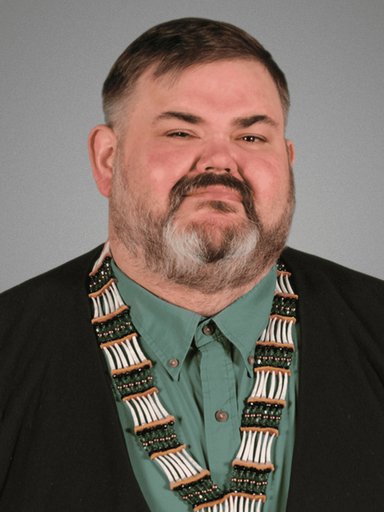
Richard Peterson
President · Central Council of Tlingit & Haida