Dan Stickel
17:09 - 18:21
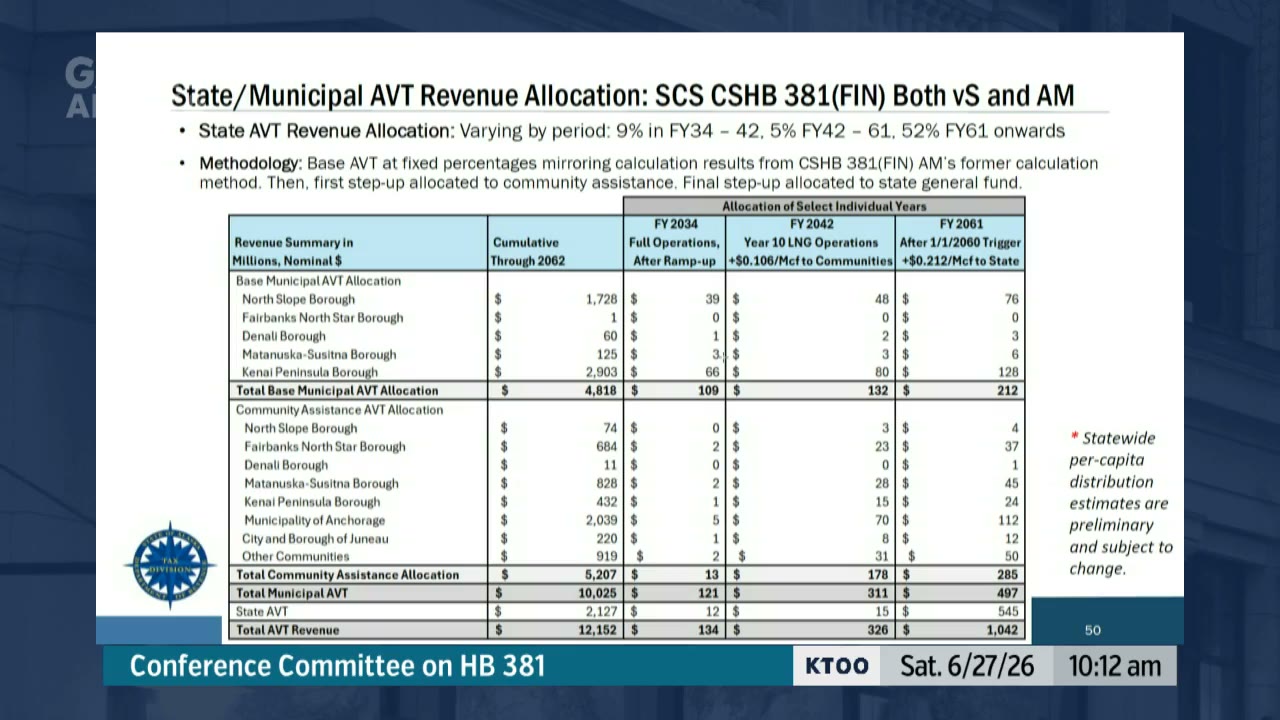
"in fiscal year 2061, which would be the first full fiscal year after the the second step up of the alternative volumetric tax. At that point in time, after adjusting for the inflation, there would be $212 million shared directly with the communities that the project resides in, an additional $285 million shared across the state based on population for community revenue sharing, and then the state at that point in time would get a little over $500 million."
“in fiscal year 2061, which would be the first full fiscal year after the the second step up of the alternative volumetric tax. At that point in time, after adjusting for the inflation, there would be $212 million shared directly with the communities that the project resides in, an additional $285 million shared across the state based on population for community revenue sharing, and then the state at that point in time would get a little over $500 million.”
- Speaker
- Dan Stickel
- Timestamp
- 17:09 – 18:21
- Community
- Alaska News
- Location
- Alaska
- Captured at
- June 27, 2026
From the transcript
So their total share, for instance, for the North Slope Borough, they would get $48 million for the allocation of the AVT for the portion of the project within their direct jurisdiction. And then they would get an additional $3 million through the community assistance allocation for a total of $51 million.. But in that 2042 example, community revenue sharing, which gets the entirety of that first step up in the ABT, that would come out to $178 million, which would be per year, which would be shared statewide based on population, with the state receiving the remaining $15 million. And then we show in fiscal year 2061, which would be the first full fiscal year after the the second step up of the alternative volumetric tax. At that point in time, after adjusting for the inflation, there would be $212 million shared directly with the communities that the project resides in, an additional $285 million shared across the state based on population for community revenue sharing, and then the state at that point in time would get a little over $500 million.