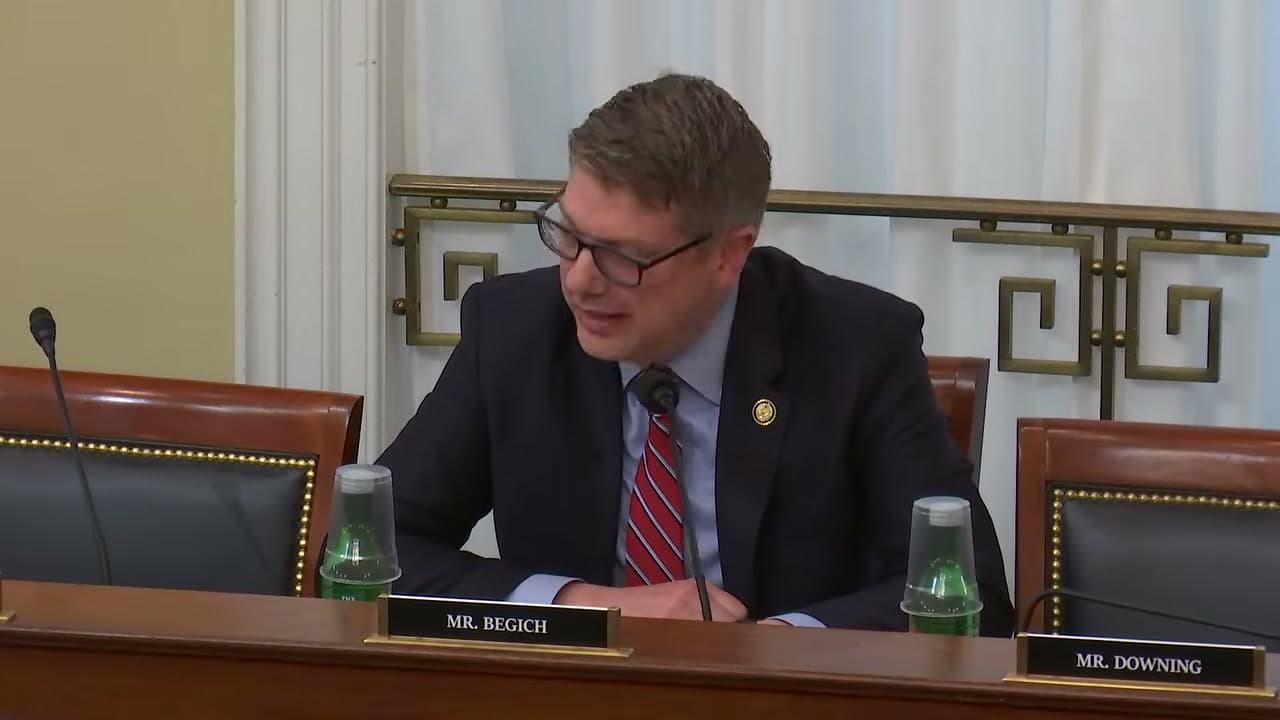
William Gibbons-Fly
127:53 - 128:48
"When you're banning commercial fishing from 50 to 200 miles, there's very, you're, you're putting, you know, very significant strain on the fishing industry, putting people out of business, harming the economy of American Samoa with very little, very little conservation benefit."
“When you're banning commercial fishing from 50 to 200 miles, there's very, you're, you're putting, you know, very significant strain on the fishing industry, putting people out of business, harming the economy of American Samoa with very little, very little conservation benefit.”
- Speaker
- William Gibbons-Fly
- Timestamp
- 127:53 – 128:48
- Source
- House Natural Resources Subcommittee on Water, Wildlife and Fisheries (Begich): Legislative Hearing
- Community
- Alaska News
- Location
- Alaska
- Captured at
- June 3, 2026
From the transcript
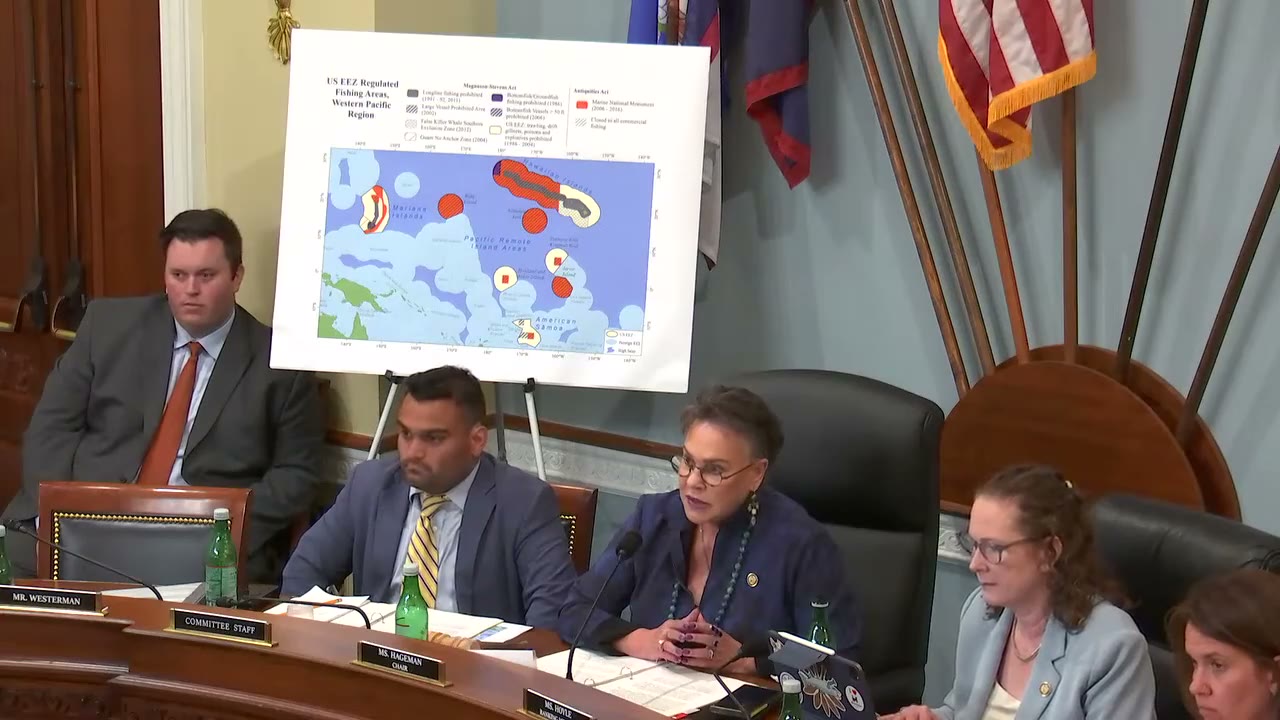
Yes, thank you for that question. You'll notice on that map that in some of those areas there are yellow areas with a smaller orange area, and then in others, it's the entire eez is the orange area. That's the difference between the original monument designation, which went out to 50 miles, and I'm speaking in particular on the Pacific remote islands, the original boundaries went out to 50 miles. And when I hear Dr. Friedman and others talk about the need to protect these resources, I hear them talk about coral reefs and nesting habitat and unique endemic marine habitats, all of which occur within 50 nautical miles. When you're banning commercial fishing from 50 to 200 miles, there's very, you're, you're putting, you know, very significant strain on the fishing industry, putting people out of business, harming the economy of American Samoa with very little, very little conservation benefit.
Related Coverage
Alaska fishery disaster funds stalled at OMB despite congressional approval
Federal fishery disaster relief funds approved by Congress in December 2024 remain unreleased, with NOAA officials unable to provide a timeline for when the money will reach Alaska and West Coast fishing families waiting for relief from disasters that occurred up to five years ago.
 by Alaska News3mo ago1 min readAI
A House bill on NOAA workplace safety is built on data from Alaska — where a third of fisheries observers report harassment or assault
A House subcommittee heard testimony on legislation to expand sexual harassment protections for NOAA employees and contractors, including fisheries observers. The bill follows a report that nearly one-third of North Pacific observers experience harassment or assault annually.
by Alaska News3mo ago2 min readAI
Begich bill to expand commerce in Alaska sea otter handicrafts gets first congressional hearing
They really otter let them do that
by Alaska News3mo ago2 min readAI