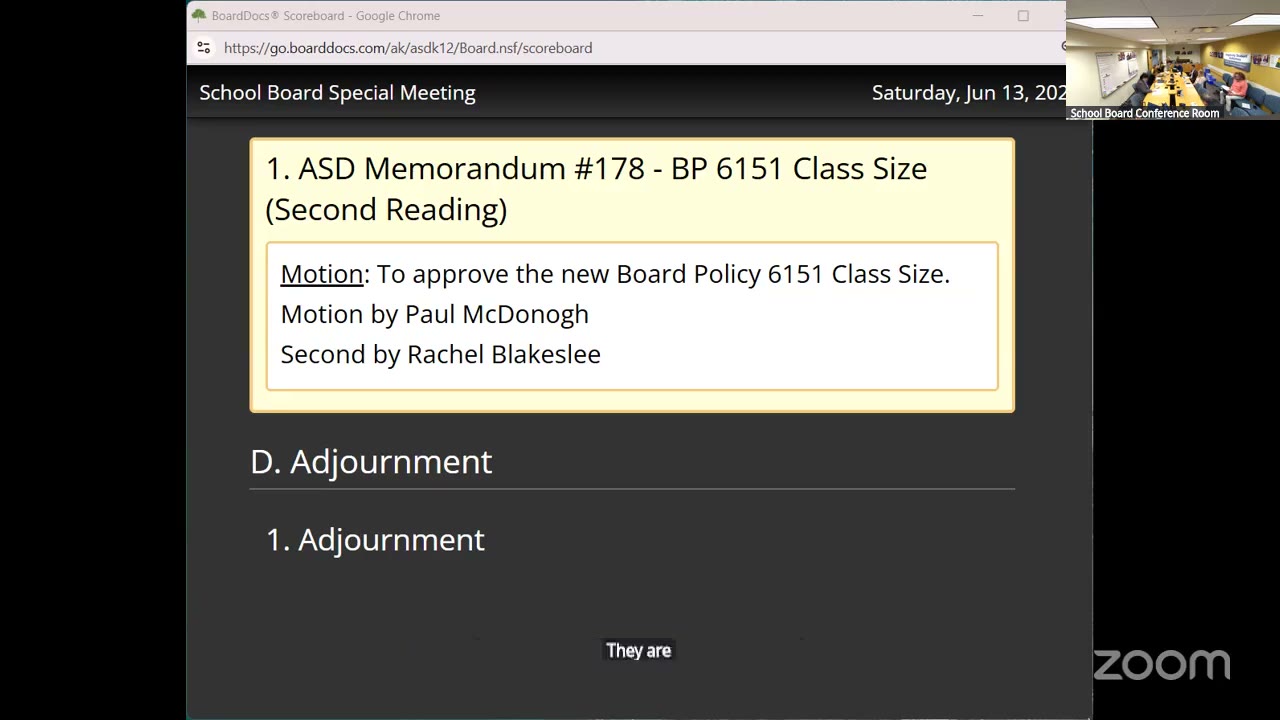
Paul McDonogh
6:05 - 6:57
"this version with its red lines does a good job at achieving what we think is the proper means of coming up with class size averages through evidence-based analysis of the science, while still also acknowledging that our main job is to comply with state statute."
“this version with its red lines does a good job at achieving what we think is the proper means of coming up with class size averages through evidence-based analysis of the science, while still also acknowledging that our main job is to comply with state statute.”
- Speaker
- Paul McDonogh
- Timestamp
- 6:05 – 6:57
- Community
- Alaska News
- Location
- Anchorage
- Captured at
- June 13, 2026
From the transcript
Grades 7 through 12, they are saying should have a maximum of 30. This policy will then comply with the Alaska statute 14.03.065, which was implemented after that. But the S version here also achieves the discussions made in governance committee, and there were several comments and pieces of concern that committee members and board members raised. And I think this version with its red lines does a good job at achieving what we think is the proper means of coming up with class size averages through evidence-based analysis of the science, while still also acknowledging that our main job is to comply with state statute. So, um, yeah, I'm bringing this forward with its changes as a much more active version of governance.
Related Coverage
Anchorage School Board adopts class size policy under state mandate
The Anchorage School Board unanimously adopted a class size policy Saturday that sets two tiers: the state's statutory maximums and lower, evidence-based targets the district cannot currently afford.
 by Walter AlaskaNews4mo ago2 min read