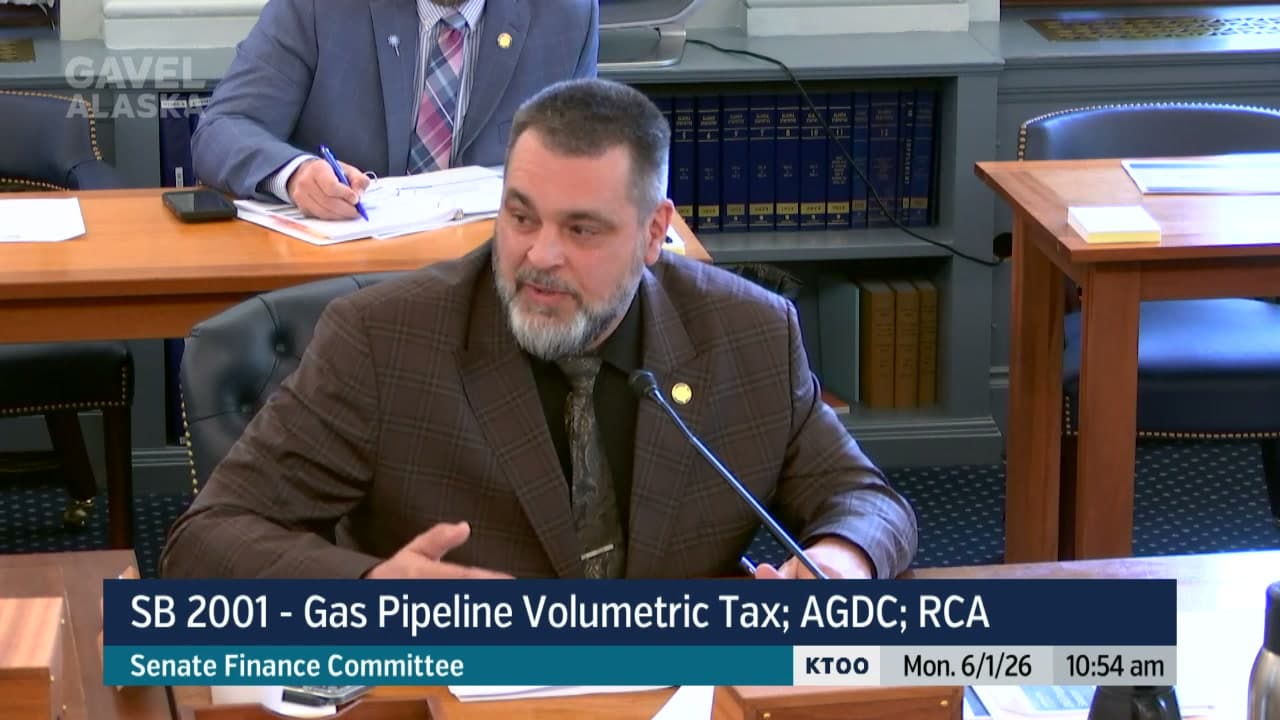
Matt Kissinger
104:02 - 105:02
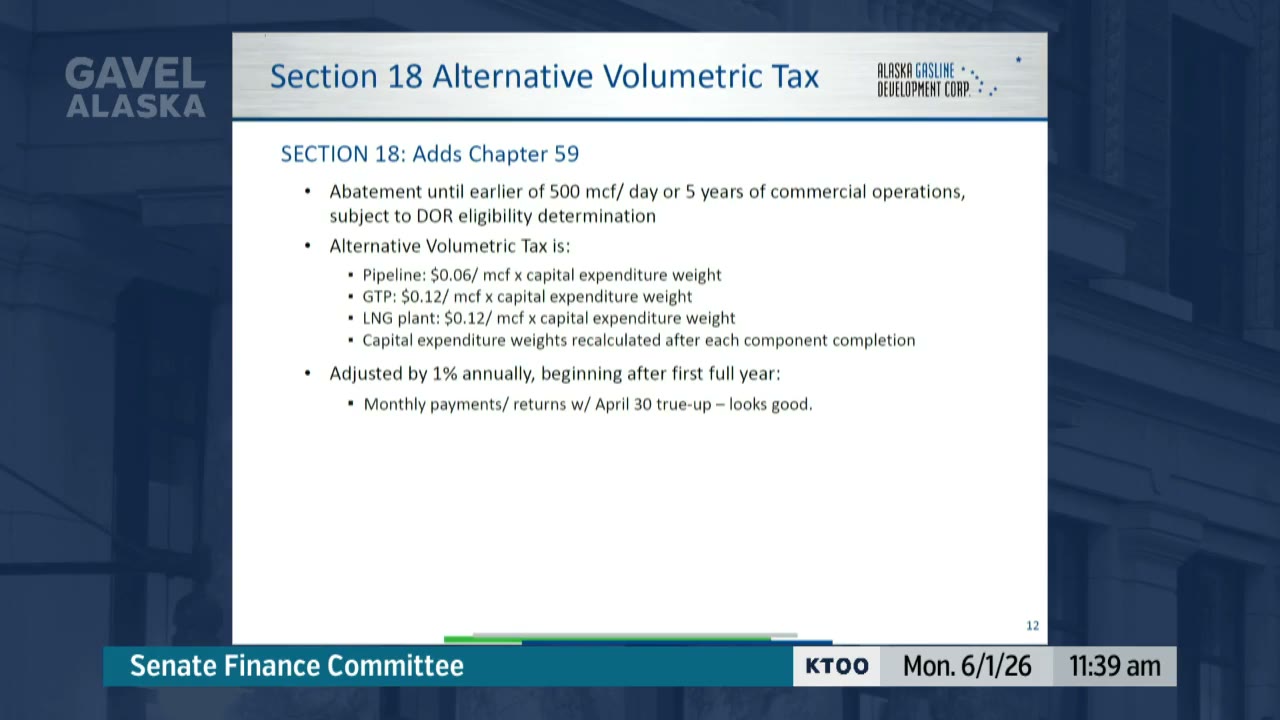
"it starts with a temporary tax abatement that would expire once the project achieves either 500 million standard cubic feet per day of throughput or five years from commencing commercial operations, whichever is first. It also sets out an alternative volumetric tax, which is $0.06 per thousand standard cubic feet flowing through the pipeline and $0.12 for gas flowing through the GTP and $0.12 for Gas flowing through the LNG facility. However, that is then weighted by the total proportion of capital that each of those segments it constitutes of the total project capital."
“it starts with a temporary tax abatement that would expire once the project achieves either 500 million standard cubic feet per day of throughput or five years from commencing commercial operations, whichever is first. It also sets out an alternative volumetric tax, which is $0.06 per thousand standard cubic feet flowing through the pipeline and $0.12 for gas flowing through the GTP and $0.12 for Gas flowing through the LNG facility. However, that is then weighted by the total proportion of capital that each of those segments it constitutes of the total project capital.”
- Speaker
- Matt Kissinger
- Timestamp
- 104:02 – 105:02
- Community
- Alaska News
- Captured at
- June 1, 2026
From the transcript
Section 18 is really where the tax, the alternative volumetric tax comes in as well as a temporary tax abatement. So it starts with a temporary tax abatement that would expire once the project achieves either 500 million standard cubic feet per day of throughput or five years from commencing commercial operations, whichever is first. It also sets out an alternative volumetric tax, which is $0.06 per thousand standard cubic feet flowing through the pipeline and $0.12 for gas flowing through the GTP and $0.12 for Gas flowing through the LNG facility. However, that is then weighted by the total proportion of capital that each of those segments it constitutes of the total project capital. So, for example, if the LNG plant is 40% of the project capital, that it would be 40% times the 0.12 in the alternative volumetric tax.
Related Coverage
Senate Finance hears $18 billion revenue trade-off for Alaska LNG tax break
Alaska Senate Finance Committee reviews fiscal analysis of proposed tax structure for Alaska LNG project, showing $18 billion combined revenue reduction over project life in exchange for improved global price competitiveness.
 by Bill AlaskaNews3mo ago2 min readAI