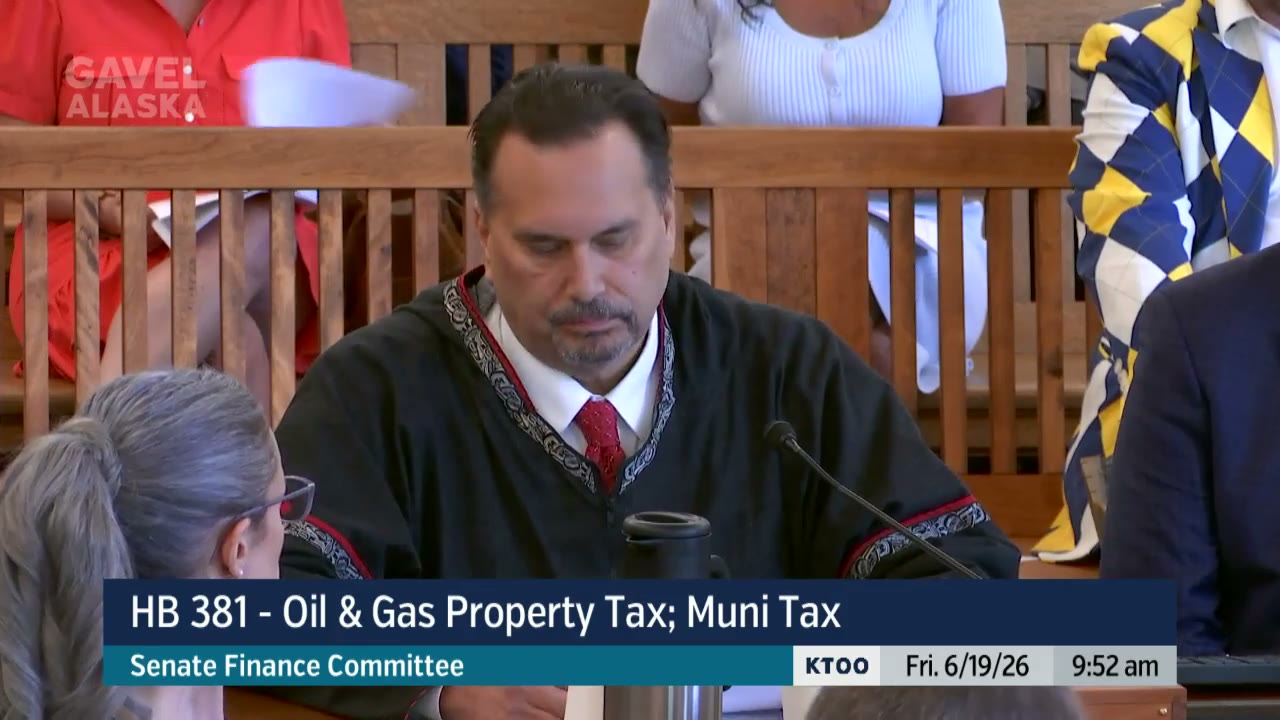
Pete Eklund
34:28 - 35:31
"The most significant change is that the committee substitute in front of you does not use capital expenditures as a component of the tax rate or the collection of the tax. Instead, it returns to a single tax rate at each stage of the project. These rates were developed to match the effective tax rate under the House version of the bill based on the Department of Revenue's modeling of the bill. So during Phase 1, the committee substitute sets the tax rate at 6.2 cents per 1,000 cubic feet, which is a blend of the 6-cent tax on the pipeline and the other body's version, and the impact of the— we've been referring to a mini gas treatment plant, Mr. Chairman, that would be— have to be put in place in Phase 1."
“The most significant change is that the committee substitute in front of you does not use capital expenditures as a component of the tax rate or the collection of the tax. Instead, it returns to a single tax rate at each stage of the project. These rates were developed to match the effective tax rate under the House version of the bill based on the Department of Revenue's modeling of the bill. So during Phase 1, the committee substitute sets the tax rate at 6.2 cents per 1,000 cubic feet, which is a blend of the 6-cent tax on the pipeline and the other body's version, and the impact of the— we've been referring to a mini gas treatment plant, Mr. Chairman, that would be— have to be put in place in Phase 1.”
- Speaker
- Pete Eklund
- Timestamp
- 34:28 – 35:31
- Community
- Alaska News
- Location
- Juneau
- Captured at
- June 19, 2026
From the transcript
And Mr. Chairman, I'll kind of lead off with one of the bigger aspects of this bill, the most important aspects of the bill here in front of you. So The most significant change is that the committee substitute in front of you does not use capital expenditures as a component of the tax rate or the collection of the tax. Instead, it returns to a single tax rate at each stage of the project. These rates were developed to match the effective tax rate under the House version of the bill based on the Department of Revenue's modeling of the bill. So during Phase 1, the committee substitute sets the tax rate at 6.2 cents per 1,000 cubic feet, which is a blend of the 6-cent tax on the pipeline and the other body's version, and the impact of the— we've been referring to a mini gas treatment plant, Mr. Chairman, that would be— have to be put in place in Phase 1..