John Sims
48:17 - 48:57
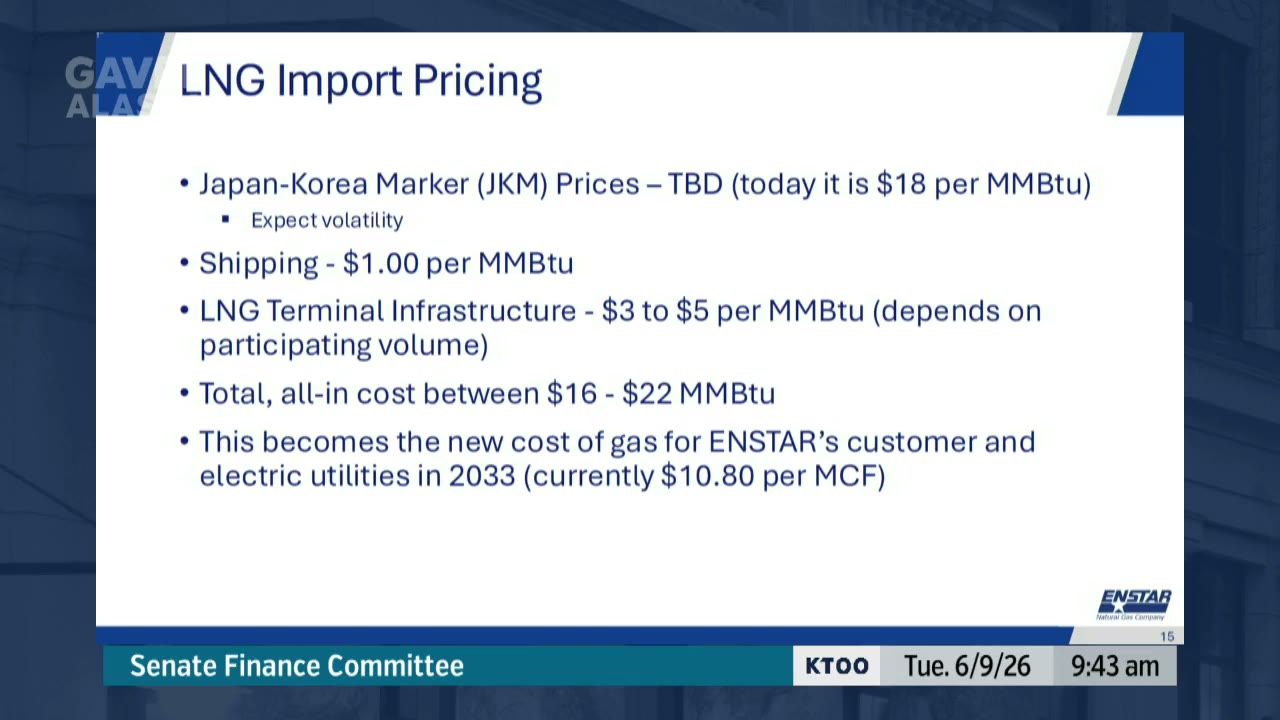
"when you look at that infrastructure that's required, it's about an additional 3 to 5 MMBTU in addition to the commodity price plus the shipping price. So when you're looking at the total all-in cost for LNG imports, assuming that the JKM forecast is correct, you're looking at somewhere from $16 to $22 per MMBtu."
“when you look at that infrastructure that's required, it's about an additional 3 to 5 MMBTU in addition to the commodity price plus the shipping price. So when you're looking at the total all-in cost for LNG imports, assuming that the JKM forecast is correct, you're looking at somewhere from $16 to $22 per MMBtu.”
- Speaker
- John Sims
- Timestamp
- 48:17 – 48:57
- Community
- Alaska News
- Location
- Alaska
- Captured at
- June 9, 2026
From the transcript
So when you look at that infrastructure that's required, it's about an additional 3 to 5 MMBTU in addition to the commodity price plus the shipping price. So when you're looking at the total all-in cost for LNG imports, assuming that the JKM forecast is correct, you're looking at somewhere from $16 to $22 per MMBtu. Um, again, when you compare that to what we're currently paying, it's $10.80. So you've got a situation where you have the infrastructure, you have the ability to accept LNG import. The question is, what's the commodity price going to be and how badly is it fluctuating, uh, either up or down.
Related Coverage
ENSTAR Caps the Price. Stedman Eyes the Debt.
Enstar is negotiating a 30-year gas supply agreement with Glenfarne that would cap prices at $16 per thousand cubic feet with annual inflation adjustments. The contract protects ratepayers from project cost overruns and allows a switch from LNG imports to pipeline gas if the export project is built.
 by Walter AlaskaNews3mo ago3 min readAI