Brock Wilson
39:00 - 39:57
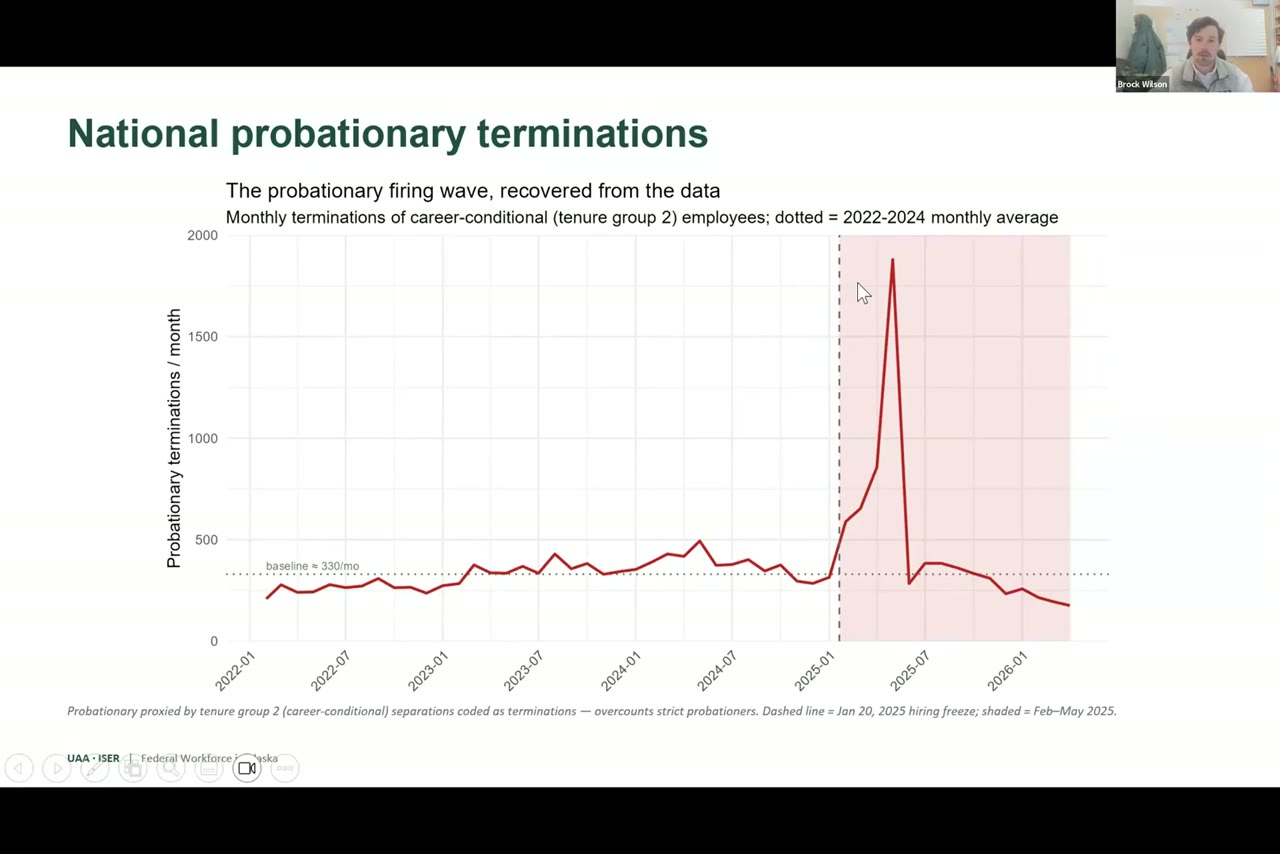
"when we look at the reduction in force, the probationary termination, and the buyouts collectively, at a national scale, by far the buyouts are what have caused the largest decline in the federal workforce. That is, we're talking about at a national level here— in one month, approximately almost 75,000 to 80,000 workers suddenly leaving"
“when we look at the reduction in force, the probationary termination, and the buyouts collectively, at a national scale, by far the buyouts are what have caused the largest decline in the federal workforce. That is, we're talking about at a national level here— in one month, approximately almost 75,000 to 80,000 workers suddenly leaving”
- Speaker
- Brock Wilson
- Timestamp
- 39:00 – 39:57
- Community
- Alaska News
- Location
- Alaska
- Captured at
- June 26, 2026
From the transcript
But when we look at the reduction in force, the probationary termination, and the buyouts collectively, at a national scale, by far the buyouts are what have caused the largest decline in the federal workforce. That is, we're talking about at a national level here— oops, gotta move that over— in one month, approximately almost 75,000 to 80,000 workers suddenly leaving in a second wave, approximately. And I should have to caveat, that's probably closer to 40,000, 50,000, and then a second wave there. And so these, these terminations, they're very real and they affected a set of people by a much larger ratio. The reduction is coming from these people who took out these, the, the DRP or the Deferred Resignation Program.
Related Coverage
Federal money built Alaska's recent growth — now it's receding fastest here
UAA economists say federal spending drove about half of Alaska's growth since 2015 — and the state is now losing federal workers faster than most, hitting rural areas hardest.
 by Bill AlaskaNews3mo ago2 min read