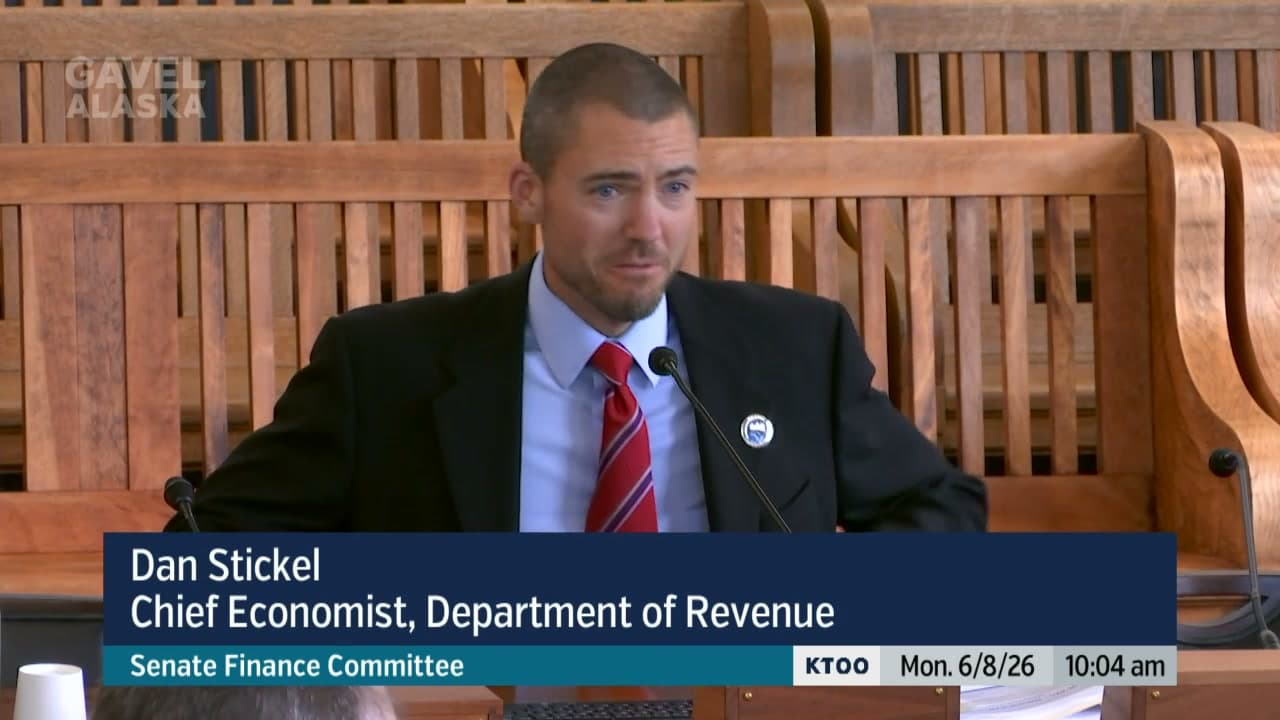
Speaker B
10:04 - 11:05
"We were asked to provide oil production sensitivities and price sensitivities on that as well."
“We were asked to provide oil production sensitivities and price sensitivities on that as well.”
- Speaker
- Speaker B
- Timestamp
- 10:04 – 11:05
- Community
- Alaska News
- Location
- Alaska
- Captured at
- June 8, 2026
From the transcript
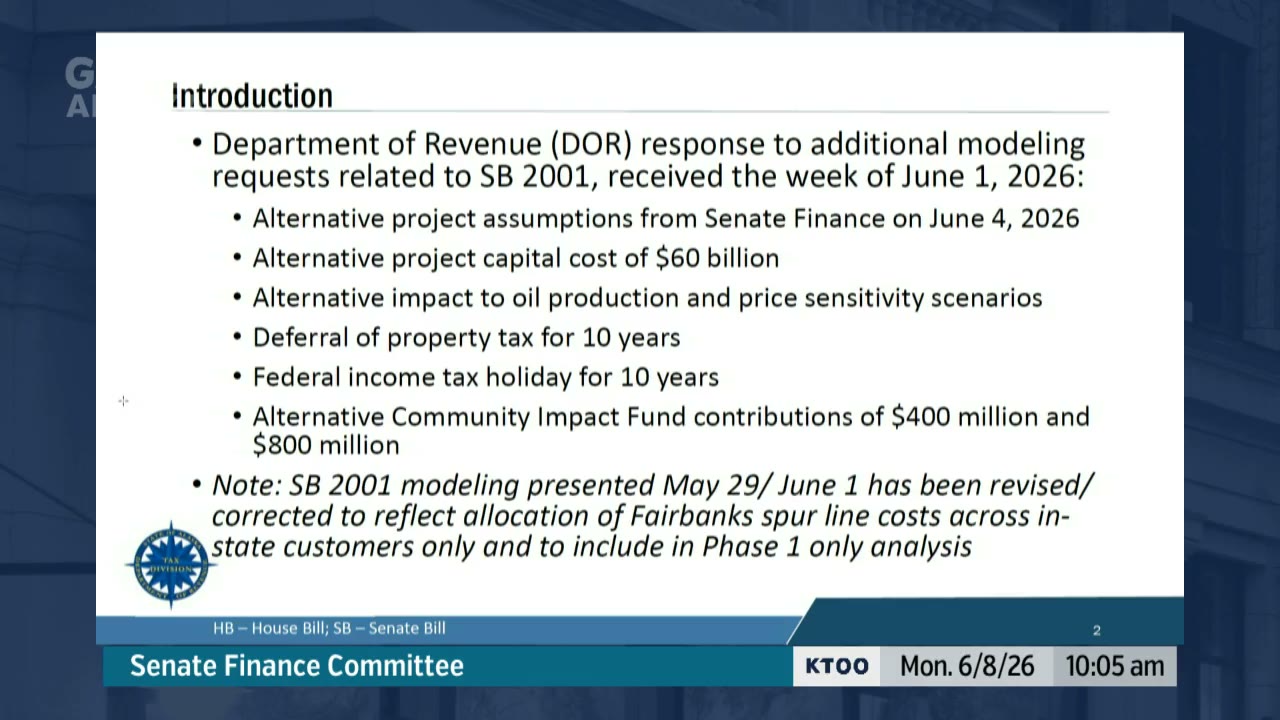
So in the slides that we presented on Monday, we were incorrectly allocating those across the entire project, including exported LNG, and we have now correctly reflected that to allocate the Fairbanks Spur Line costs over the in-state portion of the pipeline only, which is what's in the, the bill before the committee. And that model fix is included in all of the slides that we're presenting today as well that deal with Senate Bill 2001. So, and then these bullet points here at the top of the slide list out the various modeling requests that we received from the co-chairs. So there was a set of alternative project assumptions that we received We were asked to do modeling of our baseline assumptions with a $60 billion capital cost. We were asked to provide oil production sensitivities and price sensitivities on that as well.
Related Coverage
Department of Revenue presents Senate Finance with Alaska LNG breakeven modeling across cost and tax scenarios
Department of Revenue modeling shows that if the Alaska LNG project costs $60 billion instead of the baseline $46.2 billion, the price needed to break even in global markets would jump by $1.60 per thousand cubic feet, significantly affecting project viability and the state's fiscal analysis of competing tax proposals.
 by Walter AlaskaNews3mo ago2 min readAI
Department of Revenue presents Senate Finance with 25-scenario sensitivity analysis on Alaska LNG fiscal impact
Alaska Department of Revenue modeling shows the Alaska LNG project could cost the state $16.2 billion through 2062 under worst-case production scenarios combining Prudhoe Bay oil losses with Point Thompson underperformance at $100 per barrel oil prices.
by Walter AlaskaNews3mo ago2 min readAI