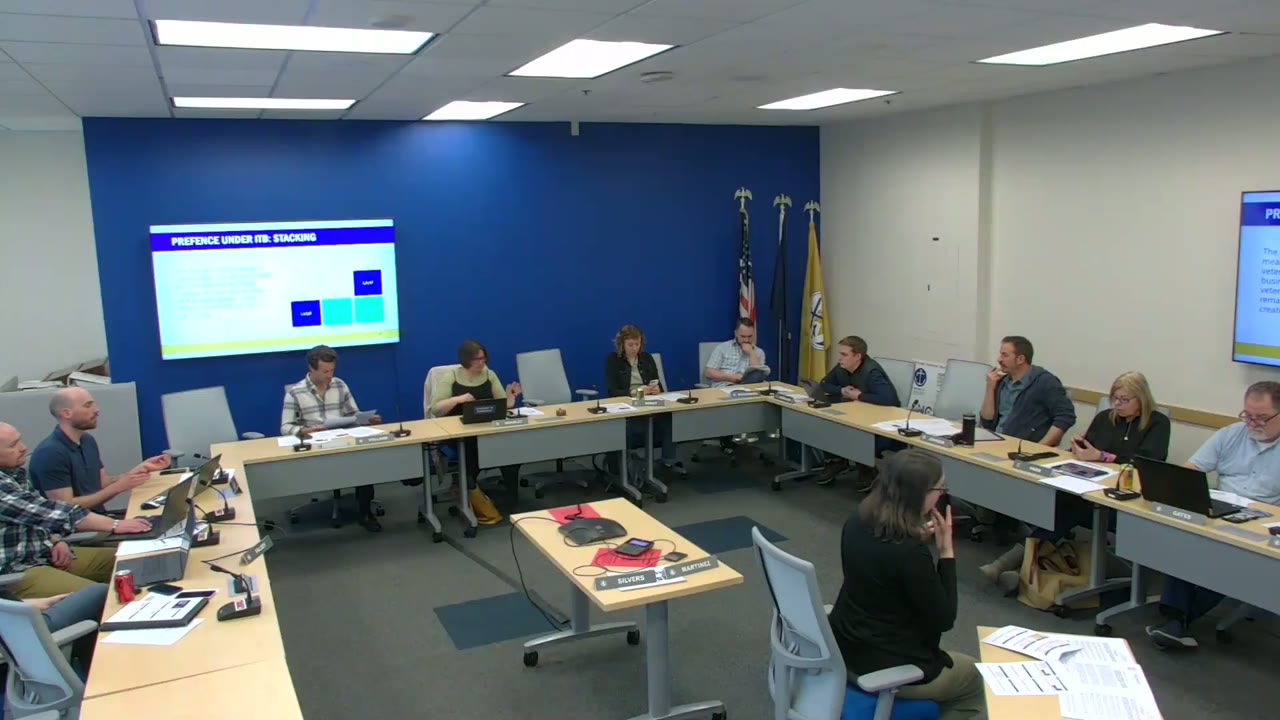
Speaker B
40:35 - 41:10
"If you have somebody that's— that two people that are bidding that are both out of state and one happens to be a veteran, that is the only scenario where somebody out of state is is getting a preference over somebody local to Alaska. So I think that is an important distinction to make."
“If you have somebody that's— that two people that are bidding that are both out of state and one happens to be a veteran, that is the only scenario where somebody out of state is is getting a preference over somebody local to Alaska. So I think that is an important distinction to make.”
- Speaker
- Speaker B
- Timestamp
- 40:35 – 41:10
- Community
- Alaska News
- Location
- Anchorage
- Captured at
- May 27, 2026
From the transcript
If you are a local and you are— and you have somebody who's bidding who's just a local and you have somebody who's bidding who's not local but is a veteran, their preferences cancel each other out. If you have somebody that's— that two people that are bidding that are both out of state and one happens to be a veteran, that is the only scenario where somebody out of state is is getting a preference over somebody local to Alaska. So I think that is an important distinction to make. And so I know that under state statute it says Alaska veteran. I think that's maybe where it's a little bit semantics at this point to be in practicality though.
Related Coverage
Anchorage veteran preference could exclude recent Afghanistan, Iraq vets
Anchorage Assembly debated Wednesday whether a proposed five-year eligibility window for veteran procurement preferences would exclude combat veterans who served in Afghanistan and Iraq.
 by Walter AlaskaNews3mo ago1 min readAI