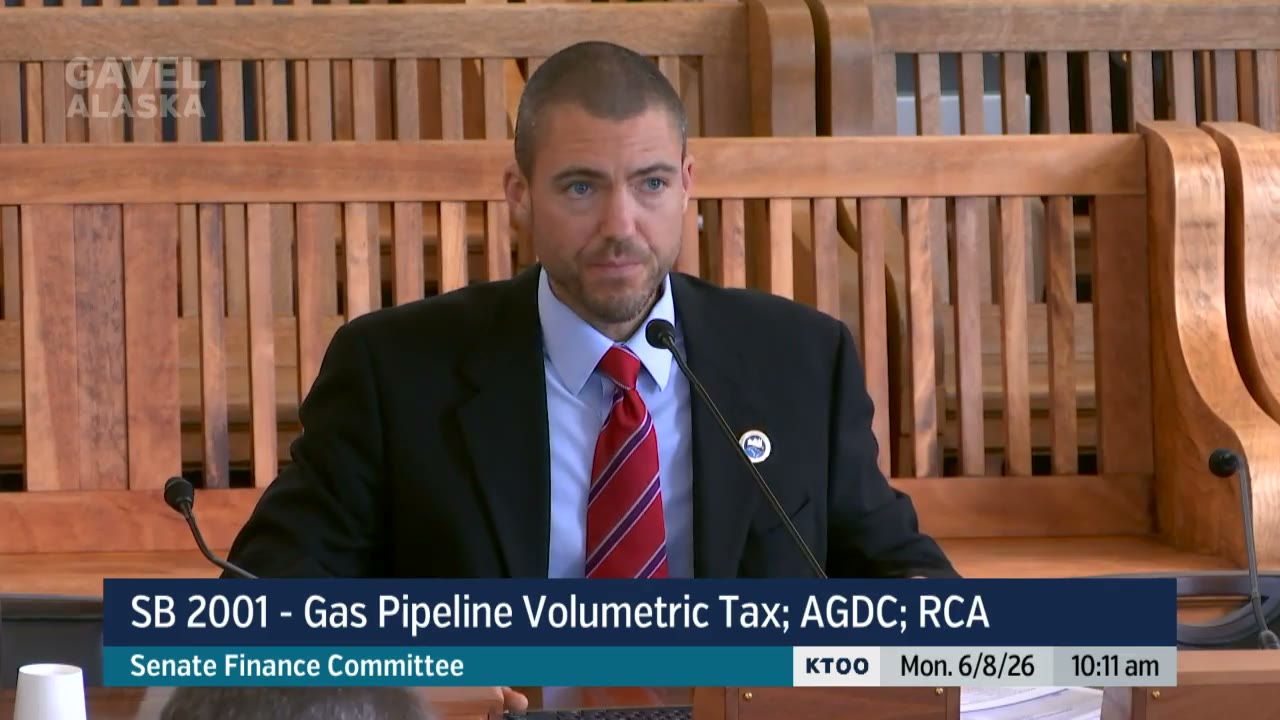
Speaker B
15:53 - 16:39
"under this set of alternative assumptions, the breakeven LNG price into the global market would be $10.34 per thousand cubic feet, and that compares to $9.07 per thousand cubic feet under the baseline assumptions. So a pretty material increase to the, the— the delivered price of LNG that would be required under this set of alternative assumptions."
“under this set of alternative assumptions, the breakeven LNG price into the global market would be $10.34 per thousand cubic feet, and that compares to $9.07 per thousand cubic feet under the baseline assumptions. So a pretty material increase to the, the— the delivered price of LNG that would be required under this set of alternative assumptions.”
- Speaker
- Speaker B
- Timestamp
- 15:53 – 16:39
- Community
- Alaska News
- Location
- Alaska
- Captured at
- June 8, 2026
From the transcript
All right, moving on to slide 5. So this is our standard cash flow and cost of supply summary for the full project under current tax law, given these alternative assumptions. And so under this set of alternative assumptions, the breakeven LNG price into the global market would be $10.34 per thousand cubic feet, and that compares to $9.07 per thousand cubic feet under the baseline assumptions. So a pretty material increase to the, the— the delivered price of LNG that would be required under this set of alternative assumptions.
Related Coverage
Department of Revenue presents Senate Finance with Alaska LNG breakeven modeling across cost and tax scenarios
Department of Revenue modeling shows that if the Alaska LNG project costs $60 billion instead of the baseline $46.2 billion, the price needed to break even in global markets would jump by $1.60 per thousand cubic feet, significantly affecting project viability and the state's fiscal analysis of competing tax proposals.
 by Walter AlaskaNews3mo ago2 min readAI
Department of Revenue presents Senate Finance with 25-scenario sensitivity analysis on Alaska LNG fiscal impact
Alaska Department of Revenue modeling shows the Alaska LNG project could cost the state $16.2 billion through 2062 under worst-case production scenarios combining Prudhoe Bay oil losses with Point Thompson underperformance at $100 per barrel oil prices.
by Walter AlaskaNews3mo ago2 min readAI