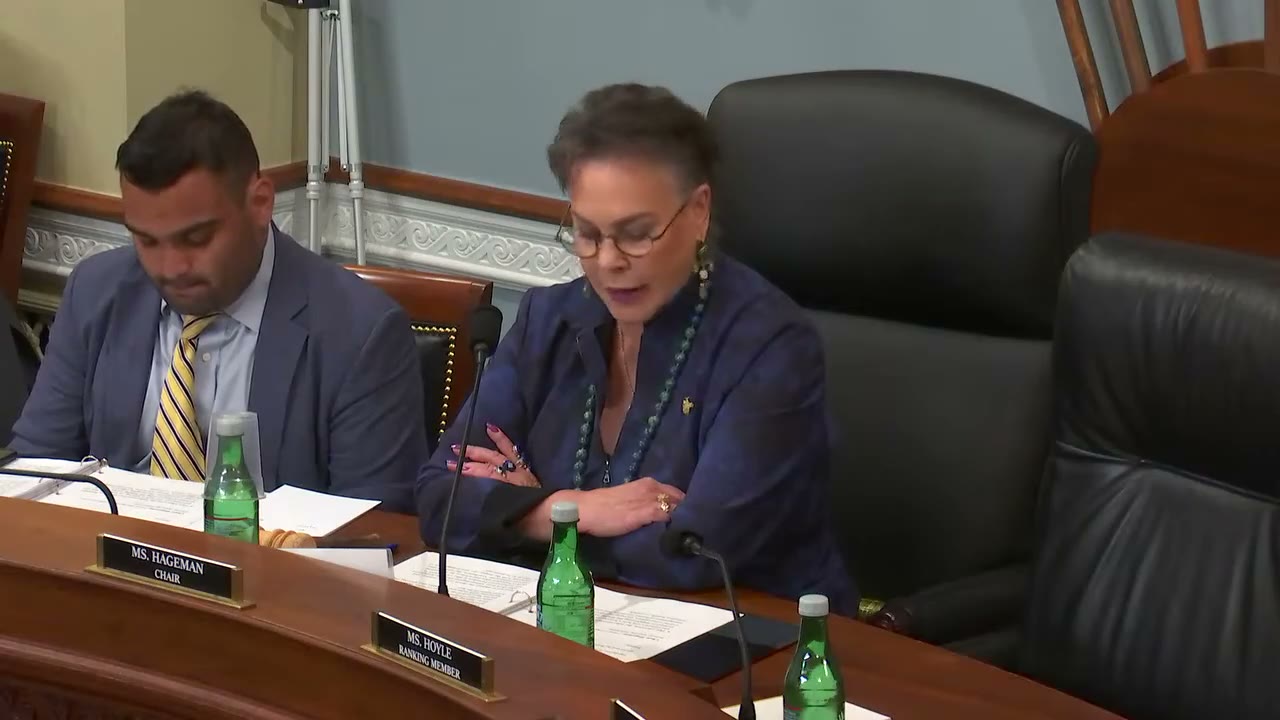
Harriet Hageman
39:07 - 39:53
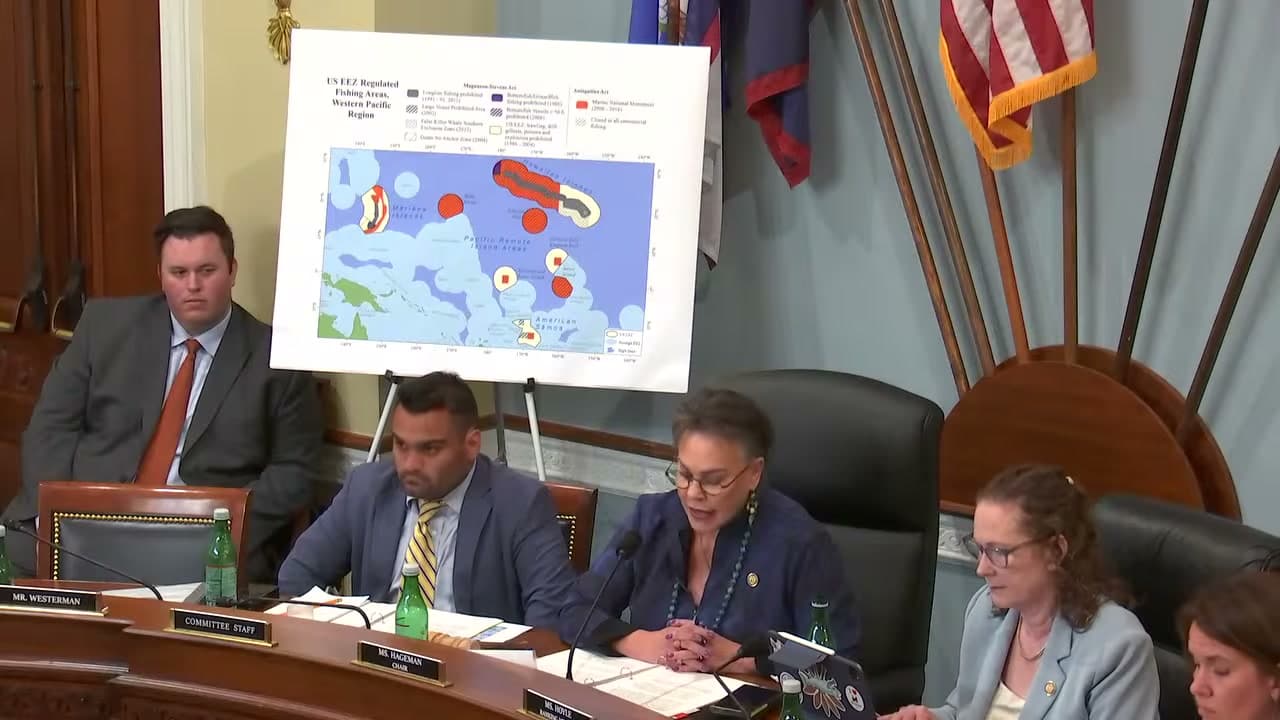
“The bill at the heart of this hearing is sponsored by Representative Radawagan of American Samoa. Her bill states that within the boundaries of a marine national monument, fishing shall be regulated under the Magnuson Stevens Fishery Conservation and Management act, not the Antiquities Act.”
- Speaker
- Harriet Hageman
- Timestamp
- 39:07 – 39:53
- Transcript
- House Natural Resources Subcommittee on Water, Wildlife and Fisheries (Begich): Legislative Hearing
- Community
- Alaska News
- Location
- Alaska
- Captured at
From the transcript
I now recognize myself for a five minute opening statement. This afternoon, the Subcommittee on Water, Wildlife and Fisheries will hold a hearing on four bills that are focused on empowering the fishing sector and and our coastal communities, encouraging effective management of marine resources and restricting executive branch overreach. The bill at the heart of this hearing is sponsored by Representative Radawagan of American Samoa. Her bill states that within the boundaries of a marine national monument, fishing shall be regulated under the Magnuson Stevens Fishery Conservation and Management act, not the Antiquities Act. Multiple use is a cornerstone of how we manage and care for America's public lands and waters and Congress has typically established a high bar for precluding productive uses within broadly defined areas.
Related Coverage
Alaska fishery disaster funds stalled at OMB despite congressional approval
Congress approved $300 million in fishery disaster relief for Alaska in December 2024, but the Office of Management and Budget has not released the funds to fishing families waiting for relief.

Begich bill to expand commerce in Alaska sea otter handicrafts gets first congressional hearing
A new bill in Congress that asks, what otter we do?
A House bill on NOAA workplace safety is built on data from Alaska — where a third of fisheries observers report harassment or assault
A House bill to strengthen sexual harassment protections at NOAA is built on data from Alaska's North Pacific Observer Program, where nearly one third of the roughly 400 annual observers report harassment or assault.