Dan Stickel
43:52 - 44:56
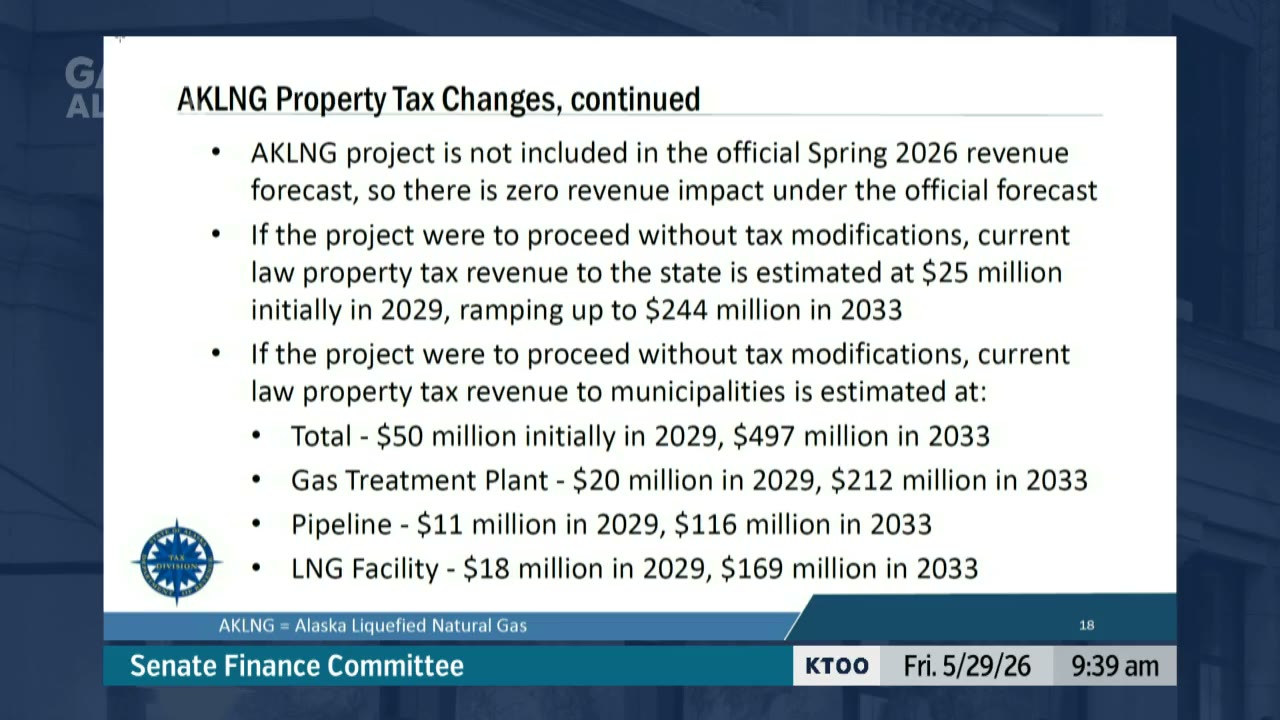
"state revenue from property tax is estimated at $25 million initially, ramping up to $244 million by 2033 in full operations. And then we lay out here the, the municipal revenues associated with the AK LNG project, which would total $50 million initially, ramping up to nearly $500 million in 2033. So in total, once the project is at full capacity operations in 2033, we're looking at around $750 million per year of property tax revenue from the project to the state and municipalities if it were to go forward under current law."
“state revenue from property tax is estimated at $25 million initially, ramping up to $244 million by 2033 in full operations. And then we lay out here the, the municipal revenues associated with the AK LNG project, which would total $50 million initially, ramping up to nearly $500 million in 2033. So in total, once the project is at full capacity operations in 2033, we're looking at around $750 million per year of property tax revenue from the project to the state and municipalities if it were to go forward under current law.”
- Speaker
- Dan Stickel
- Timestamp
- 43:52 – 44:56
- Source
- SFIN-260529-0900
- Community
- Alaska News
- Captured at
- May 29, 2026
From the transcript
If that project were to come forward without tax relief, state revenue from property tax is estimated at $25 million initially, ramping up to $244 million by 2033 in full operations. And then we lay out here the, the municipal revenues associated with the AK LNG project, which would total $50 million initially, ramping up to nearly $500 million in 2033. So in total, once the project is at full capacity operations in 2033, we're looking at around $750 million per year of property tax revenue from the project to the state and municipalities if it were to go forward under current law. Looked at it another way is almost $750 million of property tax burden for the project. And again, these are under our baseline cost assumptions around construction cost.
Related Coverage
Senate Finance Committee: how do you analyze a $46.2 billion pipeline without the numbers?
Alaska Senate Finance Committee demands actual commercial and financial data for proposed $46.2 billion gas pipeline before considering state investment role
 by Bill AlaskaNews3mo ago3 min readAI