Nicholas Fulford
78:50 - 79:52
"given the scale of the project, is debt funding. As we've discussed, in a project of this sort, probably be 60, 70% maybe even more, financed on what they call a non-recourse basis. So this would be off balance sheet, so companies would contract with a consortium of banks that would lend the money and would take some degree of risk themselves."
“given the scale of the project, is debt funding. As we've discussed, in a project of this sort, probably be 60, 70% maybe even more, financed on what they call a non-recourse basis. So this would be off balance sheet, so companies would contract with a consortium of banks that would lend the money and would take some degree of risk themselves.”
- Speaker
- Nicholas Fulford
- Timestamp
- 78:50 – 79:52
- Source
- SFIN-260528-0900
- Community
- Alaska News
- Captured at
- May 28, 2026
From the transcript
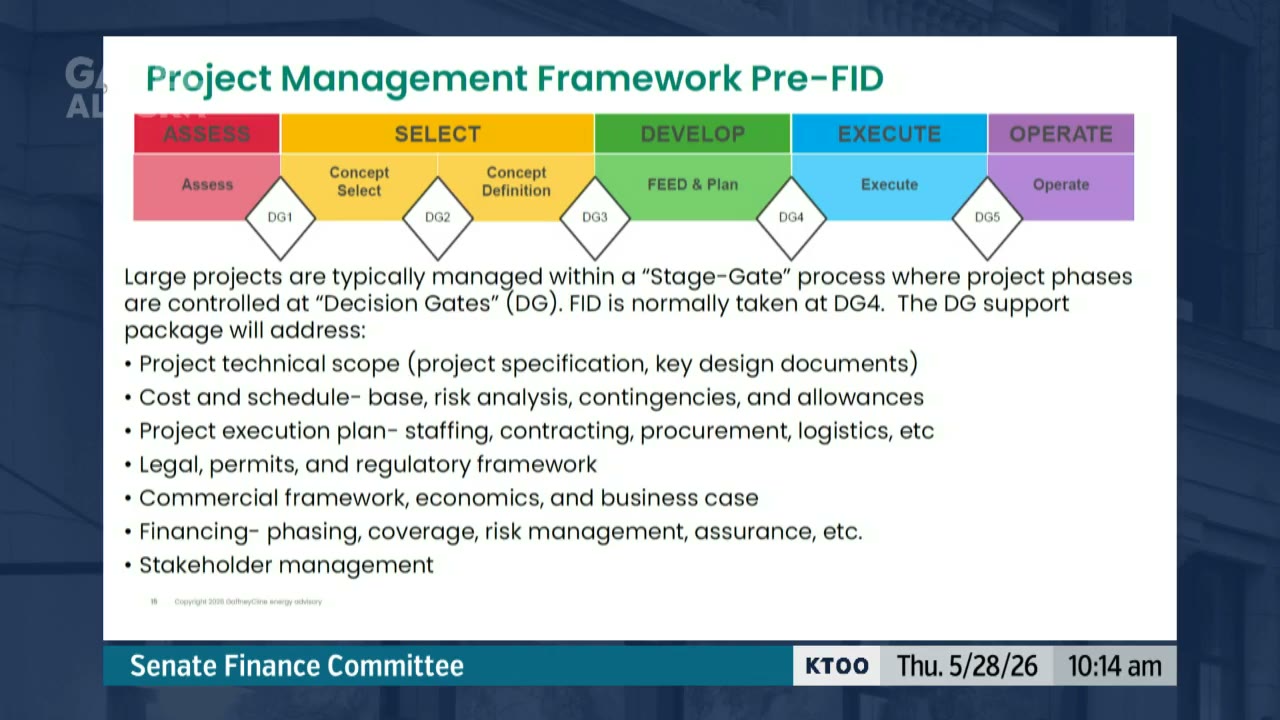
The other feature, given the scale of the project, is debt funding. As we've discussed, in a project of this sort, probably be 60, 70% maybe even more, financed on what they call a non-recourse basis. So this would be off balance sheet, so companies would contract with a consortium of banks that would lend the money and would take some degree of risk themselves. But in moving to FID, you know, everyone is doing due diligence but the banks probably do more than anybody. And certainly I've seen LNG projects that have had to have been quite significantly reworked at a relatively late stage simply because the lending community are not comfortable with, with the degree of risk and risk medications that's happened.