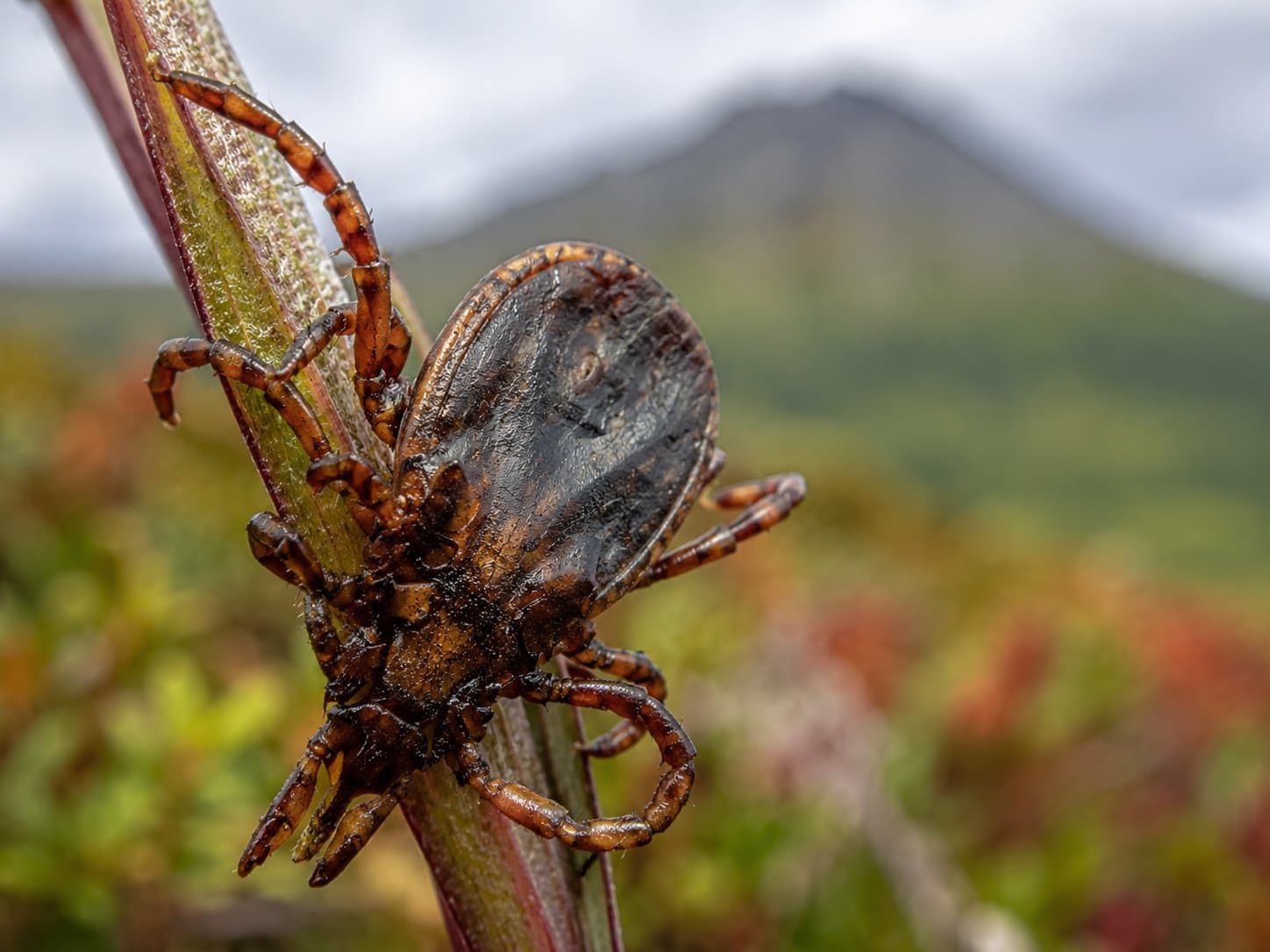
Photo by Cale Green
Tick found after Flattop hike shows Alaska's changing tick reality
A tick found on an Anchorage pet after a hike near Flattop has prompted a reminder from local veterinarians that ticks are present in Alaska and that pet owners should consider prevention measures.
Anchorage Veterinary Clinic and Urgent Care said in a Facebook post Wednesday that a tick had been found on a local pet one day earlier after the animal's family had been hiking near Flattop. The clinic said the pet had not been outside Anchorage. The tick would be sent to the state veterinarian's office for identification and possible infectious disease testing.
For many Anchorage residents, that still feels wrong. Alaska has long been different. The state's cold climate, distance, and wildlife patterns have kept the best-known dog, deer, and moose ticks from becoming part of everyday life here. State and university researchers say the picture is changing.
Native and non-native species
The Alaska Department of Environmental Conservation says Alaska has six native tick species, usually found on squirrels, rabbits, other small mammals, and birds. The larger concern is non-native ticks, the species that historically were not found in Alaska and may carry pathogens that affect people, pets, livestock, and wildlife.
DEC says in its public tick guidance that several new tick species have been found in Alaska in the past few years. The state created a formal tracking system in 2019. The Alaska Submit-A-Tick Program, run by the Alaska Office of the State Veterinarian with the Alaska Department of Fish and Game and University of Alaska researchers, asks people to save and submit ticks found on themselves, family members, pets, wildlife, or in the environment.
In 2019, the program collected 232 records representing 522 individual ticks. Anchorage accounted for 109 ticks, or 21 percent of that year's submissions. That year, 11 non-native ticks were submitted from hosts without recent travel history. DEC said no tick species met the criteria for establishment in any borough, but non-native ticks were arriving without an obvious travel explanation.
Research and surveillance
University of Alaska Anchorage researcher Micah Hahn has been one of the central figures in tracking the issue. A 2023 study by Hahn and colleagues, published in the Journal of Medical Entomology, tested tick samples collected from people, domestic animals, and wildlife in Alaska in 2019 and 2020. The researchers found established populations of several native tick species. They did not detect known human pathogens in those locally established ticks. The only Lyme disease bacterium detected in the study came from a tick associated with a dog that had recently traveled to New York.
The risk of getting a tick-borne disease in Alaska remains low, but the state is no longer in a clean category of not having ticks. KTOO and the Alaska Beacon reported in 2023 that more than 2,000 ticks collected over a decade showed new species being introduced to Alaska, often through dogs traveling from outside.
For pet owners, state tick guidance and veterinarians recommend checking dogs and cats after hikes, especially around ears, collars, toes, and places where fur is thick. Remove attached ticks carefully. Save the tick in a clean container. Submit it to the Office of the State Veterinarian through the Alaska Submit-A-Tick Program, or ask a veterinarian for help with submission.
State officials say ticks are present in Alaska often enough that a formal surveillance system is needed. A tick found after a hike near Flattop is one more data point in that system.
Source: Tick found after Flattop hike shows Alaska’s changing tick reality.
Made by our human newsroom with AI. How humans and AI work here · Grow with our newsroom
Stay informed. Support what matters.
Free, permanent access to local news you can verify. Subscribe to support Walter AlaskaNews and go ad-free.
Related Coverage
A dog reported killed in the Bear Valley bear attack turned up alive
Alaska News · 2mo ago
Brown bear injures hiker on Bear Valley trail above south Anchorage
Alaska News · 2mo ago
Rabies is climbing among wildlife across the Yukon-Kuskokwim Delta
Alaska News · 4w ago
A second person has been hurt in an Anchorage otter attack in three weeks
Alaska News · 1mo ago
Veterinary care reaches rural Alaska, where dog-bite rates run high
Alaska News · 3mo ago
Comments
Sign in to leave a comment.
No comments yet. Be the first to share your thoughts.