State freight memo logs 2020 record-low pipeline throughput
Alaska's freight network is being pulled between declining oil throughput and surging e-commerce demand, according to a statewide technical memorandum on freight prepared for the Alaska Department of Transportation & Public Facilities. The department's Long-Range Transportation Plan process launched in August 2025 and carries a planning horizon through 2055.
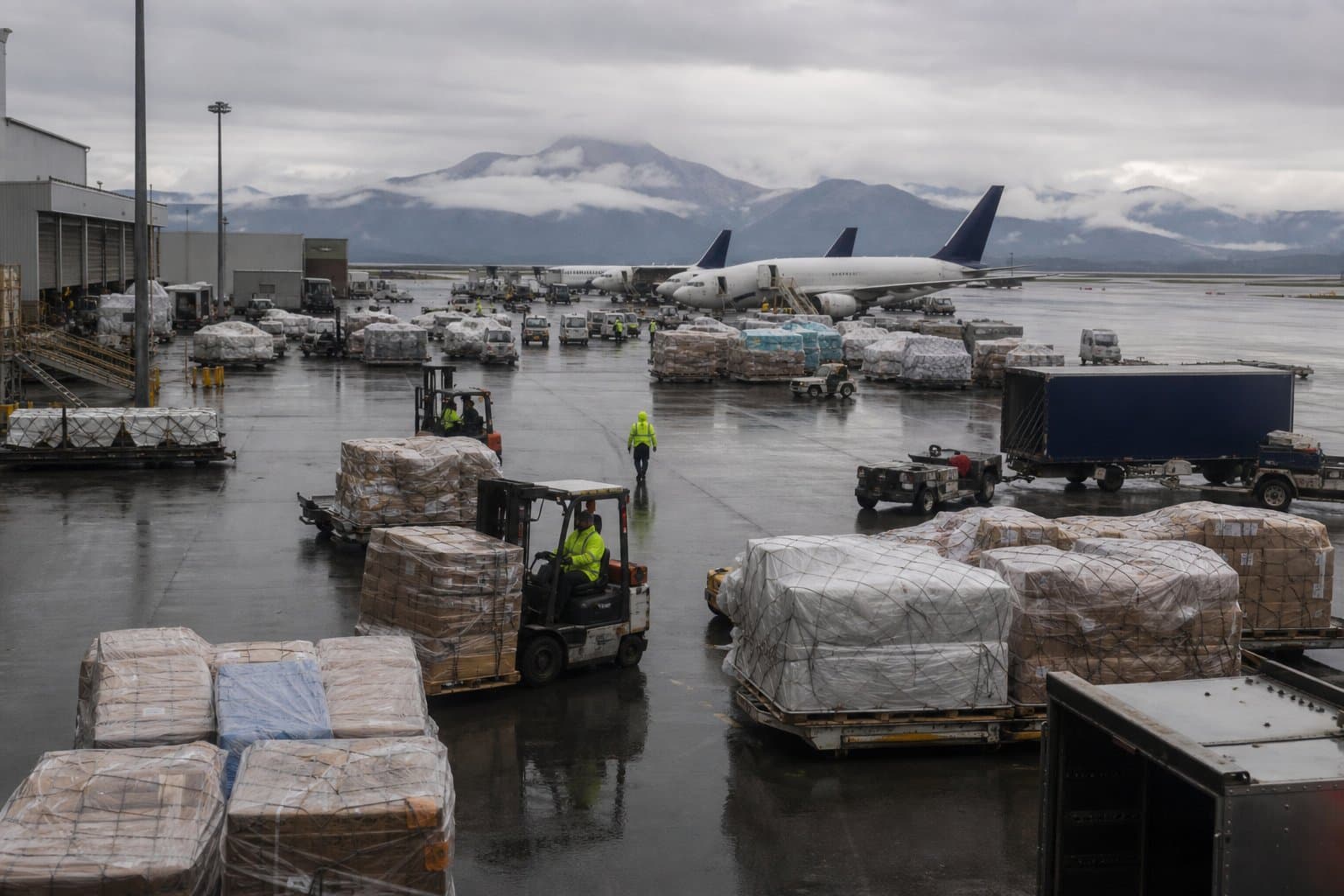
Trans-Alaska Pipeline throughput hit an all-time low of 480,199 barrels per day in 2020, down from a 1988 peak of about 2.1 million. Alyeska data show it fell further to 462,821 barrels per day in 2025. In 2020, U.S. e-commerce sales rose 42 percent to $813 billion. The Port of Alaska moved 388,000 TEUs, or 20-foot equivalent container units, in 2019. Ted Stevens Anchorage International Airport ranked the world's fourth-busiest cargo airport in 2020, a separate year. Airport planner Ian Moore said e-commerce is "reinforcing Alaska's role, especially at ANC, as a critical global cargo hub." The road network includes 235 miles of Critical Rural Freight Corridors, among other infrastructure. Trucking carries 54.4 percent of domestic in-state freight by value.
Alyeska's flow assurance analysis found that, with additional investment, it may be technically possible to operate the pipeline safely down to annualized throughput as low as 200,000 barrels per day. Industry advocates argue the decline is not settled. They point to new North Slope projects such as Pikka and Nuna as evidence that investment could stabilize or increase throughput.
The figures also carry weight for those on the receiving end. Businesses that depend on steady inbound containerized cargo, including retailers, grocers and construction suppliers, treat Port of Alaska modernization and reliability as essential to avoiding delays and higher logistics costs. The port handles about half of all inbound Alaska freight. Rural communities rely on the Critical Rural Freight Corridors to receive goods. Limited corridor mileage and sparse truck parking, 179 spaces at 18 privately owned truck stops statewide, can raise freight costs and reduce service reliability. Air cargo and logistics companies operating through ANC are stakeholders in decisions about airport capacity and surface freight connections that shape turnaround times.
AI-assisted, reviewed by editors. Spot an error?
Related Coverage
State would lease airport land at 18 cents a foot until 2076
Alaska News · 1w ago · 77% match
Kuparuk Pipeline seeks 76% capacity expansion for North Slope crude
Alaska News · 2mo ago · 76% match
Cook Inlet gas production falls to 61 Bcf in 2025
Alaska News · 1mo ago · 75% match
A shifting wall threatens Bethel's freight lifeline
Alaska News · 2w ago · 75% match
North Slope pipeline company seeks to double metering capacity at TAPS
Alaska News · 2mo ago · 75% match
Comments
Sign in to leave a comment.
No comments yet. Be the first to share your thoughts.